History & Heritage
In Ouches, the Hôtel Troisgros is much more than a mere place to stay; it is deeply rooted in a French family history intertwined with fine dining, the art of transmission, and hospitality.
The Troisgros establishment is one of those addresses where guests come not only to spend the night or a weekend but to immerse themselves in a world shaped by several generations. Here, the traveller seeks a seamless connection between the dining experience, the landscape, the rhythm of the day, and the meticulous attention to every detail.
Being a member of Relais & Châteaux provides a clear framework for this identity. It embodies a commitment to service excellence, a unique sense of place, and a rejection of overt standardisation. In this context, culinary heritage is not merely an addition to the hotel; it forms its very backbone.
The reputation of the establishment is built upon a culture of precision, sensitivity, and fidelity to an art of hospitality where conviviality never compromises rigor.
The name Troisgros evokes a lineage that has significantly influenced contemporary French gastronomy. This house has contributed to the evolution of French cuisine towards greater clarity, coherence, and a focus on quality ingredients.
This heritage is palpable in the way the hotel presents itself. Without ostentation or flashy decor, it exudes a quiet confidence. Everything seems designed to extend a living narrative rather than to freeze it in time.
This continuity between past and present is also reflected in the balance between tradition and modernity. The establishment does not aim to replicate a grand classical style; instead, it favours a more contemporary warmth, where materials, volumes, and a connection to nature contribute to a discreet elegance.
Visitors quickly sense that they are entering a home imbued with customs, gestures, and memories, yet firmly oriented towards the present.
Staying here offers a tangible encounter with French heritage in its most concrete form: the art of dining, attentiveness to hospitality, loyalty to a region, and the ability to evolve a renowned name without betraying its essence.
At Ouches, the Hôtel Troisgros offers not so much a reconstruction of the past as an experience of active transmission. For gastronomy enthusiasts and travellers who appreciate characterful establishments, this historical depth lends a particular richness to their stay. One does not come merely to sleep in a five-star hotel; one enters a home whose culture has been built over time, with consistency and high standards.
The Establishment
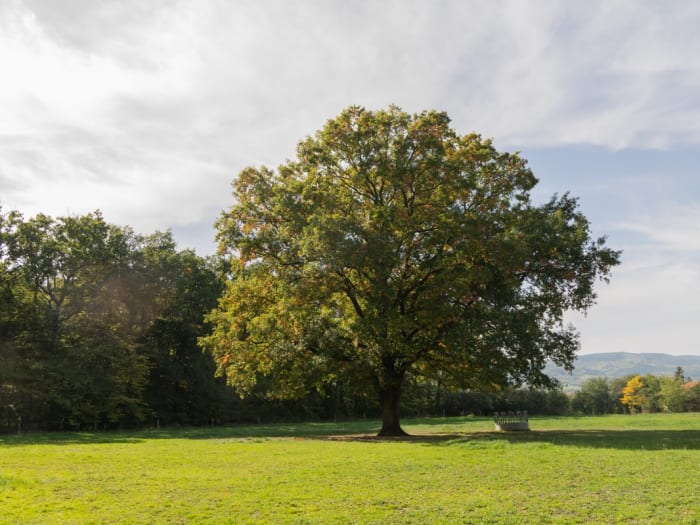
The primary luxury of the Hôtel Troisgros lies in its location. In Ouches, the verdant surroundings shape the experience of the stay. The address distances itself from the urban codes of a classic palace, favouring a direct relationship with the landscape, light, and tranquility. This breathing space allows guests to experience the house at a different tempo, seamlessly transitioning from the room to the garden, from the restaurant to a leisurely stroll.
The establishment is distinguished by a warm atmosphere that balances tradition and modernity. The overall design prioritises discernible comfort without ostentation. Elements of design and more traditional references coexist harmoniously, giving the place a recognisable personality that remains rooted in French history while embracing contemporary sensitivity.
Being situated in Ouches also matters. The stay takes on a more intimate tone than in a larger destination. Guests come here to slow down and refocus their journey on a few essential pleasures: enjoying good food, restful sleep, walking, observing, and taking their time. In this context, luxury is not about the proliferation of external signs; it is about the quality of attention and the appropriateness of the setting.
Membership in Relais & Châteaux reinforces this perspective. The venue is part of a collection of addresses that celebrate the unique character of each establishment. At the Hôtel Troisgros, this is expressed through a coherence between the interior architecture, the spirit of the dining experience, and the relationship with the surrounding area. The traveller perceives a unified whole, and it is this unity that makes the stay memorable.
For couples, gastronomy lovers, and travellers seeking a human-sized refuge, the establishment offers a fitting setting. Spring and summer enhance the presence of greenery and the appeal of the outdoors, yet the address retains its strength in every season. Its identity rests on the quality of the house itself—a place where one feels welcomed, where nature is never far away, and where comfort manifests as a calm elegance.
Rooms and Suites
In a house like the Hôtel Troisgros, the room is not merely an adjunct to the restaurant; it extends the experience with the same coherence. It provides a restful retreat in tune with the rhythm of a gastronomic stay. After a dinner, or a day spent enjoying fine dining, walking, and taking in the landscape, the traveller seeks a room that is neither anonymous nor ostentatious. They look for a space where silence, bedding, light, and space contribute to the pleasure of their stay.
The identity of the house—warmth, tradition, modernity, and a verdant setting—suggests rooms designed as contemporary refuges. Elegance here is defined by the accuracy of proportions, the quality of materials, and the simplicity of the furnishings. Some elements may evoke the local area or family history, but without being overly pronounced.
The relationship with the outdoors is also significant. In Ouches, amidst a lush environment, the openings, views, and natural light become essential to comfort. A successful room does not confine; it distances the noise of the world while maintaining a connection to the landscape. In the morning, this relationship with the outside world adds a unique quality to waking up. The stay takes on a different dimension than that of an urban hotel, allowing guests to settle into a slower pace, more attuned to sensations and details.
The service enhances this impression of controlled comfort. Daily housekeeping, turn-down service, laundry, luggage storage, and wake-up calls upon request create a seamless stay. In the finest establishments, these services are distinguished by their precision. A well-maintained room, prepared discreetly, becomes a true sanctuary for relaxation.
For couples, the hotel is well-suited for a romantic interlude. The rooms and suites provide spaces conducive to retreat, conversation, and leisurely moments. Guests return after dinner to extend the experience, feeling a sense of harmony between the dining, the place, and their rest. This coherence matters, leaving a lasting memory of a complete stay where the room fully plays its part.
The Dining Experience
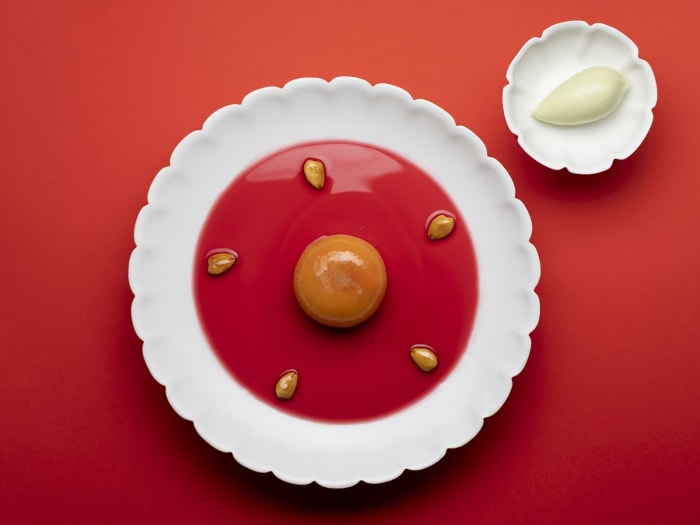
At the Hôtel Troisgros, gastronomy is the heart of the establishment. Everything revolves around this culture of the table that has established the Troisgros name.
For the traveller, this transforms the nature of their stay. One does not merely book a night in the countryside; one arranges an experience where the meal becomes a central moment, sometimes the starting point of the journey.
This hierarchy does not overshadow the rest; it lends coherence to the stay. Accommodation, service, and natural surroundings converge in a shared idea of precision and enjoyment.
The Troisgros house embodies a distinctly French way of thinking about cuisine. Clarity of flavours, respect for ingredients, an understanding of the meal's rhythm, and technical demands without heaviness are all hallmarks.
The most convincing sophistication is often the one that recedes into the background. The diner does not need to know the intricacies of the kitchen; they sense that a dish has been crafted with rigour, sensitivity, and balance.
The convivial atmosphere deserves special mention. This is a key point. Some high-end dining establishments impress more than they welcome.
Here, the notion of sharing seems integral to the experience. This does not imply laxity but rather precision. The service, the dining room, and the meal's tempo create an environment where one feels guided rather than scrutinised.
This quality of hospitality often transforms a grand dinner into a lasting memory. It allows one to experience haute cuisine not as a trial of codes but as a cultivated moment of pleasure.
Booking a table upon arrival highlights a simple reality: demand is high, and the table represents one of the main reasons for the stay. It is wise to consider the experience as a whole.
Dining here, whether for lunch or dinner, is not an ancillary consumption; it is an appointment. The meal becomes a suspended moment, etched in the memory of the journey.
For gourmets, the Hôtel Troisgros embodies this truth. Yet the address also appeals to those seeking a house where gastronomy remains vibrant, embodied, and connected to hospitality.
Its uniqueness lies in making the table not a distant sanctuary but the centre of a complete art of living. Guests come to enjoy exceptional cuisine, but also to experience what fine dining produces in a place, a landscape, and a living family history.
Concierge & Services
In the realm of high-end hospitality, the most valuable services are often those that simplify the stay without burdening the experience. Hôtel Troisgros offers a 24-hour reception, a 24-hour concierge service, daily room service, a turndown service, luggage storage, laundry services, a wake-up call service, and multilingual staff. Together, these services, housed within such a distinguished establishment, ensure a seamless stay focused on comfort, fine dining, and the joy of rediscovery.
The round-the-clock reception and concierge services allow guests to approach their stay without excessive time constraints. A dedicated contact is always available to assist with practical requests. In a hotel with a strong gastronomic identity, this availability takes on particular significance. Stays are often organised around meal times, coordination needs, or last-minute adjustments.
The turndown service and daily housekeeping contribute to a quieter luxury, fostering a sense of continuity and care. Returning to a thoughtfully prepared room after dinner enhances the feeling of being at home. These gestures allow guests to concentrate on what truly matters, without being drawn back to logistical concerns.
Laundry services, luggage storage, and wake-up calls reflect the same practical intelligence. These services are especially valued by discerning travellers. The multilingual staff underscores the hotel's commitment to hospitality, catering to an international clientele as well as French guests. The ability to welcome everyone with clarity and ease is an integral part of the hotel's standing.
Beyond the list of amenities, the essence lies in the spirit in which they are delivered. In a grand establishment, service is not merely about efficiency; it must be appropriate in tone, timing, and presence without being intrusive. Hôtel Troisgros embodies this form of service, rooted in an identity that values both hospitality and gastronomy. Guests do not expect a display of luxury but rather a continuous quality of attention.
The Art of Living in Ouches
Choosing Hôtel Troisgros also means embracing a particular way of experiencing Ouches. Here, the art of living is not merely an accumulation of activities; it reflects a more nuanced relationship with time, the countryside, dining, and conversation. The verdant surroundings open up this possibility: a stay where one accepts doing less in order to feel more. In a world saturated with optimised itineraries, this simplicity becomes a privilege.
The rhythm of a stay in Ouches seems almost to write itself. A calm awakening, soft light over the landscape, a leisurely breakfast, followed by a stroll in the surroundings or on the property. The afternoon may be spent reading, resting, observing the garden, and anticipating dinner. This is not a spectacular itinerary; it is precisely what gives it value. The best country addresses offer that rare sensation: a time that has become livable once more.
For couples, the experience takes on a special dimension. The connection between nature, intimacy, and gastronomy creates an environment conducive to discreet celebrations, anniversaries, weekend getaways, or simply the desire to reconnect away from the noise. Ouches thus becomes less a destination to tick off and more a backdrop for a chosen interlude. The hotel provides a centre of gravity for the stay, while the landscape offers its expansiveness.
Spring and summer are among the most pleasant seasons. These periods bring an increased presence of greenery, outdoor spaces more fully enjoyed, and longer daylight. However, the appeal of such a place extends beyond just the beautiful season. As long as the experience is rooted in the quality of the establishment, the dining, and the relationship with tranquility, each time of year offers its own nuance. What matters is less the climatic performance than the opportunity to slow down.
This local art of living is discovered in small touches: preserved silence, attentive service, a walk after a meal, a sense of space. Hôtel Troisgros is part of a very particular French tradition, that of establishments where excellence does not oppose lived simplicity. Ouches provides the setting; the hotel offers its interpretation. For the traveller, this translates into a memorable experience, as it restores to their rightful place some fundamental pleasures: warm hospitality, nourishing meals, restful repose, and allowing time to work its magic.
Book with MyConciergeHotel
Booking Hôtel Troisgros through MyConciergeHotel means approaching the address in the right way: as a stay considered in its entirety. In a house where the table occupies a central place, booking is not limited to choosing a date and a room category. It involves anticipating the rhythm of the stay, the arrival time, restaurant availability and, for some travellers, the wish to turn a simple overnight stop into a true gastronomic interlude. The value of concierge support lies precisely in that ability to connect the different elements rather than treating them separately.
The advice given in the short description — to reserve a table as soon as one arrives — already points to the importance of the matter. In practice, it is even more useful to address it during the planning stage. An address such as this naturally attracts lovers of fine cuisine, couples on a short escape and travellers who organise their journey around an anticipated meal. Restaurant availability may therefore shape the entire experience. Booking through MyConciergeHotel allows that coordination to be handled with greater clarity, ensuring that the essentials are aligned before arrival.
This approach is especially useful for short stays. When one has only one or two nights, every detail matters more: arrival time, time to rest before dinner, special requests, departure arrangements, and any need for luggage storage or a wake-up call. In a five-star hotel with both a 24-hour concierge and front desk, the house already offers the conditions for considerable flexibility. The role of MyConciergeHotel is then to make preparation easier in advance, so that the stay can be lived as smoothly as possible.
Booking in this way also means choosing an editorial reading of the place. Hôtel Troisgros is not an interchangeable address; it is a destination house, shaped by a strong culinary heritage and a leafy setting that invites guests to slow down. The right stay here is not necessarily the busiest one, but the best composed. It may be a weekend for two centred on dinner, a stop on a longer French itinerary, or an escape designed to step away from daily rhythm. In every case, the point is to respect the spirit of the place: take time, reserve what needs reserving, then let the house do the rest.
For travellers, that advance preparation makes a real difference. It avoids last-minute compromises, secures the most sought-after moments and allows one to arrive with an unburdened mind. That is exactly what an address such as Hôtel Troisgros deserves. Guests come here to experience a house, not to manage logistics. MyConciergeHotel helps preserve that clarity. By organising the booking with care, one gives oneself the best chance of fully enjoying what the property offers in its most valuable form: high-level hospitality, a sought-after table and a setting in which luxury takes the rare form of rightness.