The Hotel
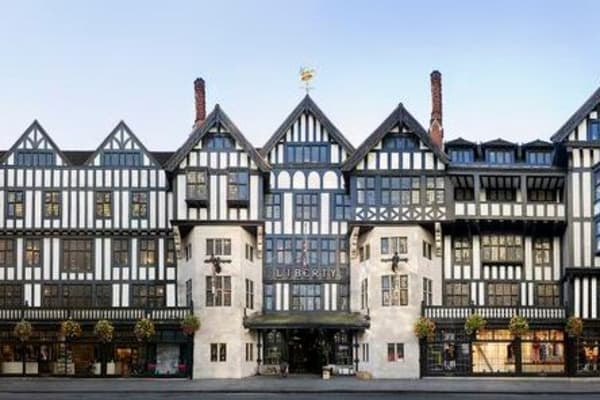
In London, few addresses capture so clearly the balance modern travellers seek: to be in the middle of everything without enduring constant noise. The Resident Soho is built around precisely that promise. Set in the heart of Soho, the hotel stands within one of the capital’s most animated districts, where theatres, restaurants, bookshops, shopping streets, discreet cafés and historic façades all contribute to a distinctly London rhythm. Yet the hotel preserves a sense of retreat, offering a quieter interlude once the door closes behind you.
That duality is one of its clearest strengths. On one hand, a central address that makes short stays and longer city breaks equally practical; on the other, a more contained atmosphere, designed for guests who want to enjoy London without turning every return to the hotel into an extension of the city’s bustle. In a neighbourhood where intensity can quickly become constant, that ability to create breathing space matters more than a simple location claim.
The spirit of the hotel favours restraint over display. Luxury here is expressed less through spectacle than through coherence: attentive hospitality, carefully kept common areas, a sense of discreet efficiency, and an ease that allows guests to settle into their stay almost immediately. It is an approach that suits Soho particularly well, a district whose elegance often feels more natural than ceremonial.
Its membership of Small Luxury Hotels of the World places the property within a certain tradition of hospitality: hotels of character, human in scale, where personality matters as much as comfort. That is reflected in the overall tone, which feels more intimate than theatrical. Guests come here for a refined urban stay, for the convenience of a central base, but also for the quality of a refuge capable of accommodating very different travel rhythms.
Couples on a weekend away, business travellers, theatre-goers and visitors exploring central London’s major cultural institutions will all find in this address a practical and appealing base. The neighbourhood invites walking, which changes one’s experience of the city entirely. Within a few streets, lively avenues give way to quieter corners, historic façades to contemporary addresses, a morning coffee to a late dinner. The Resident Soho benefits fully from this dense urban geography, where every movement becomes part of the experience rather than a mere transfer.
There is, finally, something very London about this way of inhabiting the centre without excess. The hotel does not compete with the city outside; it complements it. It offers a composed setting, an elegance free of stiffness, and that valuable feeling of being exactly where one ought to be to experience London on foot, at one’s own pace. For travellers who value the right address over decorative effect, it is a particularly persuasive proposition.
Soho, More Than a Backdrop
Staying at The Resident Soho also means choosing a neighbourhood whose identity extends far beyond geographical convenience. Soho is one of those parts of London that reads like a palimpsest: a district shaped by entertainment, creativity, sociability and successive reinventions. Today, its name evokes a particular idea of London life—free-spirited, dense, cosmopolitan, at times nocturnal, often inventive—but that reputation has been built over centuries, layer by layer, through the presence of very different communities, trades and ways of living.
The area has long been associated with the performing arts, music venues, clubs, cinemas, late-night restaurants, editorial offices, studios and an entire economy of nightlife and creation. That memory remains visible in the urban fabric, even when the signs above the doors change. It can be felt in the tight weave of the streets, in the proximity between major cultural institutions and confidential addresses, and in the coexistence of busy landmarks and quieter passages. Soho is not simply visited; it is inhabited, often on foot, with a willingness to follow detours and chance discoveries.
This is precisely where an address such as The Resident Soho becomes especially compelling. The hotel allows guests to live within the neighbourhood rather than merely observe it. In the morning, Soho presents a different face than it does at the end of the day; the flow of people shifts, shopfronts come alive in other ways, cafés fill, theatres take over, and later restaurants and bars impose their own tempo. That constant variation gives a stay here a distinctive texture, shaped by contrasts and quick transitions.
Yet the district cannot be reduced to its festive image. It also serves as a remarkably efficient starting point for reaching other facets of central London. Covent Garden, the major shopping streets of the West End, cultural institutions, certain museums, historic squares and several emblematic neighbourhoods are all within walking distance or a short journey away. That is one of the privileges of staying here: the freedom to improvise. A morning of meetings may lead into an exhibition, dinner may be followed by a performance, and an unplanned walk may end at a bookshop, a hidden courtyard or a restaurant discovered by chance.
In that sense, the hotel acts as a point of balance. It does not attempt to recreate Soho’s history artificially within its walls; rather, it offers a contemporary reading of the district through attentive hospitality and a fluid relationship with the city. Luxury here also lies in being well placed to experience one of London’s most expressive neighbourhoods without giving up the comfort of a peaceful setting.
It is this dialogue between the intensity outside and the restraint within that gives the address its meaning. Soho provides the substance of the stay—its energy, contrasts and cultural density. The Resident Soho offers the right distance from it: close enough to absorb it all, protected enough to rest. For travellers who want to understand London not as a postcard but as a city of rhythms, scenes and neighbourhoods, the choice of Soho is already an essential part of the experience.
Rooms and Suites
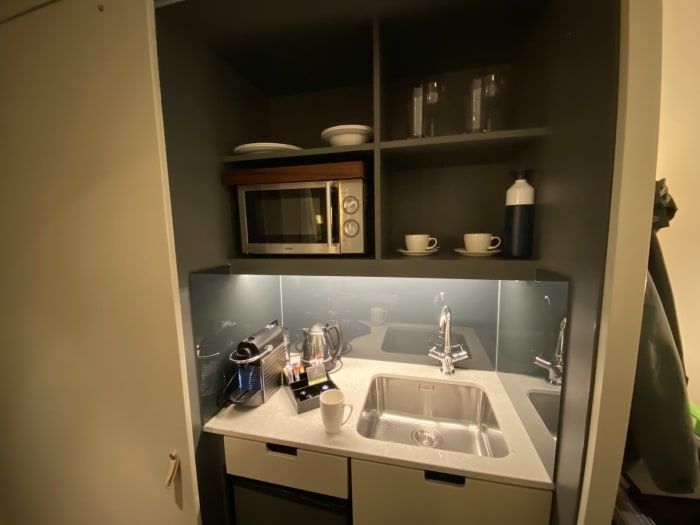
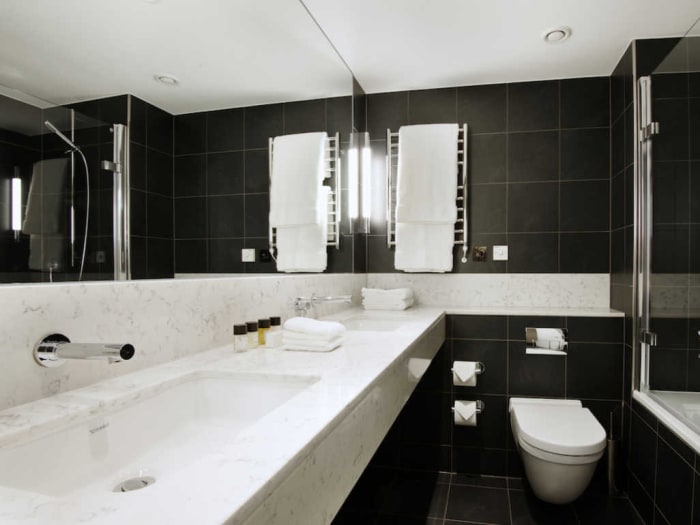
In an urban address such as The Resident Soho, the room is never merely a place to sleep. It must answer a distinctly contemporary expectation: to provide recovery, organisation and privacy in a city where days fill quickly. Whether for a couple’s stay, a business trip or a long weekend, a room in central London is expected to filter out the city, structure the rhythm of a stay and offer comfort that is immediately legible. It is within that logic that the hotel finds its balance.
The overall atmosphere favours understated elegance rather than decorative excess. In the context of Soho, that choice makes particular sense: instead of competing with the district’s intensity, the room acts as a counterpoint. Guests look for calm, a clear composition, and materials and tones capable of soothing after a day spent between meetings, walks, theatres or dinners. Luxury is measured here by the quality of that transition between the city and rest.
For couples, this restraint creates a setting well suited to a more fluid London stay, where outings and moments of pause can alternate without ever feeling staged or impersonal. For business travellers, the clarity of the space matters just as much: the ability to unpack easily, prepare without friction, return to a carefully maintained room after a dense day, and rely on consistent daily housekeeping. These elements, often less visible than architecture or views, are nevertheless decisive in the real experience of a city hotel.
Turndown service also contributes to this sense of continuous care. In a major capital, where schedules easily shift and evenings often run late, such a simple gesture reintroduces a form of classic hotel rhythm, almost reassuring in its familiarity. It suggests that beyond location, the property aims to provide a constant level of attention, even in the most everyday details.
What truly distinguishes the rooms of a strong urban address is their ability to become an intimate observation point within the stay. Guests return to them to catch their breath, prepare the next part of the day, put away purchases, check an itinerary, change before a performance, or simply enjoy an hour of quiet. At The Resident Soho, this refuge function is central. The neighbourhood encourages going out; the room gives one a reason to come back at the right moment.
In a London market where many hotels lean either towards highly theatrical boutique styling or colder standardisation, this measured approach retains real relevance. It speaks to travellers who prefer coherence to display and who understand that a fine room is not only photogenic: it must also be practical, restful and genuinely pleasant to inhabit over time. That is especially true in Soho, where the success of a stay often depends on the ability to preserve, within the centre itself, a calm and well-kept personal space.
The rooms and suites therefore align fully with the hotel’s wider identity: refined urban hospitality designed to accompany the city rather than oppose it. They do not seek spectacle; they privilege use, serenity and that valuable London feeling of having found a place that truly understands the rhythm of its guests.
Concierge and Services
In a city hotel, services are not merely a matter of comfort; they shape the true fluidity of a stay. The Resident Soho understands this well, relying on continuous hospitality built around a round-the-clock front desk, a 24-hour concierge and a set of practical services designed for the realities of urban travel. In London, where late arrivals, early departures, tight schedules and last-minute changes are common, such constant availability is not incidental: it is a very tangible form of luxury.
The 24-hour concierge plays a central role here. In a district such as Soho, where cultural and dining options are dense and days are often assembled at the last minute, the ability to rely on a responsive team changes the experience. This is not simply about providing practical information, but about helping to structure the stay: organising an arrival, suggesting an itinerary, facilitating a booking, directing guests towards a theatre, a restaurant, a neighbouring district or the most suitable transport at a given hour. That ability to simplify the city is one of the most valuable qualities of a good London hotel.
The front desk, open day and night, brings equally essential flexibility. International travellers know well the experience of landing at unusual hours, leaving before dawn or returning late after a West End performance. Finding stable, professional and available hospitality at any time immediately contributes to a sense of reassurance. This matters all the more in an address that appeals both to couples on a break and to business travellers, whose constraints are not always the same.
Daily housekeeping, luggage storage, laundry, wake-up service and turndown service form a foundation of classic amenities that remain decisive when well delivered. Luggage storage allows guests to make full use of the city before check-in or after departure. Laundry becomes especially useful during longer stays or business trips. Wake-up calls and turndown service recall a certain hotel tradition shaped by precision and discreet attention. Nothing ostentatious, but a set of gestures that lightens the logistics of travel.
Multilingual staff also contribute to the quality of the welcome. In an international capital such as London, the ability to establish clear, simple and courteous communication with guests from varied backgrounds matters greatly. It reduces friction, reassures and allows for a more personalised relationship, even in brief exchanges. That ease of interaction is often what distinguishes a genuinely good address from one that is merely well located.
What emerges over the course of a stay is a concept of service based on discretion and efficiency. The hotel does not seek to dramatise assistance; it makes it available, legible and consistent. For many travellers, that is precisely what makes the difference: not having to think about logistics, being free to focus on the city, meetings, walks or evenings out, while knowing that a reliable point of support exists at all times.
Within the context of Soho, this promise takes on particular value. The neighbourhood invites improvisation, but improvisation is only enjoyable when it rests on a solid base. The Resident Soho provides that base: continuous service, organisation without rigidity, and a form of attention that supports the stay without ever weighing it down. It is a particularly accurate vision of contemporary urban hospitality.
London Living, Seen from Soho
There are several ways to approach London. Some travellers move through it by major landmarks, others by museums, shopping, restaurants, neighbourhoods or cultural scenes. The Resident Soho allows for a more organic approach, perhaps one truer to the city itself: a London experienced in sequences, on foot, according to the hours of the day and the mood of the moment. From Soho, London living is not reduced to a list of addresses; it is discovered in the way uses overlap, in the way days change tone, and in the way a central district can feel both intensely public and surprisingly intimate.
In the morning, central London still belongs to those who observe it before the crowds. It is the hour when streets are settling into themselves, cafés are opening, and shopfronts are lit without yet overwhelming the eye. From Soho, one can set out early towards gardens, grand squares, galleries or shopping streets before they reach full animation. This ability to catch the city in transition is part of the privilege of a central address. It gives a stay a quality of rhythm often lost when one depends entirely on transport.
As the day advances, the neighbourhood becomes a crossroads. One encounters hurried Londoners, visitors heading to a performance, professionals between meetings, and regulars who know the shortcuts and the best times to go. That mix is essential to the experience. Soho is not a fixed backdrop for travellers; it is a district that continues to function for those who work, go out, dine and create there. To stay here is therefore to enter an active city, not a version held at a distance.
In the evening, the advantage becomes even clearer. London is a city of performances, late dinners, softly lit bars and conversations that continue after the theatre. Being able to return to one’s hotel on foot, without breaking the thread of the evening, changes the comfort of a stay considerably. One enjoys more, hesitates less about extending dinner or accepting a last-minute invitation, because the return remains simple. That discreet freedom is one of the great luxuries of a good West End address.
For couples, Soho offers an ideal terrain: unplanned walks, culinary pauses, bookshops, theatres and quieter side streets beyond the major nearby avenues. For business travellers, the district makes it possible to insert a little city life into a crowded schedule, slipping between two meetings a walk, a coffee break or a dinner that does not feel obligatory. In both cases, the hotel supports that flexibility by providing a stable, peaceful and central point of return.
London living here is therefore defined less by accumulation than by circulation. Circulation between atmospheres, neighbourhoods and the uses of day and night. The Resident Soho captures that dynamic without caricaturing it. It allows guests to experience London at its most convincing: a city that never reveals itself all at once, but gradually, through fragments, neighbouring streets and emerging habits. After a few days, one no longer feels merely in transit; one begins to adopt a rhythm.
That is perhaps the hotel’s most subtle success. It does not promise a spectacular vision of London, but the right kind of proximity to its most desirable everyday life: that of a capital where one can, in the same day, work, walk, see an exhibition, dine late, and then return to the calm of a well-kept room in the heart of Soho.
Book with MyConciergeHotel
Choosing The Resident Soho through MyConciergeHotel means favouring a more considered way of preparing a stay in London. A central address such as this can be experienced in many ways: a couple’s escape shaped around the West End, a cultural interlude paced by theatres and galleries, a business trip extended into a weekend, or simply the wish to stay close to London’s energy while preserving genuine comfort on one’s return. The value of a well-planned booking lies less in the transaction itself than in the way the experience is structured before arrival.
In a city as dense as London, the quality of a stay often depends on very practical details: arrival time, luggage management, choosing the right neighbourhood, proximity to the places one truly intends to frequent, the possibility of walking rather than multiplying transfers, and the balance between animation and rest. The Resident Soho responds particularly well to these criteria, which is precisely why it stands out as a relevant recommendation for travellers seeking an elegant, central and easy-to-live-with base.
For a couple, booking this address means gaining the freedom of a stay without heavy logistics. One can improvise more, go out more easily, return to change before dinner or a performance, then set off again on foot. For a business traveller, it offers flexible organisation: a continuously staffed reception, concierge availability, useful day-to-day services and an efficient location for optimising journey times. In both cases, the hotel’s value lies in its ability to simplify London without diminishing it.
Booking with dedicated support also makes it easier to calibrate the stay according to one’s own rhythm. Some travellers will want to prioritise early walks, others theatre evenings, and others still an alternation between meetings and neighbourhood discoveries. Soho lends itself remarkably well to these varied scenarios, provided one understands its uses and tempos. Good preparation therefore means thinking of the stay not as a succession of obligations, but as a fluid composition between reserved moments and time left open to chance.
That is where a concierge approach becomes especially meaningful. It is not about overloading the agenda, but about securing the essentials so that there is room for the pleasure of the city. A sought-after table, tickets for a performance, a smoother arrival arrangement, a few carefully chosen bearings in the neighbourhood: often, no more than that is needed to turn a simple city break into a genuinely well-shaped stay. With an address such as The Resident Soho, this works particularly well because the hotel lends itself to a London experience that is mobile, free and yet never disordered.
London rewards travellers who choose well. The right district, the right rhythm, the right base. The Resident Soho belongs to that category of hotels whose relevance becomes clearer as the stay unfolds. It is first appreciated for its location, then for its relative calm, then for the quality of its services, and finally for that rare feeling of having found an address that allows one to experience the centre without suffering all of its constraints.
Booking this property is therefore less about ticking off another hotel on a map than about ensuring a more fluid relationship with the city. For travellers who want to discover London with precision, comfort and freedom, in the heart of Soho yet at the right remove from its agitation, the address makes a compelling case.