History & heritage
In Chicago, certain addresses encapsulate the idea of the great urban hotel: a place to stay, certainly, but also a privileged vantage point over the city, its rhythm, its ambitions and its way of welcoming visitors. The Peninsula Chicago belongs to that international tradition of luxury hospitality, combining exacting service standards, attention to detail and a contemporary reading of refined hospitality. More than a backdrop, the hotel offers a way of inhabiting Chicago with ease, in a register that appeals equally to business travellers and to guests visiting for culture, shopping or a long weekend.
The address is part of a hotel lineage known for its discreet approach to service. Here, that translates into smooth organisation, constant attention to comfort and a kind of architectural courtesy: nothing feels showy, everything is designed to make a stay simpler, more harmonious and more legible. In a city shaped by the history of modern architecture, such restraint is not incidental. It places the hotel in a natural dialogue with Chicago itself, a metropolis of clean lines, powerful urban perspectives and functional elegance.
The prestige of The Peninsula Chicago does not rest on ostentation, but on consistency. An international clientele comes here less for theatrical effect than for a quality of execution felt at every stage of the stay: arrival, settling in, moving through the public spaces, the availability of the teams, the calm regained once the bedroom door is closed. That continuity is one of the hallmarks of great hotels. It gives travellers the sense of being expected, understood and accompanied without ever feeling crowded.
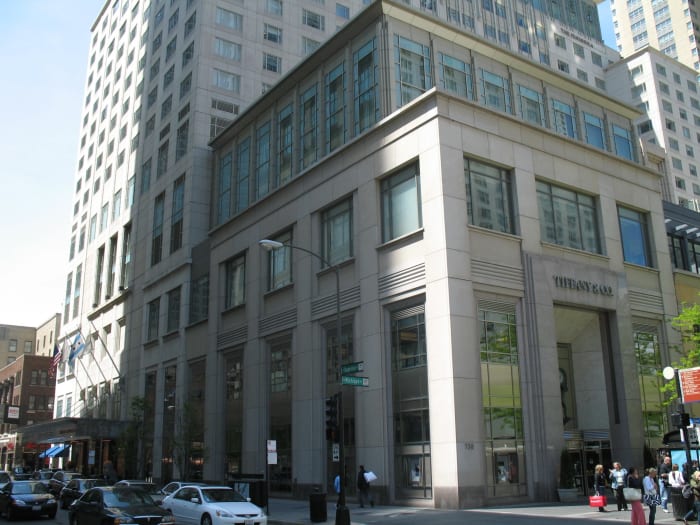
The hotel’s heritage also lies in its place within the imagination of central Chicago. To stay here is to choose a location that allows the city to be experienced in its most immediate form: landmark façades, department stores, restaurants, cultural institutions and urban promenades. The hotel becomes an interface between the intensity outside and the comfort within. One returns after a full day as one returns to a familiar point of reference, with that particular sensation offered by well-run grand hotels: a parallel world, protected from the noise without being cut off from the city’s energy.
Over time, The Peninsula Chicago has built a reputation founded on the elegance of its atmosphere and the precision of its service. These are often the qualities that endure best. They depend neither on fashion nor on marketing language, but on a culture of hospitality. For the discerning traveller, that is perhaps the clearest definition of luxury hospitality: a place where everything feels natural because everything has been carefully considered in advance.
The Establishment
One of the most immediate advantages of The Peninsula Chicago lies in its central location. In Chicago, this position makes for a particularly seamless stay. The major shopping streets, restaurants, several cultural institutions, and numerous iconic sites are easily accessible on foot or within a few minutes. Whether for a first visit or a return trip, this address simplifies the pace of exploration. One can alternate between appointments, urban discoveries, shopping, and returns to the hotel without any distractions.
The establishment cultivates an elegant and refined atmosphere, maintaining a measured tone. The common areas accommodate a variety of uses. An early arrival after a long-haul flight, a break between meetings, afternoon tea or an evening drink, a late departure after a final stroll—luxury here is not limited to materials or staging. It also encompasses the fluidity of movement, the clarity of spaces, and a sense of calm.
The relationship with the city is essential. Chicago is a vertical metropolis, structured by its towers, perspectives, and the proximity of Lake Michigan. From this central address, one quickly perceives its character. The energy of the neighbourhood, the commercial intensity, the architectural density, and then the openness of large spaces and promenades. The hotel serves as a practical anchor point for exploring the city without unnecessary travel. This is a tangible advantage, especially during short stays.
The interior ambiance acts as a counterpoint. After the bustle of the streets, entering the hotel marks a clear transition to a more subdued environment. This ability to create a bubble without disconnecting from the urban context is among the most sought-after qualities. There is a sense of mastery here. The spaces are orderly, the service attentive, and the experience coherent. For travellers accustomed to major capitals, this coherence often matters more than mere surface spectacle.
The Peninsula Chicago thus caters to various travel needs. Couples find an elegant base from which to explore the city at their own pace. Business travellers appreciate the centrality, the availability of services, and the logistical ease. Culture and architecture enthusiasts see it as a natural starting point to experience Chicago in its most emblematic form. During holidays, beautiful days, or long weekends, the address maintains an impression of poise and serenity.
Rooms and Suites
In a grand city hotel, a room is never merely a place to sleep. It must also serve as a refuge, a temporary office, or an intimate lounge. At The Peninsula Chicago, the expected balance lies in immediate comfort, clear and unencumbered. The setting extends the elegance of the common areas and reinforces the sense of retreat. After the hustle and bustle of downtown, the room restores silence, order, and the personal rhythm of the traveller.
The appeal of such a venue lies in its ability to cater to diverse profiles. For a couple, the room becomes a serene base between outings. For a business trip, it should facilitate a quick setup, an effective wake-up, and a genuine moment of relaxation upon return. For a family stay or an extended visit, the suite offers more space and a more residential feel. In all cases, success hinges on seamless usability.
The turndown service and daily maintenance matter more than they may seem. They structure the guest's day without disrupting it. A room meticulously tidied, a bed prepared for the night, details adjusted at the right moment. These gestures of continuity transform simple accommodation into a grand hotel experience. They contribute to a discreet form of care.
In an urban context like Chicago, the quality of insulation, bedding, lighting, and interior organisation plays a crucial role. An establishment of this calibre is expected to provide complete comfort. Bathrooms designed for the morning rush as well as evening relaxation. Sufficient storage for both short and longer stays. Seating suitable for reading or working. An overall atmosphere conducive to rest. It is these elements, even more than the decor alone, that define the success of a room in an urban palace.
Suites cater to a different rhythm. They allow for entertaining, stretching out, and slowing down. In Chicago, amidst architecture, museums, shopping, and dining, having a more generous space enhances the quality of the stay. Breakfast is savoured more slowly. Evenings are prepared with greater comfort. A rare sense of intimacy is found in the city centre. For travellers mindful of their time spent in the hotel, this is often where the difference lies.
The Dining Experience
In a large American metropolis, hotel dining can no longer merely serve as an ancillary service. It plays a vital role in the identity of the establishment. At The Peninsula Chicago, the gastronomic dimension enhances the stay. One can start the day methodically, take a break between meetings, or extend the evening without leaving the hotel.
Booking in advance remains wise during peak times. In this category of hotels, the dining options attract both external clientele and residents. This is particularly true in a central neighbourhood, close to shops and major urban flows. Anticipating one’s dining times preserves the fluidity of the stay, especially on weekends and during holidays.
In Chicago, a good hotel restaurant also acts as a filter. The culinary scene is vast, vibrant, and diverse. This abundance can become overwhelming when time is short. Being able to rely on quality dining on-site provides genuine comfort. In the morning, it avoids starting the day in a rush. At lunchtime, it allows for a measured meal before heading out again. In the evening, it offers a quieter option after the urban intensity.
At The Peninsula Chicago, one expects a cuisine and service that align with the overall experience. Precision, consistency, and a well-maintained setting are as important as the food itself. The success of an urban palace restaurant rests on several factors: quality of welcome, pace of service, flexibility of use, and the ability to cater to both an important meal and a more casual moment. This versatility is essential in a hotel that welcomes an international clientele.
Room service is equally important in this type of establishment. After a late arrival, a time zone shift, or a day full of meetings, dining or having breakfast in the room becomes a true comfort. Here, reliability is paramount. Punctuality, presentation, temperature, and simplicity of execution make all the difference. In a successful stay, gastronomy is not limited to the restaurant. It accompanies the traveller at every useful moment of the day.
Spa & Well-being
In a city like Chicago, where days are filled with long walks, museums, meetings, or shopping, well-being takes on a special significance. It is not merely a luxury; it contributes to the overall balance of one’s stay. Spa services are often fully booked during peak season, so it is advisable to include them at the time of reservation.
The spa of an urban palace serves a specific purpose: to recreate a sense of slow time amidst a busy schedule. Unlike a resort, it acts as a counterpoint here. Guests often visit in the late afternoon to unwind, while in the morning, it helps set a positive tone for the day ahead. Between city excursions, it offers a chance to regain a sense of sensory neutrality. This genuine pause, without leaving the city centre, ranks among the most cherished privileges of luxury urban hospitality.
The expected spirit is clear: precise welcome, tranquil environment, well-established protocols, and a treatment menu designed for an international clientele. The experience extends beyond the treatment itself; it begins the moment one makes an appointment. It continues through the quality of support, punctuality, discretion of the staff, and the feeling that every step has been simplified. Often, it is this orchestration, even more than the treatment menu, that distinguishes the finest establishments.
Well-being at the hotel also encompasses more subtle dimensions. The quality of sleep, the rhythm of services, the opportunity for moments of retreat, and returning to a room that has been thoughtfully prepared all contribute to this experience. Turn-down service, daily maintenance, and the availability of staff enhance this sensation. In a successful stay, the spa does not exist as an isolated island; it is part of a continuous comfort from arrival to departure.
For couples, booking a treatment or a moment of relaxation can structure their stay. For business travellers, it is often the best way to balance an efficient stopover. For regular visitors to Chicago, the spa can sometimes be the deciding factor between two addresses. In such an energetic metropolis, this promise of rejuvenation is an integral part of contemporary luxury.
Concierge & Services
The true luxury of a grand urban hotel is often measured by what is not immediately visible. The ability to resolve, anticipate, and simplify is part of this.
At The Peninsula Chicago, several fundamentals underpin this service promise. 24-hour concierge, 24-hour reception, daily housekeeping, turndown service, luggage storage, laundry, and wake-up calls.
Taken individually, these elements may seem expected in a five-star establishment. However, when combined in a coherent execution, they define the actual quality of the stay.
The concierge plays a central role in a destination like Chicago. A city of this size offers an abundance of opportunities but also a genuine practical complexity. Timings, reservations, traffic, choices of neighbourhoods, and occasional events require precise guidance.
A good concierge does not merely respond to a request. They help prioritise, save time, and avoid missteps. For a first-time visitor, this may mean directing them towards the most relevant sights. For a regular guest, it involves refining the experience and booking at the right place, at the right time.
The continuously open reception provides another form of comfort. It is particularly valuable in a city served by numerous domestic and international flights. Late arrivals, very early departures, and last-minute changes are part of the travel reality.
So-called secondary services are often the most appreciated once on-site. Luggage storage preserves a day of arrival or departure. Laundry becomes essential during an extended stay or a business trip. The wake-up call remains a reliable marker for early morning departures.
Daily maintenance and turndown service keep a room always just right, never left to itself. This is often where the difference lies between a comfortable hotel and an attentive home.
The quality of services is also reflected in the tone of the staff. In the best establishments, efficiency does not equate to rigidity but rather to a calm availability. Everything seems to flow naturally. This is often a sign of perfectly organised hospitality.
The Art of Living in Chicago
Staying at The Peninsula Chicago means choosing a particular interpretation of the city. Chicago unfolds as a metropolis of readable contrasts. Architectural power and the softness of the lake. Commercial energy and cultural depth. The rigour of urban planning and the simple pleasure of strolling.
From a central address, this diversity becomes accessible. One can transition from a morning of shopping to an afternoon at a museum. From a business lunch to a walk along the water. From a lively neighbourhood to the intimate comfort of the hotel. This fluidity ranks among the great luxuries of the stay.
For architecture enthusiasts, Chicago remains a top-tier destination. The city narrates an essential story of American modernity. It is expressed in its façades, towers, perspectives, and its relationship with the river and the lake. From the hotel, it is easy to create walking itineraries that blend major urban landmarks, shopfronts, squares, institutions, and viewpoints.
The art of living in Chicago also embodies a form of elegant efficiency. Dining well is the norm. Navigating the city is logical. Switching between different experiences is effortless. It is a city that suits travellers who enjoy filling their days without feeling overwhelmed. The Peninsula accommodates this rhythm. Depart early, return to relax, head out again, and then conclude the day in a more subdued setting.
The season significantly alters the experience. Summer and the holiday season attract more visitors. The downtown area gains intensity during these times. Beautiful days invite longer strolls, outdoor dining, architectural tours, and extended cultural outings. The festive season gives the city a brighter and more animated face. Booking certain activities, restaurants, or treatments in advance becomes particularly sensible.
Ultimately, the art of living offered by this address is not one of absolute retreat, but rather one of the right distance. Being at the heart of Chicago, close to major attractions, with easy access to shops and restaurants, all while maintaining an elegant and refined atmosphere. The Peninsula Chicago meets this expectation. It provides a setting where one can fully experience Chicago, and then, at the right moment, return to the calm and continuity of a grand hotel.
Booking via MyConciergeHotel
Booking The Peninsula Chicago through MyConciergeHotel is not just about confirming a room in a grand downtown hotel. It is about preparing the stay with discernment, taking into account the true rhythm of the destination and the specific practices of an establishment of this category.
Certain services, particularly restaurants and the spa, may be fully booked, especially in the summer or during the festive season. A well-supported reservation allows for anticipation of these points and avoids limited availability once on-site.
The value of MyConciergeHotel lies in this understanding of travel. It is not merely about comparing rates or validating dates. It is also about understanding whether the address aligns with your way of experiencing Chicago.
A weekend focused on shopping and dining, a business stay, or a romantic getaway: the same address may suit different reasons. The itinerary will not be the same.
Booking in advance also allows for the organisation of key moments during the stay. A spa treatment, a dinner at the hotel, an early arrival based on flight constraints, or managing luggage on departure day. All these details significantly enhance the experience.
In luxury hospitality, comfort does not solely come from the location. It also stems from the alignment between your expectations and what has been prepared before your arrival. The shorter the stay, the more this preparation matters.
For The Peninsula Chicago, the strengths are clear: a central location, proximity to major attractions, easy access to shops and restaurants, and a solid service base.
Finally, booking methodically also allows for a better enjoyment of the city. Chicago rewards well-thought-out stays: a few key reservations, a flexible itinerary, planned breaks, and a hotel capable of absorbing unexpected events with calm. The Peninsula Chicago adheres to this logic of a well-managed journey.