History & Heritage
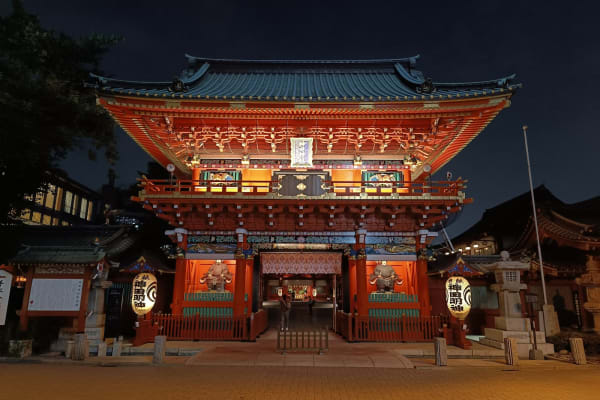
Choosing a ryokan in Tokyo is a deliberate sidestep. In a capital usually described through its rail lines, glass towers and constant momentum, Ryumeikan-Honten offers another reading of the city: slower, more inward-looking, more attentive to gesture than spectacle. The address belongs to the Japanese tradition of hospitality, one that cannot be reduced to tatami rooms or shoji screens, but rests on a way of receiving guests, preparing space and shaping time. Here, the experience lies not only in a traditional setting, but in a certain restraint, in the elegance of service that anticipates without intruding, and in that rare sensation in Tokyo of being gently removed from the pace outside.
The word honten in the property’s name suggests the idea of a main house, a principal address. The nuance suits the spirit of the place. One finds here what travellers seek in a refined urban ryokan: the continuity of an older way of living, adapted to contemporary expectations without losing its centre of gravity. Modern comfort is present, yet it remains discreet, supporting the experience rather than announcing itself. That hierarchy matters. It distinguishes properties that merely borrow Japanese codes from those that understand their deeper logic: the relationship to materials, silence, seasonality and the threshold between interior and exterior.
In a city as dense as Tokyo, a traditional ryokan functions almost as a cultural counterpoint. It reminds guests that urban Japan was not built in complete rupture with older forms, but through layering, adaptation and precision. To stay here is therefore also to approach a certain idea of Japanese continuity: one that allows a place to preserve its identity while answering present-day needs. Guests do not come only to sleep; they come, however briefly, to inhabit another tempo of attention.
This sense of heritage never feels museum-like. Ryumeikan-Honten does not ask visitors to become spectators. It invites them instead into a rhythm: removing one’s shoes, noticing the texture underfoot, recognising the quality of a well-ordered room, appreciating the clarity of a space in which every element appears chosen for its rightness. Luxury here is not demonstrative. It lies in coherence. And that coherence, deeply Japanese in spirit, gives the stay unusual depth. One leaves not so much a hotel as an atmosphere, with the feeling of having touched something distinctly local and yet immediately legible: care for detail as a form of respect.
The Property
Ryumeikan-Honten’s first strength is its ability to hold together two realities that can seem incompatible in Tokyo: the intensity of the city and the possibility of retreat. Set in a lively district, it offers easy access to major transport links, shopping areas and key points of interest, while providing, once across the threshold, a markedly calmer atmosphere. This duality is one of the privileges of the best Tokyo addresses: being in the heart of movement without constantly bearing its pressure. For first-time visitors and returning guests alike, whether travelling for business or for a cultural interlude, such positioning is invaluable.
The property stands out for its traditional Japanese setting, one that does not rely on theatrical effect. Nothing feels overstated. The interior spirit one expects from a ryokan of this calibre favours balance, clean lines and natural materials. Wood, pale surfaces, light partitions and restrained volumes create a soothing environment, especially welcome after a day spent in Tokyo’s urban density. What impresses is not ornament, but the quality of space. In Japanese tradition, emptiness is not absence; it is breathing room. The place seems shaped around that idea.
This sense of calm does not exclude comfort. On the contrary, it redefines it. Modern amenities are integrated into a broader whole designed to encourage rest, discretion and ease of movement throughout the stay. International travellers will find the practical reassurance they expect, but presented with greater restraint, so that technology and service never disturb the overall harmony. This blend of tradition and modern comfort is one of the property’s most persuasive signatures. It allows guests to access a genuinely cultural experience without giving up the ease expected of a five-star hotel.
The lively neighbourhood adds another dimension to the stay. Tokyo is often discovered in fragments: a shopping street, a discreet shrine, a local counter, a department store, a monumental station, then suddenly a quiet lane. Staying here means being able to shape one’s days in that rhythm, between exploration and return. The ryokan becomes an anchor point, almost an antechamber between two intensities. One leaves in the morning for the city, its crowds, lights and appointments; one returns in the evening to a form of ordered simplicity. That alternation gives the trip a particular quality. It avoids the fatigue Tokyo can sometimes induce and allows the city to be approached with greater openness.
For travellers who wish to experience Tokyo without losing touch with its more refined dimension, the property offers a subtle reading of the capital: not an opposition between old and contemporary, but their controlled coexistence. It is precisely in that nuance that the place finds its rightness.
Rooms and the Ryokan Spirit
In a ryokan, a room is never merely a room. It is the heart of the experience, the place where the essential principles of Japanese hospitality are concentrated: clarity, order, flexible use and a sense of calm. At Ryumeikan-Honten, that spirit is expressed through a traditional setting designed to offer genuine immersion without sacrificing contemporary comfort. Guests do not come here for accumulation or decorative display; they find instead a controlled spareness in which every element seems to contribute to an atmosphere of rest.
Japanese aesthetics, at their most persuasive, often rest on the relationship between materials and space. Tatami, woodwork, light partitions, restrained textiles and filtered light create an environment that acts almost physically upon one’s inner rhythm. Serenity is often invoked in relation to ryokans, but here the word takes on a concrete meaning. After hours spent in stations, shopping streets or business districts, returning to a room designed to slow the eye and simplify movement changes the quality of a stay. One sits differently, speaks more quietly and becomes more attentive to one’s surroundings.
This impression of simplicity does not in any way exclude the expectations attached to a five-star property. Modern comfort forms part of the experience, yet within a logic of discretion. Everything is arranged to make the stay fluid: daily housekeeping, turndown service, careful room preparation and the availability of staff at all hours. Services that may be taken for granted in luxury hospitality acquire a particular tone in a ryokan. They extend a broader idea of care, in which the guest’s private space is respected while being continually readied for comfort.
For couples, solo travellers and families alike, this way of inhabiting a room creates an experience distinct from that of a large international hotel. One settles in differently. Time spent in the room is not merely an interval between outings; it becomes an active part of the journey. Reading, resting, observing the changing light, enjoying the relative quiet of a well-kept interior: all of this restores depth to an urban stay. In a city as stimulating as Tokyo, the ability to withdraw without disconnecting from the world is a genuine luxury.
There is also a cultural dimension to the experience. Sleeping in a setting shaped by Japanese tradition is to understand physically what images do not always convey: the value of thresholds, the relationship to the floor, the importance of arrangement, the beauty of a room that does not seek to display everything at once. This is precisely what Ryumeikan-Honten achieves: accommodation that is not only comfortable, but that conveys a Japanese way of imagining domestic space. For many travellers, it will become one of the most lasting memories of a stay in Tokyo.
Concierge and Services
In a property of this kind, services are not merely a list of practical advantages; they contribute directly to the quality of the experience. Ryumeikan-Honten expresses this with a distinctly Japanese sobriety. A 24-hour front desk and round-the-clock concierge service provide, first of all, an essential sense of temporal ease in a city like Tokyo, where late arrivals, early departures and tightly planned days are part of travel itself. Knowing that a team can respond at any hour, guide, reassure or facilitate a request immediately changes one’s relationship to the stay. One feels expected rather than simply checked in.
This constant availability is especially valuable for international travellers, as Tokyo can be daunting in its scale, signage and transport density. Precise advice, help with an itinerary, recommendations suited to the time of day or the traveller’s profile: the concierge function comes fully into its own here. In a ryokan, it is not experienced as a separate desk but as a natural extension of the welcome. Service is there to make things flow, never to occupy the space.
Daily services reinforce that sense of continuity. Housekeeping ensures that private spaces remain impeccably kept, while turndown service accompanies the evening return with the discreet attention that distinguishes well-run houses. In a traditional setting, such gestures carry particular meaning: they preserve the harmony of the room, its visual order and its ability to become a refuge again after hours spent outside. The quality of a stay is often measured in these quiet details, in what has been prepared before it is even requested.
Luggage storage is another concrete advantage, especially useful in a metropolis where one often arrives before check-in or departs late in the day. It allows guests to enjoy the city fully without material constraint, whether spending a few hours in a shopping district, a museum or on a more open-ended walk. Laundry service, wake-up calls and multilingual staff complete a coherent set of amenities suited to both leisure and business stays.
What makes these services especially persuasive is their alignment with the spirit of the place. Nothing feels standardised. Even the most familiar functions of luxury hospitality are absorbed into a finer culture of attention, where efficiency is inseparable from courtesy, and courtesy never becomes overdone. Luxury here lies not in multiplying promises, but in ensuring a constant quality of presence.
For couples, families and solo travellers alike, this approach creates a reassuring sense of confidence. One can live the city intensely, improvise, follow discoveries as they come, while knowing that a stable and well-orchestrated place awaits one’s return. That, in the end, is often what true service means: not abundance, but rightness.
Tokyo Living, Seen from a Ryokan
Staying at Ryumeikan-Honten means discovering Tokyo from a singular vantage point. The city, immense and multiple, can be experienced in countless ways: through fashion districts, discreet dining rooms, department stores, museums, shrines, station cafés, waterfront walks or detours into almost residential streets. Yet the experience changes noticeably depending on where one returns in the evening. From a ryokan, Tokyo is no longer just a succession of visits; it becomes a balance between intensity and retreat, observation and rest, visible modernity and deeper continuities.
The lively district in which the property is set encourages this mobile reading of the capital. One can leave early, reach different parts of the city with ease, improvise a detour, extend a walk, then return without difficulty to a calmer interior. This fluidity is essential in Tokyo, where it is often wise not to overload one’s days. Much of the city’s pleasure lies in its intervals: an impeccably ordered department store hall, a hushed bookshop, an unexpected garden, a counter where one stops without a plan. The ryokan provides an ideal framework for experiencing these fragments without haste.
There is also an almost instructive dimension to this kind of stay. One understands Tokyo better when approaching it not only through its most spectacular signs. Returning each evening to a place that values restraint, measure and the quality of detail sharpens the eye one brings to the city itself. One notices more keenly the contrasts of materials, the transitions between public and private spaces, the quiet discipline of everyday habits, the importance of seasonality in certain settings or customs. The ryokan becomes as much a cultural key as a place to stay.
For couples, the address allows for a stay that is both urban and intimate. For solo travellers, it offers a reassuring anchor point conducive to observation and freedom. For families, it introduces a tangible, sensitive cultural dimension that goes beyond simple sightseeing. Each guest can find a way of inhabiting Tokyo here, provided they accept what the city gives best: not a uniform experience, but a succession of nuances.
Spring and autumn are often the most pleasant seasons in which to explore the capital, both for the mild weather and for the quality of light and pace of walking. Yet whatever the time of year, the principle remains the same: alternating outward movement into the city with a return to a place that recentres. That is perhaps one of Ryumeikan-Honten’s greatest attractions. It does not try to compete with Tokyo; it offers a counterpoint to it. And that counterpoint, far from diminishing the urban experience, gives it greater relief, depth and memorability.
A Contemporary Japanese Experience
What makes Ryumeikan-Honten especially compelling within Tokyo’s hotel landscape is its ability to offer a credible Japanese experience within a contemporary urban setting. Many travellers now seek more than a high level of comfort: they want to understand a place, to feel a culture through concrete habits rather than decorative signs alone. The ryokan answers that expectation precisely. It allows guests to enter a form of stylised yet living Japanese everydayness, where tradition is neither frozen nor folkloric.
That authenticity lies first in a certain discipline of space. In a ryokan, nothing is left to chance, yet nothing is overloaded. Volumes are conceived to encourage movement, rest and the perception of materials. Travellers from Europe and elsewhere often discover here another definition of refinement: one tied less to display than to precision. That precision appears in the way the room is kept, in the relationship between fullness and emptiness, in the discretion of service and in the attention paid to the transition between the lively outside world and the calmer interior.
The experience is also contemporary because it requires no unnecessary sacrifice. Modern comfort accompanies the stay naturally. Essential services are in place, staff remain available, and the whole functions with the quiet efficiency so often associated with Japan. This matters: authenticity here is not built against comfort, but with it. Guests can therefore inhabit a traditional setting without feeling they must choose between cultural immersion and practical ease.
This combination speaks particularly well to first-time visitors to Tokyo. The city can feel vertiginous in its scale and complexity, yet a ryokan like this offers an immediate point of reference. It gives the stay a sensory structure. One understands the capital better when one has a place that reveals, by contrast, some of its underlying values: restraint, order, courtesy, the coexistence of movement and calm. Even for travellers already familiar with Japan, that quality of anchoring remains valuable. It allows Tokyo to be experienced again not merely as a global metropolis, but as a profoundly Japanese city.
In that sense, Ryumeikan-Honten does more than accommodate; it interprets. It offers a way into Tokyo through delicacy rather than shock, through attention rather than accumulation. It is an address suited to those who appreciate coherent places, carefully held atmospheres and experiences that leave a lasting impression without ever chasing effect. In luxury travel, that kind of rightness is often the rarest quality of all.
Book with MyConciergeHotel
Booking Ryumeikan-Honten through MyConciergeHotel means approaching the stay with the same demand for clarity and rightness that one expects from the property itself. An address of this kind is not chosen only for its category or location; it is chosen for its tone, for a particular way of inhabiting Tokyo. The value of dedicated guidance lies precisely in confirming the fit between the place and the travel project, whether that means a first discovery of the capital, a couple’s stay, a more contemplative stop within a wider Japanese itinerary, or a refined pause after several days of movement.
The chief advantage of a well-prepared booking often lies in anticipation. In a city as sought-after as Tokyo, and especially for a property offering an authentic ryokan experience within a five-star setting, booking ahead helps secure availability and shape the stay with greater flexibility. This is particularly relevant in spring and autumn, seasons prized for their mild weather and the quality of urban walking. Yet it remains useful throughout the year whenever one is looking for a hotel with character rather than interchangeable accommodation.
MyConciergeHotel places the reservation within a more editorial than transactional logic. The point is not simply to confirm a room, but to choose the right tempo for the stay. How many nights should be devoted to Tokyo in order to enjoy the ryokan experience fully? How should the days be balanced between city exploration and time spent returning to calm? What kind of traveller will benefit most from this alliance of Japanese tradition and modern comfort? These questions matter, because they determine the final quality of the memory.
For couples, the address can become an urban refuge with a strongly intimate dimension, where each return to the room extends the mood of the journey. For solo travellers, it offers a serene anchor point, particularly suited to a personal discovery of Tokyo. For families, it provides a rare opportunity to experience some of the codes of Japanese hospitality in a setting that remains comfortable and accessible. In every case, the value of the property lies in its balance: it keeps guests connected to the city while preserving a space of retreat.
Booking this ryokan is therefore a stylistic choice as much as an address choice. It means preferring coherence to effect, depth to mere convenience, situated experience to standardisation. For travellers who wish to discover Tokyo through something other than its most familiar images, Ryumeikan-Honten offers a singular and lasting proposition. It is precisely this kind of carefully considered stay that MyConciergeHotel is designed to accompany.