History & heritage
In Tokyo, where the most contemporary urban life coexists with older ways of living, Homeikan belongs to a tradition of hospitality shaped by rhythm, restraint and close attention to detail. More than a place to stay, it evokes the spirit of the urban ryokan, a Japanese inn conceived as a refuge within the city. Here, the experience is not built on display, but on a subtler idea of comfort: the feeling of entering a world where architecture, materials and service form a coherent whole, faithful to a distinctly Japanese culture of welcome.
The heritage felt at Homeikan begins with its aesthetic language. The lines, volumes and decorative choices draw on a recognisably Japanese domestic vocabulary: understated spaces, the presence of wood, a balance between emptiness and ornament, and the pursuit of a soothing atmosphere rather than a theatrical one. This way of inhabiting space says much about Tokyo itself. Behind the density of the metropolis lies another city of thresholds, inner courtyards, quiet streets and houses where discretion is a form of elegance. Homeikan seems to extend that sensibility, offering a stay that does not try to separate the traveller from Japan, but instead places them gently within it.
Its charm also comes from the meeting of Japanese tradition and modern comfort. The phrase is often overused, yet here it has a tangible meaning: preserving a legible cultural atmosphere while meeting the expectations of contemporary travel. The result is neither museum-like nor standardised. There is a sense of continuity, as though older forms of hospitality had been adapted to present-day life without losing their integrity. This kind of address speaks to travellers seeking not a collection of effects, but an experience rooted in a precise setting.
In a capital where hotel offerings can be highly spectacular, Homeikan proposes another reading of luxury: authenticity, calm and human connection. The attentive welcome and personalised service are central to that identity. They recall that in Japan, hospitality is often measured by the quality of anticipation, the courtesy of gestures and the quiet fluency of what is arranged for the guest. This intangible dimension matters as much as the décor.
To stay here is therefore to approach Tokyo through a more intimate doorway. It is an address that does not merely allude to Japanese heritage; it incorporates it into the way it receives, preserves silence and makes the traveller feel expected. In a city that constantly changes its face, Homeikan offers the rare permanence of hospitality grounded in cultural continuity, measured simplicity and respect for each guest’s time.
The property
Homeikan’s first luxury may well be its setting in a quiet area of Tokyo. In a capital so often defined by intensity, this changes the nature of a stay entirely. One does not come here merely to sleep between appointments or visits, but to recover, at the end of the day, a rare sense of release within a megacity. The relative silence, the measured surroundings and the feeling of being slightly set back from the flow give the address an almost residential quality. It allows Tokyo to be experienced differently: not as a succession of sights to tick off, but as a city to be felt through its transitions, neighbourhoods and pauses.
At the same time, Homeikan offers easy access to the city’s attractions. This is one of its most persuasive strengths: calm without sacrificing mobility. In Tokyo, where the geography of a stay has a strong influence on the experience, that balance is invaluable. Being well connected means moving fluidly from one district to another, improvising a museum visit, a garden, a table or a walk, then returning to a more composed environment. Its proximity to public transport reinforces that freedom. For first-time visitors and regular travellers alike, it makes Tokyo more legible, less intimidating, almost domestic.
The property therefore maintains a convincing balance between refuge and point of departure. One enters it as a parenthesis, yet a parenthesis fully connected to the rest of the city. That relationship with the outside matters greatly. The stay is not lived in isolation; it unfolds in constant dialogue with Tokyo. In the morning, the address encourages early departures towards cultural landmarks or livelier districts. In the evening, it offers a softer atmosphere, conducive to rest and reflection. This alternation between urban intensity and a return to calm is central to its appeal.
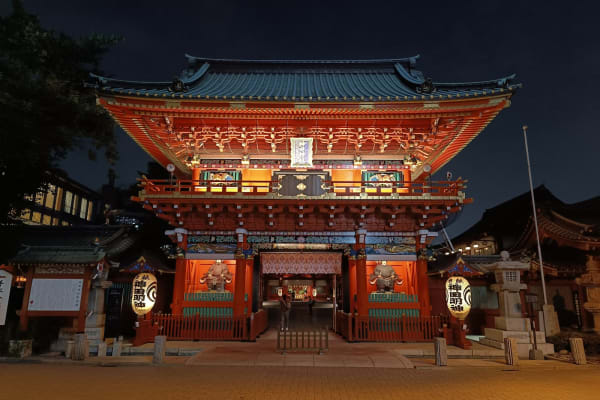
Aesthetically, Homeikan asserts a clear Japanese identity through architecture and décor rooted in heritage. This does not suggest a folkloric reconstruction, but rather an overall coherence. The place seems designed to put the traveller in a particular frame of mind: more attentive to materials, thresholds, light and the relationship between inside and outside. In a city often vertical and saturated with signs, this way of slowing the gaze feels especially valuable.
The property will particularly suit those seeking character rather than interchangeable décor. Couples, solo travellers, admirers of Japanese culture and visitors wanting a peaceful base from which to explore the capital will find a clear proposition here: to inhabit Tokyo with greater nuance. Homeikan does not attempt to compete with the city’s excess; it offers a counterpoint. And it is precisely in that restraint, in its ability to provide a calm anchor without cutting itself off from the wider movement, that its real singularity lies.
Rooms and stay experience
At Homeikan, the promise of the room cannot be reduced to a list of amenities; it lies in an atmosphere. In a property that embraces the meeting of Japanese tradition and modern comfort, the private space becomes the place where that encounter is felt most intimately. What matters here is not spectacle, but presence: a setting that soothes, a legible layout, an impression of order and simplicity that allows one to settle at once. For many travellers, especially after a day in the dense energy of Tokyo, that feeling matters more than any outward sign of luxury.
The aesthetic rooted in Japanese heritage likely gives the rooms a distinctive tone, shaped by restraint, natural materials and an economy of decorative gestures. This reserve is never austere. On the contrary, it allows what belongs to deep Japanese comfort to emerge: clarity of volume, softness of light and the sense of a space designed for rest rather than display. In such an environment, each element appears to have its place, and that legibility creates an immediate form of wellbeing.
The stay gains an almost domestic dimension. It becomes clear why the address appeals equally to couples seeking a romantic interlude and to solo travellers wishing to explore Tokyo without giving up a serene base. A successful room is not merely attractive; it supports the rhythms of use. It allows the day to begin calmly, offers a place to return with purchases or notes from visits, grants a pause before going out again for dinner, and restores in the evening an atmosphere genuinely conducive to rest. Homeikan seems to cultivate precisely that continuity between city and retreat.
Service plays a full part in this quality of stay. Daily housekeeping, turndown service and personalised attention reinforce the impression of care that is discreet yet tangible. Nothing interrupts the flow of the stay; rather, everything seems arranged to lighten it. In an address of this kind, modern comfort is not limited to technology or equipment. It is also measured by the way ordinary needs are anticipated, with the quiet courtesy that characterises the finest Japanese hospitality.
For families, the possibility of staying with children adds welcome flexibility, while the proximity of transport makes it easy to organise each day according to individual rhythms. Yet it is perhaps on a more personal scale that the experience fully reveals itself. A room at Homeikan invites one to slow down, to observe and to recover a form of inward concentration that Tokyo, however fascinating, does not always make easy.
Ultimately, the interest of the rooms lies in their ability to extend the overall identity of the house. They do not seek to impress; they seek to receive. That distinction is essential. In a city where one may be tempted by highly demonstrative addresses, Homeikan proposes another relationship to the stay: calmer, more embodied, more attentive to the quality of time spent between outings. That is where its true refinement resides.
Concierge and services
One of Homeikan’s most decisive qualities lies in the way it supports a stay without overloading it. The property offers essential services which, taken together, create a fluid form of hospitality: a round-the-clock front desk, 24-hour concierge, luggage storage, laundry, wake-up service, daily housekeeping and turndown. Considered separately, these may seem expected; together, they produce what experienced travellers truly seek: the feeling that everything is simple, legible and taken care of at the right moment.
In a city such as Tokyo, this quality of support is especially valuable. Days are often dense, journeys frequent and schedules extended. Knowing that one can rely at any hour on a staffed reception or an available concierge changes the relationship to travel. One leaves more lightly, improvises more easily and manages an early arrival, a late departure, a practical need or a last-minute question without tension. Luxury here lies not in visible abundance, but in continuity of service.
The attentive and personalised welcome, often cited among the house’s defining traits, gives these services a particular tone. It is not simply a matter of performing hotel functions correctly, but of creating trust. In the finest addresses, service never intrudes upon the guest’s space; it secures it. Homeikan appears to belong to that category of properties where one quickly feels recognised, tactfully guided and helped without insistence. For a couple, this can mean a more serene and intimate stay. For a solo traveller, it is often the difference between a functional hotel and a true house of hospitality.
The presence of multilingual staff, when associated with this kind of address, further enhances the comfort of an international stay. In Tokyo, where cultural codes can sometimes unsettle visitors, clarity of exchange matters greatly. It allows guests to organise their days more easily, ask for advice, understand local customs and enjoy the city with greater freedom. A good concierge does not merely book or answer; it helps shape the stay according to each traveller’s rhythm and expectations.
Daily room care and turndown also contribute to this impression of continuous attention. Each evening, they restore a sense of order and calm, almost ceremonial, which suits the spirit of the place. Laundry and luggage storage are more discreet, yet essential for multi-stop journeys, early arrivals or those final hours in the city before a flight.
Ultimately, Homeikan shows that great service need not be spectacular to be memorable. It simply has to be consistent, precise and human. Here, concierge and services seem designed to support the overall experience: making Tokyo more accessible, and the return to the hotel an immediate release. It is a quiet form of luxury, perfectly aligned with the identity of the house.
Tokyo living, from Homeikan
Staying at Homeikan means adopting a particular way of living Tokyo. The city lends itself to countless narratives: capital of contemporary creativity, gastronomic laboratory, mosaic of districts, empire of detail, theatre of contrasts between urban fervour and contemplation. Yet these dimensions are not discovered in the same way from every address. From Homeikan, the experience seems to favour a more nuanced, calmer, almost more everyday reading of the metropolis. The peaceful setting, the property’s Japanese heritage and the ease of access to public transport invite exploration without haste, leaving room for observation.
Tokyo rewards those who know how to alternate scales. One can move from a lively main avenue to a discreet street, from a museum to a garden, from a minimalist café to a shrine, from a monumental station to an almost silent residential pocket. Homeikan suits this geography of contrasts particularly well. Because it offers a serene point of return, it encourages guests to venture further, to cross the city repeatedly, then to come back to a setting that does not prolong the agitation outside. That breathing space is essential if one wishes to appreciate Tokyo over time.
For couples, the address can become the backdrop to an escape shaped by slow walks, cultural discoveries and more intimate evenings. For solo travellers, it provides a reassuring base, conducive to a personal exploration of the city. One can imagine days built around only a few markers: a district to explore on foot, a pause in a garden, an exhibition visit, dinner in a quieter street, then a return to the calm of the hotel. This less frenetic way of travelling often allows a deeper understanding of Tokyo, not as an accumulation of stimuli, but as a city of rhythms and micro-atmospheres.
The value of an address such as Homeikan also lies in its reminder that urban Japan cannot be reduced to spectacular modernity. There is continuity between domestic culture, attention to the seasons, the appreciation of materials, the courtesy of exchanges and the art of receiving. In that sense, the hotel is not merely a logistical base; it becomes a sensitive introduction to certain Japanese values. The traveller no longer looks at the city only from the outside, but begins to feel some of its codes, however modestly, through the quality of silence, the measure of service and the relationship to time.
Its proximity to public transport finally plays a decisive role in this freedom of composition. It allows Tokyo to be approached in sequences, without dependence on a single district or the fatigue of complicated journeys. One may leave early, return mid-afternoon, go out again in the evening, or devote an entire day to one particular area. This flexibility is a discreet but very real luxury.
From Homeikan, Tokyo is therefore discovered less as a backdrop than as a practice. One learns to move through it, to pause, to notice the elegance of a detail, the quality of a threshold, the unexpected quiet of a street. It is a more intimate approach to the capital, and perhaps one of the truest.
Book with MyConciergeHotel
Choosing Homeikan through MyConciergeHotel means favouring an address whose value lies in the coherence of the experience rather than in an accumulation of effects. This kind of property often requires an attentive editorial eye: one must recognise what makes a discreet house singular, understand what a stay in an urban ryokan in Tokyo truly means, and guide the traveller towards a proposition that suits them. Homeikan appeals to those seeking hospitality with character, rooted in a clearly legible Japanese aesthetic, with the comfort and services needed to experience the capital with ease.
Booking takes on its full meaning here when considered in relation to the travel project itself. A couple will not expect the same thing as a solo traveller, just as a first discovery of Tokyo differs from a return visit. Some will seek above all the calm of a preserved neighbourhood, others the proximity of transport, and others still a more sensitive immersion in a setting inspired by Japanese heritage. Homeikan responds precisely to this convergence of criteria: a peaceful place, well positioned for exploring the city, and shaped by attentive hospitality that makes the stay feel more personal.
Booking well in advance is particularly wise for this kind of address, especially during periods of high visitor demand or at the major moments of Tokyo’s annual rhythm. Properties that combine authentic atmosphere, human scale and good accessibility are often sought after by travellers wishing to avoid more impersonal hotels. Planning ahead not only secures the stay, but also helps shape the itinerary, arrival and departure times, and the overall rhythm of the journey.
The value of booking with MyConciergeHotel also lies in the ability to think of the hotel as a base, not merely as a room. In Tokyo, that choice is decisive. An address that is too central can expose guests to constant agitation; one that is too remote complicates movement. Homeikan offers a rare balance between retreat and connection. It is exactly the kind of house that should be selected with discernment, taking into account how one wishes to inhabit the city: intensely, but without saturation; freely, but with an anchor; close to local culture, yet without giving up comfort.
For travellers sensitive to architecture, atmosphere and quality of service, Homeikan represents a particularly relevant option. Its identity does not rely on artifice, but on a fulfilled promise: that of a Tokyo stay that is calmer, more embodied and more attentive to nuance. To book this address is to choose a luxury of rightness.
In a city as vast and multifaceted as Tokyo, the best travel decisions are often the simplest ones: a place where one feels well, from which one can set out easily, and to which one is pleased to return. Homeikan answers that definition with quiet obviousness. It is an address worth considering for those who want to discover the Japanese capital without losing touch with its intimacy.