History & sense of place
Four Seasons Resort Chiang Mai belongs to that rare category of hotels that do not seek to overpower their surroundings, but to settle into them with restraint. The experience here is shaped less by spectacle than by an attentive reading of northern Thailand: its agricultural landscapes, its vernacular architecture and its unhurried rhythm. The resort has long stood as a contemporary interpretation of Thai hospitality in which nature, daily tempo and the quality of service matter as much as physical comfort.
In Chiang Mai, the former capital of the Lanna kingdom, a sense of place is essential. The region has a distinct identity, visible in its temples, craft traditions, markets, wooden houses and a gentler pace of life than elsewhere in the country. The resort draws on this local language without slipping into pastiche. Rooflines, timber details, open-sided volumes and the constant presence of greenery create an atmosphere closer to a refined country residence than to a standardised luxury complex.
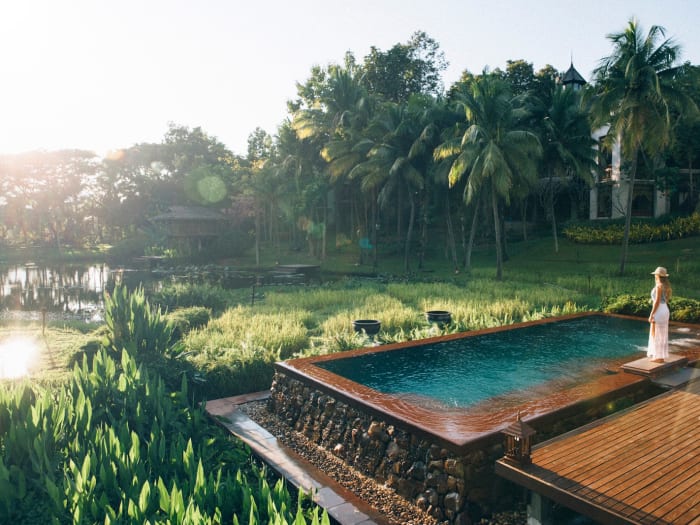
Its relationship with the rice paddies is central. This agricultural setting is not merely decorative; it shapes the way the estate is experienced. Views shift with the seasons and with the light, from early morning clarity to the warmer tones of late afternoon, reminding guests that they are staying in a region where the landscape remains cultivated, inhabited and alive. That connection to a living environment gives the resort unusual depth.
The Four Seasons signature appears in the precision of service and in the ability to make every part of the stay feel seamless without becoming showy. Luxury here is measured rather than theatrical. It is found in discreet staff, daily care and the coherence between architecture, hospitality and setting. This understated elegance suits Chiang Mai particularly well, a destination appreciated as much for its cultural life as for its restorative atmosphere.
For travellers, this is best understood as a true destination resort: a place designed for slowing down. One comes to explore Chiang Mai and its surroundings, certainly, but also to inhabit a landscape. That is what gives the property its lasting appeal: not an accumulation of effects, but a sense of balance between international refinement and the spirit of northern Thailand.
The setting, between rice paddies and mountains
One of the defining strengths of Four Seasons Resort Chiang Mai is its setting. The estate unfolds in a natural environment where rice paddies shape the immediate horizon while the mountains of Chiang Mai rise in the distance. This dual scale — the intimacy of cultivated land and the breadth of the hills beyond — gives the stay an unusual sense of space. Even when the resort is lively, the eye always finds an opening towards greenery, water and the soft lines of the surrounding landscape.
The property has been designed to make the most of this topography. Pathways, terraces and openings reveal a sequence of views rather than a single fixed panorama. Guests move from gardens to reflective water, from tree-lined paths to paddy-field outlooks, then to pavilions set at a respectful distance from the scenery. This gradual composition contributes greatly to the feeling of calm.
Traditional Thai architecture is central here. It is not simply decorative; it shapes the relationship between indoors and outdoors. Distinctive rooflines, locally inspired structures, natural materials and shaded spaces allow guests to experience the climate rather than be entirely insulated from it. Modern comfort is present throughout, yet it never erases the sense of being in northern Thailand.
The resort particularly suits travellers seeking an alternative to a purely urban stay. Chiang Mai remains within reach, with its temples, markets, workshops and food culture, but the hotel provides welcome distance. Days can be arranged in many ways: an early start in the city, a relaxed lunch back at the resort, an afternoon at the spa or in an on-site activity, and an evening settling into a quieter mood.
It works equally well for couples and families because it combines beauty of setting with clarity of space. Adults find the serenity they often seek in Chiang Mai; younger guests respond instinctively to the gardens, pathways, water features and the feeling of being in a large open estate. The resort does not impose a single style of stay. Instead, it allows each guest to shape a personal rhythm — often the mark of a well-conceived property.
Rooms, Pavilions and Villas
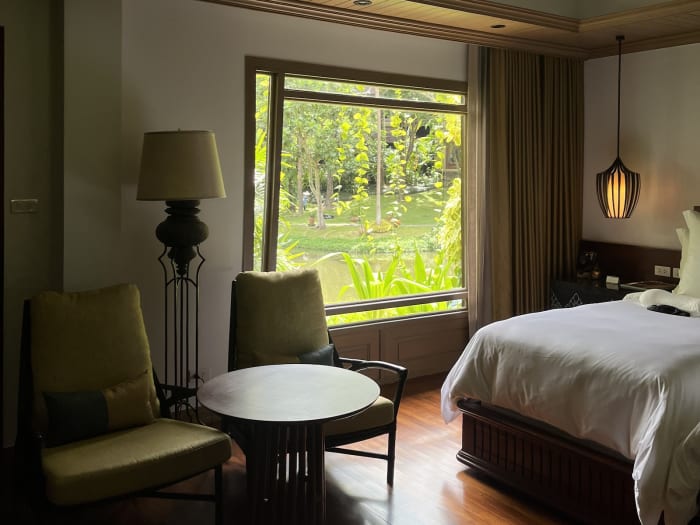
At the Four Seasons Resort Chiang Mai, accommodation is an integral part of the landscape experience. Villas and pavilions are nestled amidst the rice paddies, defining the sensation of your stay.
This is not merely a room with a view; the spaces extend the relationship with the outdoors. Depending on the chosen category, the traveller finds a similar concept of private retreat. The architecture shelters without disconnecting from the natural surroundings.
The pavilions charm with their balance. They offer an intimate atmosphere, a clear traditional Thai aesthetic, and discreet contemporary comfort. The materials, tones, and volumes encourage relaxation. Here, luxury lies in the light, the space around the bed, the bathroom, and the terrace that opens onto greenery.
The villas add a more pronounced residential dimension. They are ideal for extended stays, couples seeking intimacy, and families. The connection to the landscape becomes more personal; one inhabits the estate as much as one observes it.
In this type of resort, the quality of the stay is also determined by the rhythm permitted by the accommodation. Reading, enjoying an early morning coffee, returning from an excursion to find tranquillity—everything is designed with this in mind.
The decorative style remains true to the spirit of the place. Traditional Thai architecture is refined in the accommodations, maintaining a genuine coherence between the estate and the private spaces.
The service complements this promise of comfort. Daily housekeeping, turn-down service, and 24-hour concierge and reception ensure a seamless experience. These attentions allow guests to enjoy their day without worrying about logistics.
The choice between a pavilion and a villa largely depends on the style of stay desired. The pavilion suits those who favour elegant simplicity, while the villa caters to a desire for private space and autonomy. In both cases, the essence remains: sleeping amidst a landscape designed to soothe.
Dining and the Art of Taste
At the Four Seasons Resort Chiang Mai, gastronomy naturally extends the stay. It is deeply connected to the local territory, the slow pace of life, and the attention given to every gesture.
The dining experience takes on a unique dimension thanks to the setting, the quality of service expected from a Four Seasons establishment, and the cooking classes offered on-site.
Set amidst rice paddies, each meal benefits from a context that alters one's perception of dining. Breakfast becomes a moment to observe the landscape. Lunch is envisioned as a pause between an excursion in Chiang Mai and a more contemplative afternoon. Dinner here adopts a calmer tone, sought after by travellers who prefer to end their day in a serene environment.
The cuisine meets a dual expectation. It provides the comfort of a prestigious international hotel while also reflecting the local context through Thai flavours, the freshness of ingredients, and certain iconic dishes. In Chiang Mai, this aspect is particularly intriguing as the northern region of the country boasts a distinct culinary identity that is more herbaceous, sometimes milder, and often expressive.
The cooking classes offer a particularly relevant experience. They allow guests to go beyond mere dining to delve into the logic of ingredients, balances, and techniques. Participants leave with a tangible memory of their stay and a more intimate understanding of Thai cuisine, its herbs, pastes, cooking methods, and its emphasis on sharing. In a resort where guests come to take their time, this activity finds its natural place.
Finally, service plays a decisive role. The dining experience is not limited to what is served on the plate. It encompasses the rhythm of the meal, attention to preferences, the ability to recommend, adapt, and ensure a seamless experience.
If you are interested in the cooking classes, it is advisable to book in advance. In destination hotels, these are often the most sought-after experiences.
Spa & Well-being in a Serene Landscape
Well-being at the Four Seasons Resort Chiang Mai extends beyond a menu of treatments; it begins with the landscape itself. Here, relaxation arises from a harmony between the natural environment, open architecture, the pace of the stay, and the quality of care. The spa is part of a broader experience, one of genuine slowing down.
In a destination like Chiang Mai, this dimension is particularly meaningful. Many travellers come to northern Thailand to rediscover a sense of balance, away from overly dense or urban stays. The resort meets this expectation. After a morning of sightseeing, a transfer, a time zone adjustment, or several weeks of a hectic pace, the body appreciates the benefits of a place where one can let go of tension. The spa then becomes a tool for recalibration.
At the Four Seasons Resort Chiang Mai, the experience extends the identity of the place. The atmosphere remains calm, and the spaces facilitate the transition between the outside and the inside. The approach to treatments prioritises the quality of presence as much as technique. Guests seek not just a massage or a one-off ritual, but a sense of rebalancing.
The natural setting plays a significant role. Seeing the rice paddies, feeling the gentler air at the beginning or end of the day, moving through a lush estate—all of this prepares one for the treatment. Well-being begins even before entering the spa. Here, it adds to a serenity already palpable throughout the resort.
To structure the stay around this quest for tranquillity, it is wise to alternate activities with recovery time. A cooking class, an outing to Chiang Mai, or a stroll in the surroundings can be followed by a treatment, a moment of rest in the room, or quiet time on the terrace. This alternation adds depth to the stay.
It is advisable to book spa treatments in advance, especially from November to February. In a destination resort, the best slots fill up quickly. Planning ahead allows for a more harmonious stay.
Concierge & Daily Services
In luxury hospitality, the quality of a stay is often measured by consistency. The Four Seasons Resort Chiang Mai exemplifies this well. Beyond the setting, it is the daily services that make the experience comfortable, allowing guests to focus on relaxation, exploration, or moments of retreat.
The establishment offers 24-hour concierge service, 24-hour reception, daily housekeeping, turn-down service, luggage storage, laundry, and wake-up calls. Taken individually, these details may seem expected. Together, they create a genuine quality of use.
The concierge plays a central role in a destination resort. In Chiang Mai, expectations vary from one traveller to another. Organising a cultural outing, optimising a day of visits, booking an on-site activity, anticipating the timing of a treatment, or planning for an early departure—a good concierge helps prioritise, streamline, and simplify.
The 24-hour reception provides essential peace of mind. Late arrivals, early departures, last-minute adjustments, and unexpected needs are part of the journey. Knowing that the hotel operates at all hours transforms the stay.
Daily housekeeping and turn-down service reinforce this continuity. In a resort where guests often spend time in their accommodation, maintenance directly influences comfort. Returning to a space tidied after an excursion or prepared for the night supports the idea of a frictionless stay.
Laundry and luggage storage cater to very practical needs. For an itinerant journey in Thailand, an early arrival, or a late departure, these services preserve flexibility. They are useful for travellers combining Chiang Mai with other destinations.
The true hallmark of a great establishment lies in how these services are coordinated. Luxury also resides in their orchestration. When information flows smoothly, when requests are understood without repetition, and when staff are present without being intrusive, the stay gains in fluidity. This is often what distinguishes establishments where one feels well cared for.
The Chiang Mai way of life
Staying at Four Seasons Resort Chiang Mai also means choosing a particular way of approaching Chiang Mai itself. The city does not reveal itself as a place of speed or instant consumption. Its appeal lies in genuine cultural density, but also in a gentler rhythm that invites a different way of looking. As the former capital of the Lanna kingdom, Chiang Mai retains a strong identity, visible in its temples, markets, craft traditions, food culture and more relaxed relationship with time. The resort, through its setting and atmosphere, prepares guests especially well for that reading of the destination.
For travellers, the advantage lies in alternating immersion and retreat. A morning in town may be devoted to temple visits, wandering through the old quarters or exploring markets. One observes an urban fabric in which spirituality, daily commerce and tourism coexist without entirely merging. Returning to the resort, the contrast is immediate: noise recedes, views open up and the body slows down. That alternation gives Chiang Mai a depth less easily felt when staying only in the city centre.
Local lifestyle is also expressed through craftsmanship. Chiang Mai has long been associated with artisanal skill, patient making and the shaping of materials. Even without listing specific workshops, it is worth keeping this culture of gesture in mind. It resonates with the spirit of the resort, where traditional architecture, cooking classes and attention to detail suggest that refinement is not merely visual, but rooted in mastery and transmission.
Cuisine offers another direct route into the city. In northern Thailand, eating is one of the clearest ways to understand the territory. Flavours, herbs, textures and balances all speak of geography, climate and habits of sharing. The on-site cooking classes make particular sense in this context, linking the comfort of the resort to a wider cultural world.
To enjoy this way of life fully, the best advice is not to overfill the itinerary. Chiang Mai rewards travellers who leave room for the unplanned: a longer coffee, an unscheduled visit, an early return to the resort simply to watch the light change over the rice paddies. In an era when travel is often reduced to a checklist, this destination reminds us of the value of a more attentive and inhabited stay.
Book via MyConciergeHotel
Booking the Four Seasons Resort Chiang Mai through MyConciergeHotel is about curating an experience. In a destination resort, this distinction matters.
Choosing between a pavilion or a villa, expressing interest in cooking classes, prioritising the spa, or balancing time between the estate and Chiang Mai all influence the experience. A well-supported reservation helps align the hotel, expectations, and the season of travel.
The first question revolves around the style of stay desired. Some travellers come to Chiang Mai for a peaceful retreat, with minimal movement and a strong focus on the resort. Others use the hotel as a base to explore the city and its surroundings, returning each day to a more serene environment. Still, others travel with family and seek a balance between space, comfort, activities, and logistical simplicity.
The period from November to February, with its cooler climate, attracts more visitors. It is advisable to plan ahead, both for accommodation availability and for on-site experiences. Cooking classes and spa treatments benefit from advance booking. This often makes the difference between a smooth itinerary and a constrained schedule.
Contemporary luxury is no longer just about accessing a beautiful hotel, but about utilising it well. Knowing which category of accommodation suits your journey, understanding whether you prioritise intimacy, views, space, or proximity to facilities, and considering the balance between relaxation and activities: these choices determine the lasting memory.
The Four Seasons Resort Chiang Mai is not merely defined by its five-star status or its name. Its appeal lies in its location amidst rice paddies, its views of the mountains, its traditional Thai architecture, and its ability to provide a tranquil stay without disconnecting from the world.
In practice, it is wise to book early for the cool season, to communicate desired experiences in advance, and to think of the stay as a cohesive whole. In Chiang Mai, the true privilege often lies in finding the right tempo.