Thailand occupies a unique position in the landscape of luxury hospitality in Asia. Few countries manage to combine, within such a comprehensible territory, a global capital, established beach resorts, more secluded islands, and a culturally rich North. For the discerning traveller, the challenge is not merely to find a great hotel, but to select an authentic interpretation of the country. Bangkok does not tell the same story of Thailand as Phuket, Chiang Mai, Chiang Rai, or Koh Samui. Between high-end urban addresses, seaside retreats, and more experiential resorts, expectations can shift rapidly. This is precisely what makes this ranking useful. It does not seek to standardise the offerings; rather, it helps to decipher the signatures, locations, and purposes of the stay.
At MyConciergeHotel, we rank not only hotels but also travel contexts. Our assessment considers various concrete criteria. Location matters, as it determines the actual experience, whether it be along the banks of the Chao Phraya or in a bay in Phuket. The brand's reputation is also significant. Aman, Capella, and Anantara may not occupy the same tier, but each carries identifiable codes. We also examine the coherence between promise and execution. An island resort must provide a genuine sense of disconnection. A grand city hotel must master access, service, and pace. Finally, we take into account a property's ability to remain relevant over time. It is important to remember that a great hotel is not only appealing upon arrival; it must continue to impress on the third day.
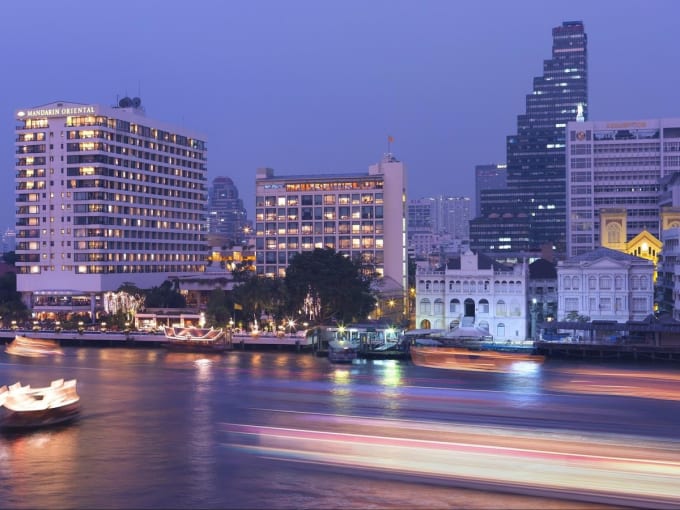
The Thai panorama presented here is particularly broad. Bangkok boasts hotels that can appeal to very different profiles. Capella Bangkok favours an intimate relationship with the river. Aman Nai Lert offers a more discreet interpretation of the capital. Anantara Siam Bangkok Hotel remains a structured option for a very central stay. Further north, Anantara Chiang Mai Resort attracts those seeking a gentler city, with a more contemplative relationship to travel. Anantara Golden Triangle Elephant Camp & Resort opens up to another imagination, more territorial in nature. On the coast, Phuket concentrates several expressions of luxury, from Amanpuri to Anantara Layan Phuket Resort, including Anantara Mai Khao Phuket Villas. Koh Samui, Koh Phangan, Hua Hin, and Trang complete this picture. Thus, this ranking reflects a geography, not merely a hierarchy.
For 2025 and 2026, several trends are confirming themselves in Thailand. The first is the return of long stays, especially in beach resorts and hotels with villas. Travellers are less inclined to focus solely on prestige. They seek more space, tranquillity, and flexibility. The second trend concerns Bangkok. The capital attracts a clientele that wishes to combine top-tier addresses with a denser cultural programme. The grand hotel becomes a base, not a closed bubble. We also observe a clear preference for establishments that manage to provide intimacy without falling into logistical isolation. Finally, the concept of well-being is evolving. The spa remains important, but it is no longer sufficient. The quality of sleep, the management of movement, light, views, and silence weigh more heavily in the final satisfaction.
What Thailand excels at is a form of fluid hospitality, devoid of demonstrative rigidity. For a French or European clientele, this quality often makes a significant difference. Luxury is not solely defined by monumentalism; it is also expressed through the precision of service, the politeness of interactions, and a certain gentleness in transitions. This is felt in a well-managed arrival, in the rhythm of breakfast, or in the way a resort organises the space between private life and communal areas. My advice in Thailand is never to reduce the choice to just the room. One must consider the ambience of the place. A hotel can be aesthetically successful but less convincing in its daily use. The best addresses know how to reconcile image, comfort, and simplicity of experience.
This ranking should also be read methodically. A number one is not a universal verdict; it is an editorial position based on the overall coherence of a property on a national scale. Some travellers will seek a highly developed urban immersion, while others will prioritise the beach, seclusion, or a family stay. A hotel may therefore rank lower while being the best choice for a specific project. This is often the case in Thailand, where the final destination profoundly alters the nature of the journey. What our advisors often observe is that an excellent stay depends less on an abstract ranking than on a good match. The right hotel, at the right time, in the right region, is always preferable to a prestigious address chosen for the wrong reasons.
Here is our interpretation of the best hotels in Thailand. It highlights the strongest addresses today while respecting the true diversity of the country.