History & sense of place
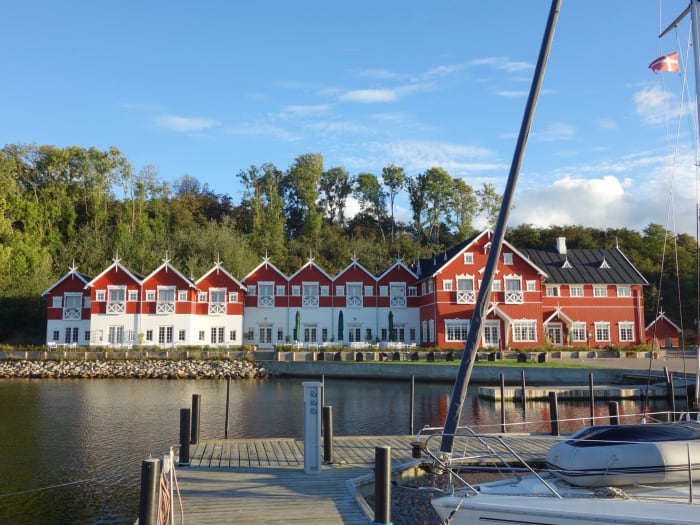
At Dyvig Badehotel, the appeal lies not in display but in a distinct idea of the Nordic coastal retreat: a waterside address shaped by calm, light and the slower rhythm of life by the sea. In Nordborg, on the island of Als, the hotel belongs to a recognisable Scandinavian tradition of holiday houses where guests come for salt air, clear skies, silence and the ever-changing shoreline. The very notion of a badehotel is rooted in Danish seaside culture, where the experience matters as much as the room itself: the table, the landscape, the quality of welcome and the feeling of being gently removed from everyday noise.
Its Relais & Châteaux affiliation helps define that philosophy without needing to overstate it. What matters here is character, hospitality, a strong sense of place and a form of luxury based on accuracy rather than excess. Refinement is expressed through coherence: a seafront house that embraces its setting, an authentic atmosphere, attentive service and a natural continuity between interiors and landscape. Guests do not simply come to sleep here; they come to inhabit a setting for a few days.
Nordborg itself plays a central role in that identity. Far from the pressure of major cities and crowded routes, the destination invites a different relationship with time. One comes to walk, to look, to breathe, to read, to linger over dinner, to watch the light shift across the water. Dyvig Badehotel answers that expectation with a discreet, soothing presence that allows nature to take the lead. Its charm lies in this balance between a characterful house and a base from which to discover the Danish coastline at its most peaceful.
Rather than a dramatic historical narrative, what emerges here is an inheritance of use and sensibility: the tradition of a resort hotel where sincere hospitality, well-judged comfort and the rare feeling of truly arriving matter most. For travellers used to grand capitals as much as for those seeking a more intimate pause, the hotel offers a measured luxury deeply connected to its maritime surroundings. That relationship to place, above all, is what defines it.
The hotel: sea, light and seclusion
The first luxury at Dyvig Badehotel is its setting. Positioned on the seafront in Nordborg, the hotel speaks to travellers who seek not a stage but a horizon. Here, the landscape is not a secondary backdrop: it shapes the stay, influences the mood of each day and sets the pace of the experience. The relationship with the water is immediate, almost organic. Depending on the hour, the light turns pearly, bright or softly diffused; the shoreline changes expression; even the air reminds guests that they are staying in a region where nature remains very present.
Its location away from major urban flows is one of the property’s most valuable qualities. Calm is not a marketing promise here but something tangible. It is felt on arrival, in the way sound recedes, in the space given to the eye and in the sense of release that preserved coastal destinations can still provide. For travellers used to the tempo of large cities, that distance from bustle becomes a genuine change of state. The stay takes on a restorative dimension: one slows down, observes more closely and rediscovers the value of simple moments.
The hotel cultivates a warm, authentic atmosphere, which in the five-star segment is often harder to achieve than decorative sophistication. The aim is not to multiply effects but to create a welcoming setting in keeping with its surroundings. The seaside calls for a certain clarity of line, an elegance that leaves room for the view and a way of inhabiting spaces that favours real comfort. Dyvig Badehotel follows that logic by offering a place where guests feel expected without feeling constrained, supported without feeling watched and settled without excessive ceremony.
This quality makes it particularly well suited to couples, short restorative breaks and journeys centred on balancing indoor comfort with outdoor life. One imagines slow mornings by the sea, returns from walks as the air cools, late afternoons given over to reading or simply looking out, followed by evenings that unfold naturally. The charm of the place lies in this continuity between hotel and landscape: it is not somewhere one hides from the outside world, but somewhere one uses as an anchor.
Nordborg and its surroundings deepen that impression. The coast, the paths, the maritime views and the nearby outdoor pursuits give the stay a quiet richness. Even without a packed programme, there is always something to do: walk, cycle, follow the shoreline, pause to watch the water, then return to the comfort of a well-run house. It is precisely this alternation between gentle movement and chosen rest that best defines the spirit of Dyvig Badehotel.
Rooms and suites: comfort as an extension of the landscape
At a property such as Dyvig Badehotel, rooms and suites are expected to do more than meet five-star standards; they should extend the experience of the place itself. By the water, guests look for accommodation that supports rest, filters out the world without severing all connection to it and provides the conditions for the deeper kind of relaxation sought by those who come here to slow down. The room becomes more than somewhere to sleep: it is an intimate vantage point, a private refuge organised around light, quiet and comfort.
The spirit of the house, as suggested by the property’s character, points towards interiors conceived with restraint: warm elegance, in keeping with the hotel’s authentic atmosphere, and attention to materials, proportions and a general sense of ease. In this kind of seaside hotel, success often lies in balancing decorative presence with discretion. Too many effects would disturb the serenity; too much austerity would diminish the feeling of hospitality. The right approach is to create spaces in which guests immediately feel at ease, without slipping into banality.
Couples will naturally find a setting well suited to time together. The pace of the hotel calls for rooms one is happy to remain in: to extend the morning, read by a window, pause after a coastal walk or simply listen to the quiet. Families and business travellers, as noted in the existing description, may also find an effective base here, provided they are looking first and foremost for tranquillity and quality of service rather than constant activity. That is one of the hotel’s strengths: it offers a restful experience without limiting it to a single type of guest.
Daily service plays a full part in this sense of controlled comfort. Housekeeping, turndown and attention to practical details help make the room feel consistently ready to receive guests on their return. In luxury hospitality, it is often these regular, almost invisible gestures that create lasting ease. Guests leave in the morning to explore the coast or enjoy the destination, then return to a room restored to order and calm.
At Dyvig Badehotel, rooms and suites may therefore be understood as spaces for breathing rather than display. They support a way of inhabiting a stay based on chosen slowness, comfort without emphasis and a sensitive closeness to the maritime environment. That is what makes them particularly well suited to a seaside escape: they do not compete with the landscape, but welcome it, frame it and, in a sense, continue it indoors.
Dining: A Seaside Hospitality
In a Relais & Châteaux establishment, the dining experience often takes centre stage. It embodies a certain vision of hospitality rather than merely serving food.
At Dyvig Badehotel, the culinary experience is deeply rooted in the spirit of the location. This tranquil seaside address invites guests to rejuvenate. Dining punctuates the day, extending the landscape and adding a sensory dimension to the stay.
In the morning, breakfast holds a special significance. It marks the beginning of the day and sets the tone for the stay. Bathed in the light of the coastline, the first meal becomes a moment of mindfulness. Time is taken. The sky is observed. The day unfolds without haste.
The rest of the day calls for a cuisine that resonates with the surroundings. A cuisine that is clear, refined, anchored in the seasons and the joy of hosting. Luxury here lies in the clarity of flavours, the quality of ingredients, and the precision of service. The seaside invites a fresher and brighter interpretation of the dining experience.
Lunch is envisioned as a pause between two strolls. Dinner becomes the serene culmination of a day spent amidst the horizon, sea air, and relaxation.
Here, conviviality finds a natural outlet. A good hotel dining experience is not merely about execution; it evokes a feeling of being well-received. The service is attuned to the expectations of each guest. A leisurely meal for a couple. A simpler pace for a family. A seamless organisation for a business traveller.
At Dyvig Badehotel, gastronomy is an integral part of the overall experience. It remains closely linked to the landscape and the rhythm of the establishment. The focus is not on spectacle, but on coherence. A dining experience that complements the stay with moderation. A table that allows for the pleasure of reconnection. In a successful seaside hotel, it is often around the table that this truth is reaffirmed.
Concierge & Services: Discreet Presence, Seamless Stay
At Dyvig Badehotel, luxury is often measured by the quality of transitions. Arriving without friction, settling in effortlessly, receiving prompt responses, and setting off for a stroll with a clear mind. These elements concretely determine the success of a stay. The hotel’s services shape this comfort, characterised by continuity, availability, and regular attentiveness.
The 24-hour reception and always-accessible concierge provide genuine flexibility. In a coastal destination, where travel rhythms vary according to connections, journeys, or seasons, this extended availability is invaluable. It allows for a more liberated approach to the stay, accommodating late arrivals, early departures, or occasional needs during the night.
The daily housekeeping and turn-down service also contribute to the quality of the stay. In the morning, the room is tidied. In the evening, it regains a more intimate atmosphere, prepared for the night. This alternation creates a sense of continuous care, particularly appreciated in a place dedicated to relaxation.
Practical services enhance this impression of fluidity. The luggage storage facilitates early arrivals and late departures. The laundry service caters to the needs of longer stays as well as those of travelling guests. The wake-up call service proves useful for organised departures, business meetings, or early excursions. The multilingual staff makes the welcome feel more natural for an international clientele.
Beyond the list of amenities, it is the spirit in which they are delivered that truly matters. In a venue renowned for its warm and authentic atmosphere, the service is neither intrusive nor distant. It knows how to fade into the background and then re-emerge at the right moment. This relational intelligence is particularly significant in a seaside hotel. The concierge supports the stay, facilitates access to coastal activities, and tailors recommendations to each guest's profile.
Thus, Dyvig Badehotel can be viewed as a home where the service enhances the experience without overplaying it. Comfort arises from precise gestures, reliable organisation, and discreet attention. The calm, the sea, and the enjoyment of a seamless stay remain at the forefront.
The Nordborg art of living: the luxury of the right pace
A stay at Dyvig Badehotel is also an introduction to a particular way of inhabiting Nordborg and, more broadly, the Danish coast. Here, the art of living is not defined by a succession of activities but by a specific relationship to time, space and nature. Luxury is not abundance but availability. Guests come to recover a sense of breadth in the day, to let the hours unfold without saturation and to reconnect with simple gestures that suddenly regain value: walking for a long time, watching the water, stopping for no particular reason, dining without haste.
Nordborg provides an especially fitting setting for this experience. The proximity of the sea, the open landscapes and the access to outdoor pursuits create a stay that is both active and soothing. There is no need to over-programme in order to feel the richness of the place. A walk along the coast, a cycle ride, time spent observing the changing sky or simply pausing before the horizon may be enough to give the day its depth. In northern maritime destinations, light plays an essential role: it transforms perception, lengthens late afternoons in season, softens mornings and constantly reminds guests that the environment is part of the journey.
This way of living naturally suits couples, though it is not limited to them. Families will find a setting conducive to quieter stays shaped by nature and quality of presence. Business travellers may also appreciate the hotel’s ability to provide a counterpoint to more demanding schedules. What unites these profiles is less the purpose of travel than the desire for a stay in which one breathes more freely. Dyvig Badehotel acts as a mediator between visitor and environment: it makes the destination accessible without reducing it, comfortable without stripping it of character.
Summer, mentioned in the short description, is naturally appealing for making the most of the seafront, longer days and outdoor activities. Yet the appeal of such a property is not confined to high season. Danish coasts also possess a particular strength when the weather turns more changeable: the experience becomes more introspective, more contemplative and at times more intense. A successful stay depends not only on sunshine but on a place’s ability to welcome the different moods of the landscape.
This is perhaps the most lasting singularity of Nordborg and Dyvig Badehotel: they offer a luxury of deceleration. Not a dramatic withdrawal from the world, but the recovery of a right pace — slow enough to notice what surrounds us, comfortable enough to surrender to it and vivid enough to leave a clear memory. In an era of accelerated travel, that quality of experience becomes especially valuable.
Book with MyConciergeHotel
Booking Dyvig Badehotel through MyConciergeHotel means approaching the property with the right understanding: not as a five-star hotel to be compared mechanically, but as a seafront house whose value lies in the alignment between place, pace and the traveller’s expectations. In this kind of hotel, the success of a stay often depends on apparently modest details: choosing the right period, allowing the right length of stay, organising arrival and departure times and finding the right balance between rest, dining and outdoor pursuits. Editorial and concierge guidance helps refine precisely these points.
Dyvig Badehotel is especially well suited to restorative breaks, couples’ escapes and stays in which atmosphere matters more than a packed schedule. That specificity deserves to be understood before booking. The travellers most likely to appreciate the property are often those who place real value on calm, proximity to the sea, attentive service and the possibility of living for a few days at a slower rhythm. In that sense, MyConciergeHotel’s role is also to ensure a good fit between the hotel and the travel plan.
Planning ahead matters, particularly during holiday periods and in summer, when sought-after coastal destinations experience stronger demand. Booking in advance not only helps secure availability but also allows the stay to be shaped more smoothly: timings, special requests, nearby outdoor activities, travel preferences and any logistical constraints. In a house where the experience depends so much on serenity, everything arranged beforehand helps preserve that sense of ease once on site.
Booking through MyConciergeHotel also places the reservation within a broader travel logic. The aim is not merely to secure a room, but to prepare a coherent experience: genuine rest, suitable recommendations, a clear reading of the destination and, where relevant, help in personalising the stay. For a property such as Dyvig Badehotel, that approach makes particular sense. The place is best discovered when approached with a clear intention: to enjoy the coast, slow down, dine well, breathe deeply and let the landscape do its work.
Ultimately, booking this house through MyConciergeHotel means choosing a useful mediation between the desire to travel and the reality of the stay. In luxury hospitality, that mediation is far from incidental: it helps avoid mismatches, adds comfort and allows guests to enter the experience with greater accuracy. For Dyvig Badehotel, it is probably the best way to prepare for what the property offers most meaningfully: a calm, carefully run maritime interlude in which every element seems to invite a return to essentials.