History & sense of place
COMO Uma Canggu is not a historic grand hotel in the European sense, with listed façades and a heritage narrative on display in the lobby. Its appeal lies elsewhere: in a distinctly contemporary way of inhabiting Bali, and more specifically Canggu, a coastal enclave that has become one of the island’s most closely watched meeting points between surf culture, wellness hospitality and tropical living. The property belongs to COMO Hotels & Resorts, a brand known for its measured approach to luxury, where wellbeing, discreet service and a calm sense of rhythm are central to the stay. The heritage here is therefore not architectural in the old-world sense, but philosophical.
In Canggu, that vision feels particularly apt. The area, once more rural than the better-known southern beach districts, has retained a direct relationship with the ocean, dark-sand beaches and surf breaks, alongside a local life that extends beyond fashionable addresses. COMO Uma Canggu sits within this setting without overstatement. Its identity is built on restraint: clean lines, open volumes and an easy dialogue between indoors and outdoors, creating the feeling that guests can move from the energy of the coast to a markedly quieter environment within moments.
The spirit of the place rests on a dual grounding. On one side is Bali, with its longstanding relationship to ritual, healing, nature and outdoor living. On the other is an international modernity that answers the expectations of travellers accustomed to the standards of contemporary luxury resorts. The result is neither a stylised imitation of Balinese tradition nor an isolated enclave detached from its surroundings. Rather, it is a current interpretation of an upscale island stay, designed for guests who want access to the beach, to the pulse of Canggu and to a structured wellness offering, without sacrificing privacy.
That coherence helps explain the hotel’s appeal to both couples and families. The property does not impose a single holiday script. Some guests come to shape their days around surfing and seaside walks; others to slow down, book treatments, re-establish healthier routines or simply enjoy a few days in a controlled, restorative environment. In each case, the hotel acts as a point of balance between outward energy and inward retreat, between the liveliness of Canggu and the restorative promise associated with the COMO name.
In a destination as fast-moving as Canggu, heritage is measured less by the age of the walls than by the relevance of the positioning. COMO Uma Canggu captures a particular moment in Bali’s evolution: one in which travellers increasingly seek a more composed experience, combining beach time, wellbeing, family ease, relaxed dining and polished service. That sense of rightness, more than any monumental backstory, is what defines the property today.
The property
A stay at COMO Uma Canggu means choosing a beach resort that privileges openness, airflow and clarity of space. In Canggu, where the pace outside can be lively depending on the season, that architecture of calm feels especially relevant. The property is conceived to welcome light, create gentle transitions between public areas and establish an immediate sense of ease from arrival. It follows the codes of well-resolved contemporary hospitality: restrained lines, materials suited to a tropical climate, a soothing palette and a constant relationship with the outdoors. Nothing feels needlessly theatrical; the aim is a form of seamless comfort.
Its first advantage remains its proximity to Canggu’s surf beaches. For many travellers, that is decisive. Guests come here to reach the shore easily, to follow the rhythm of the tides, to head out early for a surf session or simply to walk by the ocean at the end of the day. This direct connection to the coastline shapes the stay. It gives the resort a particular tone, less enclosed than a self-contained destination hotel and more connected to a local way of life in which the beach remains a daily reference point.
Yet COMO Uma Canggu is not merely a seaside address. Its other strength lies in its ability to create a peaceful interlude within an increasingly busy area. Canggu is prized for its relaxed atmosphere, cafés, restaurants, boutiques and cosmopolitan energy; but that same vitality can be tiring for travellers seeking genuine rest. The hotel answers that tension well. It allows guests to be in Canggu without being constantly overtaken by its momentum. Back at the resort, the pace slows, the spaces reassert themselves and the sense of retreat returns.
The property therefore suits different styles of stay. Couples find a setting conducive to unstructured days shaped by the beach, easy meals and treatments. Families appreciate the practicality of a resort where time can be organised without complication, supported by hotel services that genuinely facilitate the experience. That versatility is not incidental; it reflects a mature understanding of hospitality, capable of accommodating varied expectations without losing its identity.
At its best, the hotel offers a form of luxury that does not rely on accumulation or display. Instead, it rests on coherence of setting, quality of rest and ease of use. In Bali, where some properties pursue total seclusion while others embrace constant activity, COMO Uma Canggu occupies a particularly compelling middle ground. Guests come for close access to Canggu, but stay for the serenity the resort manages to preserve.
Rooms and suites
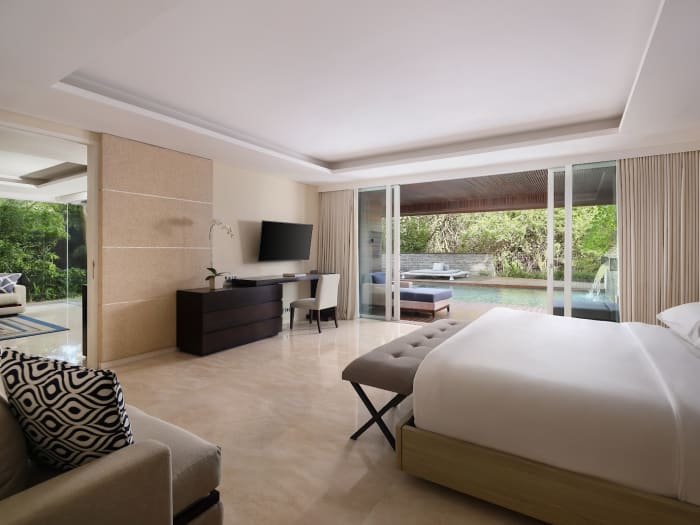
At a resort such as COMO Uma Canggu, the room is not simply where one sleeps between activities; it is central to the slower rhythm many travellers seek in Bali. The brand’s approach is recognisable in this attention to genuine rest: airy proportions, a contemporary aesthetic without excess, calming tones and a sense of order that encourages immediate decompression. In a coastal setting where days may begin early for the beach and continue outdoors until sunset, that quality of retreat matters as much as location.
The accommodation follows the broader logic of the resort. The design language is restrained, allowing space to breathe rather than filling it with decorative noise. Comfort is expressed through proportion, ease of movement and the way natural light accompanies different moments of the day. In Bali, where life often unfolds between indoors and outdoors, this relationship to climate and light is essential. It avoids the feeling of a standardised room and gives the stay a more residential, calmer and more lasting quality.
For couples, this atmosphere supports stays in which time can genuinely be taken: slow mornings, returns from the beach, reading, unhurried preparation for dinner. For families, the value is different but equally practical. A well-designed room in a beach resort should make it easier to restore order after an active day, manage different rhythms and preserve a degree of logistical simplicity. That is precisely what one expects here: accommodation that supports the stay rather than complicating it.
Perceived quality also depends on service details that are not dramatic, but do shape daily comfort. Daily housekeeping and turndown service, both among the known amenities, contribute to that sense of continuous care associated with high-end hospitality. Guests return to a room that has been reset and prepared for rest or a quieter evening. In a warm, active destination, this kind of attention has particular value.
In Canggu, the choice of accommodation also implies a certain way of experiencing the destination. Some travellers opt for highly secluded villas; others for more urban addresses close to the action but not always conducive to rest. COMO Uma Canggu offers a balanced alternative: rooms and suites conceived as contemporary retreats, sufficiently connected to the energy of the coast to keep Bali present, yet controlled enough to make the return to calm immediate.
Dining
In Bali, and especially in Canggu, dining is part of the journey itself. The area has become one of the island’s most dynamic hubs for cafés, restaurants and addresses visited as much for atmosphere as for the plate. In that context, the food offering at a resort such as COMO Uma Canggu must answer a dual expectation: to provide the comfort and coherence of a genuine on-site experience, while leaving guests free to explore the surrounding scene. It is usually in that balance that a strong contemporary beach address reveals itself.
The dining spirit one expects here aligns with the hotel’s wider identity: food that is clear, climate-appropriate and designed to accompany either active or restorative days. In a property associated with wellbeing, meals are not merely social occasions; they also contribute to the overall sense of lightness and self-care. That need not mean austerity, but rather balance. Guests look for options that suit a leisurely breakfast before the beach, a simple lunch after surfing, or a more settled dinner after a day of treatments, walks and time in Canggu.
One of the advantages of this kind of resort is precisely the possibility of different dining rhythms. Some travellers prefer to do everything on site, enjoying a stable setting without having to organise every meal. Others alternate between the hotel and neighbourhood restaurants. COMO Uma Canggu naturally lends itself to the latter reading of a stay: a comfortable base from which one can go out easily, then return to a calmer atmosphere. That flexibility is valuable in a destination where the external dining scene is abundant, but where one may also appreciate not having to be constantly in motion.
For families, dining in a well-run resort brings real practical ease. Being able to rely on organised service in a controlled environment simplifies the day and avoids turning each meal into a logistical exercise. For couples, the appeal often lies elsewhere: taking time, choosing according to mood, lingering over dinner, or opting for the spontaneity of a lighter meal before heading out. In both cases, the quality of an address is measured by its ability to support these uses without rigidity.
In Canggu, dining is also shaped by contrast. One may move from an active morning to a restful afternoon, from a lively beach to a quieter dinner, from a busy local address back to the peace of the resort. In that context, the table is not an ancillary service but part of the day’s structure and of the overall impression of the stay.
Spa & Well-being
At COMO Uma Canggu, well-being is at the heart of the experience. Spa treatments and dedicated activities are among the distinctive features of this establishment.
This focus aligns perfectly with COMO's identity. The brand combines travel with the body, sleep, energy, and recovery. In Canggu, this approach takes on a tangible form. The proximity to the ocean, the practice of surfing, the warmth, and the rhythm of the days lend themselves naturally to this philosophy.
The spa is not limited to a menu of massages; it offers a space for re-centering. Guests come here to release tension, support physical efforts, rediscover a slower pace, or simply to carve out some time for themselves.
The appeal of COMO Uma Canggu lies in the integration of well-being throughout the entire stay. A morning might begin at the beach, followed by a treatment, and then transition into a leisurely lunch. Other guests may prefer a more regular routine, balancing gentle activities, recovery, and rest.
It is advisable to book treatments in advance, especially during peak seasons, as the most sought-after slots fill up quickly.
For couples, the spa provides an opportunity to unwind together. For families, it offers individual moments of respite. For active travellers, particularly those drawn to surfing, it naturally complements their efforts. For those seeking tranquility, it extends the serene atmosphere of the property.
In Bali, many hotels speak of well-being. At COMO Uma Canggu, this dimension harmonises with the brand's identity, the lifestyle of Canggu, and the expectations of a clientele attentive to the quality of their stay.
Concierge & Services
The quality of a stay in a five-star resort often hinges on what is not captured in photographs. The organisation, consistency, and capability of the team are just as important as the surroundings. At COMO Uma Canggu, this aspect is manifested through tangible attentions. A 24-hour concierge service, continuous reception, daily room service, turn-down service, luggage storage, laundry, wake-up calls, and multilingual staff create a cohesive offering.
The round-the-clock concierge service is invaluable in a destination like Bali, where travel rhythms can vary. Late arrivals, early departures, transfers to arrange, activities to book, or practical questions about the surroundings: this availability transforms the experience. It prevents the stay from being fragmented by logistical details. In Canggu, where one easily alternates between time at the resort and outings, this responsiveness is particularly significant.
The multilingual staff also contributes to the quality of the welcome. In a hotel catering to an international clientele, clear communication is a comfort in itself. It facilitates special requests, last-minute adjustments, and discreet interactions that lend a natural quality to the service.
The room service, turn-down service, and laundry follow the same principle. In Bali, with its humidity, outdoor activities, and fast pace, having regular maintenance is greatly appreciated. Luggage storage becomes essential when flight schedules do not align with the stay.
What distinguishes good hotel service is not merely its existence, but how it integrates into the rhythm of travel. At COMO Uma Canggu, this presence accompanies the stay without overwhelming it. Service is not just an administrative framework; it forms the invisible structure that makes calm, comfort, and balance perceptible from the first to the last day.
The Canggu way of life
To understand COMO Uma Canggu, one must first understand Canggu itself. Long seen as a quieter stretch of coast than the more established beach districts of southern Bali, the area has evolved into a distinct territory where surfers, long-stay travellers, international families, creatives and devotees of a certain tropical way of life intersect. What draws people here is not only the beach, but a combination of factors: a more relaxed atmosphere than in some other resort zones, a strong café and dining culture, a daily relationship with the ocean and, despite rapid change, a lingering sense of Bali lived at a freer scale.
The beaches are of course central. They shape the day whether one is an experienced surfer, a curious beginner or simply someone who likes to walk by the water. The coastline is both a place of activity and a social backdrop. People go early for softer light, and return at day’s end when the heat eases and the sky begins to shift. For guests of COMO Uma Canggu, that proximity matters because it makes the beach not an excursion, but a natural part of the stay.
Yet Canggu is not defined by waves alone. Its appeal also lies in its tempo. One can compose very full days here, or very simple ones: coffee in the morning, a walk to the sea, a period of rest, a treatment, an unhurried lunch, a few shops, then a return to calm. This flexibility explains why the area attracts such varied travellers. Each can project a personal rhythm onto it, provided they accept that it is a living place, sometimes busy, especially in high season.
That is where the resort’s positioning becomes especially valuable. The hotel gives access to this energy without requiring guests to be immersed in it at all times. It offers a peaceful base from which one can explore, observe and participate, then withdraw. For many discerning travellers, that is the most satisfying way to experience Canggu: to enjoy its spontaneity, openness and beach culture while preserving a genuine space for rest.
Book with MyConciergeHotel
Booking COMO Uma Canggu through MyConciergeHotel means approaching the stay not as a simple hotel transaction, but as an experience to be shaped with some precision. In a destination such as Canggu, that approach makes sense. The area is appealing precisely because it feels free and informal, yet a successful trip often depends on a few well-judged decisions: choosing the right pace, anticipating busier periods, arranging spa treatments in advance, accounting for flight timings and understanding how best to balance time at the resort with time outside. It is in that space between the desire for escape and the need for organisation that concierge support becomes genuinely useful.
COMO Uma Canggu attracts different kinds of travellers. Some are drawn primarily by the surf beaches and the coastal energy of Canggu. Others prioritise wellbeing, recovery and a peaceful setting. Others still travel as families and need a stay that is at once flexible, comfortable and easy to manage. Booking with a specialist intermediary helps refine those expectations in advance. The aim is not only to confirm a room, but to ensure that the property truly matches the way one wants to experience Bali.
That preparation is all the more valuable because stays in Canggu can take very different forms depending on season, duration and travel style. A short break does not call for the same priorities as a longer interlude. A couple seeking rest will not organise their days in the same way as a family alternating beach time, downtime and outings. A wellness-focused traveller may wish to structure the stay around treatments and calm; another may prefer to leave room for spontaneity. The role of an editorial concierge service is precisely to turn those intentions into a coherent stay.
In the case of COMO Uma Canggu, certain points deserve particular attention. Booking treatments in advance, as already advised, is one of the most useful habits. The management of arrivals and departures in Bali, often shaped by less-than-linear flight schedules, can also benefit from careful coordination. More broadly, choosing this property should be understood within the geography of the island: it is especially well suited to those who want to experience Canggu closely rather than those seeking complete isolation far from any activity.