History & heritage
In Reims, Hôtel Assiette Champenoise holds a distinctive place in the French luxury-hospitality landscape: that of a house where accommodation and gastronomy have long spoken the same language. Its identity does not rely on theatrical grandeur, but on a deeply rooted culture of hospitality, culinary precision and quiet consistency. Even the name suggests a clear sense of place: Champagne expressed through the table, through welcome, and through a way of living rather than through display.
The property belongs to the French tradition of refined family-run houses where guests come not only to stay, but to experience a particular art of receiving. In such places, heritage is not decorative. It appears in the continuity of service, in the loyalty of returning guests, and in details designed to endure rather than to impress. Its Relais & Châteaux affiliation reinforces this reading: a characterful house, firmly tied to its region and to a demanding vision of hospitality and cuisine.
Reims provides an especially fitting setting. A city of coronations, pale stone, cellars and great Champagne houses, it combines monumental heritage with a culture of wine and ceremony. Hôtel Assiette Champenoise sits within that context with ease. Rather than competing with the city’s symbols, it offers a more intimate counterpoint: a residential, composed address where Champagne is expressed in subtler ways — through restraint, through long-standing savoir-faire, through an appreciation of time.
Transmission is central to the spirit of the house. In a property shaped by gastronomy, heritage is visible both on the plate and in the way guests are looked after. There is discreet discipline here, a search for balance, and a refusal of empty spectacle. Luxury takes the form of sustained attention: an arrival that never feels mechanical, a pace of stay that respects privacy, and an atmosphere in which guests feel expected without ever feeling watched.
What ultimately sets the address apart is its ability to unite two great French traditions: the serious table and the refined house hotel. Each strengthens the other. Culinary precision calls for service of equal calibre; the quality of the stay extends the pleasure of the meal. The result is neither merely a hotel with a good restaurant nor a restaurant with rooms, but a coherent destination in its own right. In a region where excellence is often associated with Champagne houses, Hôtel Assiette Champenoise reminds guests that a memorable stay may also be built around a house devoted to the noble art of receiving.
The property
Hôtel Assiette Champenoise reveals itself as a place of retreat rather than a simple stopover. In Reims — a city often approached through its cellars, cathedral and major Champagne names — this house offers a different rhythm: calmer, more inward-looking, and more concerned with genuine comfort than with staging. That restraint is precisely what makes it compelling. Arriving here feels like stepping away from the city’s pace without truly leaving it, as though the property had found the right balance between accessibility and breathing space.
The overall atmosphere is one of contemporary French elegance tempered by a very classical sense of welcome. Nothing feels forced. The shared spaces are designed to put guests at ease rather than to impose a style. It has that rare quality found in well-conceived houses: refinement without intimidation. The experience begins on arrival, with round-the-clock reception and a service structure that gives the stay notable ease. Luxury here is expressed through continuity: discreet staff, precise gestures, and the sense that everything is exactly where it should be.
The hotel particularly suits guests seeking a serene base from which to explore Reims and the wider Champagne region. It can certainly be experienced as a gastronomic destination, but equally as a retreat for a couple’s weekend, a restorative break, or a stay centred on visits to nearby Champagne houses. Its location allows easy access to the city’s principal sites while preserving a feeling of remove — a valuable quality in a destination that attracts both heritage-minded travellers and wine enthusiasts.
The setting contributes greatly to that sense of balance. Gardens, especially pleasant in warmer months, lend the stay an almost residential dimension. In summer, the light softens the experience and encourages guests to slow down; out of season, the house retains a warmth that suits more contemplative stays. This ability to work well year-round is one mark of a mature address: it depends not on seasonal effect, but on the intrinsic quality of welcome and atmosphere.
Its Relais & Châteaux identity is reflected in a coherent understanding of French travel: attention to detail, a strong relationship with place, and exacting service that never excludes simplicity of tone. That simplicity is not a lack of sophistication; it is, rather, its most accomplished form. Everything seems arranged so that guests can focus on what matters most: sleeping well, dining well, taking their time, and finding a sense of rightness in each moment of the stay.
Rooms and suites
In a house such as Hôtel Assiette Champenoise, the room is not merely a complement to the restaurant; it is an essential part of the overall experience. The same search for balance found throughout the property is present here: genuine comfort, controlled aesthetics, and an absence of excess. Luxury does not take the form of accumulation, but of an immediate sense of calm. After a day spent between Reims’s heritage sites, Champagne visits or a lingering lunch, the value of a space designed to slow the pace and restore attention becomes clear.
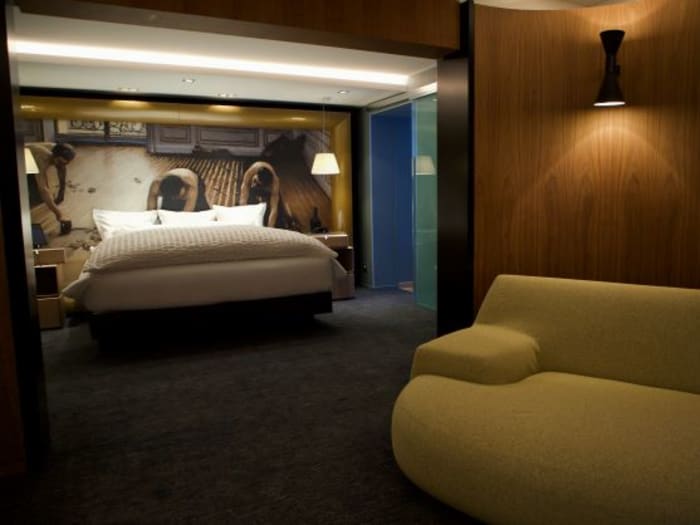
The spirit of the rooms and suites naturally aligns with that of the house. One expects carefully considered proportions, elegant décor without ostentation, and an atmosphere that privileges light, clarity and rest. In the finest French addresses, sophistication often lies in what does not announce itself at once: acoustics, bedding quality, ease of movement, and a sense of privacy. Everything suggests that this logic prevails here. Guests are not invited to admire their room as a set, but to inhabit it fully.
That habitability matters all the more in a gastronomic destination. A great dinner calls for a night worthy of it; a peaceful waking hour extends the quality of the stay just as much as it prepares it. Turndown service, daily housekeeping, and the availability of a 24-hour reception and concierge all contribute to that continuity. They create an environment in which comfort is never interrupted by logistics. The experience remains fluid, from returning to the room in the evening to departure.
For couples, the appeal is obvious. The hushed character of the house, the presence of gardens and the emphasis on tranquillity create a setting well suited to time spent together. Yet the hotel also works for travellers who value concentration and rest: wine lovers exploring the region, visitors to Reims seeking a cultural interlude, or guests in search of a French stop where one can genuinely recover. That versatility comes from a simple and difficult quality to achieve: the room feels like an extension of the house rather than a separate function.
What remains most memorable, however, is the promise of rest entirely consistent with the identity of the place. At Hôtel Assiette Champenoise, sleep is not a pause between activities; it is part of the journey itself.
Dining
At Hôtel Assiette Champenoise, gastronomy is not one amenity among others; it is the house’s centre of gravity. Around it are organised the property’s identity, rhythm and reputation, and for many travellers it is the principal reason to stay. Yet to reduce the experience to the idea of a great meal alone would be too narrow. Dining here belongs to a broader vision of French hospitality, in which the plate, the service, the setting and the time granted to the meal form a coherent whole.
Regional anchoring is essential. The cuisine is described as local and centred on produce from the region — a particularly rich field of expression in Champagne. The proximity of terroirs, the strength of local producers, the culture of wine and the finesse of possible pairings give the table unusual depth. In such a house, working with regional produce does not mean relying on provincial folklore; it means translating a territory with precision, restraint and intelligence. Champagne is not merely a wine-growing backdrop, but a complete gastronomic ecosystem shaped by seasons, textures, wines, savoir-faire and table customs.
Dining here becomes a destination in itself. Guests come to Reims for the cathedral, the cellars and the city’s history; they also come to sit at this table. That centrality changes the nature of the stay. The day willingly arranges itself around dinner, with that very French blend of anticipation and leisure: a walk through the city, a visit to a Champagne house, a return to the calm of the hotel, and then the meal, experienced as an event in its own right rather than a simple evening sequence. Granting time to the table remains one of contemporary luxury’s finest forms.
Service plays a decisive role. In a gastronomic address, attentiveness alone is not enough; the meal must be accompanied, its rhythm respected, and the right moment found to intervene or step back. The correct tone matters greatly. Too much solemnity would stiffen the experience; too much informality would weaken its precision. The best houses find the balance in a form of quiet mastery that gives the plate pride of place while never neglecting the guest’s comfort.
The proximity of Champagne houses adds further depth. It allows both enthusiasts and newcomers to place the meal within a wider landscape: a region whose culture of taste has been shaped by wine, celebration and the art of receiving. A lunch or dinner at Assiette Champenoise can thus converse naturally with a cellar visit, a tasting or a discovery of the great names of Reims and its surroundings.
Concierge & services
In luxury hospitality, the most valuable services are often those noticed least. At Hôtel Assiette Champenoise, that principle appears fully embraced. A 24-hour front desk and round-the-clock concierge immediately create a flexible, reassuring framework, well suited to travellers arriving late, leaving early or adjusting plans as they go. In a destination such as Reims, where one may alternate between cultural visits, appointments at Champagne houses and destination dining, that constant availability materially improves the stay.
The concierge acts here as a mediator between the hotel and the region. It is not merely a matter of fulfilling requests, but of shaping the stay intelligently: arranging an itinerary between Champagne houses, suggesting the right time to visit the cathedral, recommending a route through the city, or smoothing the logistics of arrival and departure. These discreet interventions are what give travel its ease. In a house of this kind, good service is never intrusive. It accompanies without overloading, advises without imposing.
Known amenities confirm this attention to daily comfort. Daily housekeeping and turndown service ensure a continuity of care that directly supports rest. Luggage storage allows guests to enjoy Reims without constraint, whether arriving before check-in or wishing to extend the day after departure. Laundry, wake-up service and luggage assistance are all practical details which, taken together, create a notably frictionless experience.
Multilingual staff is another significant asset in a region that attracts an international clientele. Champagne speaks to the world, and Reims welcomes visitors drawn equally by wine and heritage. To be received, informed and assisted with precision in several languages is not a minor convenience; it is part of what makes a house genuinely hospitable and legible to all guests.
Ultimately, the best concierge service is the one that makes everything feel simple. In a characterful address, that simplicity is an art.
The art of living in Reims and Champagne
A stay at Hôtel Assiette Champenoise is also an entry into a particular idea of Reims and, more broadly, of Champagne. The region cannot be reduced to its most famous labels. It possesses a distinct art of living shaped by precision, reserve, measured conviviality and a very French relationship to celebration. Refinement here is expressed not through exuberance, but through quality of gesture, table culture, attention to the seasons and respect for savoir-faire. The hotel, by its very positioning, offers an excellent gateway into that world.
Reims is a city best explored slowly. Its monumental heritage, foremost among it the cathedral, sits alongside a more discreet urban fabric of handsome perspectives, characterful houses and addresses where history is legible without excessive staging. Long a place of solemn passage, the city is now equally a destination for weekends, gastronomy and wine tourism. That dual identity suits it well. It allows cultural visits, urban walks and cellar discoveries to coexist within a single stay without feeling scattered.
The proximity of Champagne houses is naturally one of the address’s principal attractions. For many travellers, Champagne begins with a name or a bottle; once there, it becomes a landscape, a geology, a light and a way of receiving. Visiting a house, descending into the cellars, understanding the role of time in the making of a wine, then returning to dine in a house devoted to regional gastronomy: the sequence has deep logic. It allows guests to grasp Champagne as a complete culture, in which wine is never isolated from the table, the land and hospitality.
For couples, Reims and Champagne make a particularly well-judged destination. There is everything here that nourishes time away together without making it feel formulaic: fine tables, walks, tastings, strong heritage and that diffuse sense that time can stretch.
Booking with MyConciergeHotel
Booking Hôtel Assiette Champenoise through MyConciergeHotel means approaching the property as it deserves to be approached: not as a simple overnight stay in Reims, but as a carefully shaped experience built around a house of character. In an address where gastronomy is central and atmosphere matters as much as amenities, preparation forms part of the pleasure. The concierge’s role is precisely to help give the stay its proper shape, taking into account each traveller’s rhythm, priorities and the moments that should not be left to chance.
The first point of attention is naturally the table. In a house known for its gastronomic dimension, reserving the restaurant at the same time as the room — or as soon as the stay is confirmed — is simply sensible. It secures the property’s most sought-after experience and allows the rest of the programme to be arranged coherently: arrival time, a possible cellar visit in the afternoon, time to rest before dinner, departure the following day. A great address is always better enjoyed when its rhythm has been considered in advance.
MyConciergeHotel can also help structure a stay around Reims and Champagne without overloading it. That is often where the difference lies between a busy weekend and a successful one. There is little need to accumulate visits if the aim is to enjoy the house fully. One or two well-chosen discoveries — a Champagne house, a heritage walk in Reims, a quiet moment in the gardens when the season allows — may be enough, leaving the hotel time to unfold its own art of living.
Ultimately, booking through a concierge service offers a discreet but essential advantage: adjustment. A hotel such as this is not chosen only to satisfy objective criteria, but for a tone, a promise and a particular way of experiencing Reims.