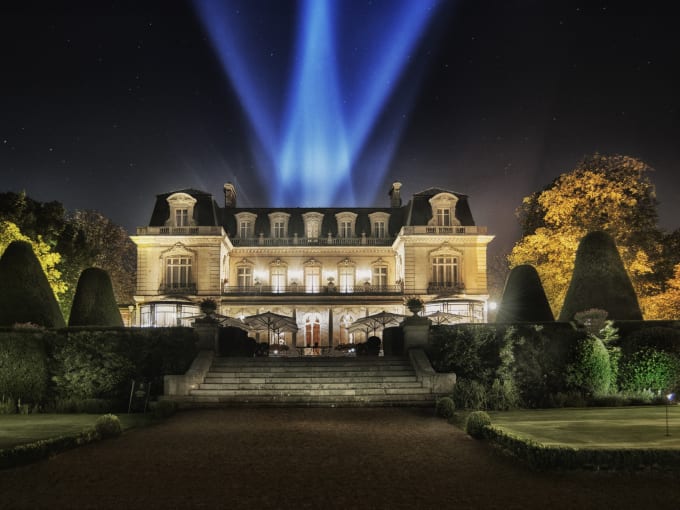
In Champagne, a gastronomic hotel is not merely about a fine dining experience. It orchestrates a comprehensive journey, thoughtfully designed around the vineyard, the rhythm of the seasons, and the precision of service. Here, the traveller comes as much to rest as to understand a region. Reims offers its rich heritage, grand houses, and immediate access to cellars. Champillon provides a more panoramic view, focused on the hills and vineyards. Within this landscape, a few addresses encapsulate the essence. Royal Champagne Hotel & Spa, Domaine Les Crayères, Hôtel Assiette Champenoise, La Caserne de Chanzy Hôtel & Spa, and Les Crayères form a coherent ensemble. All speak of gastronomy, yet each does so with its own unique hospitality language.
To establish this ranking, MyConciergeHotel does not rely on a single criterion. We first observe the coherence between accommodation and culinary offerings. A great restaurant certainly counts, but it is not enough on its own. We also consider the hotel's connection to the destination, the quality of service, the clarity of the experience, and the hotel's ability to harmonise cellar, cuisine, and stay. The level of hotel distinction also plays a role. A Palace Atout France, a recognised five-star establishment, or a hotel with a strong identity do not offer the same promise. What our advisors particularly observe is continuity. The dinner should extend the essence of the place, and the place should prepare for the dinner.
The Champagne landscape is more varied than it appears. In Reims, gastronomy often unfolds within an urban and heritage-rich setting. The traveller can alternate between the cathedral, cellars, destination restaurants, and return to the hotel without complex logistics. Domaine Les Crayères and Les Crayères embody this grand Champagne, structured by history and parkland. Hôtel Assiette Champenoise offers a more contemporary interpretation of the gastronomic address, centred on the house itself. La Caserne de Chanzy Hôtel & Spa plays a different tune. Its strength lies in its location facing the cathedral, with a more urban approach to the stay. In Champillon, Royal Champagne Hotel & Spa shifts the perspective. Here, gastronomy is anchored in the landscape, the vines, and a sense of openness.
For 2025 and 2026, several trends are emerging in Champagne's gastronomic hotels. The first concerns the length of stay. Guests no longer come solely for one night centred around a dinner. Travellers are seeking a format of two to three nights, including cellar visits, spa treatments, walks through the vineyards, and meals at various paces. The second evolution is that gastronomy is becoming more territorial in its narrative. Local produce, pairings with champagne, and seasonality are taking on greater significance. The third trend is that wellness is no longer separate from the dining experience. A solid spa, a calming view, or a well-thought-out rhythm of stay are as important as the wine list. My advice in Champagne is simple. Choose a venue based on how you wish to experience the destination.
This is also what makes Champagne particularly French in its expression of luxury. Refinement does not come through ostentation. It is evident in the decor of a dining room, in the silence of a corridor, in the view at just the right moment, and in the precision of breakfast. Gastronomy plays a central role, but never in isolation. It exists within a framework where architecture, service, and landscape work in harmony. A successful gastronomic hotel in Champagne knows how to maintain this continuity. The meal should not be a detached episode from the stay; it should be its balancing point. It is worth noting that the best address is not necessarily the most formal. For some travellers, a view of the hills may matter more. For others, the immediate proximity to Reims will take precedence.
Thus, this ranking should be read as an editorial selection, not as an absolute verdict. Each establishment caters to a specific purpose. Some are better suited for a romantic getaway, others for a structured tasting weekend, and still others for a heritage stay with fine dining. We do not seek to oppose styles; we aim to identify hotels where gastronomy becomes a genuine reason to travel. This is an important distinction. A very good hotel with a restaurant is not always a gastronomic hotel in the strong sense. Conversely, a fine dining establishment does not guarantee a complete hospitality experience. Our role as concierges is to make this distinction methodically. We favour addresses where a clear vision is felt, evident from arrival and confirmed until departure.
The following top five hotels are thus capable of showcasing Champagne through their dining, setting, and overall experience. Each deserves its place for different reasons. This is precisely what makes this ranking valuable.