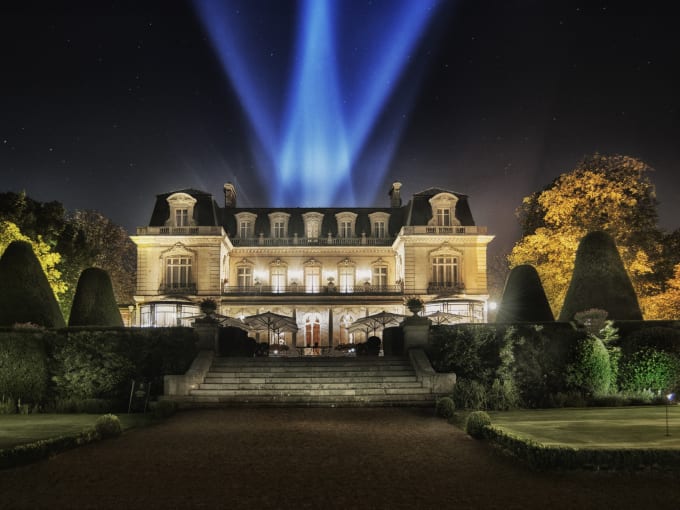
Champagne is often understood through its houses, chalk pits, and cellars. It is also defined by its hotels. For the discerning traveller, staying amidst the vineyards transforms one’s perception of the region. The landscape becomes a daily rhythm, rather than just a backdrop. The classified hills, winemaker villages, and forest edges create a different map of French luxury—one that is more grounded, quieter, and often more precise. Between Reims, Épernay, and Champillon, high-end hospitality takes on a unique tone. People come for the wine, of course, but they stay for the quality of local immersion, the views over the vine rows, and the distinctly Champagne way of combining heritage, cuisine, and hospitality without pretension.
To establish this ranking, MyConciergeHotel does not rely on trends or mere notoriety. We first consider objective elements: official category, Palace distinction where applicable, international reputation of the establishment, exact location, and coherence with the vineyard theme truly matter. We then observe practical criteria. The relationship to the vineyard landscape, ease of access to Champagne houses, quality of communal spaces, and relevance of the on-site experience weigh heavily in our assessment. We also take into account the type of stay envisioned. A wine lover's weekend, a wellness retreat, a gastronomic stopover, or a heritage escape entail different expectations. It is important to note that this ranking distinguishes complementary profiles. It does not aim to standardise addresses that have neither the same narrative nor the same tempo.
The approved selection outlines a limited yet revealing panorama. Royal Champagne Hotel & Spa, in Champillon, overlooks the vineyards from its heights, offering a direct relationship with the landscape. In Reims, Domaine Les Crayères and Les Crayères embed the experience within a city of coronations, cellars, and grand houses, speaking more to urban heritage and strategic proximity to the Champagne universe. Hôtel Assiette Champenoise reminds us that a grand stay in Champagne can also be crafted from Reims, with a focus on dining and regional prominence. In Épernay, Hôtel La Villa Eugène and Le 25bis by Leclerc Briant present a different scale—more intimate, closely linked to the Avenue de Champagne and short distances. What our advisors often observe is this diversity of entry points, allowing for a journey tailored to each client's style.
For 2025 and 2026, several trends are solidifying in this segment. The first concerns the relationship to the terroir. Travellers seek hotels that do not merely sit close to the vines; they desire a perspective on the vineyard from their room, terrace, spa, or proposed itinerary. The second relates to the duration of stay. Champagne is no longer just a one-night stop between Paris and the East; it is becoming a short getaway in its own right, often lasting two to three nights. The third trend involves the balance between prestige and intimacy. Some clients request well-established houses, while others prefer more confidential formats, with fewer rooms and a more direct connection to local life. Lastly, wellness is significantly on the rise. A spa with a view, a tranquil garden, or architecture that opens onto the landscape are becoming decisive criteria.
This ranking also reflects something about French luxury when it meets Champagne. Here, excellence does not require spectacular effects. It often lies in the precision of proportions, the quality of heritage restoration, the obviousness of a view, or the fluidity of a stay. The vineyard imposes its own grammar: changing light over the hills, unassuming villages, and short routes between cellar, table, and hotel. In this context, the best addresses are those that understand the territory rather than overplay it. My advice for this destination is simple: first, choose your relationship to the vineyard. A dominant view over the vine rows, urban immersion near the grand houses, or a more intimate base in Épernay. In Champagne, the right hotel is often the one that sets the correct angle for reading the landscape.
Thus, this ranking should be approached methodically. A number one is not a universal verdict; it is an editorial hierarchy constructed for a specific theme. A Palace with a vineyard panorama does not promise the same experience as a characterful residence in Épernay. A grand Reims establishment does not serve the same function as a more confidential address. We never seek to pit these models against each other harshly; rather, we aim to clarify their uses. Some hotels will be better suited for a celebration, others for a structured tasting weekend centred around Champagne houses, and still others for a more discreet interlude. The budget ranges, when they exist in our listings, should be interpreted with the season, events, and type of room in mind. In essence, this ranking helps to make informed choices, not abstract ones.
In the following pages, you will find six addresses, each telling a different way of experiencing Champagne. Some dominate the hills, while others engage with Reims or Épernay. All allow for a serious, comfortable, and place-sensitive approach to the vineyard.