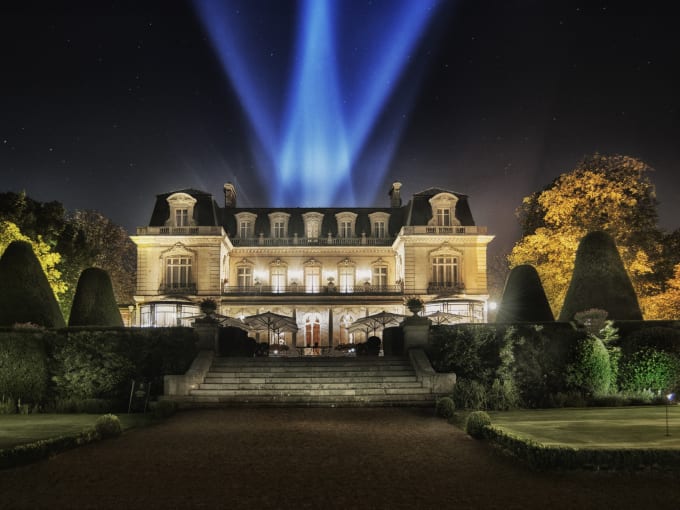
Champagne holds a unique place in French hospitality. Few regions combine, within such a clear perimeter, heritage, classified vineyards, historic cellars, and five-star addresses. For the discerning traveller, the subject extends far beyond mere tasting; it is about selecting a base camp. Reims attracts with its cultural density, cathedral, and prestigious houses, while Épernay captivates with its direct connection to the vineyard and the Avenue de Champagne. The hills, particularly around Champillon, offer a more contemplative view of the territory. In this landscape, Royal Champagne Hotel & Spa, Domaine Les Crayères, Hôtel La Villa Eugène, Hôtel Assiette Champenoise, La Caserne de Chanzy Hôtel & Spa, Le 25bis by Leclerc Briant, Les Berceaux de la Cathédrale, and Les Crayères form a rare ensemble. It is worth noting that Champagne can be explored as much from a table as from a terrace overlooking the vines.
To establish this ranking, we consider only the five-star hotels provided in your selection. Our approach remains editorial, yet it is based on verifiable facts. The official category certainly counts. Location weighs equally. Sleeping facing the vines in Champillon does not offer the same experience as a stay in the heart of Reims. We also observe the coherence between the place, its architecture, and its actual use. A palace does not promise the same experience as a more intimate address. A comprehensive spa, a defining view, a location near the cathedral or on the Avenue de Champagne change the nature of the stay. What our advisors primarily observe is the alignment between the hotel and the travel project. A wine weekend, a wellness retreat, a gastronomic stop, or a heritage discovery require different considerations.
The Champagne landscape impresses with its variety of formats. Royal Champagne Hotel & Spa embodies the panoramic retreat, oriented towards the vineyard and the spa. Domaine Les Crayères and Les Crayères evoke the imagery of the grand Reims residence, with a strong connection to local history. Hôtel Assiette Champenoise offers a more contemporary take on high-level hospitality in Reims. La Caserne de Chanzy Hôtel & Spa presents itself as an urban address, immediately connected to the cathedral. In Épernay, Hôtel La Villa Eugène and Le 25bis by Leclerc Briant speak more of residential elegance and proximity to the champagne houses. Les Berceaux de la Cathédrale adds a five-star option in the city centre. My advice is not to reduce Champagne to a single setting. Here, luxury can be monumental, residential, viticultural, or almost domestic.
For 2025 and 2026, several trends are confirmed in the region. The first concerns the length of stays. Champagne is no longer just a one-night escape from Paris. We are seeing an increase in stays of two to three nights, alternating between cellars, dining, wellness treatments, and cultural visits. The second trend relates to well-being. Travellers are seeking hotels capable of offering genuine recovery time, not just a leisure pool. In this context, addresses with structured spas are gaining a clear advantage. The third evolution is the demand for location-based experiences. Clients want to understand where they are sleeping. A view of the hills, proximity to the Avenue de Champagne, or a location facing the cathedral are becoming decisive criteria. Finally, the preference for smaller hotels is growing. It meets a desire for tranquillity, more personalised service, and a less standardised pace.
Champagne also allows for a re-examination of French luxury without clichés. Here, excellence is not solely about decorum. It is measured by the precision of service, the quality of silence, the accuracy of cuisine, and the relationship to the landscape. In a production region, luxury has something tangible. One sleeps close to a territory cultivated for centuries. The best hotels understand this. They do not seek to erase their environment; they interpret it. A grand house in Reims does not share the same grammar as an address set on the heights of Champillon. A villa in Épernay tells a different story than a hotel facing the cathedral. This diversity is the strength of the destination. It is important to note that Champagne rewards travellers who choose a hotel as one would choose a viewpoint over the region.
Thus, this ranking should be read as a tool for orientation, not as an absolute verdict. The top choice is not the best for everyone. A couple visiting for the spa and the vines will not have the same priorities as an architecture enthusiast. A stay focused on the cellars of Épernay often calls for a different address than a weekend dedicated to the cathedral of Reims. This is why we prioritise clear editorial justifications. Palace status, location, identity of the place, relationship to the vineyard, urban or residential atmosphere—all of this matters. We avoid easy superlatives, as they say little about the actual experience. What we seek is the right address for the right purpose. In such a compact region, this discernment often makes the difference between a merely beautiful stay and a perfectly tailored journey.
Here then is our selection of the best five-star hotels in Champagne. Eight addresses, eight ways to experience the region, from Reims to Épernay, and up to the hills of Champillon.