History & Heritage
In Siem Reap, Angkor Village Hotel embodies a style of travel that values atmosphere over display. Rather than reproducing an interchangeable international luxury model, the property is rooted in a distinctly local imagination, shaped by Khmer architecture, the proximity of Angkor and a quietly attentive approach to hospitality. This is what gives it its particular place in a city whose hotel scene has grown alongside global interest in the temples and in the history of the Khmer world.
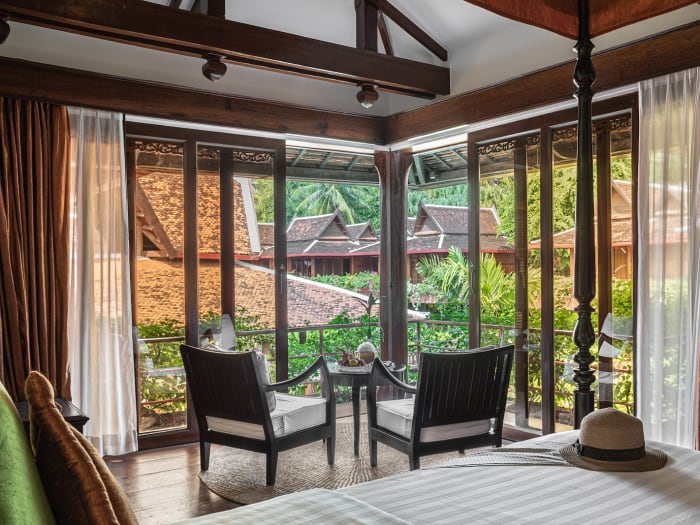
Its most striking feature is its architectural language. Dark wood, forms inspired by traditional Khmer houses, and decorative details that recall regional craftsmanship create a coherent setting, conceived as an extension of Cambodia rather than a generic exotic backdrop. In Siem Reap, this matters: the hotel experience naturally continues the cultural journey begun at Angkor. Without imitating the temples, the property echoes their world through discreet cues – natural materials, shaded spaces, a calm relationship between indoors and out.
Its membership of Small Luxury Hotels of the World also helps define its identity. The label does not standardise the hotel; it signals a certain level of service, character and human scale. Here, that translates into hospitality that feels personal rather than theatrical, and into thoughtful attention to the overall rhythm of a stay.
The hotel must also be understood through its setting. Siem Reap is not merely the gateway to Angkor; it is a city shaped by memory, tourism, craftsmanship and everyday Cambodian life. Staying in a property that embraces traditional Khmer aesthetics adds depth to the journey. Guests do not simply sleep here before setting off for the temples at dawn; they return in the evening to a place that quietly extends the sensory language of the day.
Heritage here is not museum-like. It is expressed through a contemporary way of inhabiting older references without stiffness. The hotel speaks equally to travellers drawn by history and to those simply seeking a calm, elegant retreat. That balance is perhaps its greatest success: to offer immediate sense of place without theatricality, and a distinctly intimate reading of Siem Reap.
The Property
Angkor Village Hotel reveals itself as a cool, sheltered pause in a city where days often begin early and unfold around excursions to the temples. Its greatest luxury is not overt display but the feeling of being held within tropical gardens, protected from heat, roads and the visual intensity of Angkor. In Siem Reap, that sense of retreat matters as much as proximity to the sites, and the hotel manages to combine both.
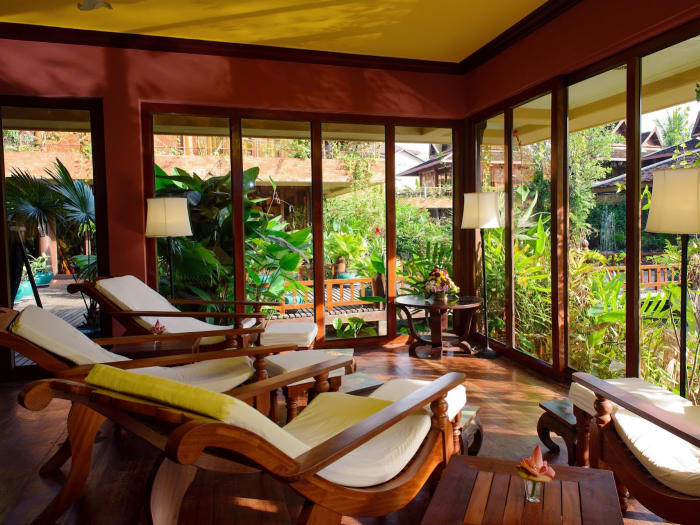
The property is built around a clear composition. Buildings inspired by traditional Khmer architecture sit within lush planting that shapes the entire experience. Nature is not merely decorative here; it is central to the hotel’s identity. The tropical gardens soften the light, filter views and create breathing space between public areas and guest rooms, establishing a slower rhythm from the outset.
This relationship with landscape is especially valuable in a destination centred on sightseeing. After early departures for Angkor Wat, Bayon or Ta Prohm, returning to a hotel defined by shade, foliage and calm changes the quality of a stay. The property acts as a counterpoint to the scale and symbolic density of the temples.
The overall mood remains one of understated elegance. Guests do not come here for contemporary spectacle, but for coherence: natural materials, traditional lines and abundant greenery create a setting that is immediately soothing. That coherence is often what allows a hotel to age well.
The address suits travellers who want to experience Siem Reap without losing touch with its cultural imagination. Couples will find it naturally romantic, solo travellers often appreciate its serenity, and families may value it as a comfortable base. Its appeal to different profiles comes less from excess facilities than from the balance of its atmosphere.
Its location near the Angkor temples remains one of its defining strengths. It allows for flexible days, early starts and easy returns. In a destination where rhythm matters, this practical ease is significant. Angkor Village Hotel is therefore more than a beautiful setting; it is a place designed to accompany the discovery of Siem Reap with calm and continuity.
Rooms and Suites
At a property such as Angkor Village Hotel, the guest room is not merely a place to sleep between excursions; it extends the aesthetic and rhythm of the hotel itself. Here, the defining qualities of the address reappear: a clear Khmer inspiration, warm materials, a calm relationship with the outdoors and a sense of refuge that becomes especially meaningful after a day among the temples of Angkor. Comfort is not only about visible amenities; it is also about atmosphere.
The decorative language follows the hotel’s traditional architectural identity. Wood naturally plays an important role, bringing warmth and visual depth. The lines favour legibility over excess, which suits Siem Reap particularly well: the room supports the journey rather than competing with it.
One imagines spaces shaped by softened light, local craft references and garden views that contribute to a feeling of decompression. In a tropical destination, that connection to the outdoors matters. Seeing greenery from the room and sensing the hotel breathe with its environment turns a night’s stay into something more immersive.
Travellers visiting Angkor often keep varied schedules. Some leave before dawn, others return in the middle of the day. In both cases, the room must accommodate early starts, restorative rest and quiet moments in between. The known turndown service fits this logic of discreet comfort.
The property suits couples, solo travellers and families, suggesting accommodation flexible enough for different ways of staying. For couples, the appeal lies in intimacy; for solo guests, in calm; for families, in having a soothing base between outings.
What remains most memorable is the sense of alignment between room and place. The accommodation does not try to rival the temples or the city; it offers something quieter and more inward. In a destination as visually and emotionally rich as Siem Reap, that controlled simplicity has real value.
Dining
In Siem Reap, dining holds a particular place in the travel experience. Days spent among temples, markets and tropical roads create an appetite that is not only culinary; one also looks for a place to pause, gather the day’s impressions and continue discovering Cambodia in a more sensory way. At Angkor Village Hotel, food and drink naturally belong to this wider rhythm. While no exhaustive detail is provided here on the property’s specific culinary concepts, the setting itself suggests a dining experience shaped by calm, coherence and a sense of place.
In a hotel defined by traditional Khmer architecture and tropical gardens, meals often acquire a strong atmospheric dimension. Wood, greenery and airflow may contribute as much to pleasure as the plate itself. In a warm destination, shaded terraces and airy rooms matter greatly.
Cambodian cuisine is subtle and often less internationally familiar than that of neighbouring countries, yet rich in herbs, fragrant broths and balanced flavours. In a hotel such as this, one expects a respectful reading of that identity, whether in classic form or a more contemporary interpretation. The point is not simply to dine well, but to feel that the table participates in the intelligence of the place.
Breakfast deserves special mention in a city where early departures are common. Many visitors leave before sunrise for the temples, and a well-run hotel must be able to support that rhythm. In such a lush setting, beginning the day among the gardens already feels like a quiet privilege.
By evening, guests usually seek something else: comforting food, attentive service and an atmosphere that asks nothing of them. Dining is often where the true quality of a hotel reveals itself – not in surprise, but in consistency and timing. Here, one imagines the table as a natural extension of the hotel: elegant without stiffness, local without cliché, restful without ever feeling generic.
Spa & Wellness
Even without a detailed inventory of wellness facilities, one can understand what the spa dimension means at a hotel such as Angkor Village Hotel. In Siem Reap, wellbeing is not merely an added indulgence; it answers the physical reality of travel. Visiting Angkor often involves very early starts, heat, walking and sensory intensity. In that context, the quality of a stay is also measured by how well a hotel helps body and mind regain balance.
The first form of care here is almost architectural. The tropical gardens, shade, wood and enveloping calm already create a sense of decompression. Before any treatment, the property itself encourages guests to slow down.
In South-East Asian travel, spa culture often matters, yet the best experiences are those that extend the spirit of the place rather than relying on spectacle. In a Khmer-inspired hotel, one expects harmony: precise gestures, gentle welcome, quiet spaces and an unhurried pace. After Angkor, the body often asks for simple, well-judged treatments.
Wellness also takes more diffuse forms: sitting quietly in the gardens, returning to a carefully prepared room, relying on round-the-clock reception and concierge support. Luxury in a sightseeing destination often lies in the absence of friction.
For couples, this wellbeing dimension naturally supports the romantic side of a stay. For solo travellers, it offers a welcome sense of recentering. For families, it helps restore a gentler rhythm at day’s end. The hotel does not need to overstate this aspect; its identity already creates the conditions for genuine relaxation.
At Angkor Village Hotel, wellness seems less about performance than about the right accord between place, service and the traveller’s real needs. That is especially relevant in Siem Reap, where the journey is at its best when exploration and restoration remain in balance.
Concierge & Services
In a destination such as Siem Reap, the quality of service is measured not only by quantity but by relevance. Travellers come with a clear purpose – to discover the temples of Angkor – while hoping the practical side of the stay remains smooth and flexible. Angkor Village Hotel appears to answer that expectation through services aligned with the real rhythm of the journey: very early departures, variable returns, quick assistance and the comfort of an orderly base at any hour.
A 24-hour front desk and round-the-clock concierge are particularly valuable here. Many days begin before dawn, and continuous availability makes those early starts easier while also reassuring guests arriving late. This kind of service removes the small logistical tensions that can weigh on an otherwise eagerly anticipated trip.
Daily housekeeping and turndown service belong to the same philosophy of discreet, consistent comfort. In a tropical climate, returning to a refreshed room has immediate value. Luggage storage, laundry and wake-up service are equally practical in a destination shaped by international itineraries and early excursions.
The presence of multilingual staff is also important in a city welcoming guests from around the world. It allows for smoother exchanges, clearer recommendations and a more immediate sense of trust. In a characterful hotel, that human quality often matters as much as infrastructure.
What distinguishes truly good service is its ability to remain almost invisible while always being available. Angkor Village Hotel seems to belong to that category of properties where support is never intrusive, yet reliably present whenever needed.
The Siem Reap Way of Life
To stay at Angkor Village Hotel is also to adopt a certain rhythm of Siem Reap. The city is often reduced to its role as the gateway to Angkor, yet it deserves a subtler reading. Its way of life lies in the balance between the extraordinary and the everyday: on one side, one of the world’s great monumental ensembles; on the other, a human-scale town shaped by markets, workshops, gardens and a gentler pace.
The hotel provides a particularly fitting base from which to discover that nuance. Its proximity to the temples allows guests to experience Angkor fully without turning the entire stay into a rigid excursion programme. One can leave early, return to rest, head back into town and then come home to the calm of the gardens.
The most pleasant period to visit, from November to February, generally offers drier and more comfortable conditions. In a city where light matters so much – on stone, water and foliage – climate directly affects the quality of the stay.
Beyond the major sites, Siem Reap is also discovered through atmosphere: lively streets, cafés, markets, craft objects and quieter moments in shaded spaces. Through its Khmer aesthetic and peaceful mood, the hotel prepares the eye for this finer reading of the city.
For couples, Siem Reap can feel deeply romantic; for solo travellers, culturally rich yet easy to navigate; for families, both rewarding and manageable. In every case, the choice of hotel shapes the way the destination is lived. Angkor Village Hotel seems to encourage a measured form of immersion.
Perhaps that is the essence of Siem Reap’s art of living: alternating wonder and retreat, discovery and contemplation, stone and greenery. The temples give the journey historical depth; the hotel gives it a human rhythm.
Book with MyConciergeHotel
Booking Angkor Village Hotel through MyConciergeHotel means choosing editorial and practical guidance designed for travellers who expect more than a simple reservation confirmation. In a destination such as Siem Reap, where stays are often shaped by early schedules, long-awaited visits and logistics that benefit from anticipation, preparation matters almost as much as the hotel itself.
The value of a specialist intermediary lies first in its reading of the property. Angkor Village Hotel is not chosen for the same reasons as a contemporary resort or a purely urban hotel. It is chosen for its traditional Khmer architecture, tropical gardens, peaceful atmosphere and proximity to the Angkor temples. In other words, for a certain idea of travel in Siem Reap.
MyConciergeHotel can also help with the details that materially improve the stay. The simplest and often most useful advice is to arrange the airport transfer in advance, ensuring a smooth arrival after an international flight.
Booking with guidance also helps align the stay with the season and with the traveller’s rhythm, whether the trip is focused on culture, romance or a more relaxed pace. A property such as this is best enjoyed when it is allowed to be more than a luxurious place to sleep.
For couples, that often means preserving intimacy and flow; for solo travellers, combining freedom with reassurance; for families, simplifying practical matters. In every case, the aim is the same: to ensure that hotel, city and visits form a coherent whole.
Choosing MyConciergeHotel is therefore not only a transactional decision but a qualitative one. It is about being directed towards a property with a clear identity, then helped to experience it at its best.