History & sense of place
In Mui Ne, the appeal of a stay lies less in aristocratic history or a grand colonial palace turned hotel than in another kind of heritage: that of a Vietnamese shoreline long shaped by fishing, wind, sand and a life oriented towards the sea. Anantara Mui Ne Resort belongs to this landscape with a contemporary interpretation of the upscale beach resort, without forcing a monumentality that would feel out of step with the setting or its rhythm. Its identity rests instead on a simple, convincing idea: to offer a refined retreat by the shore where guests can slow down, rest and reconnect with the elements.
Mui Ne has gradually earned an international reputation for its long beaches, striking dunes and seaside atmosphere still marked by local life. The resort sits within this distinctive geography, between tropical greenery, bright light and a marine horizon. That matters, because the experience here is not only that of a five-star address; it is also that of a place. The wind, especially noticeable depending on the season, gives the destination much of its character. The sea sets the pace. Mornings often feel gentler and calmer, while late afternoons invite near-instinctive contemplation of the landscape.
Within the Anantara universe, the idea of travel generally comes with a sense of local grounding, attentive service and a marked focus on wellbeing. In Mui Ne, that philosophy finds a natural setting. The resort does not need to rely on theatrical effects to persuade: its strength lies in the balance between international comfort and tropical atmosphere, between privacy and openness. It offers a way of experiencing resort hospitality that favours space, ease and understated elegance over display.
This spirit of place speaks equally to couples and families. The former will find a peaceful setting suited to time together, restorative breaks and wellbeing rituals. The latter benefit from a more flexible environment, where the sea, pool, gardens and activities allow for varied days without excessive logistical strain. That versatility is one of the property’s most interesting qualities: it does not confine itself to a single promise, but responds to different ways of travelling.
It is also worth understanding that, in a beachfront resort such as this, heritage is not read only in walls or dates. It is found in the way the property engages with its immediate surroundings: the presence of palms, the movement of air, the sea views, the transition between indoor and outdoor spaces. All of this creates a memory of stay more lasting than décor alone. Guests remember the quality of light on a terrace, returning from the beach at day’s end, a spa treatment after a sunny morning, dinner taken in a calm atmosphere. It is this sensory continuity, rather than a formal historical narrative, that defines Anantara Mui Ne Resort.
The resort
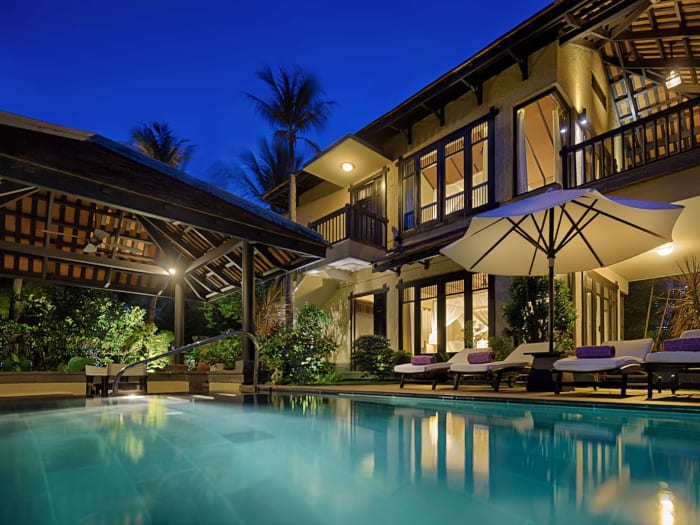
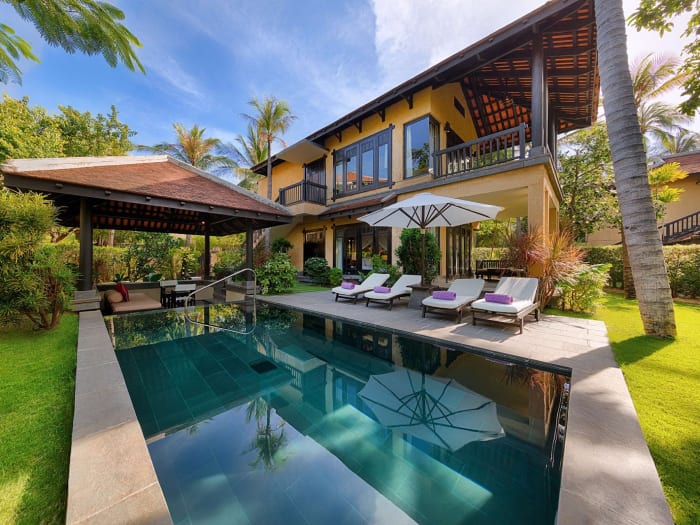
Anantara Mui Ne Resort first stands out for its beachfront setting, in a destination where the relationship with the landscape remains essential. In Mui Ne, the appeal of a stay lies in the meeting of sand, light and a tropical environment that still retains something simple and legible. The resort builds on that obvious strength without overcomplicating it. Its layout seems designed less to dominate the site than to extend its qualities: immediate proximity to the beach, breathing room in the gardens, fluid movement between living spaces and outdoors, and a sense of escape that settles in from arrival.
The tropical setting plays a central role here. Palms, carefully kept greenery, pathways opening onto sea-facing perspectives and spaces made for rest create an atmosphere that speaks directly to travellers seeking a seaside interlude. The value of such an environment is that it works at several rhythms. One can enjoy a very quiet, almost contemplative stay, moving between beach, reading, pool and spa. It can also be approached more actively, making the most of the activities available in the region and opportunities to discover local culture. The resort then serves as a comfortable, calming base to which one returns gladly after an outing or a busier day.
The architecture and layout, without needing to be treated as a manifesto, appear conceived to encourage this feeling of ease. In a successful resort, luxury is measured not only by materials or generous proportions; it is also seen in how effortlessly the day unfolds. Here, that impression comes from continuity between spaces: one moves from garden to dining areas, from pool to beach, from spa to room without abrupt interruption. This coherence contributes to the overall serenity of the stay.
The resort clearly appeals to guests in search of rest, though not total isolation. That is an important distinction. Mui Ne has a character of its own, with natural scenery, a distinctive coastline and local roots. Staying here therefore means enjoying a protected environment while retaining access to a living destination. For couples, this means the possibility of a romantic stay that does not amount to being sealed inside a bubble. For families, it offers a structured, reassuring setting flexible enough to alternate shared moments with more individual time.
The peaceful atmosphere highlighted among the property’s strengths is not an abstract claim. It is felt in the way the resort stages unhurried time: breakfasts without rush, afternoons stretched between shade and sun, evenings oriented towards the sea, nights favouring softness rather than noise. This quality of ambience is often what separates a merely comfortable beach hotel from a genuine resort address.
Finally, Anantara Mui Ne Resort answers well to contemporary expectations of high-end travel: an immediately readable setting, a strong emphasis on wellbeing, services designed to simplify the stay, and a direct relationship with the destination. One does not come here to collect spectacular effects, but to rediscover a more durable form of luxury: space, calm, the sea within sight, and service attentive enough to leave each guest free to experience Mui Ne at their own pace.
Rooms, suites and the rhythm of a stay
In a beach resort, the room is not merely somewhere to return to between activities. It plays a full part in the quality of the stay, becoming the place to retreat after the beach, to extend the sense of calm and to recover a protected form of intimacy. At Anantara Mui Ne Resort, that dimension seems particularly important. The property’s overall atmosphere, oriented towards relaxation, calls for accommodation able to carry that mood into the most ordinary moments of the day: waking up, an afternoon pause, getting ready in the evening, or simply spending a few hours doing very little.
What one expects from such an address is not decorative display but comfort consistent with the setting. In Mui Ne, the light, warmth and proximity of the sea create an obvious logic of use: well-considered spaces, fluid circulation, a pleasant relationship between indoors and outdoors, and an overall impression of freshness and rest. In this context, rooms and suites matter most when they genuinely allow guests to slow down. A good resort room is one that invites return in the middle of the day, lingering before dinner, or taking an early coffee while looking out to the garden or watching the light change.
For couples, the room experience is often inseparable from a search for tranquillity. A stay succeeds when the space preserves a sense of cocooning without cutting one off entirely from the landscape. For families, expectations differ slightly: flexibility is needed, along with simple organisation and comfort that does not turn every return to the room into a logistical exercise. The value of a well-designed resort lies precisely in its ability to answer both uses, offering intimacy and practicality at once.
In a property where wellbeing occupies an important place, accommodation also becomes an extension of a certain healthy rhythm to the stay. One alternates beach, pool, a treatment, a light lunch, then rest in the room before heading out again. That breathing space is essential. It distinguishes addresses where one merely consumes a holiday programme from those where one rediscovers a true resort rhythm. At Anantara Mui Ne Resort, everything suggests that this gentle sequencing forms part of the experience: nothing compels guests to fill every hour, and the room becomes a space for recovery as much as one of comfort.
Luxury here likely lies in the ability to make simple gestures more pleasurable. Opening the curtains onto a soothing view, returning from the sun to a cool interior, enjoying a comfortable bathroom, sitting on a terrace or by a window with a book: these details, taken together, create the real quality of a stay. In a seaside destination, it is easy to underestimate how much the room shapes travel memory. Yet it is there that the sensations of the day settle.
Booking Anantara Mui Ne Resort therefore also means choosing a way of inhabiting Mui Ne. Not as a passing visitor, but as a temporary resident of a tropical coastline, with all that implies in terms of slowness, comfort and attention to time. Rooms and suites are not simply accommodation categories; they are the intimate framework from which each guest composes a stay of deep rest, greater activity, or a balance between the two.
Dining, between seaside freshness and refined simplicity
In a beachfront resort, dining is not simply about accumulating signatures or promising a theatrical scene. It must first support a particular way of living, shaped by time outdoors, heat, returns from the beach, a desire for freshness and meals that suit the rhythm of the stay. At Anantara Mui Ne Resort, that logic feels especially relevant. The setting calls for cuisine that is clear and pleasurable, able to move from a generous breakfast to a light lunch and then a more settled dinner, without ever breaking the overall balance of the experience.
The first pleasure in a property of this kind is often the morning meal. In a tropical climate, breakfast is not a mere service: it is one of the day’s defining moments. One looks for both energy and softness, with time to sit, look out over gardens or sea, and decide how the day will unfold. A good resort turns this into a ritual rather than a formality. In a setting such as Mui Ne, this takes on particular appeal, because the morning light, still-mild air and proximity to the coast give the meal an almost contemplative quality.
At midday, expectations shift. After the beach, the pool or an activity in the region, guests often want something simpler and fresher, suited to the climate. This is where a well-run property makes the difference: by offering food that supports the stay rather than weighing it down. Luxury in this context lies less in demonstrative sophistication than in accuracy. Smooth service, balanced plates, a good understanding of the moment’s appetite, and the possibility of lunching without interrupting the overall sense of ease often matter more than an overemphatic gastronomic narrative.
In the evening, the atmosphere changes again. The resort takes on a calmer, more enveloping tone. Dinner becomes a transition between the active day and the night, with all that implies in terms of comfort, soft light and attentive service. In a seaside destination, one particularly values tables that preserve this feeling of release while still giving the meal proper structure. The point is not necessarily to dramatise the experience, but to provide the right framework: breathing space, serious execution, and an ambience that leaves room for conversation or contemplation.
One of Mui Ne’s strengths is also that it opens onto a broader cultural and culinary environment. Activities designed to explore local culture naturally encourage an interest in Vietnamese flavours, balances, herbs, freshness and contrasts. In an international resort, success often lies in the ability to honour that context without turning it into folklore. Today’s traveller expects both comfort and a degree of local grounding, however discreet. Good dining therefore finds a balance between familiarity and discovery.
Ultimately, dining at Anantara Mui Ne Resort ideally forms part of a wider vision of the stay: to nourish without burdening, accompany without interrupting, and offer pleasurable moments that extend the holiday feeling rather than overload it. This is an underrated but essential quality in strong resort addresses. One rarely remembers a meal for technical prowess alone; one remembers it because it felt right at the right time, in the right setting, with the right light and pace. That is the coherence that matters here.
Spa & Well-being
In Mui Ne, well-being takes on a simple and measured rhythm. The Anantara Spa offers an intimate experience, featuring four treatment rooms.
This measured scale promotes tranquility and attentive care. The atmosphere encourages a slower pace, away from the ordinary rhythms of your stay.
The treatment menu is embodied in a few signature gestures, rooted in genuine materials and sensations. The tamarind scrub revitalises the skin with a lively yet delicate texture.
The herbal bath extends this moment of relaxation in a cocooning warmth. The body finds peace, and the mind follows suit, without any ostentatious effects.
Outside, the infinity pool provides a more ethereal interlude. The water's edge naturally accompanies this moment of recovery between treatments.
Together, these elements create a subtle sense of well-being, based on the continuity of sensations. One treatment, one bath, a few laps, and then silence regains its place.
Services, support and the art of hospitality
In high-end hospitality, services matter less for their sheer number than for their ability to make a stay simpler, smoother and more pleasurable. This is even more evident in a beach resort, where guests come precisely in search of release. At Anantara Mui Ne Resort, the art of hospitality seems to express itself through this logic of ease: allowing travellers to enjoy the setting without constantly thinking about organisation, bookings or practical details. In this context, true luxury is often the luxury of continuity.
The property is presented as suitable for both couples and families, which implies a certain intelligence of service. Needs differ depending on whether one is travelling as a pair for a few restful days or with children for a more structured holiday. A convincing resort is one that can modulate its support without rigidity. For couples, this may mean greater privacy, discreet help in arranging dinner, an activity or a treatment. For families, it chiefly requires flexibility, clarity and an ability to simplify everyday logistics. In both cases, service must remain present without becoming intrusive.
The presence of activities designed to explore local culture adds an interesting dimension. It suggests that the property does not merely offer a self-contained setting, but also provides bridges to Mui Ne and its surroundings. This matters for contemporary travellers, who expect a strong resort to be both refuge and gateway to the destination. The role of concierge or guest teams is therefore decisive: to guide, recommend, book and adjust plans according to weather, energy levels or the make-up of the trip.
In a place centred on wellbeing, services also take on a particular tone. It is not only a matter of executing requests correctly, but of understanding the rhythm desired by the guest. Some want to fill their days; others seek to lighten them. The best properties know how to read that nuance. They propose without imposing, suggest without overloading, and leave the traveller with the precious feeling that everything is possible while nothing is compulsory. This accompanied freedom is one of the most reliable markers of genuine luxury service.
The resort also benefits from a structural advantage: its very setting facilitates a legible stay experience. The beach, relaxation areas, spa and local activities form a coherent whole. Services therefore have the task of linking these elements together, almost invisibly. Booking a treatment, arranging an outing, planning downtime, adjusting meals to the day’s programme: all these micro-decisions shape the real quality of the experience. When they are well handled, the stay immediately gains in elegance.
Ultimately, Anantara Mui Ne Resort seems to answer an essential expectation of resort travel: to be looked after with precision without losing one’s freedom. That is likely what separates a good hotel from an address one recommends. Guests are not looking only for a room or a beach, but for a way of being welcomed, guided and accompanied. When that support is successful, it becomes almost imperceptible — and it is precisely then that it reaches its most accomplished form.
The art of living in Mui Ne
Staying at Anantara Mui Ne Resort also means discovering a particular way of inhabiting Mui Ne, beyond hotel comfort alone. The destination has a very distinctive identity within the Vietnamese landscape: a shoreline where sea, sand, wind and light create an immediately recognisable setting. One comes here for the beaches, certainly, but also for a more diffuse sense of breathing space. Mui Ne is not merely a seaside resort; it is a place where the landscape organises time, where days are read through the weather, the intensity of the sun, the colour of the sky and the constant presence of the horizon.
This relationship with the elements explains much of the destination’s appeal. In the morning, the coast can offer a softness suited to walking, contemplation or a very calm start to the day. Later, the light grows stronger, seaside activities take over, and one rediscovers the particular energy of tropical shores. Then evening arrives, an essential moment in Mui Ne, when the heat drops, the air becomes more mobile again and the sea resumes an almost meditative role in the stay. A good beachfront resort accompanies these transitions; a great one makes them memorable.
Mui Ne’s other attraction lies in its natural scenery, often cited among the reasons to come. Even without drawing up a detailed inventory, it is enough to recall that the region is known for landscapes of sand and coastline that contrast with the more urban or heritage-focused image some travellers first associate with Vietnam. This singularity gives the stay a different tone: more horizontal, more sensory, more tied to climate and texture. One seeks here less a succession of visits than a balance between discovery and immersion.
Activities that allow guests to explore local culture therefore take on their full meaning. They add depth to the stay, reminding visitors that Mui Ne is not merely a postcard backdrop. Beyond the beach there is a region, ways of life, rhythms, a long relationship with the sea and a daily reality that continues outside the resort. For the discerning traveller, this possibility of measured contact with the place is valuable. It avoids the pitfall of a wholly abstract stay cut off from context, while preserving the comfort and serenity expected of a five-star address.
The art of living in Mui Ne also depends on seasonality. The dry season, from November to April, is generally considered especially favourable for enjoying the beaches. This practical point directly shapes the nature of the stay: more time outdoors, an easier relationship with the sea, and days that organise themselves naturally around the sun. Yet beyond that indication, what matters here is the ability to adopt the local tempo. Not trying to do too much. Accepting empty moments. Letting the destination work through its very simplicity.
That is perhaps where Anantara Mui Ne Resort finds its best role: not to impose an artificial version of Mui Ne, but to offer a framework from which each guest can grasp its essentials. A successful stay here is not necessarily the one in which one multiplies experiences, but the one in which one understands, almost physically, what it means to live for a few days by this Vietnamese coast. Luxury then takes on a very concrete form: having the time to look, to feel, to slow down — and to let Mui Ne do the rest.
Booking through MyConciergeHotel
Booking Anantara Mui Ne Resort through MyConciergeHotel means approaching the stay not as a simple hotel transaction, but as an experience to be prepared with precision. In a seaside destination such as Mui Ne, the quality of the trip often depends on very concrete choices: selecting the right period, understanding the rhythm of the destination, anticipating spa treatments, arranging a few local activities without overloading the programme, and above all preserving that delicate balance between discovery and rest. It is precisely here that tailored support becomes meaningful.
The value of an assisted booking lies first in clarifying the travel plan. A couple will not be looking for the same thing as a family, and a wellbeing-led trip is not built in the same way as a more active break focused on excursions. From a simple brief, it becomes possible to guide the choice of accommodation, suggest the right pace, identify what should be booked in advance and avoid classic mistakes — especially the temptation to overfill days in a destination best enjoyed through slowness.
Mui Ne calls for a kind of calm precision. The dry season, from November to April, is generally the most favourable for fully enjoying the beaches. This information may seem basic, yet it changes much in the way a stay is conceived. It influences one’s relationship with the sea, the place of outdoor activities and the way rest, discovery and wellbeing time are articulated. Editorial and concierge support can turn such practical data into a genuine travel strategy tailored to each guest profile.
The spa is another important point of attention. The advice to book treatments in advance during high season is not incidental. In a property where wellbeing forms part of the stay’s very identity, missing the most sought-after slots can affect the overall experience. Anticipating these reservations, along with certain meals or activities, helps secure the highlights of the trip while still leaving room for spontaneity. It is this combination of structure and flexibility that makes for the most successful stays.
Booking through MyConciergeHotel also means benefiting from an editorial perspective. The aim is not only to confirm a room, but to help guests understand what the property truly offers. In the case of Anantara Mui Ne Resort, that means highlighting its beachfront setting, tropical environment, peaceful atmosphere, suitability for both couples and families, and strong commitment to wellbeing. In other words, it means revealing the overall coherence of the experience, so that the hotel choice answers a precise expectation rather than a generic promise of luxury.
Finally, good support helps preserve what matters most: a sense of ease once on site. When the essential elements have been considered in advance — timing, pace, treatments, activities, particular expectations — the stay gains in freedom. Guests can then fully enjoy Mui Ne, the beach, the resort and the atmosphere of relaxation that defines the address. Booking becomes less an administrative act than the first stage of the journey itself. And in the world of high-end resort travel, that quality of preparation often makes all the difference.