History & sense of place
In Phuket, luxury hospitality often takes the form of a dialogue between tropical scenery, Thai graciousness and resort architecture designed to open onto the outdoors. Anantara Layan Phuket Resort belongs to that contemporary tradition: not a historic palace in the European sense, but a high-end seaside retreat conceived in close conversation with its setting. Its identity rests less on old-world heritage than on a certain idea of refined island living, where time stretches out between the beach, gardens, wellness spaces and sea views. In this part of Phuket, generally more peaceful than some of the island’s busier areas, the resort cultivates the atmosphere of an elegant coastal hideaway shaped by light, natural materials and fluid indoor-outdoor living.
The Anantara signature, well established in Asian luxury hospitality, is expressed here through attention to the overall experience rather than through overt display. The decorative language combines contemporary lines, wood, stone, pale textiles and discreet Thai accents to create a setting that feels soothing rather than theatrical. This approach suits Phuket particularly well, appealing to travellers seeking rest, couples marking a special occasion and families wanting comfort, privacy and easy access to the sea. The spirit of the place lies in that balance: delivering the codes of an international luxury resort while maintaining a sensitive connection to the local landscape.
The name Layan refers to a coastal area valued for its relatively serene character. That geographical anchoring matters greatly to the experience. This is not an urban waterfront or a resort strip defined by constant activity, but a quieter enclave chosen for breathing space. The resort makes the most of that position by offering a stay shaped by the elements: the sea, visible or close at hand depending on where one is; the salty air; tropical greenery; heat softened by shade; and that distinctly Thai way of turning service into an art of discretion.
In this context, heritage is less about chronology than about a legacy of style and hospitality. It belongs to a form of Asian luxury hotel culture that knows how to stage ease without stiffness, where one moves naturally from breakfast by the shore to a wellness treatment, from a swim to an unhurried dinner. The resort speaks to travellers who are not necessarily looking for constant stimulation, but for the quality of a coherent setting, the feeling of being quietly looked after, and the opportunity to experience Phuket from a calmer vantage point. Seen this way, the property has a clear personality: a contemporary beachfront retreat, polished without excess, designed to slow the pace and let the island reveal itself gradually.
The property
Anantara Layan Phuket Resort is defined first and foremost by its immediate relationship with the shoreline. Direct beach access is not merely a brochure phrase here; it genuinely shapes the stay. Guests move from the resort’s living spaces to the sand and sea with an ease that changes the way the property is experienced. That continuity between architecture and landscape is central to what is offered. The beachfront becomes a natural extension of rooms, terraces, dining venues and relaxation areas. At any hour, the presence of the water acts as a guiding thread, whether for an early walk, a shaded reading pause or an evening spent facing the horizon.
The overall setting favours serenity. Where some Phuket addresses lean into festive energy or a dense programme of activities, this one appears designed to create breathing space. The volumes, gardens, pathways and quiet corners all contribute to a sense of measured openness. In that sense, the seafront resort functions as a refuge: a place to reconnect with a slower rhythm without giving up the comfort expected from a five-star property. That feeling of calm is especially valuable in Phuket, a multifaceted destination where lively beaches, nightlife, boat trips and more secluded enclaves all coexist.
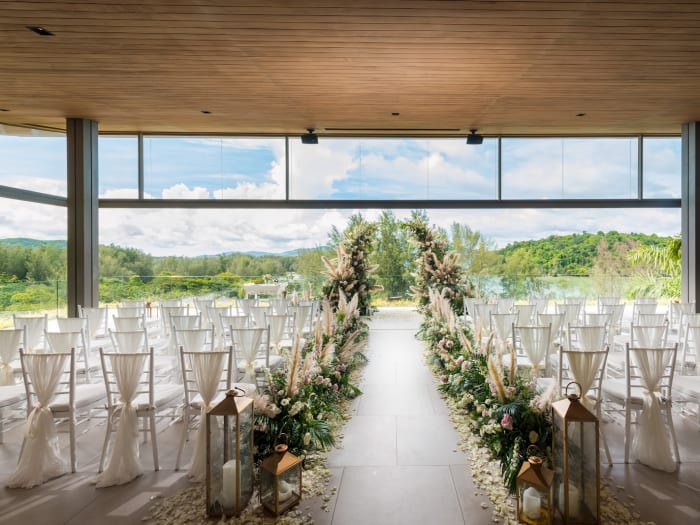
Aesthetically, the property embraces a design language that combines modern lines with Thai touches. In practice, this often means restrained architecture, natural materials, pale palettes and local references used with discretion. The result is not museum-like; it is contemporary resort luxury, legible and functional, yet sufficiently rooted in its setting to avoid international blandness. This stylistic restraint encourages visual rest and allows the landscape to remain the main protagonist, often the wisest choice in a seaside retreat.
Its location in Phuket also brings an important practical dimension. One of Thailand’s best-known islands, Phuket appeals through the variety of experiences it offers: beaches, viewpoints, boat outings, markets, temples, villages, restaurants and everyday local life. Staying at a resort such as Anantara Layan Phuket Resort allows travellers to shape their trip according to mood. Some guests will feel no need to leave the property at all, so naturally does the setting invite relaxation. Others will use it as a comfortable base from which to explore the island before returning each evening to a quieter atmosphere.
What ultimately stands out is the overall coherence. The resort does not seek to impress through accumulation, but to establish a quality of presence. The sea, the beach, the wellness facilities, the serene mood and the contemporary design form a persuasive whole for travellers who value balance. Couples, families and seasoned beach-resort guests may use the property differently, yet they share the same benefit: the feeling of being in a place designed to make luxury feel fluid, liveable and deeply restorative.
Rooms, Suites, and the Art of Relaxation
In a beachfront resort of this calibre, the room serves not merely as a place to rest but becomes an essential part of the disconnection experience.
At the Anantara Layan Phuket Resort, the accommodations extend the spirit of the communal spaces. The contemporary decor is softened by Thai touches and soothing materials.
The interiors are designed to invite light, preserve privacy, and maintain a constant connection with the outdoors. Gardens, terraces, unobstructed views, or proximity to the sea enhance this sensation. Here, luxury is defined more by volume, comfort, and atmosphere than by decorative effect.
This approach suits travellers who choose Phuket to unwind. After a day in the sun, a boat trip, or a visit to the spa, returning to a quiet and calming room is of utmost importance.
The spaces prioritise a simple and clear usage. A welcoming sleeping area, a bathroom designed for well-being, seating conducive to reading or relaxation, and openings that celebrate tropical light. The Thai touches add warmth and a sense of local grounding without overwhelming the overall aesthetic.
For couples, this type of accommodation allows them to feel secluded while enjoying five-star service. In a serene resort atmosphere, the room becomes a private refuge.
For families, the challenge is different. It is about having an orderly, comfortable, and practical setting that facilitates shared moments as well as times of retreat. In both cases, the success of the stay often hinges on this adaptability.
The relationship with the outdoors remains central. In Phuket, life is often lived outside, but there is also appreciation for retreating into a cool and calm space during the hottest hours.
The accommodations should provide a smooth transition between the beach, gardens, restaurants, and relaxation. The quality of a venue is often reflected in these practical details: ease of movement, sense of intimacy, comfort of bedding, generosity of bathrooms, and pleasant terraces according to the chosen category.
Ultimately, the rooms and suites at the Anantara Layan Phuket Resort do not seek to compete with the landscape; they complement it. They frame the island experience and make it more fluid and restful. For the traveller, each return to the room acts as a reset.
Dining, between sea horizon and tropical rhythm
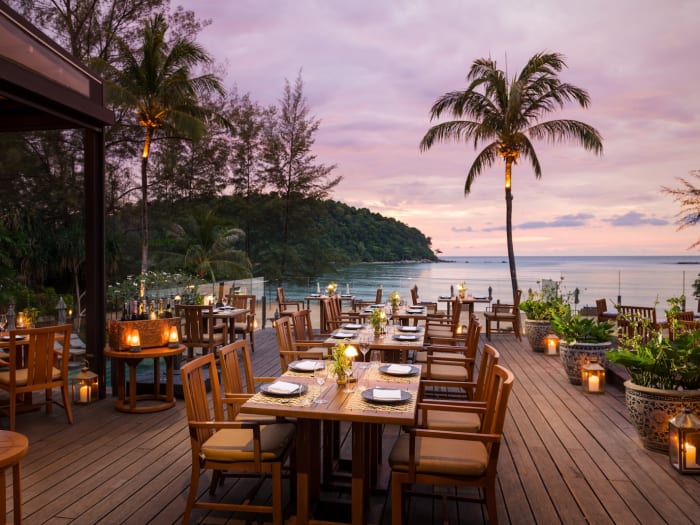
In a seafront resort, dining contributes as much to atmosphere as it does to comfort. At Anantara Layan Phuket Resort, one can readily imagine an offering designed to accompany the different moments of the day rather than impose a single formal ritual. Morning calls for fresh, lighter fare suited to the early light and rising warmth; lunch lends itself to uncomplicated meals taken without breaking from the beach; evening, by contrast, invites more composed dinners in which the maritime setting, the air and the timing of sunset matter almost as much as what is on the plate. In this kind of property, successful dining often lies in its ability to follow the natural rhythm of the stay.
Phuket more broadly provides a rich culinary backdrop, shaped by Thai influences, seafood and deeply rooted traditions of hospitality. Without overstating what the resort specifically offers, it is reasonable to expect from a five-star property of this standing a cuisine attentive to freshness, clarity of flavour and a balance between international repertoire and local inspiration. Travellers today value restaurants able to answer different needs: a generous yet not overly heavy breakfast, an easy lunch after swimming, a more considered dinner to mark the evening, or more intimate options for those wishing to extend the resort’s quiet mood.
The seaside context also changes the way people want to eat. Guests seek not so much formality as rightness: smooth service, airy spaces, a discreet staging of the landscape, and menus that leave room for appetite and mood. In a setting that combines modern lines with Thai touches, the dining experience benefits from the same principle of balance. A few well-executed local references, seafood handled with restraint, clean presentation and, above all, a sense of ease. In a destination such as Phuket, true luxury often lies in dining very well without ever feeling removed from the holiday atmosphere.
For couples, the table naturally becomes the setting for chosen moments: dinner by the sea, a drink taken as the light softens, a breakfast allowed to linger. For families, it must remain welcoming, flexible and able to accommodate varying rhythms. A great resort succeeds when it can answer both expectations without compartmentalising the experience. The culinary offering does not need to be theatrical to be memorable; it simply needs to feel coherent with the place, the climate and the overall mood of the stay.
That is perhaps the best way to think about dining at Anantara Layan Phuket Resort: as an organic part of life on site. One does not come only to eat, but to extend a feeling of seaside ease, comfort and availability. In this context, a fine table is one that leaves room for the landscape, for unhurried time and for conversation. It accompanies the day rather than interrupting it, and contributes to that rare impression of a stay in which everything seems to flow naturally.
Spa & Well-being
The wellness facilities are among the defining features of Anantara Layan Phuket Resort. At this seaside resort in Phuket, the spa naturally extends the experience of your stay.
Guests come here not only to relax but also to restore their physical and mental balance. The tropical setting, proximity to the water, and a slower pace all contribute significantly to this.
Well-being takes many forms, from beach walks to structured treatments, as well as moments of silence and recovery.
The Thai culture of care and hospitality gives this aspect a unique resonance. A spa of this calibre is distinguished by the quality of its welcome, the mastery of its techniques, and the overall atmosphere.
Luxury here lies in precision. A pleasant temperature, an unhurried pace, and genuine attentiveness are all it takes to foster relaxation.
The resort enjoys a clear advantage. The sea and beach provide a natural prelude to well-being.
Many travellers alternate between swimming, sunbathing, staying hydrated, indulging in body treatments, and enjoying quiet time in their rooms. This simple succession structures the high-end beach experience.
The on-site facilities cater to this need for recovery. They support both a massage after a long-haul flight and a moment of re-centering during your stay.
For couples, well-being often forms part of the ritual of travelling together. For families, it offers a useful counterpoint to the energy of shared days.
In both cases, having facilities on-site simplifies the experience. Treatments seamlessly integrate into the rhythm of the day.
At Anantara Layan Phuket Resort, the serene atmosphere, direct beach access, and contemporary décor with Thai touches support this approach to well-being. Here, one seeks both a treatment and a quality of attention.
Concierge & Services
In luxury hospitality, the most appreciated services are often those that go unnoticed. At Anantara Layan Phuket Resort, this fluidity makes the stay simple, comfortable, and coherent, without excessive staging.
The setting is particularly conducive to this. In a seaside resort, expectations are concrete: organising your days without friction, moving easily from the beach to the restaurant, from relaxation to wellness, from activities to the intimacy of your room. Good service anticipates needs, guides, and resolves issues discreetly.
The clientele of such an establishment is diverse. Couples seek attentions that foster intimacy and spontaneity, such as tailored recommendations, simple reservations, flexible timings, and assistance in organising special moments. Families particularly appreciate clarity and responsiveness, with clear information, straightforward logistics, and practical solutions to structure the day for both children and adults.
A well-managed resort meets these needs without giving the impression of segmenting its clientele. It creates a sense of continuity, where everyone finds their rhythm within the same quality framework.
In Phuket, the concierge service takes on particular significance. The island offers numerous opportunities for excursions and activities. Even during a very relaxing stay, the desire for a boat trip, local discovery, or a water activity often arises. In such a destination, the quality of the stay depends on the effective orchestration of key moments. The service makes these experiences accessible, secures necessary reservations, and avoids the pitfalls of improvised organisation.
The most valuable services are not always spectacular. They also rely on the welcome, the ability of the staff to quickly understand the tone desired by the guest, and the manner of being present without intrusion. In an establishment with a serene atmosphere, this relational intelligence is essential. Luxury is not solely about facilities; it also resides in the quality of interaction and the feeling of being able to request much without having to insist.
For a discerning traveller, the value of a five-star establishment like Anantara Layan Phuket Resort is also measured at this invisible level. Direct beach access, wellness facilities, and a restful environment take on another dimension when supported by precise and stable service. The concierge does not only respond to exceptional requests; it structures daily comfort and transforms a beautiful stay into a seamless experience.
The Phuket way of life
Staying in Phuket means accepting that one island can offer several faces at once. There is, of course, the immediate image of beaches, warm sea and sunsets, yet the local way of life cannot be reduced to a tropical postcard. Phuket has a composite identity, shaped by its insular setting, its history of maritime exchange, its cultural influences and its major role in contemporary Thai tourism. For the traveller, this means a stay can take very different forms: an almost motionless beach retreat, an itinerary punctuated by excursions, a culinary discovery, or a blend of rest and activity. Anantara Layan Phuket Resort fits precisely into that plurality by offering a serene base from which each guest can compose a personal rhythm.
Layan and, more broadly, Phuket’s quieter coastal areas appeal to those seeking a calmer relationship with the island. People come here less for nightlife than for the quality of daytime: morning light on the sea, the slow hours of heat, late-afternoon walks, and the feeling of living outdoors without constant agitation. This way of life rests on availability. It invites one to restore value to simple gestures — taking breakfast without hurry, swimming several times a day, reading in the shade, booking a treatment, sharing dinner by the water. With its direct beach access and serene atmosphere, the resort naturally lends itself to this way of inhabiting Phuket.
That does not exclude curiosity. The island also allows for changing perspectives, whether through discovering other beaches, observing local life, tasting Thai food in a more everyday register, or arranging a boat outing. That is the advantage of a well-shaped stay: alternating openness and retreat. A well-located beachfront property then becomes a point of balance. One can go out for a few hours and return to an environment that is immediately restful. This alternation is often the key to a successful Phuket trip, especially for travellers who wish to avoid the feeling of an overfilled programme.
The Phuket way of life is also influenced by climate, with a season particularly appreciated from November to April, as the existing description notes. This period, generally sought after for its pleasant conditions, encourages a life largely lived outdoors. Terraces, the beach, water activities and moments of relaxation naturally take centre stage. In that context, booking certain experiences in advance can make a real difference, especially when demand rises. Here again, true luxury lies not in accumulating activities, but in being able to choose and pace them.
Ultimately, Phuket is most compelling when one allows it to unfold at its own tempo. Anantara Layan Phuket Resort appears to answer that logic by privileging the conditions for a harmonious stay: the sea within immediate reach, on-site wellness, calming design and attentive service. The island provides the setting and the possibilities; the resort provides the frame. Between the two emerges a distinctly contemporary way of travelling: seeking less the performance of a packed itinerary than the quality of lived experience, and making each day a flexible composition of contemplation, comfort and carefully chosen discoveries.
Booking through MyConciergeHotel
Choosing Anantara Layan Phuket Resort through MyConciergeHotel means approaching the stay not as a simple hotel transaction, but as an experience to be prepared with discernment. In a destination such as Phuket, where the offer is extensive and travel styles vary widely, the value of editorial and concierge guidance lies in matching a property to a travel intention. This resort is particularly well suited to travellers who prioritise direct beach access, a serene atmosphere, on-site wellness facilities and contemporary design softened by Thai touches. In other words, it appeals to those seeking not excitement for its own sake, but the coherence of a true relaxation resort.
Booking wisely begins with understanding the rhythm of the place. Everything here suggests a stay oriented towards rest, seaside ease and the simplicity of well-executed luxury. It is a relevant address for a trip for two, a restorative break, a holiday built around beach time and spa visits, or family travel in a calmer setting. High season, from November to April, is naturally the most sought-after period for enjoying pleasant conditions. During those months, planning ahead becomes a genuine source of comfort, not only for choosing the right accommodation, but also for arranging the most in-demand activities.
That is precisely where a service such as MyConciergeHotel becomes meaningful. Beyond the reservation itself, it is about identifying the right parameters for the stay: the ideal length according to the travel plan, the appeal of a highly residential programme or, conversely, one punctuated by excursions, the need to book certain water activities in advance, and the balance between rest and island discovery. A beachfront resort is enjoyed all the more when practical details have been considered beforehand. It prevents a restorative holiday from turning into a succession of improvised decisions.
For discerning travellers, the value of a well-supported booking also lies in the quality of information. Knowing that a hotel is attractive is not enough; one must understand its true atmosphere, its best use, the type of guest it draws and the way it sits within its destination. Anantara Layan Phuket Resort stands out through a clear promise: that of an elegant seaside refuge centred on the sea and wellbeing. That clarity is valuable because it allows guests to book for the right reasons. A successful stay often begins with this alignment between expectations and the reality of the place.
Finally, booking through MyConciergeHotel means favouring a more qualitative approach to travel. Not multiplying grand claims, but choosing with precision. In Phuket, that often means deciding between animation and tranquillity, between exploration and retreat, between a spectacular resort and one that is genuinely easy to inhabit. Anantara Layan Phuket Resort clearly belongs to the latter category: a property designed to be lived in continuously, in direct relationship with the beach and with rest. For travellers seeking that quieter form of luxury, the booking becomes as much a choice of rhythm as a choice of hotel.