History & heritage
In Santiago de Compostela, A Quinta da Auga Hotel & Spa offers a more intimate reading of the destination than the grand urban addresses set within the old town. Its identity rests on continuity: that of a Galician house rooted in a landscape of water, greenery and stone, later reinterpreted for contemporary hospitality without losing its domestic character. The very name evokes this relationship to place. In Galicia, a quinta suggests a country estate, a slower rhythm of life, architecture built to endure; water, ever-present in the region, recalls rivers, springs, damp gardens and the shifting light that shapes the land.
The appeal of the property lies precisely in its fidelity to a local spirit. Luxury here is not demonstrative; it is expressed through the quality of the volumes, the sense of historical depth, and the dialogue between traditional materials and modern comfort. Guests do not come merely for a well-run room or a pleasant spa: they come to inhabit, for a few days, a characterful Galician house, set away from the busiest tourist flow yet close to one of the Iberian Peninsula's most storied cities.
Its Relais & Châteaux affiliation helps define this position. The membership suggests a particular idea of hospitality: a house of human scale, with attention paid to setting, cuisine, service and regional anchoring. At A Quinta da Auga, this translates into an atmosphere that favours coherence over effect. It offers what seasoned travellers often seek in fine European properties: spaces with soul, an aesthetic untouched by passing fashions, and a sense of refuge that feels especially valuable in a city marked by arrival, emotion and, at times, the fatigue of pilgrims.
For centuries, Santiago de Compostela has been a city of passage and fulfilment. Staying at a property such as this allows guests to approach that heritage from a calmer angle. Rather than an exclusively monumental immersion, the experience is shaped by a movement between urban patrimony and landscape breathing space. That is perhaps the hotel's singularity: genuine proximity to the historic city, with enough remove to recover silence, slowness and a restorative form of comfort.
This union of local memory and contemporary hospitality gives the hotel a timeless tone. Nothing appears designed to impress in the short term. Everything instead encourages guests to settle in, observe and let the stay find its own rhythm. For travellers drawn to Galician culture, country-house architecture and a more understated idea of the luxury hotel, A Quinta da Auga stands out as a characterful address where heritage is not a static backdrop but a way of receiving people.
The Establishment
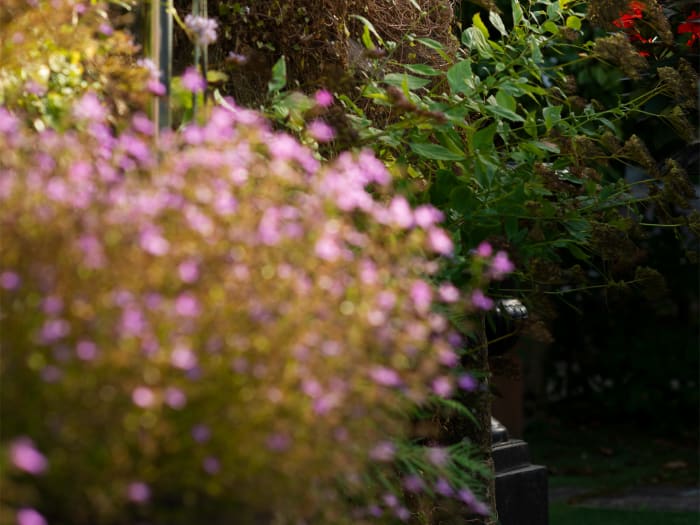
One of the major assets of A Quinta da Auga Hotel & Spa lies in its location. Situated in Santiago de Compostela, this address offers a different geography for your stay: more verdant, more tranquil, and more enveloping. The soothing natural surroundings profoundly shape the experience. There is a gentle transition felt between the city and the countryside, between the rich heritage and the need for rest.
This setting will appeal to travellers looking to explore Santiago without being caught up in the hustle and bustle of the city centre. After a day of sightseeing, meetings, or walking, returning to a quieter environment alters the perception of the stay. The noise recedes, views open up to the greenery, and the hotel serves as a true retreat. This is an important nuance in a destination where crowds can sometimes weigh heavily on the experience.
Architecturally, the establishment strikes a balance between traditional charm and modern comfort. The volumes retain elements of the original house, with a keen focus on materials, light, and the flow between indoor and outdoor spaces. The result is neither rustic nor standardised. It embodies a luxury of texture and atmosphere, where one can sense Galicia in the tones, in the relationship with the garden, and in the emphasis placed on tranquillity.
The communal areas play a crucial role here. In country houses transformed into hotels, the experience never ends at the bedroom door. It is also constructed in the lounges, on the terraces, in the corridors, with views of nature, and during moments of reading or conversation. The common spaces are thoughtfully designed to encourage relaxation and conviviality. A successful large hotel is not just a place where one sleeps well, but a place where one wishes to linger.
Proximity to historical sites remains another tangible advantage. It allows for a flexible itinerary: an early start to explore the old town, a return during the day for a break, dining on-site or venturing out into the city depending on the mood. This ease of movement suits couples, business travellers, or families wishing to alternate cultural visits with downtime. The hotel manages to be close without being overwhelming, connected to the destination without sacrificing the feeling of being elsewhere.
For those already familiar with Santiago de Compostela, A Quinta da Auga represents a more residential and serene way to experience the city. For first-time visitors, it allows for an appreciation of both its historical dimension and its peripheral gentleness. This dual perspective of the place, urban and rural, is part of its lasting appeal.
Rooms and suites
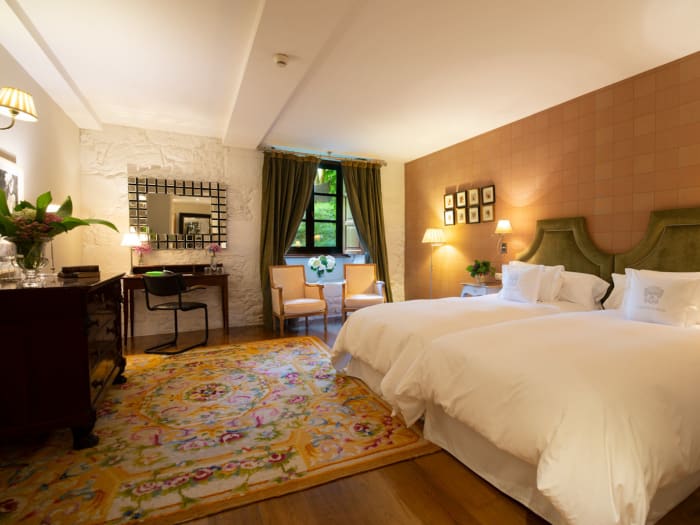
In a house of this nature, rooms and suites are more than accommodation categories: they extend a certain idea of the stay, shaped by intimacy, calm and elegance without stiffness. At A Quinta da Auga Hotel & Spa, one may reasonably expect spaces conceived in continuity with the overall architecture, with the blend of traditional charm and modern comfort that defines the property. In this kind of hotel, the aim is not to multiply spectacular effects, but to create rooms in which guests feel immediately settled, almost received into a private residence rather than lodged in a standardised hotel.
The character of a successful room often lies in details less visible than overtly luxurious décor: the quality of silence, the generosity of the bedding, the softness of textiles, the accuracy of lighting, the presence of well-designed storage, the sense of space around the bed and seating. In a destination such as Santiago de Compostela, where days can be long and full of movement, this practical comfort becomes especially important. Leisure travellers find a refuge; pilgrims or walkers, a place to recover; business guests, a setting conducive to concentration and rest.
The house's Galician identity also suggests a measured decorative palette, likely attentive to natural materials, restrained tones, a certain warmth in wood and fabrics, and a peaceful relationship with the outdoors. In the best rooms of this type of address, the view need not be monumental; it may simply offer a pleasing connection to greenery, light or gardens, which is often enough to transform the atmosphere. Luxury here lies less in display than in coherence: nothing seeks to distract, everything seeks to soothe.
Suites, whether for couples celebrating a special occasion or families needing more space, make particular sense in a hotel such as this. They allow the stay to stretch: one reads there, takes tea, gets ready before dinner, lingers into the evening. In a characterful house, a successful suite is not merely larger; it offers a more residential way of inhabiting the hotel. This is worth considering for stays of several nights, especially if one wishes to alternate city visits, spa time and rest without constantly leaving the room.
Given the hotel's positioning, one may also expect particular attention to bathrooms, now central to the high-end experience. After a day in Santiago's streets or on the roads of Galicia, having a comfortable, well-conceived bathroom immediately changes the quality of the return to the hotel. It is often there that the feeling of genuine recovery begins.
Ultimately, the rooms and suites at A Quinta da Auga appear designed for travellers who value atmosphere over display. They do not promise an interchangeable luxury abstraction that could belong to any city, but an experience aligned with the place itself: peaceful, carefully considered, rooted in a house and a landscape. For many guests, that coherence is precisely what distinguishes a good hotel from an address worth returning to.
The Dining Experience
In a house that is a member of Relais & Châteaux, the dining experience naturally holds significant importance. At A Quinta da Auga Hotel & Spa, the culinary journey extends the spirit of the stay. Respect for the location, a sense of hospitality, and a quest for balance are seamlessly intertwined. In Santiago de Compostela, this aspect takes on a particular significance. Galicia boasts a strong culinary identity, nourished by the ocean, the fertile lands, and the changing seasons.
For the traveller, dining at the hotel can become much more than a mere comfort solution. In such an establishment, the cuisine contributes to a deeper understanding of the region. A grand Galician table impresses with the clarity of flavours, the quality of the ingredients, and an elegant simplicity in execution. The finest meals in the area do not obscure the origin of the produce; rather, they accompany and reveal it with subtlety. This approach is well-suited to a hotel set in a soothing natural environment.
Breakfast deserves special attention. In fine hotels, it often ranks among the most memorable moments of the stay, setting the tone for the day ahead. At A Quinta da Auga, the service prioritises a leisurely pace, carefully selected products, and hot beverages prepared with care. For travellers eager to explore Santiago, this is a discreet luxury. Setting off to visit the city after a calm awakening in a verdant setting enhances the quality of the experience.
Dinner can serve multiple purposes. There is the sought-after meal enjoyed for its own sake when one wishes to dedicate the evening to the hotel. There is also the more relaxed dinner upon returning after a busy day in the historic centre. In both cases, the appeal of having a restaurant on-site lies in the continuity it offers. One does not leave the atmosphere of the hotel; instead, one extends its rhythm. This continuity is appreciated by couples, business travellers, and families alike.
Service is as important as the food itself. In a house of this calibre, attentive presence is expected. It guides without being intrusive, recommends with discretion, and adapts the pace of the meal to the mood of the moment. A well-maintained dining room, smooth hospitality, and a competent team make for an enjoyable experience without rendering it overly formal.
In Santiago de Compostela, a city of pilgrimage, culture, and transit, the dining experience at A Quinta da Auga thus plays a unique role. It is not merely a hotel restaurant; it becomes a space for re-centering and a way to savour Galicia within a setting that remains true to the spirit of the house.
Spa & Well-being
The spa is one of the most distinctive features of A Quinta da Auga Hotel & Spa. In Santiago de Compostela, well-being takes on a unique significance.
The city attracts a diverse array of travellers. Heritage enthusiasts, couples, professionals, families, walkers, and pilgrims all converge here. In this context, the spa transcends mere indulgence; it becomes a central element of the stay.
A good spa extends the identity of the establishment. At A Quinta da Auga, it is set within a soothing natural environment. Well-being finds a calm and enveloping form here, with an emphasis on recovery and balance.
Booking a treatment upon arrival allows for better organisation of one's stay. A treatment can mark the transition from travel to relaxation. A moment of unwinding also finds its place after exploring the historic centre.
For travellers arriving after a long walk, the spa offers genuine recovery comfort. It helps to release tension, soothe fatigue, and reclaim personal time. For couples, it becomes a shared ritual before dinner or after a day of exploration.
The appeal of a spa in a hotel surrounded by nature lies in this sensory continuity. One transitions from the garden and the damp light of Galicia to an interior realm dedicated to care. Well-being thus becomes an integral part of the entire stay.
The spa at A Quinta da Auga embodies restorative comfort, tailored to the genuine needs of travellers. In Santiago de Compostela, this aspect takes on a particularly resonant significance.
Concierge & Services
A five-star hotel is judged by its setting, its rooms, and its dining. It is also revealed in the quality of its services. At A Quinta da Auga Hotel & Spa, this aspect is less about the accumulation of offerings and more about a seamless accompaniment throughout the stay. The establishment caters to a variety of profiles. This versatility requires an organisation capable of adapting to different expectations without losing coherence.
For a couple, the ideal service simplifies the experience. Booking a spa treatment, advising on the best time to visit the historic centre, assisting in organising a dinner, and providing discreet attention to the rhythm of the journey. For a business traveller, priorities shift. Efficiency in arrivals and departures, a calm environment conducive to work, and a team ready to respond swiftly to logistical requests. For a family, the value of service is measured by its flexibility. It involves anticipating practical needs, guiding towards suitable activities, and making the entire stay more serene. In all cases, excellence lies in precision.
The concierge can play a particularly useful role in Santiago de Compostela. The city is not just defined by its major monuments. It is also discovered through its timings, its flows, its neighbourhoods, and its local habits. A good team knows when to suggest visiting the old town for the best experience. They can also assist in structuring a day between heritage and relaxation, or consider a broader excursion in Galicia. Such recommendations often transform a satisfactory visit into a truly memorable experience.
The hotel also values communal spaces as places for rest and conviviality. This implies attentive service to the overall atmosphere. Careful maintenance of the lounges and circulation areas, discreet staff presence, and the ability to make guests feel they can settle in, ask for assistance, or extend a moment. In the best establishments, this sense of ease is crafted with care. Nothing feels forced.
Advance booking, especially during the summer season, takes on significant importance here. It allows for better selection of room categories based on the nature of the stay. It also facilitates planning treatments, visits, and a balanced rhythm between city exploration and retreat. For travellers arriving in Santiago as part of a broader itinerary across Spain or the Iberian northwest, this coordination can be invaluable.
In summary, the services at A Quinta da Auga respond to a mature definition of hotel luxury. Being present without being intrusive, anticipating without overwhelming, making things simple without rendering them impersonal. In a characterful establishment, this quality of accompaniment is as important as the decor.
The art of living in Santiago de Compostela
Staying at A Quinta da Auga Hotel & Spa also means discovering Santiago de Compostela from a more nuanced angle than pilgrimage alone. Certainly, the city remains inseparable from its cathedral, the Praza do Obradoiro, the emotion of arrivals and the historical density of its old centre. Yet it also possesses a discreet art of living shaped by university rhythms, Galician culture, cafés, fine rain, wet stone and walks that are savoured rather than ticked off. A hotel set in a peaceful natural environment while remaining close to historic sights makes it possible to embrace precisely this complexity.
The best way to approach the city is often to accept its tempo. Santiago is not visited like a capital to be collected. It reveals itself in layers: a Romanesque or Baroque façade glimpsed at the turn of a street, a square that fills and empties, a granite perspective under changing light, a market, a bookshop, a cloister, a garden. The stay then takes on an almost meditative quality, especially when one can return at the end of the day to a hotel that prolongs this feeling of retreat and calm.
For French travellers accustomed to major heritage cities, Santiago offers something different: a very strong spiritual and symbolic intensity, yet still on a human scale. One walks a great deal, often looks upwards, and feels the presence of long time. This dimension sits well with the spirit of A Quinta da Auga. The hotel does not invite guests to consume the destination at speed; it encourages a stay alternating discovery and breathing space. It is a more accurate way of entering Galician culture, which readily values conviviality, food, the seasons and a relationship with landscape.
The climate is part of the experience. In Galicia, light, humidity and changing skies constantly alter the perception of place. Far from being a mere weather parameter, this instability gives Santiago its particular atmosphere. It makes interiors more precious, pauses more enjoyable and returns to the hotel more meaningful. In a house surrounded by greenery, this relationship to climate even becomes an aesthetic pleasure: watching the rain, enjoying a clearing sky, appreciating the comfort of a lounge or spa after time in the city.
Local art of living also passes through gastronomy, habits of walking and the ability to leave room for unprogrammed moments. That is perhaps where the hotel makes fullest sense. It allows a stay that is neither exclusively touristic nor purely contemplative, but a balance between the two. In the morning, one heads towards the historic sights; in the afternoon, one allows a pause; in the evening, one chooses between the house table and a meal in town. This flexibility is precious, because it leaves everyone free to compose their own Santiago.
Ultimately, A Quinta da Auga supports a certain idea of travel in Galicia: more sensory than demonstrative, more attentive to atmospheres than to performance, more faithful to duration than to accumulation. For those wishing to understand Santiago de Compostela beyond its most familiar image, it is a particularly relevant base.
Book with MyConciergeHotel
Booking A Quinta da Auga Hotel & Spa through MyConciergeHotel makes sense for travellers seeking not merely availability, but a precise fit between the property and the nature of their stay. This five-star hotel in Santiago de Compostela does not operate as simple accommodation. Its appeal lies in a particular balance between proximity to historic sights, a peaceful natural setting, the atmosphere of a characterful house and a clear wellbeing dimension. To enjoy it fully, it helps to think of booking as the first stage of the experience rather than an administrative formality.
The first consideration is the rhythm of the stay. A single night may suit an elegant stop on a Galician itinerary, but the property reveals more of its qualities when there is time to inhabit it: enjoy the spa, alternate visits and rest, dine on site, and let the setting work. MyConciergeHotel can help calibrate this duration according to the traveller's profile. A couple seeking a romantic pause will not organise their time in the same way as a business guest, nor as a family wishing to discover the city without giving up the comfort of a calm environment.
Room choice also deserves particular attention. In a hotel where atmosphere matters as much as amenities, the category selected directly influences the quality of the stay. Whether one prioritises intimacy, space, the ease of a short stop or the comfort of a longer stay, booking guidance helps direct guests towards the most relevant option. This personalised approach is especially useful in characterful houses, where rooms do not necessarily answer the same purpose or sensibility.
As noted, the spa is one of the property's major strengths. It is therefore wise to anticipate treatments at the time of booking, particularly during busier periods. This is exactly the kind of detail that changes the on-site experience: arriving with a confirmed appointment, knowing when to integrate a wellbeing pause, and avoiding last-minute disappointment. MyConciergeHotel can play a decisive role here by coordinating the priorities of the stay rather than treating them separately.
Booking with support also means better aligning the hotel with the destination. In Santiago de Compostela, some travellers wish to focus their time on the historic centre; others want to preserve moments of retreat; others still see the hotel as a base for exploring Galicia more widely. A well-prepared booking aligns these intentions with the property's actual strengths. This matters especially for a hotel such as A Quinta da Auga, whose singularity rests precisely on this successful in-between position between city and nature.
Ultimately, booking through MyConciergeHotel means booking with discernment. Not to add complexity, but to restore to travel its sense of rightness: the right room, the right rhythm, the right spa moments, the right reading of the destination. In a house where what matters most is atmosphere and the quality of lived experience, such attentive preparation is not an extra; it is fully part of the luxury.