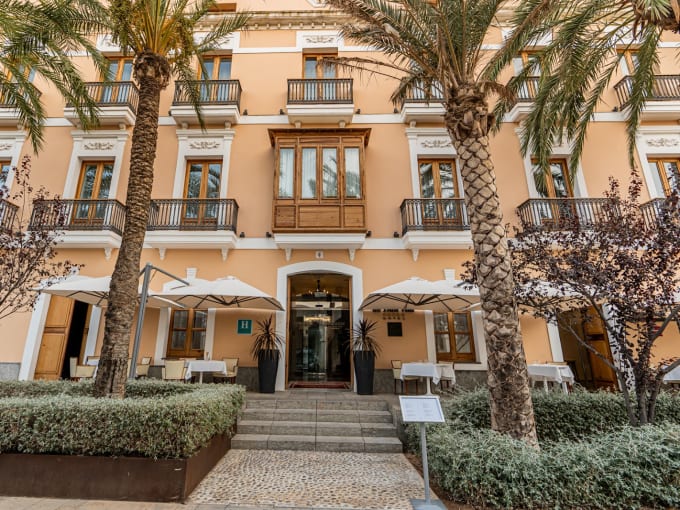
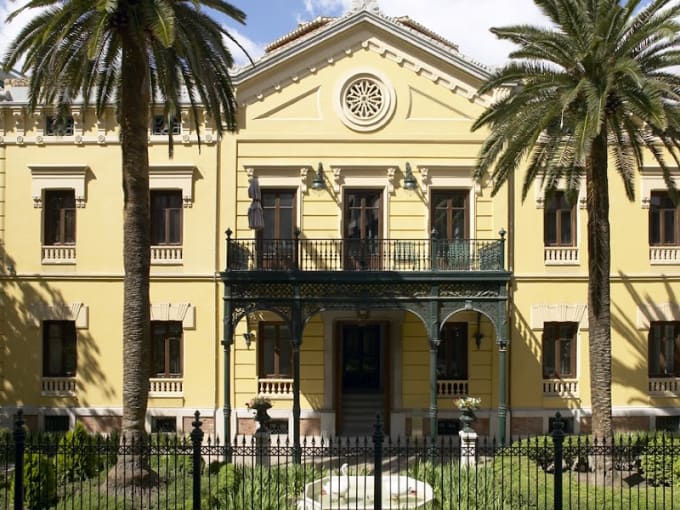
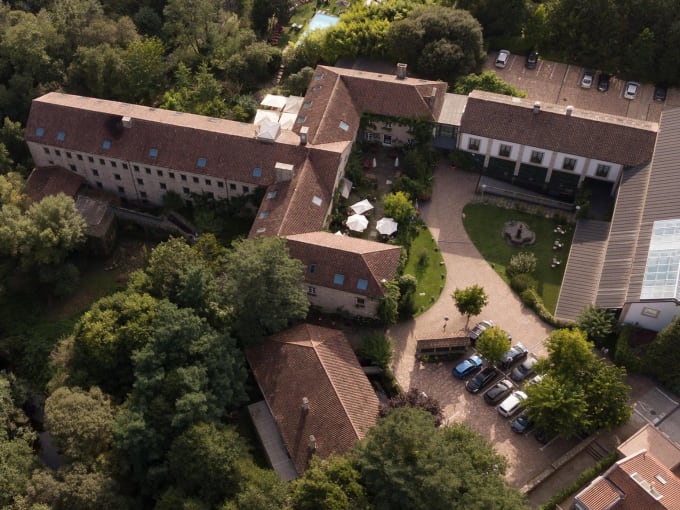
Spain is a particularly rich landscape for charming hotels linked to heritage. The country juxtaposes royal cities, trading ports, episcopal towns, fortified islands, and monastic countryside. This historical density gives rise to a very unique hospitality scene. Here, luxury is not solely defined by the size of the suites. It is expressed in a 17th-century façade, an old urban palace, a reinterpreted mill, or a property located near a classified historic centre. This is precisely what makes this ranking useful. Between Madrid, Barcelona, Granada, Cáceres, Santiago de Compostela, Cadiz, Alicante, Ibiza, Menorca, and Sigüenza, Spain offers various ways to inhabit history. It is important to note that Spanish heritage charm is never uniform. It varies according to the stone, the light, the memory of the place, and the relationship with the city.
To establish this top 10, we have adhered to consistent editorial criteria. The first is the strength of the location. A charming heritage hotel must engage with its immediate environment. We consider the address, the city, architectural coherence, and the building's ability to narrate an era. The second criterion concerns scale. These hotels often favour a more embodied experience than a large complex. The third relates to the clarity of positioning. An urban palace like Four Seasons Madrid does not express heritage in the same way as Hotel Casa de las Cuatro Torres in Cadiz. However, both can enter the conversation if their historical grounding is clear. Finally, we observe brand reputation, five-star status, and the consistency perceived by our advisors.
The panorama presented here showcases a highly diverse heritage Spain. In Barcelona, ABaC Restaurant & Hotel, Hotel 1898, and Hotel Claris illustrate three distinct interpretations of urban charm. In Madrid, Heritage Madrid Hotel and Four Seasons Madrid remind us that the capital knows how to combine characterful addresses with grand hospitality. Further south, Alhambra Palace Hotel in Granada and Atrio Restaurante Hotel in Cáceres are situated in particularly strong historical contexts. On the islands, Hotel Mirador de Dalt Vila in Ibiza and Hotel Faustino Gran in Ciutadella de Menorca offer a more Mediterranean relationship with heritage. In a more confidential vein, A Quinta da Auga Hotel & Spa, Hotel Helguera Palacio Boutique & Antique, Hotel Echaurren, and Hotel Molino de Alcuneza demonstrate that Spanish charm is also found outside the capitals.
For 2025 and 2026, several trends are clearly emerging. The first is a return to buildings with memory. Travellers are seeking less isolated decorative effects. They want to understand where they are sleeping. An old residence, a palace, a manor house, or a property linked to a historic centre are gaining more value. The second trend is the search for human scale. Even in the five-star segment, intimacy and personality matter more. The third concerns the rhythm of the stay. The heritage hotel becomes a base for exploring on foot, dining on-site, slowing down, and experiencing the city differently. What our advisors observe is simple. In Spain, the most sought-after charming hotels are those that connect heritage, location, and contemporary use without turning history into a static decor.
At MyConciergeHotel, we advocate for a certain idea of French luxury. It does not consist of standardising experiences. It is about recognising the authenticity of a place. In the Spanish context, this perspective is invaluable. A successful charming hotel does not need to overdo it. It should offer readable hospitality, a coherent setting, and a sense of continuity between the building and the stay. Heritage is not a sufficient marketing argument. It becomes compelling when it genuinely structures the experience. This is why we pay as much attention to the situation as to the identity. Sleeping near the walls of Ibiza, in a historic city like Cáceres, facing the Andalusian heritage of Granada, or in a characterful address in Santiago de Compostela tells different stories of Spain. And that is a good thing.
It is also important to clarify how to read this ranking. It is not a universal verdict. It is an editorial hierarchy designed for travellers who place heritage at the centre of their choices. Some will prefer the energy of a large city. Others will seek a more secluded address. Some will want a characterful house of human scale. Others will embrace a grand international signature, provided it is set in a strong historical context. We do not seek to oppose these models. My advice is to read each hotel as a different response to the same question. How to stay in Spain with the feeling of entering a place that has its own memory, geography, and presence. It is this nuance that adds value to the segment.
The following top ten highlights ten particularly compelling addresses for a charming stay in Spain. Each offers a specific relationship with heritage. Some focus on monumentality. Others on intimacy. All deserve the attention of a discerning traveller.