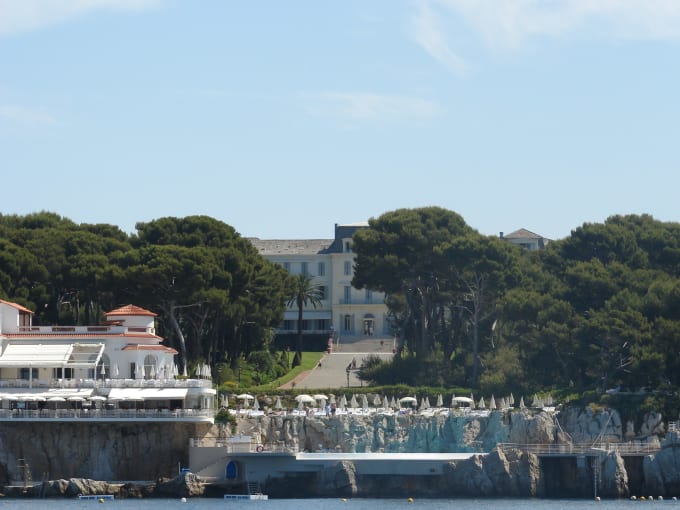
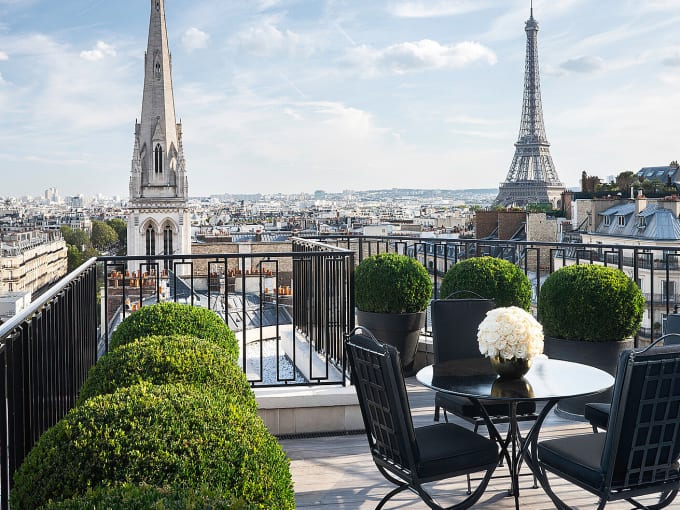
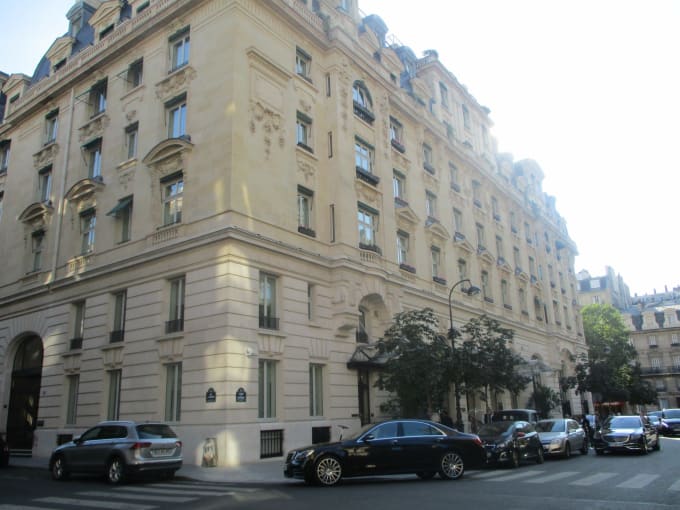
France remains a unique case in the luxury hotel sector. The country is home to historic addresses, family-run establishments, urban palaces, and destination retreats. This density allows for a more nuanced understanding of the five-star rating. Here, the ranking rewards not only opulence but also the longevity of an establishment. It examines the coherence between location, architecture, service, and the desire to travel. From Paris to the Riviera, Provence, and the Alps, the most beautiful five-star hotels in France thus convey multiple visions of luxury. They do not always resemble one another, which is precisely what makes this segment so fascinating to explore. A stay at the Bulgari Hotel Paris does not convey the same idea of refinement as a retreat at Airelles Gordes, La Bastide, or the Grand-Hôtel du Cap-Ferrat, A Four Seasons Hotel.
To establish this panorama, MyConciergeHotel relies on consistent editorial criteria. We first consider the hotel’s status and institutional recognition. In France, the Palace distinction serves as a strong benchmark, though it is not sufficient on its own. We also assess the strength of the location. Iconic addresses, remarkable buildings, landscape integration, views, accessibility, quality of communal spaces, and clarity of the experience all carry significant weight. Service is equally important; a fine establishment must deliver on its promises at every stage. Finally, we observe the hotel's personality. Some addresses impose a clear urban signature, such as Cheval Blanc Paris, Hôtel de Crillon, A Rosewood Hotel, or Four Seasons Hotel George V. Others excel in their relationship to the site, like Hôtel du Cap-Eden-Roc, Château Saint-Martin & Spa, or Cheval Blanc Courchevel.
This ranking serves as a reminder that French five-star hotels do not form a uniform block. Paris embodies the grand international tradition, featuring legendary hotels, fashion houses translated into hospitality, and institutions with highly polished service. The Mediterranean coast offers a different grammar, where light, gardens, terraces, and the relationship to the sea become central. Saint-Tropez, Antibes, or Saint-Jean-Cap-Ferrat do not provide the same temporal experience as a stay on Avenue George V or Place de la Concorde. In Provence, the landscape and stone redirect the experience towards contemplation. In the mountains, Megève and Courchevel prioritise intimacy, skiing, and seasonality. It is important to note that this diversity is not a secondary backdrop; it determines the rhythm of the stay, the type of service expected, and the way one inhabits the hotel.
The trends for 2025-2026 confirm several fundamental evolutions. The first concerns space. Travellers are increasingly favouring well-designed suites, terraces, gardens, and clear views. The second relates to well-being. The spa remains important, but it is no longer a standalone selling point; it must engage with the destination, natural light, and the overall tempo of the establishment. The third evolution pertains to the discretion of service. Our advisors observe a clear preference for hotels capable of anticipating needs without being overbearing. Finally, the notion of beauty is changing. It is no longer limited to spectacular decor; it encompasses the appropriateness of materials, acoustic quality, circulation, building restoration, and the ability to evoke the essence of France without resorting to folklore. This is where an address like Hôtel Le Bristol Paris or Le Fouquet's Paris can impress differently from a seaside palace.
Discussing the most beautiful five-star hotels in France also involves a certain art of hospitality. French luxury is not solely about rarity; it is based on a sense of measure. The best establishments know how to orchestrate heritage references, attentive service, and a genuine culture of detail without excessive rigidity. This philosophy manifests in very different registers. In Paris, it may take the form of a grand classic hotel, a contemporary address, or a house with a more couture style. On the Côte d’Azur, it often involves the relationship to the landscape. In Provence, it is expressed in the scale of the village, garden, or bastide. My advice is to perceive the beauty of a hotel as a cohesive whole. Facade, rooms, dining, views, arrival, silence, light, and a sense of inevitability form a complete experience.
It is also essential to approach this ranking methodically. The term 'beautiful' remains partially subjective. One address may impress with its history, another with its location, and a third with its contemporary attention to detail. We do not oppose these qualities; rather, we seek to prioritise comprehensive, credible, and desirable experiences today. A Parisian palace does not serve the same role as a holiday hotel in Saint-Tropez or an alpine retreat. Each establishment caters to a particular moment of travel. Some are suited for a first stay in France, while others are ideal for a celebration, honeymoon, long weekend, or winter getaway. This is why this top list highlights a variety of profiles, distinguishing hotels that can combine prestige, setting, and consistency, without claiming that a single model encapsulates French excellence.
Now, let us turn to the Top 12. Here, you will find major urban addresses, Riviera institutions, Provençal retreats, and well-maintained mountain hotels. Each offers a precise definition of hotel beauty.