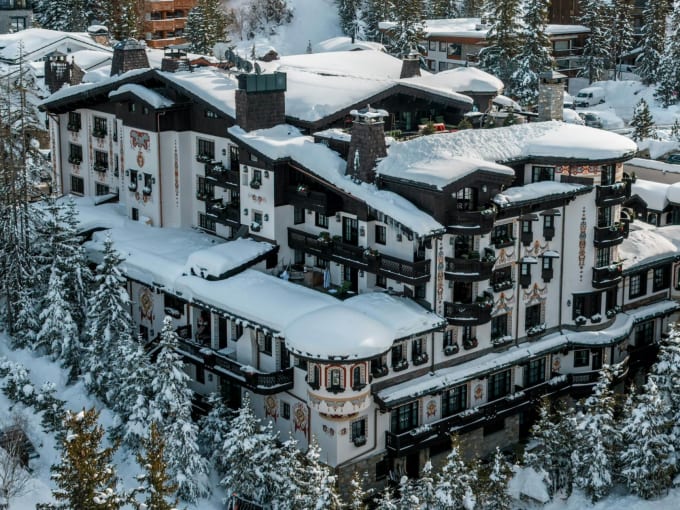
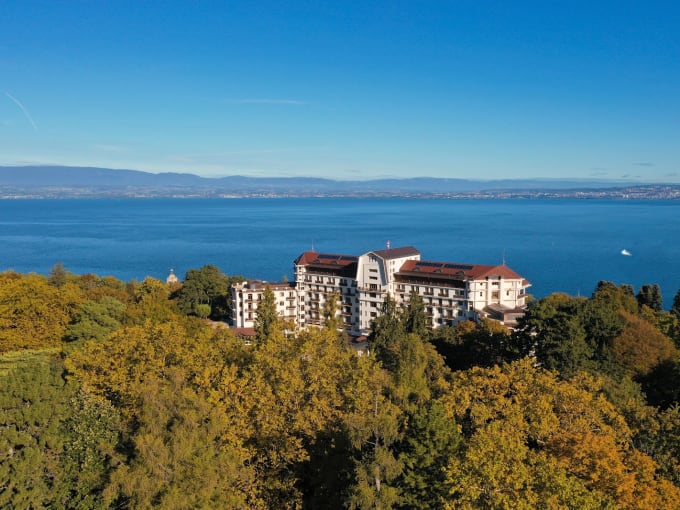
How many Palaces are there in the Alps? Seven establishments have been distinguished by Atout France in the Palace Collection 2026. This figure was unveiled on 2 June 2026. Out of 33 Palaces in France, the French Alps boast 7. This alone explains the attention given to this region, which holds a rare share of exceptional French hospitality. How many Palaces are in Courchevel? Five. Cheval Blanc Courchevel, L'Apogée Courchevel, Fouquet's Courchevel, Le K2 Palace, and Les Airelles Courchevel. Courchevel thus has the highest density of Palaces outside Paris. This is not merely a cartographic effect; it represents a geography of service, skiing, and international prestige. At the other end of the alpine landscape, the Hôtel Royal Palace - Evian Resort reminds us that a Palace in the Alps can also overlook Lake Geneva, far from the slopes.
What is a Palace? It is a French state distinction created in 2010, managed by Atout France, and sits above the 5-star classification. A hotel must already be rated 5 stars to be eligible. The distinction is awarded for three years, following an application process and a visit from a commission appointed by the Minister of Tourism. At MyConciergeHotel, this reminder is not an administrative preamble; it is the foundation of our ranking. We are not discussing a mere impression of luxury; we are referring to a level of expectation recognised by the state. The criteria observed by Atout France matter: the establishment's location and history, exemplary personalised service, gastronomic signature, international reach, and contribution to the image of France shape our assessment.
Our methodology is thus straightforward in principle but demanding in execution. This ranking comprehensively covers the 7 alpine Palaces distinguished by Atout France. No other hotels are included in this selection. We do not mix Palaces, grand 5-star hotels, and beautiful mountain houses. The subject is precise, and we embrace it. We then examine each address through several editorial filters. The first is the coherence between the location and the promise. The second is the quality of personalised service. The third concerns the hotel's integration into its environment. Views, access to the slopes, relationship to the village, or presence by the lake all alter the experience. It is also important to note a house's ability to embody a certain idea of French luxury without unnecessary theatrics.
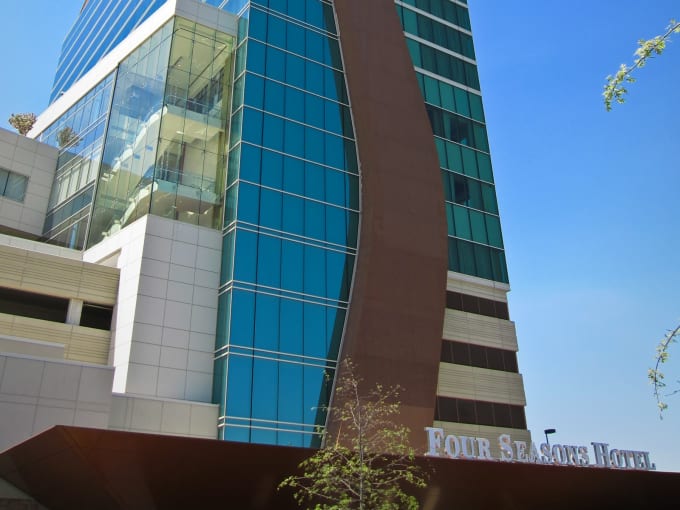
The alpine panorama is more varied than it appears. Five Palaces are located in Courchevel, but they do not tell the same mountain story. Cheval Blanc Courchevel appeals to a clientele focused on high-level skiing and the codes of a prestigious French brand. L'Apogée Courchevel offers a more panoramic experience, with a location that enhances the experience. Fouquet's Courchevel transposes a well-known Parisian brand into an international resort context. Le K2 Palace asserts its own identity within the Courchevel landscape. Les Airelles Courchevel remains a historical reference for the resort. Outside of Courchevel, Four Seasons Hotel Megève introduces a different relationship with the Alps, situated in a village with a strong heritage. Finally, the Hôtel Royal Palace - Evian Resort occupies a unique position as the northernmost of the alpine Palaces and the only one not located in a ski resort.
The trends for 2025-2026 confirm several underlying movements. Firstly, the mountains are no longer just a high-season winter destination. Travellers are seeking longer and more flexible stays, wishing to alternate skiing, wellness, gastronomy, and relaxation. Secondly, ultra-personalised service is becoming less demonstrative, more precise, fluid, and sometimes almost invisible. This is often where the difference between a grand hotel and a Palace lies. Our advisors also observe the growing importance of rhythm: simplified arrivals, mastered ski logistics, generous spaces, and preserved intimacy. Lastly, the gastronomic signature remains a strong marker, which Atout France also incorporates into its evaluations. While not reducing the experience to the dining table, it continues to weigh heavily in the international appeal of an alpine address.
These Palaces should also be viewed as expressions of French luxury—not a fixed luxury, nor a decor without purpose. The best of this tradition lies in balance: a history without nostalgia, excellence in service without stiffness, high-level gastronomy integrated into the stay, and architecture or decoration serving real comfort. In the Alps, this balance takes on a particular form. The climate demands technicality, the mountains require logistics, and the international clientele expects high standards. An alpine Palace succeeds when it transforms these constraints into evident advantages. My advice is to look beyond images of snow and roaring fires; the true difference is often measured in consistency, location, and quality of attention.
How, then, to read this ranking without falling into hollow superlatives? By accepting that a Palace is not an absolute; it is a highly developed response to a type of stay. Some travellers seek immediate ski access, others prefer a village connection, while some look for a lakeside retreat, more contemplative, as in Évian-les-Bains. We do not rank hotels against one another; we organise experiences within an already very restricted circle. All the establishments mentioned hold the Palace distinction and belong to a regulated elite of French hospitality. The nuance lies elsewhere: in the personality of the place, its relationship to the mountains, and how it serves its audience. This is the perspective we offer you, with precision, without unnecessary emphasis.
Now, let us turn to the Top 7, where you will find all the French alpine Palaces distinguished by Atout France. Each deserves careful consideration, as each responds to a different idea of the alpine stay.