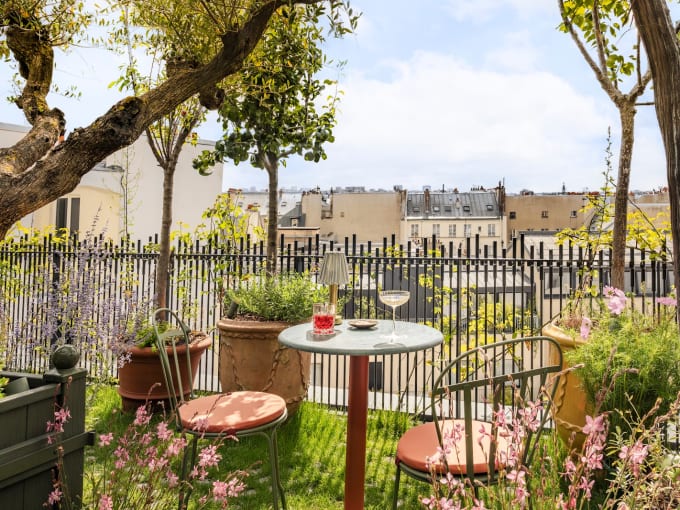
The 9th arrondissement embodies a quintessentially Parisian concept of the urban hotel. One can navigate between the Opéra, Saint-Georges, Pigalle, and the Grands Boulevards. The atmosphere of the neighbourhood shifts dramatically within just a few streets, which is precisely what makes it so captivating. Here, the business traveller, theatre enthusiast, leisurely stoller through the passages, and loyal patron of grand establishments can all find accommodation within walking distance. Few arrondissements offer such a density of scenes, shops, façades, and uses. Thus, in a ranking dedicated to the best urban hotels in the 9th, the focus is not solely on the address but also on the relationship with the city. A grand hotel at the Opéra tells a different story of Paris than a more intimate establishment in Pigalle. Between InterContinental Paris Le Grand, Sofitel Le Scribe Paris Opéra, Maison Souquet, La Fantaisie, Soho House Paris, and Bus Palladium, one can discern six distinct ways of inhabiting the same arrondissement.
At MyConciergeHotel, we approach this segment with a straightforward method. We first seek the alignment between the hotel and its immediate surroundings. A successful urban hotel does not exist in isolation; it must engage with its street, neighbourhood, and the actual practices of its guests. We then observe the consistency of service levels, clarity of offerings, quality of communal spaces, and the intelligence of the room layout. While brand reputation matters, it is never sufficient on its own. The five-star status indicates a level of amenities but does not replace the experience. We also consider verifiable elements. The exact address, historical anchoring, presence of a spa, garden, rooftop, grand lobby, or structured social life all weigh into our assessment. It is important to note that our ranking does not reward mere decor; it values a credible way of experiencing Paris 9.
The panorama of this selection showcases the richness of the 9th. InterContinental Paris Le Grand epitomises grand destination hospitality, facing the Opéra Garnier. Sofitel Le Scribe Paris Opéra represents another tradition, that of a central grand hotel designed for business, shopping, and cultural stays. Maison Souquet offers a more intimate experience, appealing to those seeking a more enveloping atmosphere near Pigalle. La Fantaisie introduces a different note in the Cadet sector, attracting guests with its contemporary energy and a more verdant relationship with the city. Soho House Paris highlights creative sociability, with spaces that extend the day well beyond check-in. Finally, Bus Palladium reminds us that the 9th maintains a strong connection to Parisian nightlife, music, and a form of urban relaxation. Six hotels, six rhythms, six legitimate uses of the same arrondissement.
For 2025 and 2026, several trends are solidifying in Parisian urban hospitality. The first concerns hyper-locality. Travellers desire not just a simple base but a connection to the neighbourhood. In the 9th, this means being able to move from a street café to a performance venue and then back to one’s room without cumbersome logistics. The second trend pertains to communal spaces. The classic lobby is giving way to hybrid areas where one can work, have lunch, hold a meeting, and return in the evening. The third evolution relates to well-being. Even in the city, spas, pools, or planted terraces are becoming essential features. Lastly, the demand for discretion is on the rise. This does not contradict social life; rather, it requires fluid circulation, precise service, and a room conceived as a refuge. What our advisors observe is a luxury that is less ostentatious but more coherent.
French luxury in the 9th is not merely about decorum; it often hinges on a more subtle combination. A fitting address. Readable architecture. Anticipatory service that does not intrude. A room that shields from external tumult. A good Parisian urban hotel must know how to navigate the city’s density. It should provide breathing space without promising impossible isolation. This is where the 9th becomes intriguing. It lacks the uniform monumentality of certain districts, nor does it possess their residential calm. It offers something different: an elegance of movement. One stays here to live Paris, not to abstract oneself from it. In this logic, the best hotel is not always the most solemn; it can be the most suitable for a specific agenda. My advice in this arrondissement is to first choose a tempo. Opéra, Pigalle, Saint-Georges, or Cadet do not narrate the same days.
It is also essential to explain how to interpret this ranking. An editorial top is not a universal verdict. It serves to prioritise proposals, not to erase their differences. A traveller coming for the Opéra, department stores, and professional meetings will have different expectations than a couple drawn to Pigalle. Similarly, a regular at socially vibrant establishments will not seek the same atmosphere as a client who values discretion. We have thus prioritised urban coherence, quality of execution, and each address's ability to fulfil its promise. This explains why very different hotels can coexist in the same ranking. None are included due to trends; each responds to a clear use. This is also why we avoid easy superlatives, as they often obscure the essence. In Paris 9, the right address is primarily one that aligns precisely with your way of staying.
Lastly, an essential point for our interpretation of this neighbourhood: the 9th is not a fixed decor. It is an arrondissement of movement, meetings, and contrasts. One comes here for a first visit to Paris and returns after stays in more residential areas. Its strength lies in this versatility. Within minutes, one can transition from a Second Empire façade to a more discreet street, from a grand hall to a more secretive house. This tension nourishes our selection. We have chosen hotels capable of offering a genuine city experience, with distinct signatures but a shared sense of address. The ranking that follows can thus be read as a map of contemporary 9th. You will find institutions, characterful houses, and more social venues. It is then up to you to choose the intensity, staging, and relationship to Paris that suits you.