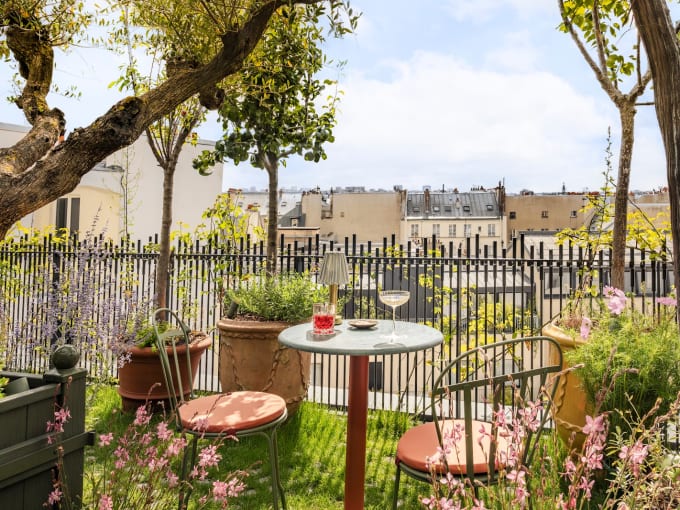
In the 9th arrondissement of Paris, boutique hotels take on a unique resonance. This district encapsulates various facets of the capital, linking the grand boulevards, the Opéra, theatres, passages, Nouvelle Athènes, and the slopes leading to Pigalle. This urban density fosters a direct relationship with heritage. Here, one does not merely choose a room; one selects an address, a neighbourhood rhythm, a way of inhabiting Paris. This is precisely what makes this segment so intriguing. Between historical institutions and more contemporary narratives, the 9th offers a rare landscape. It allows guests to stay in a setting rich in history without sacrificing modern comfort. It is important to note that Parisian charm does not rely solely on ostentation. It often arises from a just scale, local grounding, and a sensitive interpretation of the place.
To establish this ranking, MyConciergeHotel prioritises clear and verifiable criteria. The first is heritage anchoring. We observe the hotel's relationship with its immediate environment. Historical address, cultural neighbourhood, dialogue with Parisian architecture, or the ability to narrate the 9th without superficial decor. The second criterion concerns hotel personality. A boutique hotel is not merely defined by its category. It stands out through a coherent identity, a human scale, or a clear stance. We also consider the quality of execution, which includes the level of service, the upkeep of spaces, real comfort, and the consistency of the experience. Finally, our advisors assess the usage. A very good boutique hotel should be suitable for a cultural stay, a Parisian weekend, or a more discreet interlude.
The panorama of the 9th is more varied than it appears. On one hand, a grand establishment like InterContinental Paris Le Grand embodies the continuity of monumental Paris. Its proximity to the Opéra Garnier, its status as a grand hotel, and its place in the Haussmannian imagination lend it significant weight. On the other hand, more recent or unconventional offerings are shifting the codes. La Fantaisie, for instance, provides a more botanical and contemporary interpretation of the Parisian stay while remaining connected to the neighbourhood's energy. Bus Palladium, finally, reminds us that an address can also charm through its cultural memory and its relationship with the music scene. This trio aptly illustrates the richness of the 9th. Heritage here is not static; it can be monumental, social, artistic, or countercultural, depending on the chosen address.
For 2025 and 2026, several trends are solidifying in this segment. The first is the search for hotels with a strong local identity. Travellers want to understand a neighbourhood, not just tick off a city. The 9th responds very well to this expectation. It allows for a journey from the Opéra to more residential streets, then to cafés, performance venues, and specialised shops. The second trend concerns reinterpreted heritage. Guests appreciate places that respect history without turning it into a museum. This involves better-designed rooms, livelier common areas, and a less ostentatious aesthetic. Thirdly, well-being is taking on new forms. It is not always expressed through large spas; it can also be found in acoustics, lighting, bedding, and the fluidity of service. My advice in the 9th is to consider the address before the volume.
Discussing boutique hotels in Paris also necessitates a conversation about a certain idea of French luxury. Not a luxury of display, but a luxury of composition. In the 9th, this often translates into details that may seem simple but require true mastery. A façade that fits into the street without overwhelming it. A lobby that welcomes without excessive theatricality. A room where proportions matter as much as decor. Here, heritage is not only about monuments; it also encompasses usage. Walking to the Opéra. Returning from a theatre. Crossing a well-lit boulevard late at night. Taking the time for breakfast before a day of museums or meetings. What our advisors observe is a hotel's ability to make Paris immediately livable.
This ranking should therefore be read as an editorial selection, not as an absolute verdict. Each hotel has its audience, its tempo, and its promise. Some travellers will seek the grand Parisian tradition, with its codes, history, and iconic location. Others will prefer a more singular, intimate, or creative address. Still others will desire a hotel that engages with the nightlife, music, or the freer spirit of the neighbourhood. We do not aim to oppose these approaches; rather, we seek to distinguish those we find most compelling in terms of heritage within the specific context of the 9th arrondissement. Category, notoriety, or size alone are not sufficient. What matters is the harmony between the place, the experience, and the vision of Paris that the address offers.
Here is our Top 3 of the best boutique hotels in Paris 9th. Three ways to enter the arrondissement. Three interpretations of heritage. And for each, a clear reason to settle in.