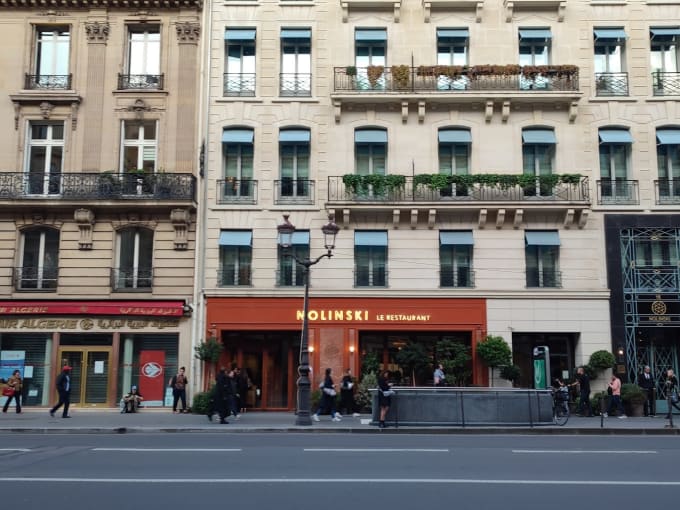
In the 1st arrondissement of Paris, urban hotels play a unique role. They serve not merely as addresses but become anchors in the historic centre. Between Place Vendôme, the Tuileries Garden, Rue Saint-Honoré, the Palais Royal, and the quays, the area boasts a rare density of major establishments. Visitors stay here to work, shop, dine, view exhibitions, or simply to experience Paris for a few days without wasting time on travel. It is also a district where luxury is expressed with discretion. Facades often remain understated. Entrances do not seek to impress. Yet, behind the doors, one discovers spacious interiors, patios, spas, suites with views, and a service tailored for travellers who are already well-acquainted with the city. This is precisely what makes this segment so exciting to rank.
To establish this selection, we first consider the coherence between the address and urban usage. A grand hotel in the 1st arrondissement must facilitate experiencing the capital on foot. This is a central criterion. We then assess the level of official distinction, such as the Palace label from Atout France when applicable, the international reputation of the establishment, the quality of hotel execution, the clarity of positioning, and the ability to offer a complete experience without disconnecting from the city. Our advisors also observe very concrete elements. The arrival must be seamless. The rooms should function well for both short stays and longer visits. The concierge service must master the rhythms of the neighbourhood. Finally, we favour hotels with a clear identity, rather than those that attempt to promise everything to everyone.
The landscape of the 1st arrondissement is more varied than it appears. Cheval Blanc Paris and Le Meurice embody two very different interpretations of Parisian luxury. One gazes upon the Seine with a controlled modernity, while the other is rooted in a palatial tradition facing the Tuileries. Ritz Paris remains an absolute reference at Place Vendôme, with an intact image and a location that speaks for itself. Mandarin Oriental, Paris offers an international vision of a Palace, in a highly sought-after area for fashion and business. Alongside these institutions, Burgundy, Grand Hôtel du Palais Royal, Le Roch Hotel & Spa, and Nolinski Paris champion more intimate formats. They often attract travellers who desire a central location with a more direct connection to the city, design, or a certain intimacy.
For 2025 and 2026, several trends are solidifying in this micro-market. The first concerns usable space. Clients expect less ostentation and more discernible comfort. A beautiful suite is, of course, important, but circulation, light, soundproofing, and service flexibility are equally crucial. The second trend is that wellness is becoming a standard, even in dense urban hospitality. The spa is no longer just an amenity; it complements a stay between meetings, after a long-haul flight, or before an evening out. The third evolution is the growing demand for highly localised experiences. A good hotel is no longer merely a refuge; it must understand its neighbourhood. In the 1st arrondissement, this means knowing how to orchestrate a day between museums, shopping, business meetings, and sought-after dining, without ever giving the impression of a standardised itinerary.
This ranking also speaks to the essence of French luxury when expressed in the heart of Paris. Here, refinement does not solely rely on the grandeur of the venues. It hinges on balance. A palace can impress, but it must also reassure. A boutique hotel may be more compact, yet it must maintain impeccable standards. In the 1st arrondissement, this philosophy is evident in the details. An inner courtyard that muffles noise. A room framing a monument without excessive theatricality. A lobby suitable for discreet meetings. A service that anticipates without intruding. My advice is simple. In this neighbourhood, one should choose an address according to their personal rhythm. Some travellers seek the most iconic Parisian scene, while others look for an elegant, more subdued base just minutes from the same attractions.
Thus, this ranking should be read for what it is. It does not designate a perfect hotel for all. It ranks very strong propositions, each with its audience. A historic Palace does not offer the same relationship with Paris as a more contemporary establishment. An address at Place Vendôme does not generate the same energy as a hotel near the Palais Royal. What our advisors observe is the relevance of the choice. For a first stay, certain hotels immediately convey the feeling of being part of the grand Parisian narrative. For regular visitors, others provide a more precious sense of freedom. We value both the mastery of service and the appropriateness of the setting. And we remind a useful truth: in the 1st arrondissement, location alone is never enough. The difference lies in daily execution, from waking up to returning late at night.
Our top 6 therefore brings together hotels that truly know how to inhabit the 1st arrondissement of Paris. Some carry the institutional prestige of a Palace. Others focus on a more refined elegance. All deserve attention. The challenge remains to identify the one that resonates with you.