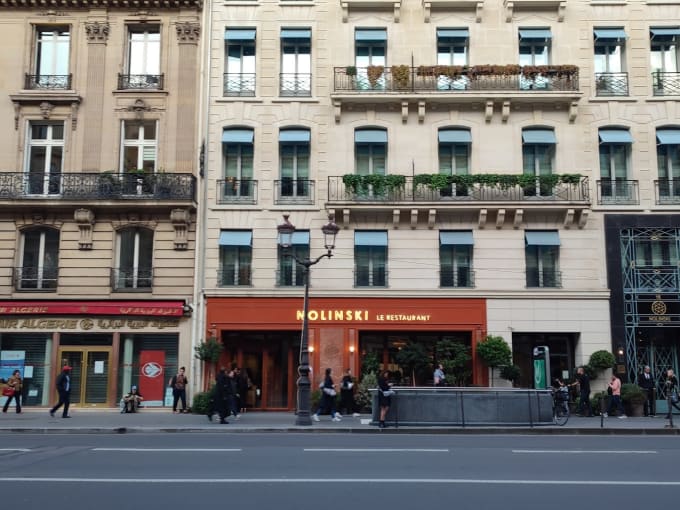
The 1st arrondissement of Paris embodies a rare concept of charming hospitality. Here, heritage is not merely a backdrop; it shapes the experience, from the Louvre to the Tuileries, from Place Vendôme to the quieter streets surrounding the Palais-Royal. Within this compact area, a select few establishments create a unique landscape. Historic palaces, more contemporary houses, and hotels that cultivate a sense of intimacy in a highly exposed neighbourhood can all be found here. It is precisely this contrast that piques our interest. The 1st arrondissement attracts visitors for its institutions, yet retains them through its ability to offer havens. Travellers come for monumental Paris but often choose their hotels for a more subdued experience. Between heritage, design, service, and location, charm takes on multiple forms here. Our selection includes Cheval Blanc Paris, Le Meurice, Mandarin Oriental, Paris, Ritz Paris, Le Roch Hotel & Spa, and Nolinski Paris.
In establishing this editorial ranking, we do not seek to create a sensational effect. We observe concrete and comparable criteria. The first is the establishment's anchoring in the 1st arrondissement. The second pertains to the heritage interpretation of the location, which may be reflected in a historic address, immediate proximity to major sites, or a coherent manner of embedding the hotel within Parisian history. We also consider the quality of the hotel experience, which includes the level of service, the clarity of spaces, the consistency of the welcome, and the ability to create an atmosphere. Status is also important. A Palace Atout France, such as Cheval Blanc Paris, Le Meurice, Mandarin Oriental, Paris, or Ritz Paris, provides an official reference point, but it does not solely define charm. Five-star hotels like Le Roch Hotel & Spa or Nolinski Paris may offer a more immediate, residential, and sometimes discreet relationship.
The panorama of the 1st is more nuanced than it appears. Le Meurice and Ritz Paris embody two major interpretations of the grand Parisian hotel. The former engages in dialogue with the Tuileries and a very French decorative tradition, while the latter is inseparable from Place Vendôme and a certain worldly memory of the capital. Cheval Blanc Paris introduces another sequence. Its location on the banks of the Seine, in a reinvented building, connects urban heritage with a contemporary perspective. Mandarin Oriental, Paris plays a more inward role, favouring retreat, fluidity, and a form of calm luxury, yet just steps away from the bustle of Saint-Honoré. Finally, Le Roch Hotel & Spa and Nolinski Paris remind us that a charming hotel is not solely measured by its institutional prestige; it is also gauged by its ability to make one forget the city, without ever cutting off from its energy.
The trends for 2025-2026 confirm this evolution. In the 1st arrondissement, the upscale traveller no longer seeks merely a recognised address. They look for a discernible identity, with heritage remaining central but expected in a less museum-like version. Clients value hotels that can articulate the memory of the place, contemporary comfort, and a personal rhythm. This translates into more versatile spaces, suites designed for longer stays, and increased attention to intimacy. Our advisors also observe a return to location as a decisive criterion. Being able to walk to the Louvre, the Tuileries, La Samaritaine, Rue Saint-Honoré, or the Opéra alters the way one experiences Paris. The spa remains important, as does dining. However, the true luxury in this neighbourhood often lies in transitioning from a very public Paris to a room that shields one from the tumult.
Discussing charm in the 1st arrondissement necessitates clarifying what we mean by French luxury. It is not merely about ostentation. Charm often arises from a careful balance: a well-known façade followed by a reception that remains understated; a thoughtfully designed decor that is never overwhelming; service that is present without excessive theatricality. In the best addresses of the neighbourhood, elegance rests on restraint and a culture of detail. It is reflected in the scale of the salons, in the light, in the relationship to the street, and in the way a view of Paris is opened up or, conversely, a cocoon is created. It is also a matter of temporality. Heritage is not static; it extends into contemporary uses. A palace may appear solemn from the outside yet be very fluid in experience. A boutique hotel can offer remarkable depth of stay if it truly understands its neighbourhood and its visitors.
Thus, this ranking should be read as a compass, not as a universal verdict. Each hotel meets different expectations. Some travellers will favour the grand Parisian tradition, with its codes, volumes, and history, while others will prefer a more confidential address, closer to a pied-à-terre, with a more direct relationship to the city. A palace does not eclipse a more discreet charming hotel; it simply offers a different form of experience. It is also worth noting that the 1st arrondissement is a territory of contrasts. A single day can blend museum visits, shopping, business meetings, and garden strolls. The right hotel is one that accompanies this rhythm without complicating it. This is why we have selected very different establishments, all coherent with the idea of heritage. Each tells the story of Paris in its own way, with its own vocabulary.
Our Top 6 now delves into the details. You will find both reference addresses and more discreet havens. My advice is to choose according to your way of experiencing Paris. The neighbourhood will do the rest.