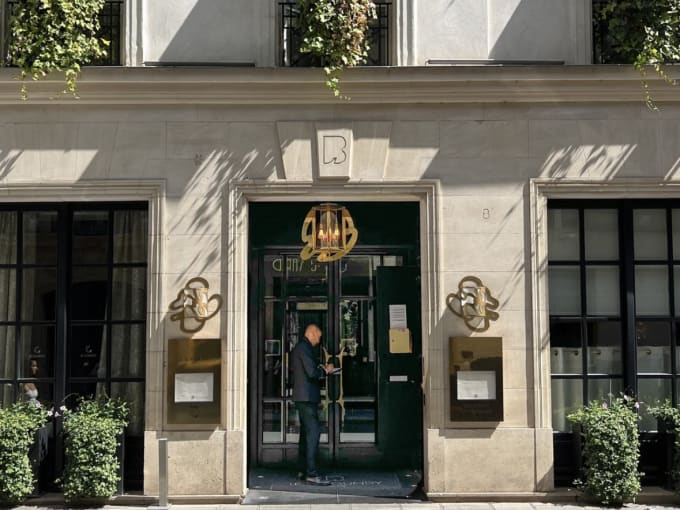
The 1st arrondissement of Paris boasts a rare concentration of establishments where the hotel and dining experience are held to the same high standards. This area encompasses the Louvre, the Tuileries, Place Vendôme, Rue Saint-Honoré, and the Palais-Royal. This geography matters. It attracts an international clientele that seeks more than just a hotel restaurant; they desire a complete experience, from breakfast to the last drink of the evening. In this district, gastronomy is not merely an added bonus; it shapes the identity of the establishments. Cheval Blanc Paris, Le Meurice, Burgundy, Grand Hôtel du Palais Royal, Mandarin Oriental, Paris, and Ritz Paris each represent a unique approach to the Parisian culinary scene. Notably, the 1st arrondissement allows for high-end dining followed by a leisurely stroll or a quick lift ride back to one’s suite.
To compile this ranking, MyConciergeHotel never limits itself to the prestige of an address. We first assess the coherence between gastronomic ambition and the overall hotel experience. The quality of the dining is, of course, crucial, as is the level of service in the dining room. We also consider consistency, the setting, the personality of the venue, the relevance of the offerings throughout the day, and a hotel’s ability to make dining a reason to stay. Official distinctions and collection affiliations serve as useful benchmarks but do not replace analysis. What our advisors primarily observe is how a dinner integrates into a stay. A great gastronomic hotel succeeds when the cuisine extends the experience of the address, rather than operating in isolation.
The landscape of the 1st arrondissement is more varied than it appears. Some establishments rely on a strong institutional status, such as the Palaces, and embrace a very readable Parisian theatricality. Others favour a more contained scale and a more discreet relationship with gastronomy. Cheval Blanc Paris opts for a contemporary address, deeply rooted along the Seine. Le Meurice engages with the heritage of grand historic hotels facing the Tuileries. Ritz Paris remains inseparable from Place Vendôme and a particular vision of grand French service. Mandarin Oriental, Paris presents its offerings through a more design-oriented lens of the capital. Burgundy and Grand Hôtel du Palais Royal offer a more intimate relationship with dining. My advice here is to choose based on the desired pace of the stay, not solely on reputation.
For 2025 and 2026, several trends are emerging in Parisian gastronomic hotels. The first concerns clarity. Travellers want to immediately understand the culinary promise of an establishment. The second relates to longevity. A grand hotel restaurant must be equally compelling at breakfast, for a light lunch, and for a destination dinner. We also see an increasing importance placed on outdoor settings, views, and terraces where they exist. Décor alone is not sufficient, but it is becoming a decision-making criterion once again. Another notable evolution is the demand for more flexible experiences. Tasting menus, shorter meals, lounges, bars, and patisseries must coexist without contradiction. In the 1st arrondissement, this versatility is becoming a marker of maturity, distinguishing establishments that can accommodate multiple uses of the city.
Discussing gastronomy in the Parisian luxury sector necessitates avoiding clichés. French luxury is not merely about showiness or nostalgia. In the finest addresses of the 1st, it rests on precision. This is evident in the table setting, the rhythm of service, the acoustics of a room, the accuracy of a wine cellar, or the attention given to a regular patron’s habits. Cuisine finds its place as a language of hospitality, reflecting the level of the establishment, its relationship with the neighbourhood, and its understanding of international expectations. Our advisors often observe this. A convincing gastronomic hotel is one where one can both celebrate a Parisian stay and hold an important meeting. This dual capacity, both festive and functional, remains one of the great privileges of the 1st arrondissement.
It is also important to explain how to interpret this ranking. It does not designate a perfect hotel for everyone. It ranks different offerings, each legitimate in its own right. Some travellers will favour the grandeur of a Palace and the symbolic strength of its restaurant. Others will seek a more discreet establishment, where gastronomy is woven into a more subdued atmosphere. Some will desire a view, others a heritage address, and still others a table that justifies the journey in itself. Our role is not to impose a singular taste but to clarify the options. An editorial ranking serves to guide, not to homogenise. This is why we emphasise coherence, personality, and consistency. In such a densely packed arrondissement, the right address always depends on the moment of the stay and the traveller’s intent.
Here is our take on the best gastronomic hotels in the 1st arrondissement of Paris. This Top 6 highlights establishments where the culinary experience truly matters in the choice of address. You will find Palaces, institutions, and more confidential hotels, all with a clear signature.