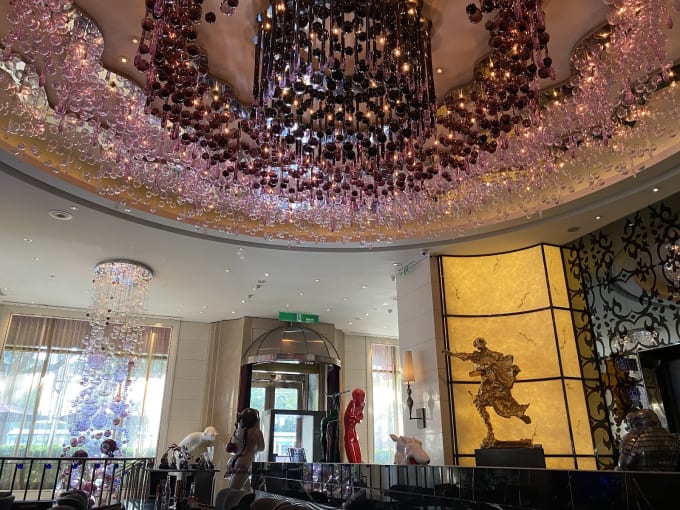
Taiwan holds a unique position in the realm of high-end Asian hospitality. The island combines a bustling capital, historic hot springs, volcanic landscapes, and a highly structured service culture. For the discerning traveller, this territory is understood not by the quantity of addresses but by their precision. In Taipei, the five-star offerings cater to very different needs: business stays, wellness weekends, urban getaways, or retreats near hot springs. This is precisely what makes this ranking useful. It is not about lining up well-known brands but about identifying the hotels that best embody Taiwan today. In our selection, Grand Victoria Hotel, Hotel Eclat Taipei, Hôtel Villa 32, Mandarin Oriental, Taipei, and Volando Urai Spring Spa & Resort already outline a clear map of local luxury.
At MyConciergeHotel, a ranking is never a mere exercise in notoriety. We cross-reference concrete, observable, and comparable criteria. First, the coherence between the address and its destination. A large urban hotel is not evaluated like a spa retreat. Next, the quality of the arrival experience, the level of service, the consistency of offerings, and the clarity of positioning are all taken into account. We also consider the strength of local anchoring: views, neighbourhood, relationship with nature, bathing culture, interior architecture, or the ability to provide tranquillity. Finally, we take into account a often decisive point: a hotel's ability to remain relevant over time. One establishment may be excellent for a night of transit, while another is ideal for three days of disconnection.
The Taiwanese panorama is more nuanced than it appears. Taipei concentrates several expressions of international luxury. Some addresses favour large volumes, comprehensive facilities, and a highly codified execution. Others focus on a more intimate scale, offering an almost residential interpretation of the stay. This diversity is invaluable. It allows us to recommend a hotel based on the rhythm of travel, rather than an abstract hierarchy. Mandarin Oriental, Taipei appeals to a clientele expecting a grand urban establishment, very structured. Hotel Eclat Taipei attracts design enthusiasts and those seeking a more discreet address. Grand Victoria Hotel is well-suited for functional stays, with a clear five-star comfort. In contrast, Hôtel Villa 32 and Volando Urai Spring Spa & Resort shift the focus towards water, silence, and a slower pace.
For 2025 and 2026, several trends are emerging in Taiwan. The first concerns wellness. A spa is no longer sufficient as a standalone argument. Travellers now seek a more integrated experience. Thermalism, intimacy, quality of sleep, natural light, and noise control are as important as the treatment menu. The second trend relates to format. Very large hotels maintain their relevance, especially in Taipei. However, smaller, more intimate addresses gain desirability when they offer true uniqueness. The third evolution pertains to the mobility of stays. Many travellers now combine an urban base with a short escape to hot springs. This reflects a very Taiwanese interpretation of contemporary luxury, alternating between the intensity of the city and retreat. This back-and-forth explains the complementarity of the hotels featured in this ranking.
From our concierge culture perspective, luxury in Taiwan can be well understood through a French lens. Not to impose an external model, but to recognise shared values. The discretion of service, the precision of gestures, respect for the client's pace, and the importance given to useful detail. A grand hotel is not merely a backdrop or a signature. It is a hospitality mechanism that must simplify the stay. Notably, the best Taiwanese addresses often excel in this restraint. They do not overdo it. They organise space, silence, and fluidity. What our advisors often observe on-site is this ability to make comfort evident. The traveller feels it upon arrival. Nothing is ostentatious. Everything should seem simple.
Thus, this ranking must be read methodically. The number one does not negate the qualities of number five; it simply aligns more broadly with our current editorial framework. Each hotel has its audience, tempo, and ideal season. A couple seeking private baths will not choose the same address as a business traveller based in Taipei. Similarly, a comprehensive international brand does not offer the same promise as a more niche boutique hotel. We reject automatic superlatives because they cloud decision-making. Our role is to illuminate, not to exaggerate. My advice is simple: first consider the nature of your trip. City or retreat. Fast-paced or slow pause. This is often where the right booking is made, well before the question of apparent prestige.
The following top five reflects this understanding. It distinguishes very different hotels, all relevant for discovering Taiwan with discernment. Each to their own use. Each with their own definition of a successful stay.