Choosing the best hotels in Israel begins with understanding the country itself. Here, distances are short, yet the atmospheres change rapidly. Tel Aviv imposes its urban, beachside, and creative rhythm. Jerusalem calls for a different tempo, one that is more heritage-focused and introspective. Herzliya, on the other hand, plays a more coastal, residential tune, often sought after for relaxation stays. In this context, high-end hospitality is not merely about an accumulation of amenities. It reflects different ways of inhabiting a city, of gazing at the Mediterranean, or of approaching a place steeped in history. This is precisely what makes this ranking useful. It is not just about identifying well-known addresses; it is about distinguishing those that offer a clear, coherent, and sustainable interpretation of luxury in Israel.
At MyConciergeHotel, we do not rank a hotel solely on its reputation. We first assess the robustness of its positioning. The brand matters, of course, when it guarantees discernible standards. However, it is never enough on its own. We also evaluate the quality of the location, the architectural relevance, the consistency of service, the clarity of the experience, and a property's ability to embody its destination. A grand urban hotel is not judged in the same manner as a historic address. A coastal resort is not interpreted as a heritage palace. What our advisors observe is the alignment between promise and reality. It is also important to note that consistency matters more than mere announcements. In a country where travellers often combine multiple stops, this coherence becomes crucial.
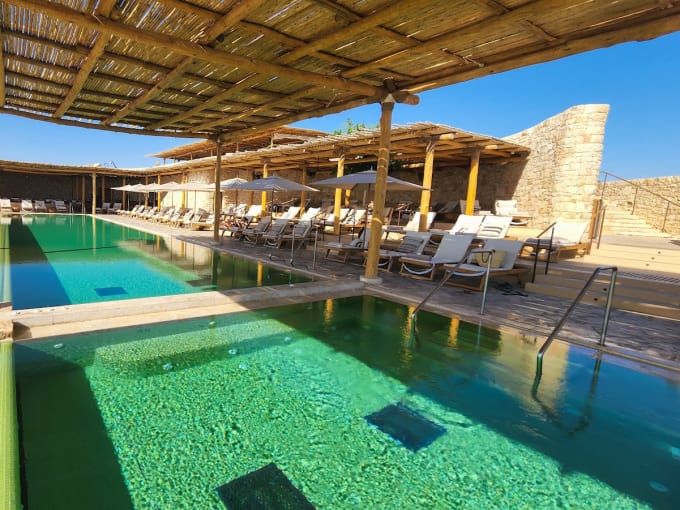
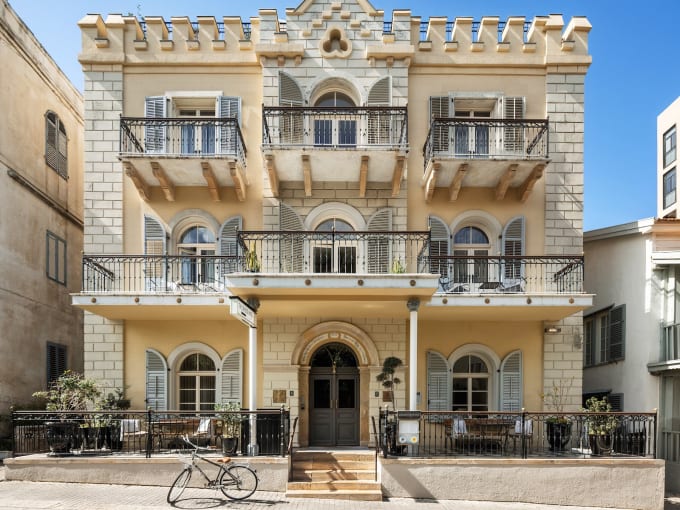
The Israeli panorama presented here illustrates this diversity. In Tel Aviv, The Drisco Hotel offers a more heritage-focused and intimate reading of the city. Six Senses Tel Aviv introduces a contemporary vision of urban wellness, driven by a well-established brand. The David Kempinski Tel Aviv asserts an international register facing the sea, with the visual impact and clarity expected of a major brand. In Jerusalem, The American Colony Hotel remains a unique address, sought after for its history and character. Waldorf Astoria Jerusalem employs a different grammar, more institutional and monumental. Finally, The Ritz-Carlton Herzliya is aligned with a coastal and residential logic, nestled between the marina, the sea horizon, and highly codified service standards. Thus, six hotels, but six distinct ways to enter the country.
For 2025 and 2026, several trends are confirming themselves in the Israeli luxury sector. The first concerns a return to more discernible experiences. Travellers desire less spectacle and more substance. They seek hotels capable of providing a clear setting, stable service, and a genuine connection to the place. The second trend relates to wellness. It is no longer just about a spa, but a more holistic approach to rhythm, recovery, light, and space. In this regard, certain international brands have a structural advantage. The third evolution is the increasing value placed on built heritage. Addresses that manage to preserve architectural memory without freezing the experience draw more attention. My advice for a first stay is to consider the hotel itinerary as a succession of atmospheres, not merely a straightforward upgrade.
This perspective aligns with a certain idea of French luxury, which we advocate at Le Concierge. Luxury is not about marble volumes or decorative excess. It lies in precision. The precision of an arrival. The precision of silence in a room. The precision of a view, bedding, or a lounge where one wishes to linger. In a country as contrasting as Israel, this precision takes on particular significance. A successful hotel must know how to filter external intensity without cutting the traveller off from their environment. It should provide a setting, not an isolated bubble. This is why we value establishments that embrace a clear identity. Some prioritise heritage. Others excel in contemporary efficiency. Still others play with coastal breathing. Not all have the same vocation, and that is perfectly fine.
Thus, this ranking should be read without a reflex for superlatives. The number one does not overshadow the others. It simply responds, according to our criteria, to a more comprehensive combination of factors. A historic hotel may be preferred for a characterful stay. A large international brand may be better suited for an extended business trip. An address facing the sea will be more relevant for a weekend of unwinding. What our advisors often remind us is that a good ranking never replaces a good personalised recommendation. It serves to clarify profiles. It helps to understand why a particular address stands out. It also helps to avoid artificial comparisons between hotels that do not pursue the same objective. Here, each selected establishment deserves attention. The hierarchy refines the choice. It does not diminish the richness of the landscape.
Our Top 6 best hotels in Israel follows this logic. You will find strong urban signatures, historic institutions, and well-crafted maritime retreats. Now, let us proceed to the ranking.