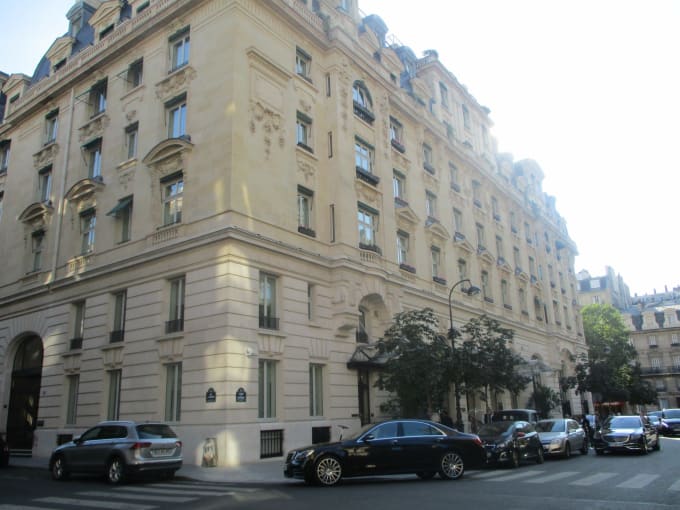
In Paris 16th, the hotel dining experience is not merely an ancillary service. It often shapes the establishment, its rhythm, and sometimes even its international reputation. This arrondissement is home to several venues where the gastronomic experience intertwines with a rich history of residential, diplomatic, or cultural significance. Travellers here seek less the fleeting trends and more a sense of continuity. They come to stay in a grand hotel, but also to book a destination lunch, a celebratory dinner, or an afternoon tea designed as a ritual. This is precisely what makes this segment intriguing. In the 16th, hotel gastronomy is expressed in a refined setting, often distanced from the central tumult. It thus gains in precision, comfort, and clarity for the discerning guest.
To establish this ranking, MyConciergeHotel never limits itself to the mere fame of a dining room or a façade. We first examine the coherence between the hotel and its culinary offerings. A prestigious restaurant is, of course, important, but it is not sufficient on its own. We also assess the depth of the experience. This includes the level of service, the consistency observed, the quality of the setting, and the venue's ability to accommodate multiple uses. A convincing gastronomic hotel must cater to an important dinner, but also to a business lunch, a romantic getaway, or a Parisian stop focused on dining. We also take into account objective markers. The Palace status, the international standing of the establishment, the exact location in the 16th, and the clarity of the dining options all weigh in our assessment.
The landscape of the 16th reveals a sharper diversity than one might expect. The Peninsula Paris embodies a well-structured vision of the grand international hotel, with dining conceived as a destination pillar. Saint James Paris offers a more singular interpretation, almost akin to a private residence, where gastronomy is set within a Parisian club atmosphere. Shangri-La Paris, a former princely private hotel, combines stunning views, historical heritage, and high-level culinary offerings. Sofitel Paris Baltimore Tour Eiffel adopts a more understated approach, yet remains relevant for travellers who prioritise a well-located, clear, and serious dining establishment. What is essential to note is that these four hotels do not convey the same idea of a meal. They outline four ways to gastronomically inhabit the 16th.
In 2025 and 2026, we observe several developments in Parisian gastronomic hospitality. The first concerns clarity. Guests want to quickly understand what the hotel offers. They seek precision over accumulation. A signature restaurant, a more accessible dining option, a solid bar, a well-crafted breakfast, and sometimes a well-utilised terrace. The second trend relates to the time spent on-site. Dining is no longer limited to dinner. It extends to brunch, afternoon tea, light snacks, and informal meetings. Finally, the setting regains central importance. In the 16th, this means views, gardens, lounges, or architecture that adds depth to the dining experience. Our advisors also note a strong expectation for tranquility. Here, gastronomic luxury often involves space and a sense of breathing.
This geography speaks volumes about French luxury when expressed in a Parisian hotel. It is not merely about sophistication. It is about a measured staging of comfort, service, and taste. In the 16th, hotel gastronomy is nourished by a unique relationship with the city. It is neither in the monumental Paris of heavy traffic nor in the Paris of overly demonstrative hidden gems. It occupies a sought-after middle ground. The grand establishments cultivate a sense of restraint. The decor matters, but it must never overshadow the plate. Service should be attentive without becoming theatrical. And the experience must appeal to both the resident guest and the Parisian who comes solely for the dining. My advice is simple. In this arrondissement, choose a hotel whose dining aligns with your pace of stay.
As always, this ranking does not claim to designate a universal winner. It ranks experiences according to our editorial perspective at a given moment. Each listed hotel has its audience, its rhythm, and its way of making gastronomy a reason for booking. Some travellers will favour the institutional prestige of a Palace. Others will prefer a more residential atmosphere or a more direct relationship between the dining room, garden, and room. We reject automatic superlatives, as they muddle decision-making. A good ranking should aid in choosing, not in homogenising. That is why we value concrete criteria. The quality of the location, the coherence of the culinary offerings, the overall experience of the stay, and the venue's ability to remain desirable beyond a single meal. Thus, reading this top list is about finding the gastronomic hotel that truly suits you.
Here is our selection of the best gastronomic hotels in Paris 16th. It brings together four solid addresses, each with a distinct identity. It is up to you to choose the scene that fits your stay.