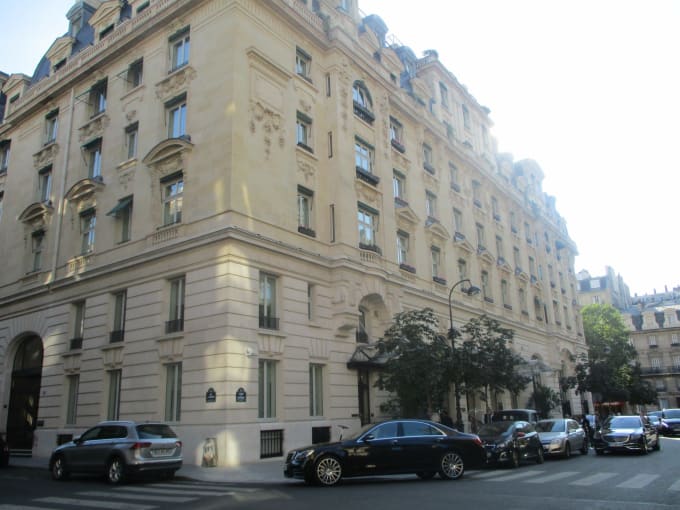
The 16th arrondissement holds a unique position in the Parisian hotel landscape. It embodies a notion of charm that does not rely on superficiality. Here, everything hinges on the quality of the establishments, the quality of the views, and the sense of space. Between Avenue Kléber, Trocadéro, Passy, and the outskirts of Bois de Boulogne, the area is home to private mansions, grand residences, and discreet institutions. This is a more residential Paris, often more subdued, yet never secondary. For a traveller attuned to heritage, the 16th offers a rare vantage point. One can read the architectural history of the capital in the façades, volumes, and decor. It also features hotels capable of blending heritage, contemporary service, and genuine personality. This balance is precisely what we are interested in here.
At MyConciergeHotel, we never reduce a ranking to mere star ratings. To establish a selection based on heritage, we cross-reference several criteria. The first remains architectural anchoring. A historic building, an address housed in a former residence, or a strong connection to the urban landscape of the 16th are all significant. The second concerns the coherence of the experience. We observe how the history of the place continues in the rooms, lounges, corridors, and views. The third criterion relates to service. A charming hotel is not just beautiful; it must be legible, inhabited, well-maintained, and pleasant to live in. Finally, we take into account the reputation of the establishment, its consistency, and its ability to offer a clear Parisian experience. Palace, grand classic, or boutique hotel, each address is assessed according to its actual promise.
The panorama of the 16th is more varied than one might imagine. On one side, palaces such as Saint James Paris, Shangri-La Paris, or Hôtel The Peninsula Paris embody very different expressions of heritage. The former plays the role of a grand house apart, almost an urban château, with a privileged relationship to the garden and privacy. The latter places hospitality within a former princely setting, with an immediate connection to the Seine, Trocadéro, and Parisian views. The third represents a more international interpretation of the grand hotel, situated in a strategic area between Avenue Kléber and the Arc de Triomphe. Alongside them, Hôtel Raphaël reminds us of the strength of independent Parisian addresses. Hôtel Square Paris, finally, offers a more contemporary and discreet interpretation of charm, located in Auteuil. This diversity enriches the ranking, allowing it to meet very different expectations without betraying the spirit of the neighbourhood.
For 2025 and 2026, our advisors observe a clear evolution in expectations. The upscale traveller seeks less ostentation and more authenticity. In the 16th, this favours hotels that can tell their story without overplaying it. Guests are requesting quieter rooms, more discernible views, outdoor spaces when available, and a genuine continuity between decor and service. Heritage is no longer seen as mere decoration; it has become a criterion for choice, on par with well-being or location. We also see a growing interest in smaller, more intimate establishments, or in large institutions that manage to maintain a sense of intimacy. Another strong trend is the search for a less saturated Paris. The 16th responds well to this demand, providing access to the capital's major landmarks while retaining a more residential feel.
French luxury in this sector is not merely about ostentation; it is rooted in a form of aesthetic discipline. Proportions matter. Materials matter. The way one enters a hotel, moves around, has breakfast, or finds silence after the city is equally important. In the 16th, this philosophy takes on a particular significance. The neighbourhood does not accommodate overly demonstrative concepts; it values restraint, discretion, and continuity. A successful charming hotel here offers a serene relationship with Paris, allowing one to see the city without unnecessary noise. My advice for this type of stay is simple: choose an address that matches your true pace. Some travellers desire a grand heritage decor and iconic views, while others prefer a more secretive, residential, almost neighbourly establishment. The right choice depends less on displayed prestige than on the expected experience.
Thus, this ranking should be read as an editorial hierarchy, not as an absolute verdict. Each selected hotel possesses its own legitimacy. Some excel by their status, others by their atmosphere, and others still by their ability to embody a specific Paris. We do not seek to pit the establishments against one another; rather, we aim to distinguish those that, in the 16th, best express the idea of a charming hotel linked to heritage. This implies embracing several forms of charm. Charm may arise from a rare garden in Paris, from a historic façade, a terrace with a view, a long-established address, or a more discreet luxury. Therefore, one simple rule to remember: the top-ranked hotel does not negate the others; it simply responds, according to our criteria, with greater precision to the promise of this selection.
Our top 5 thus brings together five interpretations of the 16th. Some are monumental, while others are more discreet. All convey something essential about Parisian heritage and the hospitality of this neighbourhood.