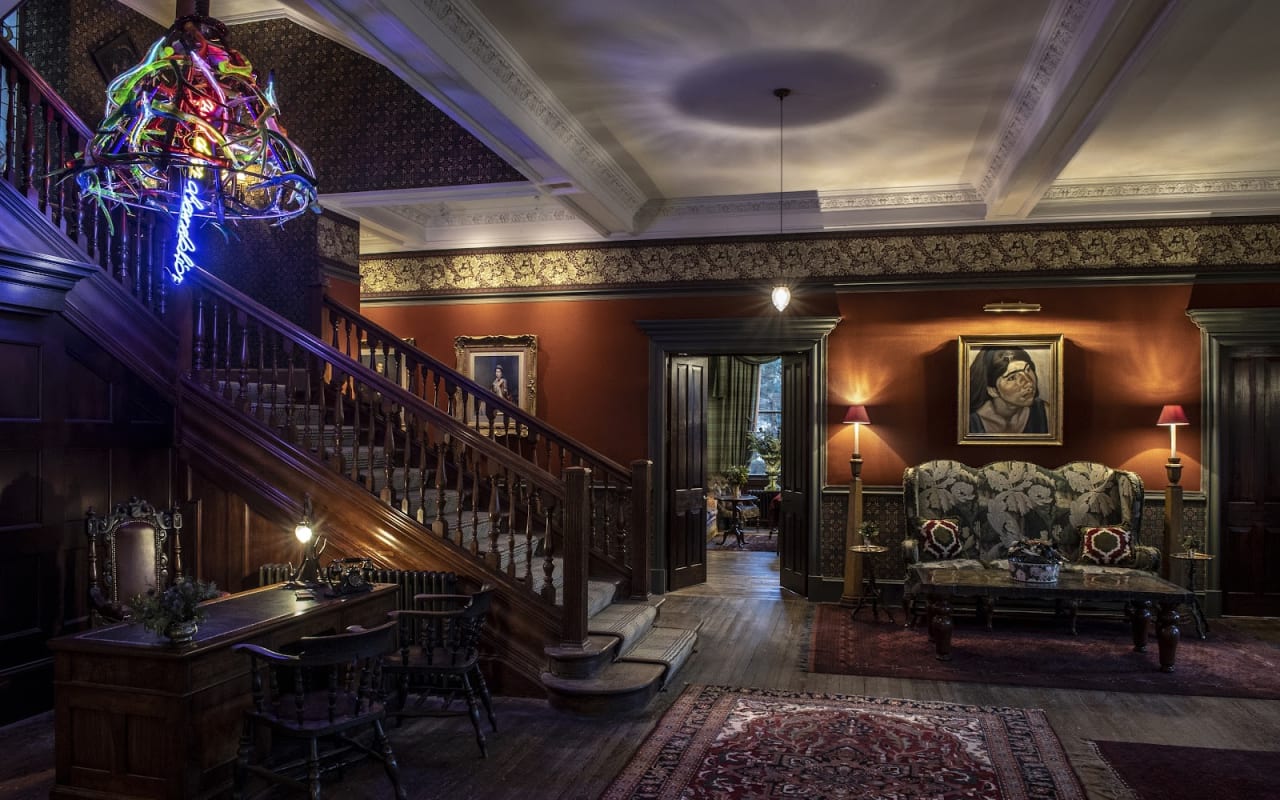
The United Kingdom provides a particularly fertile ground for hotel design. This topic extends far beyond mere decoration. Here, design narrates a way of inhabiting the city, the countryside, history, and usage. London concentrates a significant portion of this energy, featuring venues that engage with the staging of volumes, light, materials, and circulation. Andaz London Liverpool Street, Bvlgari Hotel London, citizenM London Bankside, Eccleston Square Hotel, and Claridge's exemplify this plurality. Outside the capital, Beaverbrook, Amberley Castle, Farlam Hall Hotel & Restaurant, and Glenapp Castle remind us that a design hotel is not necessarily a minimalist manifesto. It can also be an ancient place, reinterpreted with coherence, precision, and attention to detail.
To establish this ranking, we first consider the clarity of the design approach. A design hotel cannot be reduced to a few signature pieces; it must offer a readable vision. We observe the interior architecture, the coherence between private and communal spaces, the quality of materials, the intelligence of usage, and how technology is integrated. We also take the context into account. In London, good design must engage with the urban rhythm. In the countryside, it must respect the landscape and the scale of the location. Finally, we favour addresses whose identity remains stable over time. Notably, sustainable design counts for more than a well-photographed trend.
The British landscape is more varied than one might imagine from the continent. On one side, London boasts hotels where contemporary aesthetics manifest in various registers. Bvlgari Hotel London embodies a dense, mineral elegance that is highly controlled. Andaz London Liverpool Street plays with the encounter between historical architecture and contemporary language. citizenM London Bankside offers a more accessible, direct interpretation focused on usage and visual efficiency. Eccleston Square Hotel introduces a more pronounced technological dimension. Claridge's reminds us that a great classic can remain a design reference when it evolves its codes without losing its essence. On the other side, establishments like Beaverbrook and Amberley Castle demonstrate that heritage and design can progress together without contradiction.
The trends for 2025-2026 lean towards less demonstrative design. Our advisors observe a return to clarity. Clients are seeking better thought-out rooms, more fluid bathrooms, and communal spaces that truly serve during the day. Technology remains present, but it should fade into the background of the experience. Natural materials, calming palettes, and carefully selected objects are gaining ground. At the same time, the most compelling British hotels avoid international uniformity, retaining a local flavour. This may manifest through a preserved façade, a respected historical structure, or a unique relationship with the neighbourhood. Hotel design in the UK is thus becoming less spectacular and more habitable, which is often a better sign.
This perspective resonates, in a way, with our French luxury culture. We do not seek accumulation; we seek precision. A beautiful design hotel is primarily a place where every choice seems necessary. The furniture should serve comfort. The lighting should flatter without tiring. The materials should age well. Silence, circulation, and intimacy are as important as the visual appeal. My advice when comparing these addresses is simple: always consider what the design does for your actual stay. A photogenic lobby does not compensate for a poorly designed room. Conversely, a discreet aesthetic can yield a highly refined experience. This is often where the difference lies between a trendy address and a sustainable one.
It is also important to approach this ranking without absolute reflexes. The best design hotel for a cultural weekend in London may not necessarily be the best choice for a retreat in the countryside. Some travellers favour visible avant-garde, while others prefer a more understated elegance. Some seek an urban immersion, close to galleries, institutions, and creative districts, while others look for a place where design supports disconnection. Therefore, we are not ranking hotels against one another; we are prioritising proposals. Each responds to a particular usage, rhythm, and sensitivity. This is why a grand classic like Claridge's can coexist within the same selection as a more contemporary concept like citizenM London Bankside or a technological address like Eccleston Square Hotel.
In the following Top 10, you will find very different signatures. Some are London-based and urban, while others are set in a more residential or historical landscape. All share a clear idea of design, which is the guiding principle of our selection.