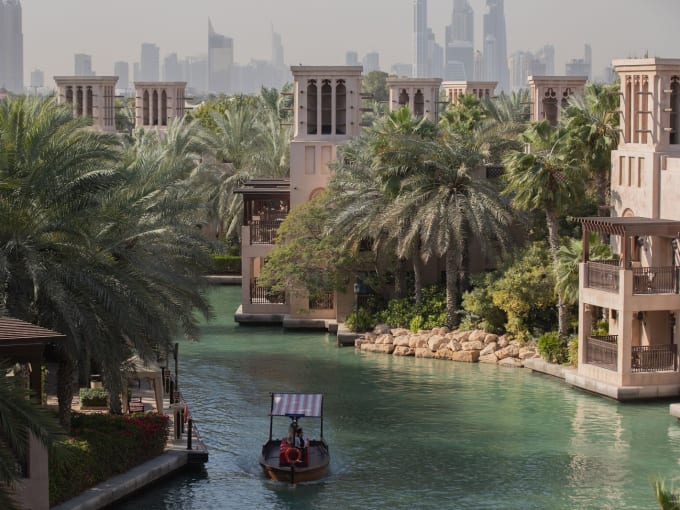
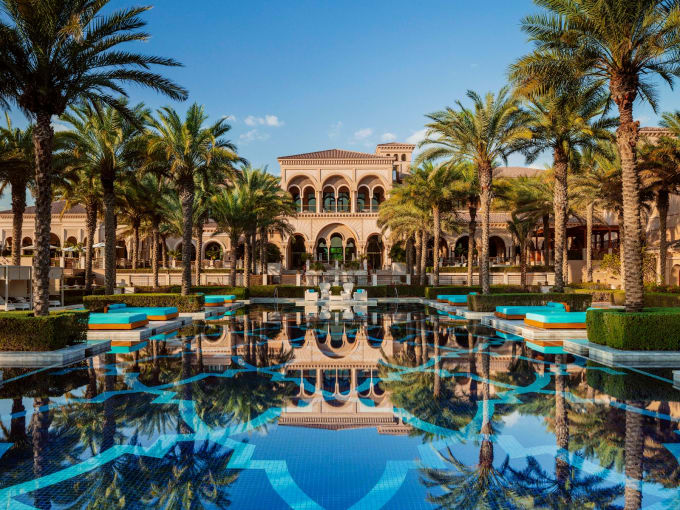
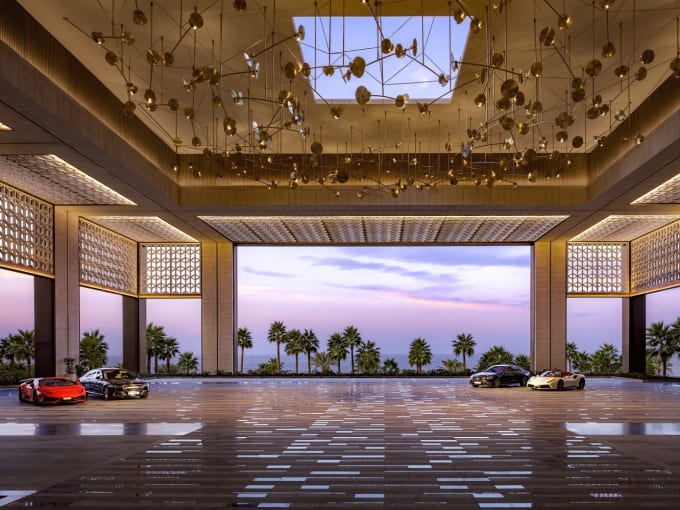
In the United Arab Emirates, a charming hotel is not limited to a small, discreet address. It often takes on a more expansive form, rooted in a sense of place. Here, heritage expresses itself differently than in Europe, conveyed through vernacular architecture, the relationship with water, the memory of trade routes, and the art of hospitality. In Dubai, several establishments reflect this interpretation with distinct languages. Jumeirah Dar Al Masyaf, Jumeirah Mina A'Salam, and Jumeirah Al Qasr create an inspired vision of ancient Arab coastal ensembles. One&Only The Palm Dubai adopts a more subdued approach. One&Only One Za'abeel, Atlantis The Royal, Bulgari Hotel, and The Lana tell another chapter—more contemporary, more urban, yet always attentive to the sense of place.
To establish this ranking, we do not seek mere publicity. We first observe the coherence between the address and the theme of heritage. A charming hotel, in this context, must offer more than a high level of service; it must forge a credible relationship with its cultural environment. We consider the architecture, materials, scale of spaces, and how the experience is integrated into the destination. We also take into account the clarity of the project. A house can be spectacular without being relevant to this subject. Conversely, a well-known address can still be appropriate. What our advisors primarily observe is a hotel's ability to leave a lasting impression of place—not just a memory of comfort.
The Emirati landscape is more varied than one might imagine from Europe. Some travellers still associate the country with a demonstration-style hospitality. The reality is more nuanced. In our selection, several hotels engage with the notion of heritage through the built environment. Canals, gardens, courtyards, and fortress silhouettes reinterpret regional forms. Others prioritise heritage as a continuity of hospitality, where service, spatial flow, and the sense of arrival become cultural markers. In Dubai, this diversity is particularly evident. Between the Arabesque classicism of Jumeirah Al Qasr, the residential spirit of Jumeirah Dar Al Masyaf, and the beachside elegance of Jumeirah Mina A'Salam, charm takes on very different expressions. More recent addresses also demonstrate how the contemporary can engage with local memory.
For 2025 and 2026, we see a clear trend emerging. High-end travellers are seeking less abstract grandeur and more context, narrative, and discernible uniqueness. In the United Arab Emirates, this favours hotels that can articulate modernity and rootedness. The most compelling projects do not copy the past; they translate it with precision. This can manifest through a waterfront location, a composition inspired by coastal medinas, or a refined approach to intimacy. At the same time, heritage expands beyond mere architecture to include uses, views, the relationship to the desert or coastline, and a hotel's ability to slow down the pace. My advice is simple: in this destination, one must pay attention to the details. It is these that distinguish an iconic address from one that is genuinely inhabited.
At MyConciergeHotel, we advocate for a certain idea of French luxury. It is not based on ostentation or the repetition of international codes. It prioritises accuracy, transmission, and quality of attention. Applied to the Emirates, this framework is particularly useful. It allows us to recognise establishments that possess a certain integrity—architectural integrity, first and foremost; service integrity, secondly; and finally, editorial integrity. In other words, a hotel must know what it is conveying. Jumeirah Dar Al Masyaf and Jumeirah Mina A'Salam speak of a reinterpreted coastal heritage. One&Only The Palm Dubai offers a rare intimacy for the destination. Bulgari Hotel and The Lana embrace a more urban sophistication. Atlantis The Royal and One&Only One Za'abeel illustrate how the current era can produce strong landmarks. It is important to remember that charm never excludes grandeur; it demands a clear identity.
This ranking should therefore be read as a selection of sensibilities, not as a universal verdict. Each hotel caters to a specific use. Some will be better suited for a first visit to the Emirates, while others will appeal more to regular visitors already familiar with Dubai. One address may be ideal for a heritage-focused trip for two, while another will be more relevant for a beach holiday with a strong design dimension. We do not rank hotels against one another; we prioritise offerings according to the announced theme. This changes everything. A very contemporary establishment can feature here if it expresses a convincing interpretation of the place. Conversely, an Arabesque aesthetic alone is not sufficient. What we value is the harmony between decor, experience, and memory, as well as a house's ability to remain legible over time.
Thus, here is our interpretation of the best charming hotels in the United Arab Emirates, viewed through the lens of heritage. Eight addresses, eight ways to inhabit the country.