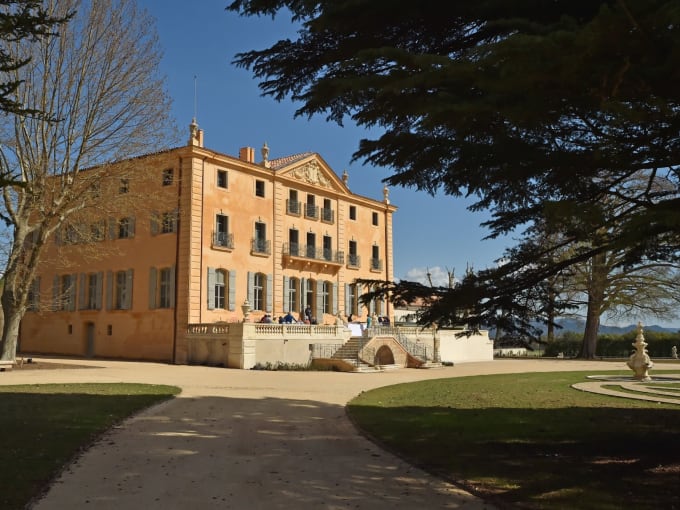
In Provence, the château-hotel occupies a unique position. It is neither a mere heritage stay nor a standardised resort. It offers a perspective on the territory through architecture, gardens, light, and the local rhythm. In this region, the notion of a château takes various forms. It can refer to an aristocratic bastide, a reimagined wine estate, or a historic country house transformed into a five-star refuge. For the traveller, the challenge goes beyond the beautiful stone. It is about finding a place that showcases Provence without freezing it in time. This is precisely what makes this segment so exciting. Between Aix-en-Provence, Le Puy-Sainte-Réparade, and Saint-Rémy-de-Provence, three establishments illustrate distinct yet coherent interpretations of characterful stays.
At MyConciergeHotel, we never view a ranking as an abstract list. We first observe the coherence between the location, the history of the building, and the experience actually offered. For this top 3, we have selected simple yet demanding criteria. The first concerns Provençal anchoring. A château-hotel must engage with its environment rather than erase it. The second pertains to the quality of execution. This includes the hotel standard, the clarity of spaces, the care taken with the rooms, and the ability to provide a seamless experience. The third criterion relates to personality. A memorable address is not only beautiful; it has a point of view. Finally, we consider sustainable desirability. In other words, does the establishment remain relevant beyond the novelty effect?
The scope of this selection is intentionally narrow. It brings together three addresses, all rated 5 stars, but very different in their approach to embodying Provence. Château de Fonscolombe, in Puy-Sainte-Réparade, adheres to a classic interpretation of the historic estate. The relationship with the park, the volumes, and the Aix countryside is significant here. Château de la Gaude, in Aix-en-Provence, offers a more composite approach. The château interacts with a lively estate, where hospitality is also conceived through contemporary uses. Hôtel Château des Alpilles, in Saint-Rémy-de-Provence, embodies another tone. More intimate in spirit, it draws on a highly sought-after Provençal imagery, balancing family home, controlled nature, and proximity to the Alpilles. It is worth noting that these three hotels share a common heritage base, but not the same promise of stay.
For 2025 and 2026, several trends are shaping the château-hotel market in Provence. The first is a return to more grounded, less ostentatious stays. Travellers are seeking homes with a clear identity, rather than interchangeable luxury. The second concerns longer stays. People are booking less to tick off a destination and more to inhabit a place for a few days. This favours estates capable of offering multiple experiences: garden, dining, spa, local culture, walks, silence. Another evolution merits attention. International clientele remain sensitive to historical signatures, but they also expect frictionless comfort. Finally, seasonality is being redefined. Provence is no longer limited to summer. The shoulder seasons are gaining ground, especially in characterful hotels, where light, fireplaces, and tranquillity become decisive arguments.
French luxury in a Provençal château-hotel is not merely about ostentation. It often embodies a form of restraint. A tree-lined avenue, a period staircase, shutters overlooking a park, a shaded terrace, a service that understands the right tempo. This language is subtle, yet it speaks immediately to travellers accustomed to grand European houses. In Provence, it takes on a particular hue. The light imposes a frank relationship with materials. Stone, lime, terracotta tiles, light fabrics, and structured gardens serve more than a decorative function. They create an atmosphere. What our advisors often observe is that the best stays arise from a balance. Character is essential, of course. But so is ease, space, and a genuine quality of life on site.
This ranking should therefore be read as an editorial orientation, not as a universal truth. The best château-hotel in Provence varies depending on whether one travels for a gastronomic weekend, a romantic interlude, a few days in nature, or a cultural exploration around Aix and Saint-Rémy. Some travellers will prioritise proximity to a city. Others will seek a more contemplative estate. Still, others will look for a human-sized address, where the spirit of a grand private house can be found. This is why we have ranked these hotels according to their ability to combine identity, hotel quality, and destination relevance. None are interchangeable. None speak to the same traveller in the same way. My advice is to read this top as a compass. The ranking matters, but personal affinity matters more.
Now, let us present our top 3 château-hotels in Provence. Three addresses, three ways to enter the region through heritage, landscape, and hospitality.