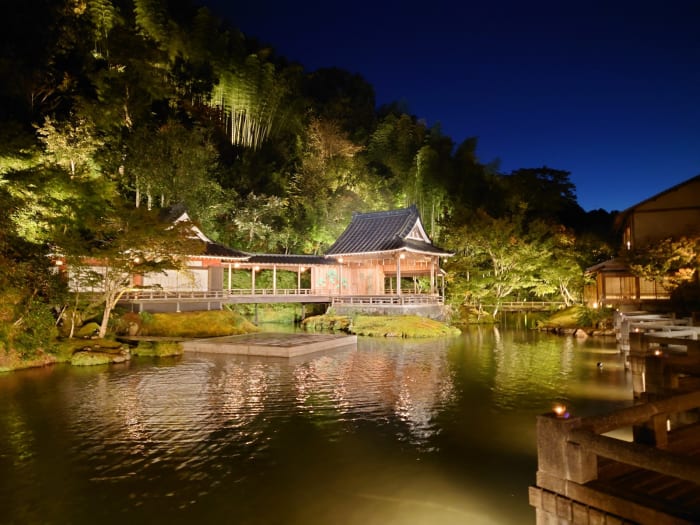
Histoire & héritage
À Izu, la notion d’hospitalité ne relève pas seulement du service : elle appartient à une culture du temps long, façonnée par les sources chaudes, les paysages de montagne et une certaine idée japonaise du retrait. L’Hôtel Asaba s’inscrit dans cette tradition du ryokan, forme d’hébergement qui dépasse largement la simple nuitée pour proposer une expérience complète, faite de rythme, de silence, de gestes mesurés et d’attention portée à l’environnement immédiat. Ici, l’héritage ne se lit pas dans un discours appuyé, mais dans une manière d’habiter l’espace, de recevoir, de servir le thé, de préparer un bain, de laisser la nature entrer dans l’expérience sans jamais la forcer.
Le fait que l’établissement soit membre de Relais & Châteaux donne un cadre de lecture utile : celui d’une maison où l’identité locale prime, où l’architecture, la table et l’art de recevoir sont pensés comme un ensemble cohérent. Dans le cas d’Asaba, cette cohérence passe d’abord par une fidélité à l’esthétique japonaise traditionnelle. Les volumes, les lignes, les matériaux et la relation entre intérieur et extérieur participent d’un langage ancien, toujours vivant, qui privilégie l’équilibre plutôt que l’effet. Le bois, les ouvertures sur le jardin, les perspectives cadrées et la retenue décorative composent une atmosphère où rien ne semble démonstratif, mais où chaque détail paraît à sa place.
Dans la péninsule d’Izu, région réputée pour ses onsen et ses paysages changeants, cette forme d’hospitalité a trouvé un terrain naturel. Le voyageur ne vient pas seulement chercher un hôtel de grand confort ; il vient aussi éprouver une autre cadence. Le séjour s’organise autour d’éléments simples en apparence : le bain, le repas, le repos, la contemplation d’un jardin ou d’une lumière de fin de journée. Ce sont précisément ces éléments, lorsqu’ils sont traités avec justesse, qui donnent à une adresse son caractère durable.
L’héritage d’un ryokan comme Asaba tient également à sa capacité à demeurer contemporain sans rompre avec ses fondations. Les attentes d’aujourd’hui en matière de confort, de discrétion du service et de fluidité du séjour sont bien présentes, mais elles ne prennent pas le pas sur l’esprit du lieu. Le luxe y est moins affaire d’ostentation que de qualité d’attention : une chambre préparée avec soin, un service de couverture exécuté sans bruit, une réception disponible à toute heure, une cuisine ancrée dans les produits locaux et une sensation constante de calme organisé.
Pour le voyageur européen, l’intérêt d’Asaba réside aussi dans cette rencontre entre deux imaginaires du grand hôtel. D’un côté, les codes internationaux du cinq étoiles ; de l’autre, l’univers du ryokan, avec sa profondeur culturelle propre. Le résultat n’est ni un pastiche ni une adaptation superficielle, mais une adresse qui semble assumer pleinement son contexte. C’est cette fidélité à une tradition d’accueil japonaise, enrichie par des standards contemporains, qui donne à l’établissement sa singularité. Plus qu’un décor, Asaba propose une forme d’héritage vécu : un séjour où l’on comprend, par l’expérience, ce que signifie vraiment l’hospitalité dans une région comme Izu.
L’établissement
Le premier luxe d’Asaba est son inscription dans le paysage d’Izu. La région, connue pour ses reliefs doux, sa végétation abondante et la présence constante de l’eau thermale, offre un décor qui appelle naturellement au ralentissement. L’hôtel tire parti de ce contexte sans le surjouer. Plutôt que de s’imposer à la nature, il semble s’y glisser, dans une relation de continuité entre architecture traditionnelle, jardins et vues ouvertes sur un environnement apaisant. Cette manière de s’ancrer dans le site est essentielle à l’expérience : on ne séjourne pas ici dans un établissement interchangeable, mais dans une adresse profondément liée à son territoire.
L’architecture japonaise traditionnelle, mentionnée parmi les traits distinctifs de la maison, structure cette impression dès l’arrivée. Les lignes sont sobres, les circulations pensées pour ménager des transitions, et les espaces communs invitent moins à la démonstration qu’à la présence. On y perçoit une intelligence du vide, de la lumière et des matières, qui fait partie intégrante du confort. Là où certains hôtels multiplient les effets visuels, Asaba privilégie une esthétique de la retenue. Le regard se pose sur un détail de bois, sur le dessin d’un toit, sur le cadre d’une ouverture donnant sur le jardin ou sur l’eau. Cette simplicité apparente demande en réalité une grande maîtrise.
Le cadre naturel au cœur d’Izu contribue à faire de l’établissement un lieu de séjour autant qu’un lieu de destination. On peut bien sûr envisager l’hôtel comme point de départ pour explorer la région, ses paysages et sa culture des sources chaudes, mais beaucoup de voyageurs y trouveront surtout le désir de rester. Le temps y prend une texture différente. Le matin, la lumière transforme les volumes et révèle la délicatesse des matériaux. En journée, les espaces communs et les chambres deviennent des refuges silencieux. Le soir, l’atmosphère se resserre autour du bain, du dîner et d’un sentiment de retrait presque cérémoniel.
Cette relation au lieu est renforcée par la qualité des services de base, qui assurent une fluidité discrète. Réception et conciergerie disponibles 24h/24, entretien quotidien, service de couverture, consigne à bagages et assistance attentive permettent au séjour de se dérouler sans friction. Dans un hôtel de cette nature, le confort ne tient pas seulement à ce qui est visible ; il réside aussi dans tout ce qui se règle sans effort apparent. Le personnel multilingue, lorsqu’il est disponible, facilite encore cette sensation d’aisance pour les voyageurs internationaux.
Asaba s’adresse particulièrement à ceux qui cherchent une expérience de calme construit, loin des rythmes urbains et des hôtels standardisés. Le lieu n’est pas spectaculaire au sens occidental du terme ; il est plus subtil que cela. Son pouvoir tient à l’accord entre le site, l’architecture et la promesse de repos. Dans une destination comme Izu, célèbre pour ses paysages pittoresques et ses eaux chaudes, cette adresse propose une interprétation aboutie du séjour de ressourcement. On y vient pour dormir, bien sûr, mais aussi pour retrouver une qualité d’attention au monde extérieur : la saison, l’humidité de l’air, le silence d’un couloir, le bruissement du jardin, la chaleur de l’eau. C’est cette somme de perceptions, plus qu’un simple inventaire d’équipements, qui définit véritablement l’établissement.
Chambres et suites
Dans un ryokan de cette catégorie, la chambre n’est pas seulement un espace privé : elle constitue le cœur du séjour. À l’Hôtel Asaba, on peut raisonnablement s’attendre à ce que les hébergements prolongent l’esprit général de la maison, fait d’architecture japonaise traditionnelle, de calme visuel et de confort discret. Plus qu’une accumulation d’objets ou de technologies ostensibles, le luxe s’y exprime par la qualité des matières, la lisibilité des volumes et la sensation d’ordre. Le voyageur y trouve un refuge pensé pour apaiser plutôt que pour impressionner.
La tradition japonaise du ryokan accorde une importance particulière à la relation entre la chambre et son environnement immédiat. Cela se traduit souvent par une grande attention portée aux ouvertures, à la lumière naturelle, à la vue sur le jardin ou sur les éléments du paysage, ainsi qu’à la flexibilité de l’espace. Même lorsque les standards contemporains sont bien présents, l’esprit demeure celui d’une pièce à vivre où l’on se repose, où l’on prend le temps d’observer, où le silence devient une composante du confort. À Asaba, cette logique semble cohérente avec tout ce que l’on sait de la maison : un lieu où le séjour s’inscrit dans une expérience globale de détente.
Le service quotidien joue ici un rôle central. L’entretien de la chambre, le service de couverture et l’attention portée aux rythmes du client participent à cette impression de fluidité qui distingue les meilleures adresses. Rien n’a besoin d’être spectaculaire pour être mémorable : il suffit qu’une pièce soit toujours impeccable, qu’un retour en chambre après le dîner soit accompagné d’une atmosphère déjà préparée pour la nuit, ou qu’un besoin pratique soit anticipé avec tact. Dans un établissement orienté vers le repos, cette discrétion opérationnelle compte autant que le décor lui-même.
Les voyageurs sensibles à l’esthétique japonaise apprécieront particulièrement la retenue des espaces. Dans ce type de maison, la chambre laisse souvent la place à la respiration visuelle. Les lignes sont nettes, les matériaux naturels, le mobilier mesuré. L’absence de surcharge permet de se recentrer sur des sensations simples : la texture d’un sol, la chaleur d’un bois, la lumière qui glisse au fil de la journée, la proximité du jardin ou la présence de l’eau dans l’imaginaire du lieu. Cette sobriété n’est jamais froide lorsqu’elle est bien maîtrisée ; elle crée au contraire une forme de confort profond, presque mental.
Pour un séjour en couple, Asaba paraît particulièrement adapté. La promesse n’est pas celle d’un hôtel urbain animé, mais d’un retrait à deux, où la chambre devient un espace de reconnexion. Les saisons y jouent un rôle important. Selon la période, la lumière, les couleurs du paysage et l’atmosphère générale transforment subtilement l’expérience. C’est l’un des privilèges d’un séjour dans une région comme Izu : sentir que l’hébergement n’est pas coupé du monde extérieur, mais qu’il dialogue avec lui.
En définitive, les chambres et suites d’Asaba doivent être envisagées comme des lieux de séjour à part entière, et non comme de simples bases entre deux activités. On y lit la philosophie de la maison : accueillir avec précision, offrir du confort sans bruit, privilégier l’harmonie à l’effet. Pour les voyageurs en quête d’une forme de luxe plus intérieure, plus attentive au rythme qu’à la mise en scène, c’est précisément ce type d’hébergement qui fait la différence.
La table
À l’Hôtel Asaba, la gastronomie s’inscrit dans une logique de lieu plus que dans une démonstration de prestige. La cuisine met en avant des ingrédients locaux. À Izu, la table reflète les saisons, la proximité de la mer et des terres fertiles. Elle prolonge le sentiment d’ancrage déjà perceptible dans l’architecture et dans le rapport à la nature.
Dans un ryokan, le repas structure la journée. Il ne s’agit pas seulement de se restaurer, mais de vivre un moment de rythme et d’attention. Les textures, les températures, la succession des plats et la présentation composent une narration silencieuse. À Asaba, le dîner et le petit-déjeuner comptent parmi les temps forts du séjour. Ils offrent une lecture sensible de la région, à travers des produits frais et de saison.
L’intérêt d’une cuisine locale dans un établissement de cette nature est aussi de préserver une certaine vérité du voyage. Au lieu d’un répertoire international standardisé, le convive découvre une table qui parle le langage d’Izu et du Japon. Cela passe par une attention aux bouillons, aux légumes de saison, aux poissons et aux préparations délicates. Le raffinement se niche dans la précision des cuissons, l’équilibre des assaisonnements et la manière de laisser chaque ingrédient exprimer son caractère.
Le cadre joue évidemment un rôle. Dans un hôtel où l’architecture traditionnelle est centrale, les espaces de repas participent à l’expérience globale. On y recherche moins l’animation que la sérénité. Le service suit la même ligne : présent, attentif, mais jamais intrusif. Cette retenue permet au repas de devenir un moment de concentration agréable, presque méditatif.
Pour les hôtes internationaux, la table d’Asaba peut constituer une porte d’entrée vers l’art culinaire japonais dans ce qu’il a de plus subtil. Loin des clichés ou des formats urbains plus démonstratifs, elle rappelle que la haute hospitalité japonaise repose souvent sur des nuances. Une feuille, une céramique, un ordre de service, une association de saveurs peuvent suffire à créer une impression durable. Dans ce contexte, dîner à Asaba est l’une des manières les plus directes de comprendre le lieu.
En somme, la table prolonge la promesse générale de l’hôtel : celle d’un séjour de ressourcement, précis et enraciné dans son environnement. Les voyageurs qui choisissent Asaba pour sa tranquillité, son architecture et son appartenance à Relais & Châteaux y trouveront un complément naturel. Ici, manger revient aussi à habiter Izu, le temps d’un repas pensé comme un art de l’attention.
Spa & bien-être
À Asaba, le bien-être ne se présente pas comme un département isolé, mais comme la trame du séjour. À Izu, l’eau thermale appartient à l’identité du lieu. Séjourner ici, c’est entrer dans une culture du bain, du relâchement et de la récupération. Le repos n’y est pas passif. Il est soutenu par l’environnement, les usages et le rythme de la journée.
Dans l’univers du ryokan, le bain possède une dimension presque rituelle. Il prépare au dîner, prolonge la promenade et délasse après le voyage. L’expérience d’Asaba s’inscrit dans cette tradition japonaise du soin par l’eau et par le calme. La chaleur, le silence, la lenteur des gestes et la qualité du cadre composent une forme de thérapie douce. Elle convient particulièrement aux voyageurs venus se défaire de la fatigue urbaine ou du décalage des longs trajets.
Le bien-être tient aussi à ce qui entoure le bain. L’architecture traditionnelle, la proximité de la nature, la sobriété des chambres et la qualité du service favorisent une véritable décompression. On dort mieux lorsque les stimuli se raréfient. On respire différemment lorsque les espaces sont ordonnés et silencieux. On récupère plus profondément lorsque repas et repos s’inscrivent dans une même logique d’équilibre. Cette cohérence distingue les adresses réellement apaisantes.
Pour les couples, Asaba peut représenter une destination de pause. Le séjour prend la forme d’un retrait choisi, entre bains, temps en chambre, repas et contemplation du paysage. Les saisons renforcent cette dimension. Selon le moment de l’année, l’air, la lumière et les couleurs extérieures modifient la sensation du bain et la qualité du repos. Le bien-être n’est donc pas standardisé. Il dépend du dialogue entre le corps, le lieu et la saison.
Dans ce contexte, l’idée de wellness renvoie moins à la performance qu’à l’harmonisation. Le luxe consiste à disposer de temps, d’espace et d’attention pour retrouver une forme de disponibilité intérieure. C’est aussi ce qui fait de ce type d’adresse une parenthèse bienvenue dans un itinéraire plus dense au Japon.
À Asaba, le bien-être ne se résume pas à un soin ou à un bain en fin de journée. Il engage le paysage, l’eau, l’architecture, la table et le service. À Izu, cette approche s’impose avec évidence. Un grand séjour de repos dépend moins d’équipements sophistiqués que d’une intelligence d’ensemble, attentive aux sensations essentielles.
Conciergerie & services
À Asaba, la qualité du service tient à la constance d’une attention discrète. La conciergerie et la réception sont assurées 24h/24. S’y ajoutent le service de chambre quotidien, le service de couverture, la consigne à bagages, la blanchisserie, le service de réveil et un personnel multilingue.
Dans un ryokan traditionnel, cet ensemble apporte une vraie fluidité au séjour. Il accompagne le voyageur international sans altérer l’esprit du lieu.
La réception permanente apporte une forme de sérénité. À Izu, elle permet de gérer une arrivée tardive, un besoin logistique ou une question pratique à toute heure.
La conciergerie joue un rôle plus subtil. Elle aide à organiser le séjour, à ajuster les horaires et à recommander un rythme de visite adapté au repos recherché.
L’entretien quotidien et le service de couverture prolongent cette impression de soin continu. La chambre reste un refuge prêt à accueillir un moment de repos.
La blanchisserie et la consigne à bagages répondent à des besoins très concrets. Elles facilitent les étapes avant ou après le check-in et allègent le séjour.
Le personnel multilingue constitue un atout réel. Il aide à expliquer certains usages, à répondre aux questions pratiques et à accompagner les voyageurs étrangers avec tact.
L’ensemble suit une logique de soutien silencieux. L’assistance reste présente sans se faire sentir, au service du repos et de la simplicité.
L’art de vivre à Izu
Séjourner à Asaba, c’est découvrir une certaine idée d’Izu. Péninsule de reliefs, de littoraux, de végétation généreuse et de sources chaudes, la région occupe une place singulière dans l’imaginaire japonais. Pour le voyageur, cet art de vivre ne se résume pas à une liste de sites. Il tient à une relation plus sensible au paysage, à la saison et au temps disponible.
Izu se prête particulièrement bien à cette approche. La lumière, les feuillages, l’humidité de l’air et la température de l’eau modifient la perception du lieu. Le printemps, l’été, l’automne et l’hiver ne racontent pas la même histoire. Dans une maison tournée vers le repos, cette variation saisonnière devient un luxe en soi.
L’art de vivre à Izu repose aussi sur la culture des onsen, profondément ancrée dans la région. Séjourner dans un environnement où l’eau chaude fait partie du quotidien change le rapport au corps et au temps. On marche différemment, on mange différemment, on organise sa journée autour de moments de détente. Cette priorité donnée au bien-être concret explique en partie l’attrait durable de la région.
À Izu, le paysage se ressent autant qu’il se regarde. Il y a l’odeur de l’air, la présence de la végétation, le bruit discret de l’eau, la douceur ou la fraîcheur d’une fin de journée. Dans un hôtel comme Asaba, où l’architecture traditionnelle ménage une relation étroite avec l’extérieur, cette dimension sensorielle prend tout son sens.
Pour les couples, la destination favorise les séjours de reconnexion et les parenthèses silencieuses. Pour les voyageurs solitaires, elle peut offrir un espace de recentrage, presque contemplatif. Dans les deux cas, Izu agit comme une destination de décélération.
Un séjour à Asaba permet d’en faire l’expérience dans de très bonnes conditions : architecture cohérente, cuisine locale, culture du bain, service attentif et environnement naturel apaisant. Ensemble, ces éléments dessinent une manière d’être au voyage plus lente, plus précise et plus durable.
Réserver via MyConciergeHotel
Réserver l’Hôtel Asaba via MyConciergeHotel, c’est choisir un accompagnement éditorial et humain adapté à une adresse dont la subtilité mérite d’être bien comprise avant le départ. Un ryokan 5★ membre de Relais & Châteaux ne se réserve pas tout à fait comme un hôtel classique. Le voyageur y cherche souvent davantage qu’une chambre : une atmosphère, un rythme, une expérience de bien-être, une immersion dans une région réputée pour ses sources chaudes et sa nature. Notre rôle consiste précisément à vous aider à vérifier que cette promesse correspond à votre manière de voyager, à la saison envisagée et à la place que vous souhaitez donner à Izu dans votre itinéraire japonais.
Asaba conviendra particulièrement aux couples en quête de tranquillité, aux voyageurs sensibles à l’architecture japonaise traditionnelle et à ceux qui souhaitent intégrer une parenthèse de repos dans un voyage plus dense. C’est une adresse qui se prête bien aux séjours de décompression, aux anniversaires discrets, aux lunes de miel sobres ou aux étapes de ressourcement entre grandes villes. Réserver avec MyConciergeHotel permet de poser en amont les bonnes questions : durée idéale du séjour, intérêt d’une arrivée suffisamment tôt pour profiter du lieu, organisation des transferts, gestion des bagages, attentes en matière de restauration et de bien-être, ou encore adéquation entre l’expérience ryokan et vos habitudes de voyage.
Notre approche privilégie la clarté. Nous mettons en perspective les éléments confirmés de l’établissement — son positionnement 5★, son appartenance à Relais & Châteaux, son cadre naturel au cœur d’Izu, son architecture traditionnelle, son orientation bien-être et sa cuisine locale — afin de vous aider à réserver en connaissance de cause. Là où certaines plateformes se contentent d’aligner des équipements, nous cherchons à restituer la logique du lieu. Cela compte particulièrement pour un hôtel comme Asaba, dont la valeur tient autant à l’atmosphère et au rythme qu’aux services eux-mêmes.
Réserver via MyConciergeHotel, c’est aussi bénéficier d’un regard curatorial. Dans une destination japonaise riche en options, toutes les adresses de luxe ne répondent pas au même désir de voyage. Certaines privilégient la scène, d’autres l’intimité ; certaines sont pensées pour l’exploration active, d’autres pour le retrait. Asaba appartient clairement à la seconde catégorie. Nous vous aidons donc à l’inscrire au bon moment dans votre parcours, afin que l’expérience déploie tout son sens. Une nuit peut suffire à entrevoir l’esprit du lieu, mais un séjour un peu plus ample permet souvent d’en apprécier la profondeur.
Enfin, notre accompagnement vise à rendre l’expérience plus fluide avant même l’arrivée. Besoin d’anticiper une demande particulière, de comprendre le fonctionnement général d’un ryokan, d’évaluer la meilleure période pour partir ou de construire un séjour cohérent autour du bien-être et de la nature ? Nous sommes là pour cela. Dans le cas d’Asaba, cette préparation est loin d’être accessoire : elle permet d’entrer dans le séjour avec la bonne disposition d’esprit.
Choisir Asaba, c’est opter pour une forme de luxe silencieux, ancrée dans Izu et dans la tradition japonaise de l’hospitalité. Le réserver via MyConciergeHotel, c’est s’assurer que cette promesse soit lue avec précision, respectée dans ses nuances et intégrée intelligemment à votre voyage. Pour les voyageurs qui privilégient la justesse à l’effet, c’est souvent la meilleure manière de commencer l’expérience.