Basilique Saint-Jean-de-Latran
In Rome, the Basilica of Saint John Lateran is the cathedral of the Bishop of Rome. It is also one of the city’s four major basilicas.
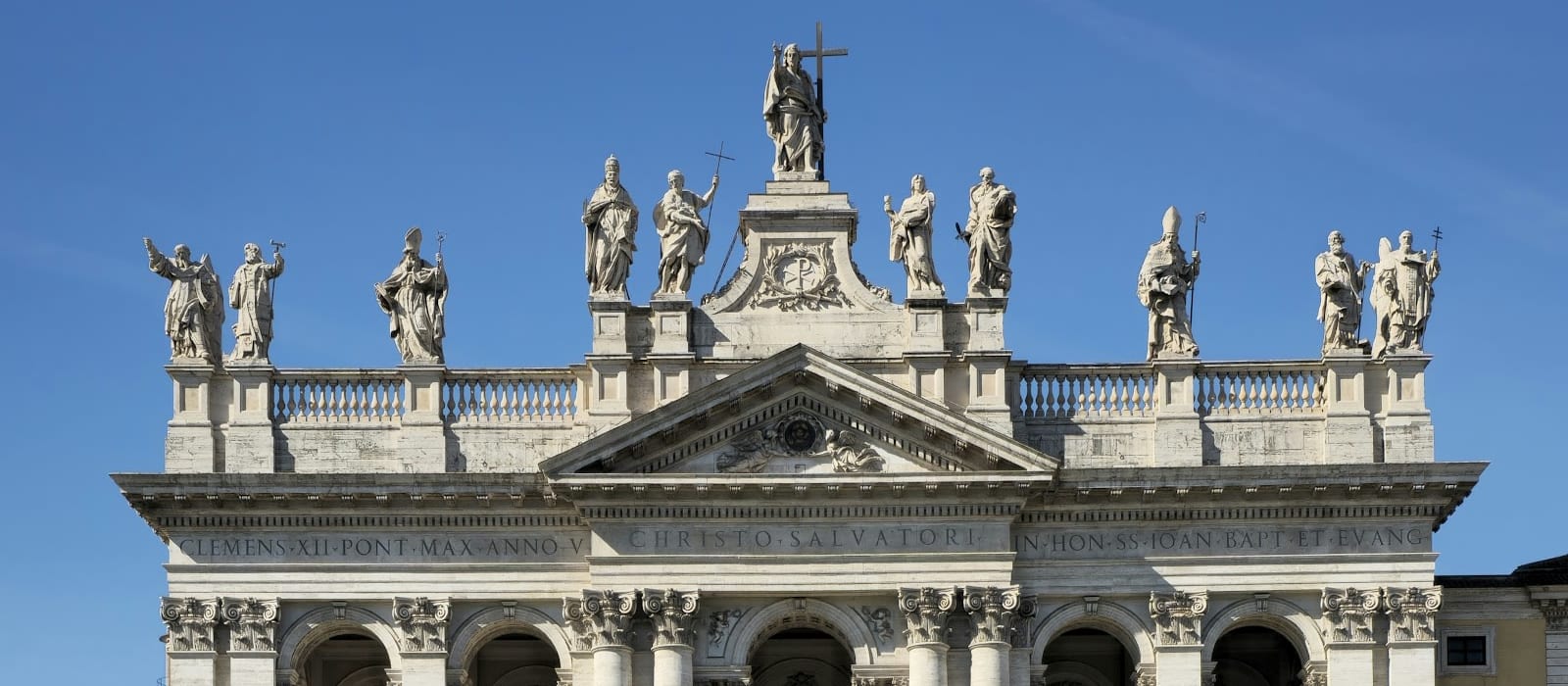
In pictures


About
The Basilica of Saint John Lateran, or basilique Saint-Jean-de-Latran Rome, holds a distinct place in the city. It may be less crowded than St Peter’s. Yet it is the cathedral of the Bishop of Rome, meaning the Pope.
That status explains why it matters. A visit gives useful context to Rome beyond the Vatican. It offers a more civic and ecclesiastical perspective. Inside, the scale is clear at once. The long nave, formal rhythm and ceremonial character make the space easy to read, even on a first visit.
For a smarter stop, allow time for the cloister and the immediate surroundings. Do so if access is open that day. The area often feels calmer than the Vatican side of Rome. This usually makes for a quieter, more comfortable visit.
It combines well with the baptistery, the Scala Santa, or another of Rome’s four major basilicas. If you are looking for basilique saint-jean-de-latran photos, softer light often works best from the forecourt. In summer, go earlier to avoid heat. In cooler months, pair it with an indoor church visit nearby.
The Concierge's Tip
Go early or later in the afternoon. Light is softer, and the forecourt is usually more pleasant. Dress with a place of worship in mind. If you plan several church visits, start here before the Vatican area, which is often busier. In summer, earlier is more comfortable. In cooler months, pair Saint John Lateran with another indoor stop nearby. Check on-site access to the cloister or side spaces.
Ask the Concierge
Our Concierge arranges your visit: skip-the-line tickets, a private guide, off-hours access.
Ask the ConciergeFrequently asked questions
- What is the history of Saint John Lateran Basilica?
- Saint John Lateran is one of Rome’s most important churches. Its significance comes first from its role as the cathedral of the Bishop of Rome. Like many major Roman churches, it has been altered and restored over centuries. For visitors, the key point is its institutional and liturgical importance. That sets it apart from a standard church visit.
- How can I visit Saint John Lateran Basilica?
- It is easy to include in a Rome itinerary. Allow enough time for the basilica itself and the immediate surroundings. Respectful dress is advisable, as this is an active place of worship. Access conditions for side areas may vary by day. It is wise to check current information on-site before planning to add the cloister or nearby religious sites.
- What makes Saint John Lateran Basilica special?
- Its defining feature is its status. Saint John Lateran is the cathedral of the Pope as Bishop of Rome. Many visitors assume St Peter’s fills that role, but this basilica is different in function and meaning. That distinction gives it a central place in Rome’s religious history. It also makes it a very useful complement to a Vatican visit.
- What are the four major basilicas of Rome?
- Rome’s four major basilicas are Saint John Lateran, St Peter’s in the Vatican, Santa Maria Maggiore and Saint Paul Outside the Walls. If your schedule is tight, Saint John Lateran fits well into a day away from the busiest central crowds. It also helps clarify how Rome’s main religious sites relate to one another.
- Who is buried at Saint John Lateran?
- Questions about basilique saint-jean-de-latran personnes inhumées are common. The basilica is associated with papal burials and memorials, but exact lists should be checked carefully rather than assumed. If this matters to your visit, look closely at the funerary monuments inside. Use current on-site information or a reliable guide to confirm specific names.
- How much time should I allow for a visit?
- A comfortable visit to the basilica itself usually takes around thirty minutes to one hour. Allow more if you also want to see the cloister, baptistery or nearby religious sites. Your pace will depend on your interest in architecture, worship spaces and photography. A flexible slot works better than trying to squeeze it between fixed appointments.
- When is the best time to visit Saint John Lateran?
- Early morning and late afternoon are often the best times. Light is softer, and the atmosphere can feel calmer. In summer, avoid the hottest part of the day if possible. If a service is taking place, adjust your visit respectfully. This is first and foremost an active church rather than only a heritage landmark.
Hotels nearby
Our selection of extraordinary hotels a short walk from this place.
