Panthéon
The Panthéon Paris is a landmark in the Latin Quarter, known for its vast interior, crypt, and role as a national memorial.
In pictures


About
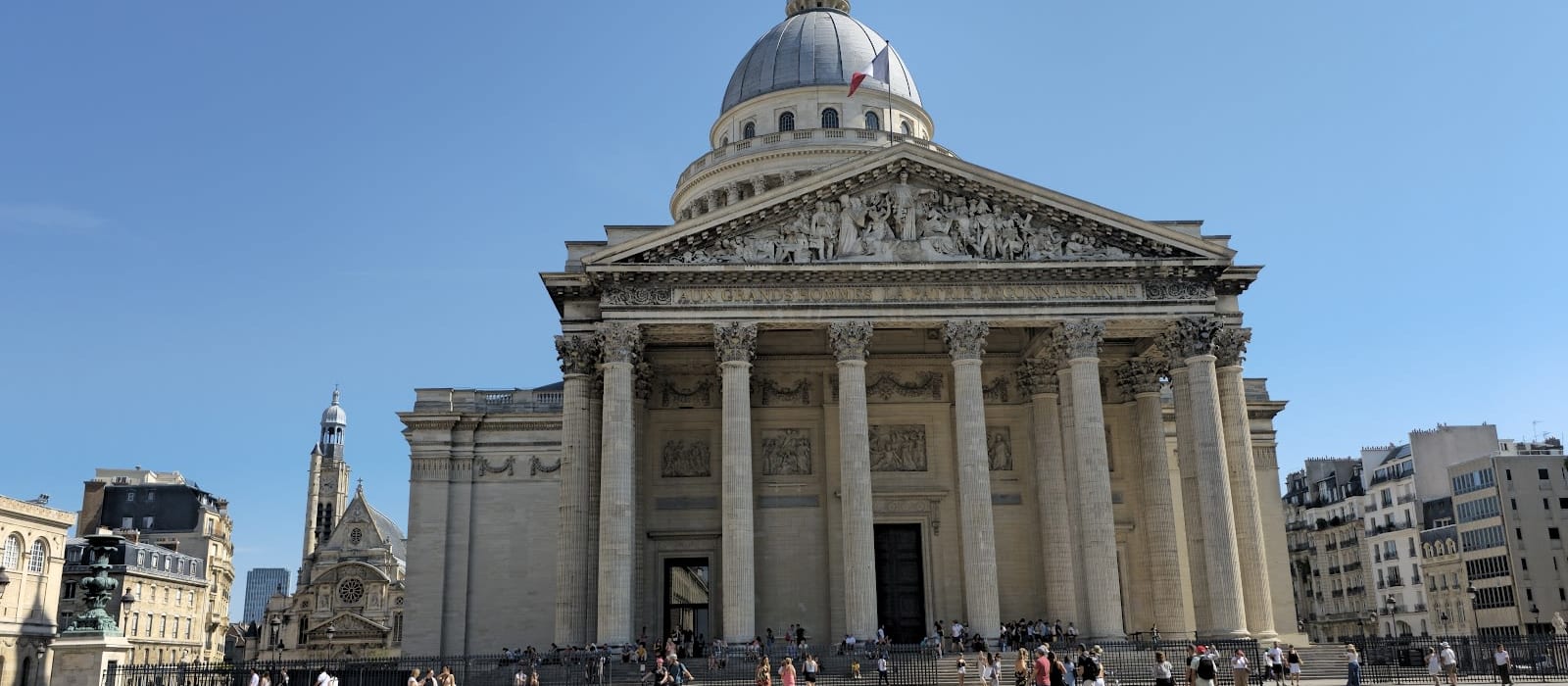
The Panthéon Paris is both a monument and a national memorial. Set on the Montagne Sainte-Geneviève, it anchors a walk through the Latin Quarter. Visitors come for its grand interior, its dome, and a mood that feels more reflective than museum-like.
The Panthéon in Paris also offers a clear introduction to part of France's civic history. Its crypt honours major figures from political, scientific, literary, and intellectual life. Even if you do not know every name, the visit remains easy to follow.
Give the Panthéon intérieur time. Start with the main nave and long sightlines, then continue down to the crypt. Many guests find that about an hour works well, while a slower visit pairs nicely with nearby Saint-Étienne-du-Mont.
This part of Paris is especially easy on foot. You can combine the Panthéon, the Luxembourg Gardens, and Rue Mouffetard in the same half day. For quieter conditions, go early or choose a weekday. In colder months, it is also a very good stop between outdoor walks.
The Concierge's Tip
Start with the Panthéon early in the day, then continue on foot to Saint-Étienne-du-Mont and the Luxembourg Gardens. It is the most efficient route and keeps the visit balanced. On bright days, the interior reads better and feels less austere. In winter, it also works well as a warm cultural stop between outdoor walks in the Latin Quarter.
Ask the Concierge
Our Concierge arranges your visit: skip-the-line tickets, a private guide, off-hours access.
Ask the ConciergeFrequently asked questions
- What is the Panthéon in Paris?
- The Panthéon Paris is a public monument and national memorial in the Latin Quarter. It combines a vast ceremonial interior with a crypt dedicated to major French figures. Most visitors come for both the architecture and the historical meaning of the site.
- What does the word Panthéon mean?
- Historically, the word referred to a place associated with all gods. In Paris, the modern meaning is different in practice. It usually refers to a monument where the nation honours women and men considered important to its history.
- Who is buried in the Panthéon?
- The crypt holds French figures associated with politics, science, literature, and intellectual life. The exact list matters, but the visit is not only about names. Even on a first visit, you can quickly understand the broader idea of national recognition.
- What is there to see inside the Panthéon?
- The main highlights are the grand nave, the dome, and the descent into the crypt. The visit works through contrast, from open ceremonial space to quieter memorial areas. The approach itself is also rewarding, as the monument shapes the surrounding streetscape.
- How long should you allow for a visit to the Panthéon?
- Around one hour is often enough for a straightforward visit. If you like to read, pause, or spend more time in the crypt, allow longer. It fits very easily into a half-day walk with other nearby stops in the Latin Quarter.
- When is the best time to visit the Panthéon?
- Early in the day is usually the easiest time to move around and take in the interior calmly. Weekdays tend to feel smoother than weekends. If you plan to continue on foot to nearby sights, a morning visit makes the overall route simpler.
- Is the Panthéon suitable for families?
- Yes, especially with children who are comfortable in large, quiet monuments. The visit is visual and fairly easy to follow, even without much background knowledge. It works best with a short format and a nearby outdoor stop, such as the Luxembourg Gardens.
Hotels nearby
Our selection of extraordinary hotels a short walk from this place.