Marché Bourse
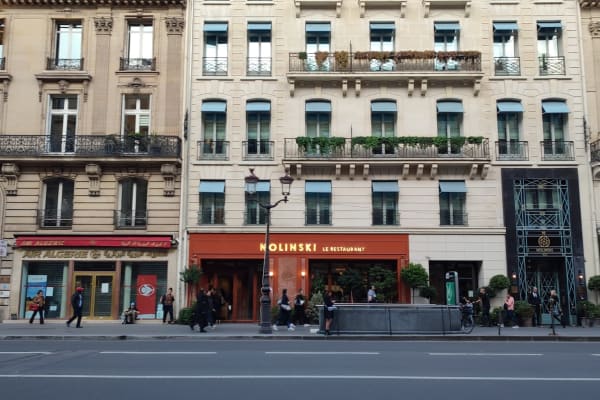
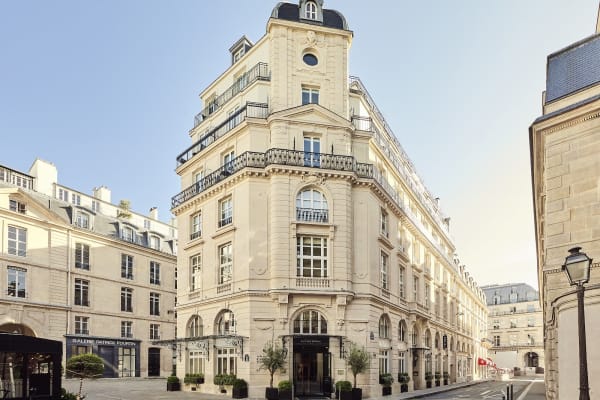
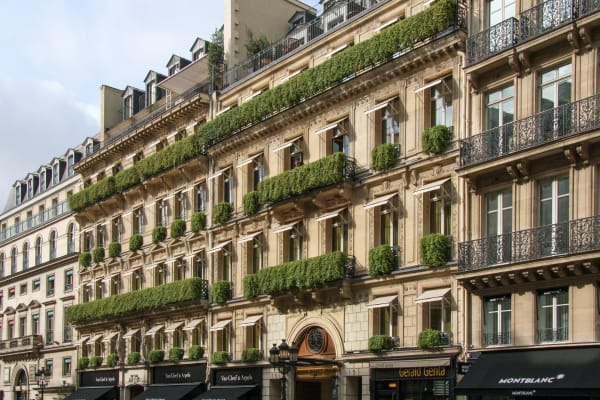
On Place de la Bourse, this 2nd arrondissement landmark reflects Paris’s financial history. It is easy to take in as part of a central city walk.

In pictures


About
Marché Bourse here refers to the area around Place de la Bourse, in the heart of Paris’s 2nd arrondissement. It is more a financial landmark than a market in the usual sense.
This stop matters for the story it tells about the city. It reflects Paris’s commercial past and the business character that still shapes the neighborhood today.
Most visitors do not come for a single attraction behind one door. They come to read the district itself. Streets, façades, and daily movement give the place its meaning.
It works well within a walk linking the Grands Boulevards, Passage des Panoramas, and Palais Brongniart. The area is easy to cover on foot. The visit is usually brief.
Weekdays often give the clearest sense of the neighborhood’s rhythm. Evenings and weekends feel calmer, with more attention on architecture and urban perspective. In colder months, pair the stop with nearby covered passages. In warmer weather, continue on foot toward the gardens and arcades around the central districts.
The Concierge's Tip
Go during the day, preferably on a weekday, if you want to understand the district’s business atmosphere. Approach on foot from the Grands Boulevards, then continue toward Passage des Panoramas. In wet or cold weather, nearby covered passages make a practical extension. If you prefer a more substantial visit, pair this stop with another cultural address in the 2nd arrondissement.
Ask the Concierge
Our Concierge arranges your visit: skip-the-line tickets, a private guide, off-hours access.
Ask the ConciergeFrequently asked questions
- What is Marché Bourse in Paris?
- It refers to the area around Place de la Bourse, linked to Paris’s financial history. It is not a traditional food market. Visitors usually come for the neighborhood setting, the architecture, and the connection with Palais Brongniart. It works more as an urban stop on a walk. It is not a self-contained attraction with a fixed route.
- How much time should I allow for the visit?
- Allow a short stop if you only want to see the square and its immediate surroundings. The visit becomes longer if you add nearby streets, covered passages, or Palais Brongniart. This is usually a smart waypoint rather than a long standalone visit. It is best combined with other nearby stops in central Paris.
- When is the best time to visit?
- Daytime, especially on weekdays, usually gives the clearest sense of the area. You see more of its office rhythm and daily movement. Evenings and weekends feel quieter, which can be better for architecture and photographs. The best moment depends on what you want. Urban energy or a calmer reading of the streetscape.
- Is Marché Bourse suitable for families?
- Yes, if you treat it as a short city walk rather than a dedicated family attraction. It suits children who are comfortable walking, but it is not necessarily an activity-led visit. The appeal comes from the neighborhood itself, nearby passages, and the ease of building a simple route without much planning.
- What is the easiest way to get there from central Paris?
- Walking is often the easiest option if you are staying in the central arrondissements. The area connects well with the Grands Boulevards, Opéra, and the streets of the 2nd arrondissement. A car is rarely the most practical choice here. Approaching on foot also makes the neighborhood easier to understand as part of a larger urban route.
- Is this the same as the Paris stock exchange today?
- The name points to the district’s financial history, but a visit here is about place and context. It does not answer practical searches about live market data, trading hours, or current Paris stock exchange activity. On site, the value is architectural, historical, and urban. It is not a source of real-time financial information.
Hotels nearby
Our selection of extraordinary hotels a short walk from this place.