Bab Agnaou
Bab Agnaou in Marrakech is a monumental gate by the kasbah. It marks a southern entrance through the old walls and is easy to see on foot.
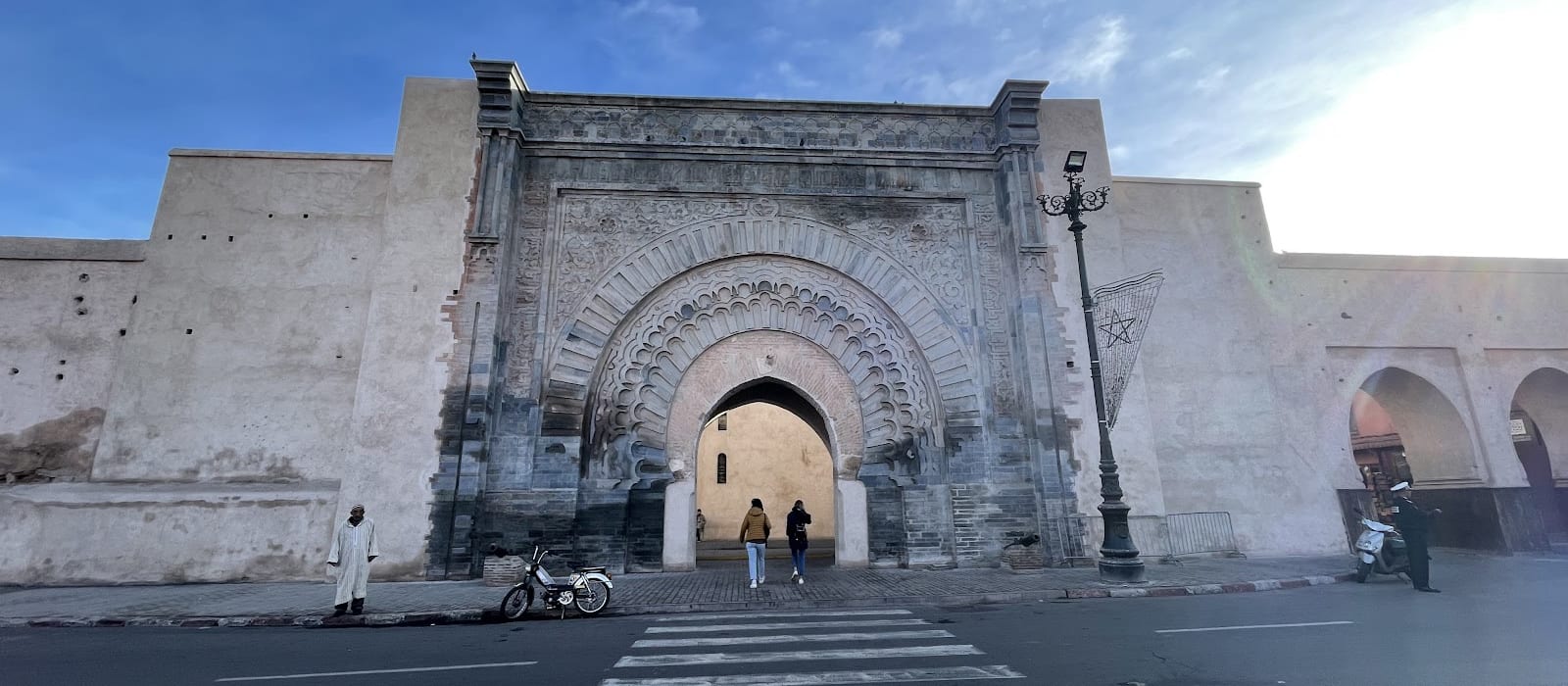
In pictures


About
Bab Agnaou is one of the best-known gates in Marrakech. It stands near the kasbah, on the southern side of the medina. People come for its carved stonework and for its place within the old walls.
The word “bab” simply means “gate” in Arabic. Here, the interest is both historical and practical. This is not a monument with a long interior visit. It works best as a short stop. Take time to look closely at the façade and the surrounding quarter.
Bab Agnaou fits naturally into a walk around the kasbah area. You can pair it with the Saadian Tombs. Add an exterior view of the Kasbah Mosque, or nearby streets with a more local rhythm. Together, these stops help explain southern Marrakech. They show how it was organized around movement, defense, and authority.
For a smarter visit, go when the area is quieter and the light is softer. Early morning is often more comfortable in warmer months. Late afternoon can also work well for photos. If the gate feels busy, continue a little farther into the kasbah lanes. Then return for a calmer look.
The Concierge's Tip
Start at Bab Agnaou early in the morning, then continue toward the Saadian Tombs if you are exploring this part of Marrakech. The gate itself is a short stop, but traffic nearby can affect the experience. Step back a little for a clearer view of the carved details. In warmer months, plan this before midday. If the area feels crowded, walk deeper into the kasbah lanes and return a little later.
Ask the Concierge
Our Concierge arranges your visit: skip-the-line tickets, a private guide, off-hours access.
Ask the ConciergeFrequently asked questions
- What is the history of Bab Agnaou in Marrakech?
- Bab Agnaou is a historic gate connected to the kasbah area of Marrakech. It once formed part of the southern access and defensive layout of the city. Today, visitors mainly stop for its heritage value and carved decoration. Even as a brief exterior visit, it helps explain how the old city was structured. It also shows the role of walls, controlled entry points, and key political quarters.
- What does “bab” mean in Morocco?
- In Morocco, as in Arabic generally, “bab” means “gate” or “door.” In historic cities. It often refers to a gate in the walls or a major entrance to a district. In the case of Bab Agnaou, the word describes its original purpose very clearly. It is both a monumental gateway and a useful landmark within the old urban layout of Marrakech.
- How much time do you need to visit Bab Agnaou?
- Bab Agnaou is usually a short visit. Many travelers spend around ten to twenty minutes there, depending on their interest in architecture and photography. The stop becomes more rewarding when included in a wider walk around the kasbah district. It works best as part of a route, rather than as a long standalone visit.
- When is the best time to see Bab Agnaou?
- The best time depends mainly on light, heat, and street activity. Morning is often calmer and more comfortable for a short stop. Late afternoon can also be good if you want softer light on the stonework. In hotter months, avoid the middle of the day. As this is an outdoor site, the experience changes noticeably with season and traffic.
- Is Bab Agnaou suitable for families?
- Yes, Bab Agnaou works well for families because it is a brief and easy stop within a wider walk. There is no complex route needed to appreciate the gate from the outside. The main point is to stay aware of traffic and the general street activity nearby. A stroller can work, though pavements and crossings may be uneven in places.
- Can you see Bab Agnaou in the evening, and is the area pleasant?
- You can pass by Bab Agnaou in the late afternoon or early evening, especially if it is part of a clear route. As in other parts of the medina, it is wiser to stay on active streets and keep your bearings. The gate is more rewarding in daylight, when its details are easier to read. In the evening, it is more of a neighborhood stop than an architectural one.
Hotels nearby
Our selection of extraordinary hotels a short walk from this place.


