Bespoke itineraries
Marrakech, Fès, Désert Merzouga, Essaouira 10-day culture luxe itinerary
- 10 days
- Marrakech, Fès, Désert Merzouga, Essaouira · MA
- Luxury
10-day luxe itinerary in Marrakech, Fès, Désert Merzouga, Essaouira. Concierge timings, culture, luxe highlights, verified addresses by MyConciergeHotel.
This 10-day Morocco itinerary links Marrakech, Fez, Merzouga and Essaouira across 4 well-paced stops. La Mamounia sets the tone first, then Ksar Char-Bagh in Fez shifts the stay toward a quieter cadence. The balance works well. You explore early, travel when needed, and still keep real downtime between cultural sequences. Expect roughly 9,500 to 16,000 EUR TTC for two, depending on season, room category and private guiding. April to early June, then late September to November, are the easiest windows. The main logistical constraint is the long overland section between Fez, the desert and the Kasbah route. Plan it with a dedicated driver, not ad hoc transfers. One practical concierge note matters: at La Mamounia, request a Junior Suite on the garden side, left wing. City-facing suites are less sought after for a reason. For the final night, Royal Mansour works best if you secure riad number 3 for the highest roof terrace and Atlas views in clear weather.
What is the best 10-day itinerary for Marrakech, Fès, Désert Merzouga, Essaouira?
10-day luxury Morocco itinerary for Marrakech, Fès, Merzouga, and Essaouira. Day 1: Djemaa el-Fna, the Souks of the medina, and Palais Bahia. Day 2: Fès el-Bali, Tanneries Chouara, and Madrasa Bou Inania. Day 3: Erg Chebbi dunes, Aït Benhaddou, and Dadès Gorges. Day 4: Essaouira medina, ramparts, and fishing port. Base at La Mamounia. Best in autumn. Updated May 2026.
The itinerary, step by step
Each step combines an exceptional hotel, a tested timing and our on-site recommendations.
- Day 1
Days 1-3: Marrakech — Medina, souks and La Mamounia
- Marrakech
- Stay duration: 3 days
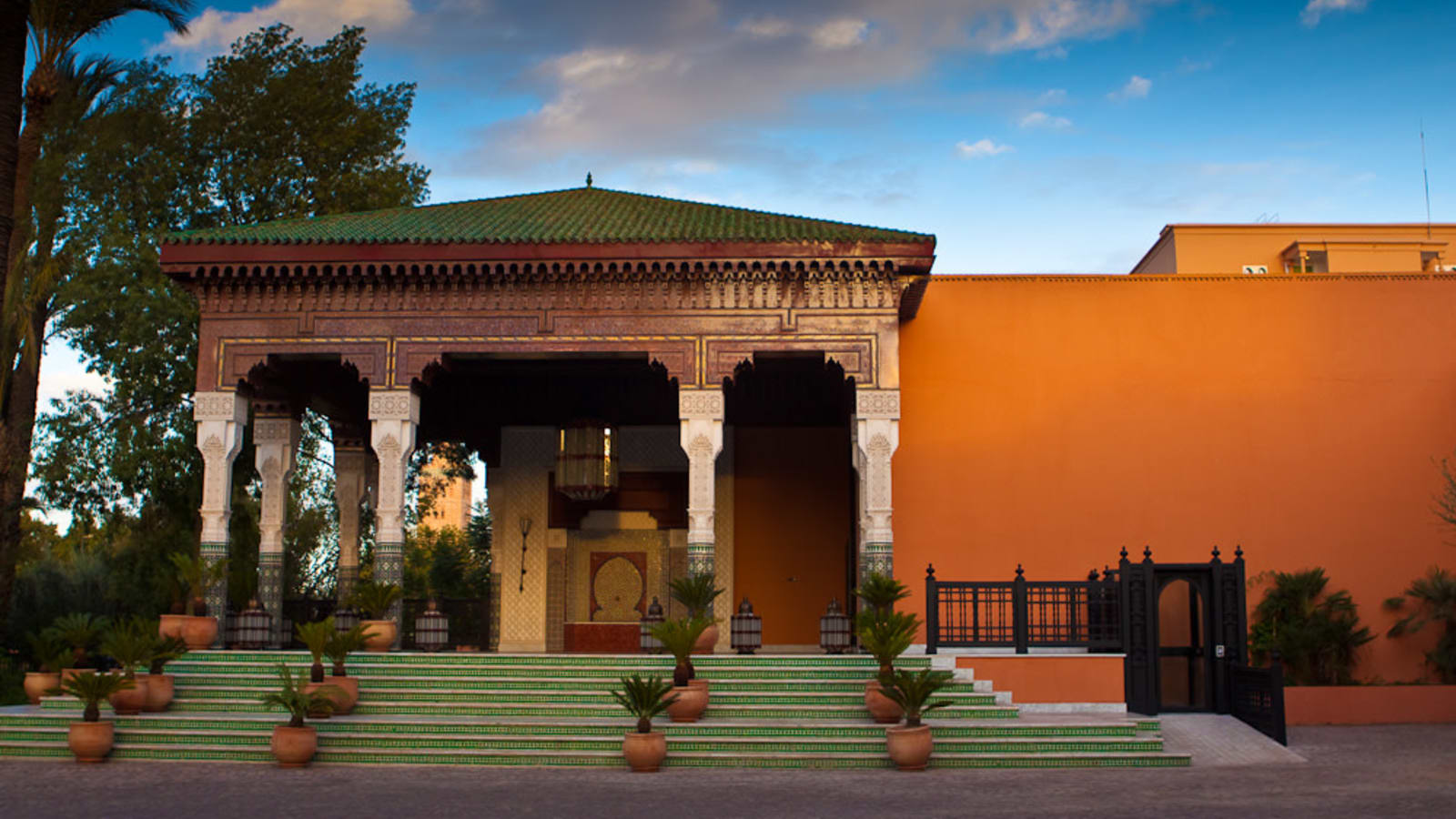
Marrakech works best early, before the heat and before the city fully wakes. Start at 8:00 in the gardens of La Mamounia, a 5-star Atout France palace, then move on while the streets are still manageable. By 9:00, take the first slot at the Jardin Majorelle, and book both the Fondation Jardin Majorelle and the Yves Saint Laurent Marrakech museum in advance. Leave Palais Bahia for late morning, once the groups thin out in the patios. In the afternoon, enter the souks of the medina with a private guide who knows Dar Cherifa and the workshops around the fondouks. That saves time in the crowded passages near Djemaa el-Fna and avoids the filler shops. Keep Bain Zitoun for a traditional hammam at the end of the day. Take the last useful slot, around 18:30, so you can go straight back to dinner. At the hotel, ask the concierge for a Junior Suite facing the garden, left wing, with views of the century-old olive trees. City-facing suites are less sought after, but also less quiet. For dinner, book Le Marocain at La Mamounia and ask for an early table, around 20:00, in a quiet salon. Concierge secret: Djemaa el-Fna is easier to cross between 16:30 and 17:30, just before the evening shift.
Things to see / do
- Djemaa el-Fna
- Souks médina
- Palais Bahia
- Jardin Majorelle
- Day 2
Days 4-5: Fès — Medieval medina, tanneries and madrasa
- Fès
- Stay duration: 2 days
Fès needs time on foot, a solid guide, and exact timing if you want to cross the medina without losing the thread. Check into Ksar Char-Bagh, Relais & Châteaux, then leave early for Fès el-Bali with a certified historian guide. The medina of Fès, listed by UNESCO, is easier to read in the morning, before deliveries and bottlenecks in the narrow lanes. Start with Madrasa Bou Inania at opening time, then continue to the Musée Nejjarine, which helps explain the wood trades before you enter the artisan quarters. Keep the Tanneries Chouara for late morning, when the light reads better from the terraces. The tanneries are visited from the terraces of the leather shops. Politely decline any purchase at the entrance; it is not a problem if you say so immediately. In the afternoon, return to Ksar Char-Bagh and use the 5-hectare garden, or ask for a light dinner in your room if the day has been full. The concierge can also arrange a car for the round trip to the medina, which helps avoid waiting at the old city gates. For dinner, book Dar Roumana in its historic riad for the first service at 19:30. Concierge secret: ask your guide to enter Fès el-Bali through Bab Bou Jeloud and leave by a different gate, so you avoid backtracking.
Things to see / do
- Médina de Fès (Fès el-Bali)
- Tanneries Chouara
- Madrasa Bou Inania
- Musée Nejjarine
- Day 3
Days 6-8: Merzouga Desert & Kasbahs — Sahara, dunes and caravans
- Désert Merzouga & route des Kasbahs
- Stay duration: 3 days
Southern Morocco is a crossing, not a sequence of quick stops. Distances are long, pauses need to be deliberate, and the night in the dunes should be secured well ahead. From Fès, leave early via Midelt to smooth the drive toward Merzouga. Pace matters more than the number of stops. Keep only the useful breaks, and reach the dunes of Erg Chebbi before sunset so you can arrive at camp without rushing. Book a tent at Luxury Desert Camp with dinner included, and confirm the 4x4 transfer the day before. For sunrise, go by camel or by 4x4, depending on your tolerance for the morning cold. Ask for a departure before 6:30 to stay ahead of the other convoys. On the return west, structure the route of the kasbahs with short, dated stops. Kasbah Aït Benhaddou, UNESCO-listed, is best late morning or very late afternoon, outside group peaks. The Gorges du Dadès and the Vallée des Roses, near Kelaat M’Gouna, mainly require a well-managed car and a driver who knows real travel times. Do not keep more than two major sites in the same day. For the transit night, have Ksar Char-Bagh confirm an early departure and a breakfast basket. For dinner in the desert, lock the exact service time before 20:30. Concierge secret: at Aït Benhaddou, enter by the main bridge but exit by the lower passage, which is smoother when groups leave.
Things to see / do
- Dunes de l'Erg Chebbi Merzouga
- Kasbah Aït Benhaddou (UNESCO)
- Gorges du Dadès
- Vallée des Roses Kelaat M'Gouna
- Day 4
Days 9-10: Essaouira & Marrakech — UNESCO medina and farewell
- Essaouira
- Stay duration: 2 days
Essaouira closes the trip with softer light, a clearer medina, and a final return to Marrakech planned for comfort. From Marrakech, allow 3 hours by road and do not add extra stops. On arrival, focus on the medina of Essaouira, a UNESCO site, then keep the ramparts for 17:00, when the light drops across the cannons and the wind-exposed walls. Visit the fishing port before lunch, while the boat returns still animate the quays. If the weather holds, continue to the Plage des Îles Purpuraires for an unstructured walk. Essaouira works best in short sequences, with regular returns to the hotel. The last night in Marrakech should be simple, with no late dinner. At Royal Mansour, a 5-star Atout France palace, each riad is independent. Ask the concierge for riad no. 3, configured with 3 bedrooms, to secure the highest roof terrace and Atlas views in clear weather. Also confirm the return transfer from Essaouira, with departure before 10:00 to avoid the busy approach into Marrakech. For lunch, choose fresh fish at the port and arrive before 12:30 to avoid waiting. For the final dinner, reserve La Grande Table Marocaine at Royal Mansour for the first service. Concierge secret: the ramparts are easiest between 16:45 and 17:15, before sunset crowds build.
Things to see / do
- Médina Essaouira (UNESCO)
- Remparts et cannons
- Port de pêche
- Plage des Îles Purpuraires
Frequently asked questions
When is the best time to visit Morocco?
For a Marrakech, Fes, Merzouga and Essaouira itinerary, aim for March to May, then mid-September to mid-November. Daytime temperatures are usually steady, often between 20 and 30°C depending on the stop. July and August feel heavy in Marrakech and the desert. Winter works well for Marrakech and Fes, but nights in Merzouga often drop below 5°C. In Essaouira, expect wind most of the year, usually stronger in the afternoon. Updated May 2026.
What is the best way to travel between Marrakech, Fes and the desert?
For a 10-day luxury trip, a private driver in a premium van or 4x4 is the smoothest option. Marrakech to Fes takes about 6 to 7 hours on the motorway. Fes to Merzouga is usually 7 to 8 hours with stops. Marrakech to Merzouga direct is closer to 9 to 10 hours, so an overnight break is wiser. ONCF trains work well between Marrakech and Fes in first class, but not for the desert. Leave before 8:30 am.
Which luxury riads and hotels are worth booking in Morocco?
In Marrakech, La Mamounia remains a historic benchmark, while Royal Mansour stands apart with its fully private riads. At La Mamounia, ask for a Junior Suite on the garden side, left wing. At Royal Mansour, riad number 3 has the highest rooftop terrace. Ksar Char-Bagh, a Relais & Châteaux property, suits travelers who want the Palmeraie in a quieter setting. In Fes, Riad Fès, also Relais & Châteaux, is a reliable choice inside the medina.
What budget should you plan for a 10-day luxury trip in Morocco?
For a 10-day luxury trip for two, expect roughly EUR 9,000 to EUR 16,000 including taxes, excluding long-haul flights. That usually covers hotels such as La Mamounia or Royal Mansour for 3 to 4 nights, a high-end Merzouga desert camp, a private driver, licensed guides and a few signature dining experiences. With two suites, more private outings and peak-season dates, the budget is more often EUR 18,000 to EUR 28,000 including taxes. Fine dining can quickly add EUR 120 to EUR 250 per person.
Can you reach the Merzouga desert from Marrakech by car?
Yes, but it should not be treated as a light transfer. Marrakech to Merzouga usually takes 9 to 10 hours by road, depending on traffic and stops. For a luxury itinerary, I recommend breaking the journey in Ouarzazate or Skoura to avoid an exhausting day. The route via Tizi n’Tichka pass is generally workable, but tiring. In winter, leave early and keep weather flexibility. The final stretch to many camps is often handled by the property in a 4x4.
Which Moroccan sites are listed as UNESCO World Heritage?
For your route, the key UNESCO World Heritage sites are the medina of Marrakech, the medina of Fes and the ksar of Aït-Ben-Haddou. Essaouira is also listed, under the medina of Essaouira. More broadly, Morocco also includes Meknes, Volubilis, Tetouan, the Portuguese City of Mazagan in El Jadida and Rabat. For Aït-Ben-Haddou, arrive before 10:30 am or after 4 pm to avoid the heaviest group traffic.
How do you explore the Fes medina without getting lost?
Book a licensed guide for the first half day, then return on your own within a short, familiar area. The Fes medina has thousands of lanes and wayfinding is limited. Always set a fixed return point, such as Bab Boujloud or your riad. For the Chouara tanneries, the standard viewpoint is from the terraces of leather shops. Say clearly at the entrance that you are only looking. A polite refusal to buy is generally accepted.
Is Morocco a safe destination for French travelers?
Yes, broadly speaking, especially on a classic route such as Marrakech, Fes, Merzouga and Essaouira. The main issues are petty opportunistic scams, unofficial guides and poorly managed taxis. Pre-book your transfers, use licensed guides and keep sensitive card payments to hotels or established venues. In the medinas, avoid empty lanes late at night. On desert roads, do not drive after dark. Practical caution matters more here than general concern.
Which Moroccan dishes should you try on a cultural itinerary?
Try lamb tagine with prunes, pastilla with pigeon or chicken, Friday couscous, and rfissa if it appears on the menu, then tanjia marrakchia for a more local Marrakech specialty. In Fes, also look for harira and cooked salads. In the desert, sand-baked bread and medfouna sometimes appear, depending on the camp. For a precise address, Dar Roumana in Fes handles the traditional repertoire with a polished touch.
Can you combine Morocco and Spain, especially Andalusia, in one trip?
Yes, but with 10 days you need to stay disciplined. The easiest pairing is Marrakech or Fes with Seville, Cordoba or Granada. Direct flights are often more efficient than crossing by sea. The Tangier to Tarifa ferry works well, but it forces you up to northern Morocco. For a smooth trip, keep 5 nights in Morocco and 4 nights in Andalusia, use an open-jaw flight and limit yourself to one hotel change in each country.