History & heritage
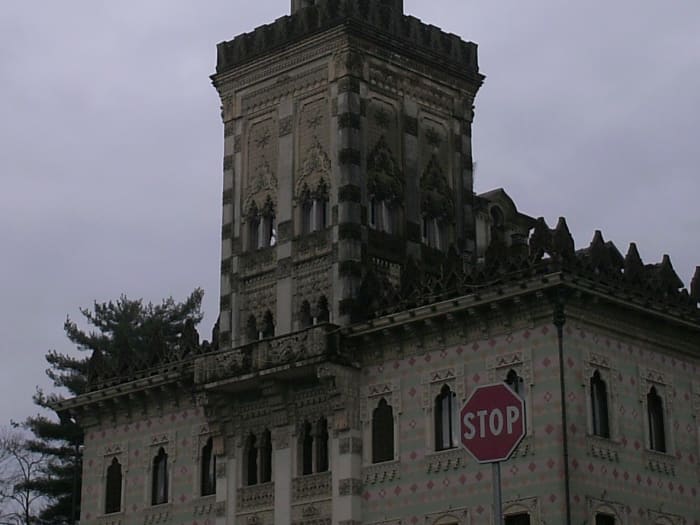
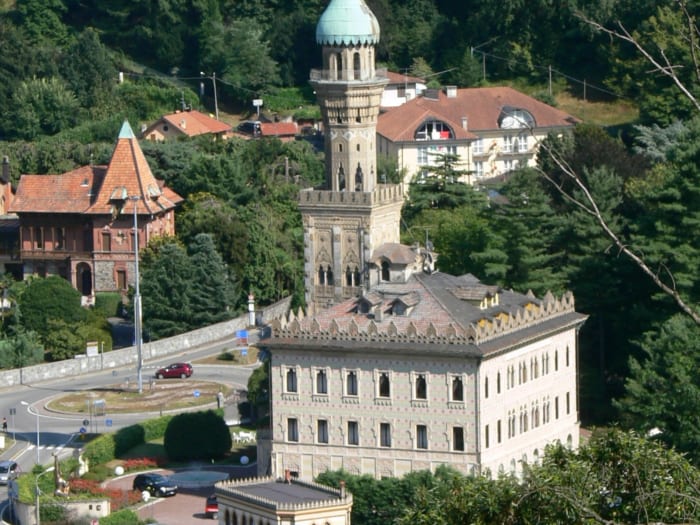
Villa Crespi belongs to that rare category of addresses whose silhouette alone creates an immediate sense of occasion. On the shores of Lake Orta, its presence stands apart from more classical Piedmontese villas: dome, arches, Moorish-inspired ornament and lines that recall the late-19th-century taste for travel and cultivated eclecticism. Here, the orientalising vocabulary is not a decorative aside; it shapes the identity of the house and gives it a character that remains instantly recognisable today.
This architectural singularity explains much of the hotel’s aura. Even before hospitality enters the picture, Villa Crespi suggests a particular idea of travel: a pause, a change of rhythm, almost a romantic interlude. Guests do not arrive at an interchangeable lakeside villa, but at a residence conceived to surprise, to hint at elsewhere while remaining deeply rooted in the landscape of Piedmont. That contrast is central to its appeal. On one side, the softness of Lake Orta, the discreet elegance of Orta San Giulio and the shifting light on the water; on the other, a carefully composed architecture of fantasy that introduces a theatrical note without disturbing the overall harmony.
The transition from private villa to refined hotel has naturally changed the use of the spaces, yet the spirit of a house remains palpable. One finds what the finest Italian residences often preserve when they become hotels: a human scale, an intimate relationship with lounges and gardens, and a sense of continuity between heritage and contemporary life. Membership of Relais & Châteaux reinforces this reading. It places Villa Crespi within a tradition of hospitality in which a property is valued not only for comfort, but for its ability to express a place, a culture and a style of welcome.
Villa Crespi’s heritage therefore does not depend on a catalogue of historical anecdotes so much as on coherence: that of a building with a strong identity, a preserved lakeside setting and a manner of receiving guests that privileges experience over display. Luxury here is not based on scale or spectacle. It is found in the quality of upkeep, in the permanence of an atmosphere and in the feeling of inhabiting, for the duration of a stay, a residence unlike any other in the Italian hotel landscape.
For travellers familiar with the grand names of Lake Como or the Riviera, Villa Crespi offers a different tone: more introspective, perhaps more literary, with its blend of refinement, quietness and character. Its heritage is not frozen in a postcard image. It continues to live through service, cuisine and the close relationship between the building and its surroundings. That continuity is precisely what gives the place depth and credibility.
The property
To stay at Hotel Villa Crespi is to choose an Italian lake destination slightly removed from the most exposed circuits, without giving up elegance or the standards of a distinguished address. Lake Orta has a more intimate scale than other northern Italian lakes. Its atmosphere is quieter, more contemplative, with the sense of a landscape that is lived in yet never overrun. Within this setting, Villa Crespi enjoys a particularly appealing position: on the lakeshore, close to Orta San Giulio, one of the most charming villages in the region.
Arrival is very much part of the experience. The façade, with its Moorish-inspired references, stands out amid the greenery and immediately signals a stay with character. Once inside, the pace changes. The public rooms invite not hurried movement but lingering. One can easily imagine a coffee taken slowly, a moment of reading in a lounge, or a return in the late afternoon after a walk by the water. The house seems designed for precisely that: to offer intervals of calm and to allow the place itself time to work on the traveller.
The relationship with the lake is essential. Even when one is not standing directly at the water’s edge, the landscape remains perceptible. The light, the slight humidity in the air, the glimpses through the trees all remind guests that they are staying in a destination shaped by its natural surroundings. This proximity gives the hotel a rare quality: it is at once a refuge and a point of departure. A refuge because the atmosphere is enveloping, almost protective; a point of departure because the promenades, landing stages and the centre of Orta San Giulio are all within easy reach.
The village itself adds an important layer to the stay. Its lanes, old façades, direct relationship with the lake and measured rhythm create a setting that naturally extends the hotel experience. This is not a destination of sealed-off resort life, but a coherent whole in which the address and its surroundings answer one another. That continuity matters for travellers seeking more than a beautiful room: a genuine sense of place.
Villa Crespi is particularly suited to guests who appreciate hotels with a clear identity. Its charm is not manufactured; it comes from a precise combination of architecture, scale, setting and quality of welcome. Couples will find a naturally romantic backdrop, yet the property can also appeal to travellers in search of concentration, rest or a gastronomic stop in Piedmont. As on many Italian lakes, the most rewarding season runs from spring to autumn, when gardens, terraces and walks come fully into their own.
What stands out in the end is the rightness of tone. Villa Crespi does not attempt to compete with large-scale, spectacular hotel machinery. Its luxury is more nuanced, more relational, more attached to the quality of the experience than to the accumulation of effects. That is precisely what makes it memorable: a hotel that knows how to honour its setting without overpowering it, and how to welcome guests without ever losing the feeling of a house.
Rooms and suites
In a residence such as Villa Crespi, the room is more than a place to sleep: it extends a broader staging in which architecture, landscape and service are expected to form a coherent whole. Guests come here in search of calm, intimacy and a certain density of atmosphere. The rooms and suites contribute to that balance by favouring character over anonymous standardisation. In a historic house of this kind, singularity often matters most: differing proportions, varied outlooks, decorative details that echo the identity of the property, and the feeling of inhabiting a villa rather than a conventional hotel.
In keeping with the overall architecture, the aesthetic language suggests a form of classical refinement. One can expect carefully composed interiors, attention to materials, textiles, lighting and the quality of furnishings. The aim is not to produce a showy décor, but to preserve continuity between the public rooms and the private accommodation. That continuity gives the stay its depth: one does not leave the world of the house on closing the bedroom door, but enters it more intimately.
The experience of spending the night by the lake also plays an important role. Lakeside destinations have a particular acoustic quality, a way of absorbing noise and slowing one’s sense of time. At Villa Crespi, this translates into a welcome feeling of retreat, especially for urban travellers or guests moving through a more animated Italian itinerary. Returning to one’s room after dinner, drawing the curtains in the morning, watching the light shift across the landscape: these are simple gestures, yet here they acquire a special value.
The suites will naturally appeal to those seeking more space or a more ceremonial stay, particularly for a romantic escape. The rooms, meanwhile, answer to another idea of luxury: precise comfort, discreet service and well-executed details. Turndown, daily housekeeping and the availability of the team all contribute to that sense of ease that distinguishes a well-run house. Nothing should feel complicated; everything should appear natural.
When choosing a category, it is worth thinking less in terms of floor area alone than in terms of how one wishes to inhabit the stay. Some travellers will prioritise a particular outlook or atmosphere, others the generosity of a sitting area, and others simply the promise of an elegant refuge after a day of walks or a gastronomic dinner. In every case, Villa Crespi’s appeal lies in the alliance between heritage character and hotel comfort.
At a time when many high-end addresses lean towards an internationalised form of luxury, the rooms and suites at Villa Crespi are a reminder of the appeal of hotels that retain a strong local identity. Comfort matters, of course, but it does not erase personality. Quite the opposite: comfort here serves to make the experience clearer, gentler and more lasting. For many travellers, that is exactly what one hopes for from a great stay on an Italian lake: not merely to sleep in a beautiful hotel, but to inhabit, if only for a night or two, a place with something to say.
The Dining Experience
The culinary reputation of Villa Crespi is an integral part of its identity. Here, dining is not merely an ancillary service; it is one of the primary reasons for the journey. Guests come for the overall experience, but also for a dinner that adds a unique tone to their stay. It is wise to anticipate reservations, especially during peak periods.
What distinguishes a great hotel dining experience on an Italian lake is not only the technical prowess of the cuisine but also its ability to engage with the surroundings. At Villa Crespi, the setting, architecture, and atmosphere create favourable conditions for a memorable gastronomic experience. The meal is part of a larger sequence: arriving at the end of the day, the fading light over the lake, passing through the lounges, the attentive service, and then the dinner itself. This gentle dramaturgy is as important as the dish itself, transforming the meal into a destination moment.
The refined cuisine of the house reflects a high level of expectation, both in product selection and in the execution and pace of service. Here, one anticipates a contemporary interpretation of Italian gastronomy, characterised by precision, clarity of flavours, and elegance in presentation. Piedmont, with its rich culinary tradition, provides a particularly rich backdrop. The regional context encourages a cuisine that is attentive to seasons, textures, and aromatic depth.
For guests staying one or two nights, dinner often becomes the highlight of their journey. It structures the day and justifies an early arrival to fully enjoy the location. Breakfast then takes on a new dimension. Following a gastronomic evening, it extends the feeling of being welcomed into a home that pays attention to both the nuances of taste and the details of service. This continuity between different dining moments is often one of the most reliable signs of a well-managed establishment.
Villa Crespi will particularly appeal to travellers for whom gastronomy is a key part of their stay narrative. The romantic setting of the hotel enhances the allure of a dinner for two. The dining experience can also attract discerning food enthusiasts, transient guests in Piedmont, or travellers who plan their itinerary around a few strong culinary experiences. The interest lies in the harmony between the establishment and the plate, a place with a clear identity, complemented by a gastronomic offering that aligns with its decor.
The practical advice remains straightforward: book your table in advance. In hotels where dining is part of the destination, improvisation has its limits. It is best to incorporate dinner into the stay plan at the time of booking the room. This is the best way to experience Villa Crespi in its most complete form.
Concierge & Services
At Villa Crespi, the service is characterised by a carefully mastered discretion. From the moment of arrival, the valet takes over, easing the transition across the threshold.
The concierge enhances the stay with a meticulous attention to detail that saves time. This creates a fluid rhythm within the establishment, never disturbing the sought-after tranquillity.
For arrivals and departures, an airport shuttle service is available for an additional fee. This service simplifies transfers and is ideal for those staying without a car.
Room service is available twenty-four hours a day, allowing guests to extend the intimacy of their room at any hour, depending on their desires.
Pets are welcome upon request, with potential fees applicable, making it possible to enjoy a stay with a four-legged companion in an organised setting.
Together, these elements create a thoughtful hospitality experience designed to make movements effortless and requests feel natural. Here, the service does not seek to impress; it simply accompanies each moment of the stay with precision.
The art of living in Orta San Giulio
Choosing Villa Crespi also means choosing Orta San Giulio and, more broadly, a certain idea of the Italian lake district in the north. Here, the art of living does not depend on social bustle or display. It is expressed through slower rhythms, the quality of views, the pleasure of walking without an overfilled programme, pausing in a square, watching the lake change colour over the course of the day. For many travellers, that is precisely Orta’s value: a sense of calm beauty, immediately perceptible yet never aggressive.
The village has that rare density found in small Italian destinations that have preserved both their scale and their coherence. The lanes invite wandering, the old façades create a living setting rather than a frozen heritage backdrop, and the relationship with the water naturally shapes one’s walks. One comes here less to tick off sights than to inhabit an atmosphere. It is a place that rewards attentive travellers: those who enjoy observing details, varying the hour of their outings, taking time over a coffee or an aperitivo, and returning more than once to the same viewpoint in order to catch its nuances.
Lake Orta, more discreet than some other Italian lakes, encourages this approach. Its human scale, more contemplative mood and the presence of the Island of San Giulio in the landscape give it a particular depth. Even without multiplying activities, simply being here is often enough to fill a day. A morning walk, time in the village, a light lunch, a return to the hotel, a period of rest before dinner: this sequence works especially well here. The stay benefits from not being overloaded.
For couples, Orta San Giulio offers a naturally fitting backdrop for time away together. The romance of the place does not come from artifice, but from a distinctly Italian combination of stone, water, relative quiet and light. Solo travellers or guests in search of reflection will also find a favourable environment. There is in this landscape a quality of gentle concentration, a way of slowing down without feeling cut off. It is an increasingly rare luxury.
The appeal of an address such as Villa Crespi lies in allowing a constant movement between immersion and retreat. One can go out to explore and then quickly return to a more enveloping setting. One can experience the village as an extension of the hotel, and the hotel as a privileged observatory of the spirit of the place. This porosity between indoors and outdoors is central to the experience.
In practical terms, spring, summer and early autumn are the most obvious seasons in which to enjoy the full softness of lakeside life. Yet beyond the calendar, it is above all a matter of mindset. Orta San Giulio reveals itself best when one accepts a slower pace, leaves room for the unexpected and privileges quality of presence over quantity of activity. Villa Crespi fits perfectly within that philosophy. The hotel is not merely a place to stay; it becomes one of the instruments of this way of travelling: more sensitive, more attentive and, ultimately, more lasting in the memory.
Book with MyConciergeHotel
Booking Villa Crespi through MyConciergeHotel means approaching the property not as a simple high-end overnight stay, but as a journey to be shaped with care. A characterful hotel on an Italian lake often calls for a number of choices: ideal length of stay, room category, pace of the trip, dinner reservation, arrival and departure logistics, and any special touches for a particular occasion. It is precisely on these points that editorial guidance and concierge support become valuable.
The first benefit of a well-prepared booking lies in the match between the hotel and the travel plan. Villa Crespi is not an address to be consumed indiscriminately. It is particularly suited to travellers seeking atmosphere, a reputed table, a charming village and a more intimate relationship with a lake landscape. For a romantic escape, an anniversary, a gastronomic stop in Piedmont or a short restorative break, expectations will not be exactly the same. Receiving advice in advance helps guide the choice towards the most suitable room category and the right rhythm for the stay.
The second issue concerns dining. As our concierge advice underlines, it is strongly recommended to reserve the restaurant in advance, especially in high season. In a house where gastronomy forms part of the identity, missing that moment would mean experiencing only part of what the property offers. MyConciergeHotel can help integrate this dimension from the planning stage, so that the stay is conceived as a coherent whole rather than a simple juxtaposition of services.
Booking with support also makes it possible to anticipate the details that genuinely change the experience: arrival time, luggage handling, special requests, dietary requirements to be noted, the organisation of a stay for two with a particular attention, or simply the need to smooth a broader itinerary through northern Italy. In the most desirable hotels, it is often these details prepared in advance that make the difference between a good stay and one that feels perfectly calibrated.
MyConciergeHotel also brings a useful editorial perspective. In a hotel landscape saturated with standardised promises, our role is to place an address back in context, to explain for whom it is right, at what time of year it reveals itself best, and how to draw out its substance. For Villa Crespi, that perspective is essential: one comes not only for a level of service, but for an atmosphere, a singular architectural setting, a privileged relationship with Lake Orta and a recognised dining experience.
In practical terms, we recommend booking as soon as dates are fixed, especially if the trip falls between spring and autumn or includes dinner on site. The stronger the demand, the faster the best stay configurations fill. Booking through MyConciergeHotel therefore means choosing a more attentive, more strategic and more serene approach. The result is a stay thought through in its details, faithful to the spirit of Villa Crespi and to the way a great character hotel deserves to be experienced.