History & Heritage
At Tobira Onsen Myojinkan, the feeling of disconnection stems from a cultural continuity inherent to Japanese ryokan inns. This establishment is deeply rooted in the world of ryokan hospitality, which has evolved from the roads, hot springs, and an art of welcoming based on discretion.
Here, luxury manifests itself through precision. It is the experience of crossing a threshold as you leave the city, of preserved silence, and attentive service. The affiliation with Relais & Châteaux illuminates this philosophy. The location has been chosen for its character, its grounding, and its sense of experience.
The name of the establishment evokes a place of passage and retreat. Nestled in the mountains above Matsumoto, Tobira Onsen belongs to the Japanese geography of hot spring resorts. For centuries, these havens have provided refuge for rest, contemplation, and rejuvenation. Bathing here is part of an ancient cultural practice, intertwined with the seasons, purification, and the relationship between the body and the landscape.
Staying at Myojinkan is to enter a living heritage. You will find precise codes here: natural materials, a fluid transition between indoors and outdoors, and a taste for artisanal detail. All of this is reinterpreted for contemporary travellers.
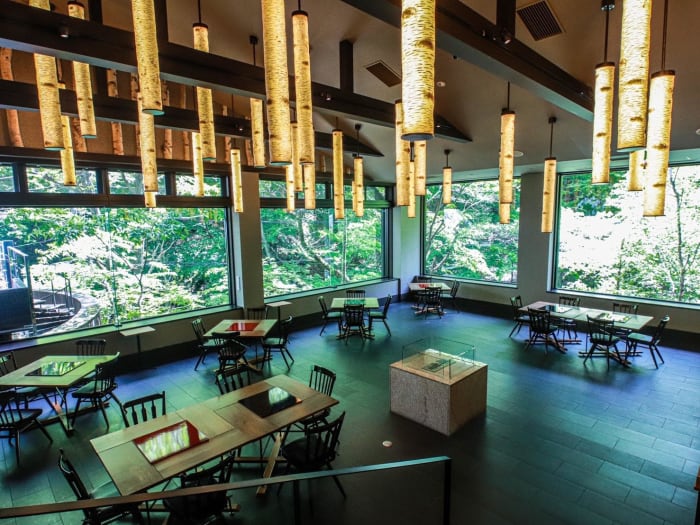
Traditional Japanese architecture shapes the experience. Wood, simple lines, openings framing nature, and communal spaces designed for visual breathing all contribute to a sense of ordered calm. This formal restraint creates an elegant atmosphere, far removed from fleeting trends. Modern comfort serves as an invisible support, making the space effortlessly habitable, balancing authenticity with contemporary use.
This fidelity to Japanese hospitality is also reflected in the relationship with time. One does not come here to tick off activities, but to slow down. The stay takes the form of a pause, rhythmically punctuated by bathing, dining, and the light on the mountains. It is a destination for those seeking a coherent experience, rooted in a territory and in time-honoured gestures.
In Matsumoto, a city renowned for its historic castle and its location in the heart of the Japanese Alps, Myojinkan offers a counterpoint. Not the urban bustle, but its retreat. This distance is part of its identity, reminding us that access to a place of rest sometimes requires a slight detachment. In return, one gains an immersion in nature and a rare quality of attention.
The Establishment
One of the great strengths of Tobira Onsen Myojinkan lies in its location. The hotel is set amidst mountains and nature. The air feels cleaner, sounds become scarce, and the gaze rests upon the lines of vegetation. This relationship with the landscape forms the backbone of the experience. From the moment of arrival, the address reveals itself as a refuge, away from the ordinary rhythm of life.
The mountainous surroundings of Matsumoto change with the seasons, and the hotel benefits from this continuous variation. Lush foliage in the warmer months, more mineral tones as the climate cools, and a cocoon-like atmosphere when the light diminishes. This seasonality lends the stay an almost meditative quality.
Traditional Japanese architecture finds its true meaning here. The volumes do not seek to dominate the site; rather, they fit into it with precision. The materials, openings, and transitions between communal spaces and more intimate areas reinforce this harmony. Modern comfort is seamlessly integrated, without altering the spirit of the place.
The communal spaces contribute to this sense of tranquillity. The pathways do not merely connect functions; they prepare the experience. A corridor, a lounge, a threshold leading to the baths or dining room become moments of transition. The traveller is invited to slow down, to observe, to listen.
The feeling of isolation does not equate to discomfort. The establishment combines modern comfort with Japanese traditions, remaining accessible to international travellers without losing its essence. Here, one finds the serenity of a secluded place, paired with the fluidity of services expected in a five-star hotel.
The establishment is suited for those who choose their hotel based on what it allows them to feel. Here, the landscape sets the tempo of the stay. In the morning, it accompanies the awakening. During the day, it invites gentle exploration. In the evening, it extends the effects of the thermal baths and dinner. More than just a stopover in Matsumoto, Tobira Onsen Myojinkan is a destination in its own right.
Rooms and Suites
At Tobira Onsen Myojinkan, the room embodies the philosophy of the place. It combines modern comfort with Japanese traditions, paying careful attention to the atmosphere.
The rooms and suites are designed as silent retreats. Guests come here not only to sleep but also to reconnect with a calmer sense of time.
The decor favours natural materials, understated lines, and a soothing palette. The details draw inspiration from Japanese aesthetics, without excess.
The space encourages fluid movement, clearly defined resting areas, and a subtle relationship with light. This design logic enhances the feeling of seclusion.
The gaze is not constantly engaged; it can rest. Here, elegance lies in a form of restraint.
The natural environment plays a central role in the in-room experience. The mountains and nature extend the sense of calm.
A window, an opening, a view of trees or the neighbouring landscape is enough to create a connection with the scenery. This relationship with the outside allows one to feel the season, the weather, and the daylight.
Modern comfort is expressed through quality usage. Guests can expect well-maintained bedding, a pleasant bathroom, controlled temperature, and well-integrated amenities.
The rooms are suitable for couples, as well as for travellers seeking solitude, reading, rest, or contemplation. After the thermal baths, returning to the room takes on an almost ritualistic dimension.
The evening turndown service and daily maintenance reinforce this sense of continuous care, without ostentation.
At Myojinkan, the room is part of a larger whole. It becomes the anchor point of an experience filled with baths, meals, silence, and landscape.
Dining
In a Japanese thermal retreat, dining occupies a particular place. It is not merely a food service; it forms part of the overall balance of the stay alongside bathing, rest and landscape. At Tobira Onsen Myojinkan, one can reasonably expect an approach aligned with the spirit of the property: attentive to the seasons, respectful of ingredients and conceived as a moment of calm rather than performance. The hotel’s membership of Relais & Châteaux further supports the expectation of cuisine with character, rooted in its surroundings and served in a setting coherent with the wider experience.
In Matsumoto and the wider Nagano region, the relationship with nature naturally shapes the table. Mountains, forests, farmland and marked seasons create a culinary repertoire in which freshness, apparent simplicity and precision matter more than spectacle. In a context such as Myojinkan, a meal often takes the form of a carefully paced sequence in which textures, temperatures and presentation matter as much as flavour itself. This sensitivity is deeply Japanese: dining is also a way of perceiving the moment of the year.
The architectural setting once again plays an essential role. In a property with traditional Japanese aesthetics, the dining room, the service and the rhythm of the meal belong to the same gentle dramaturgy. One sits, observes and allows time to settle. Dinner becomes a natural extension of the thermal baths, as though the body, already relaxed, were more receptive to nuance. Far from demonstrative gastronomy, the desired experience is one of rightness: a well-handled ingredient, a clear broth, precise cooking, measured service.
For international travellers, this style of dining is often one of the great pleasures of a stay in Japan. It offers not only flavours, but another way of having dinner: quieter, more sequenced and more attentive to context. In the morning, breakfast can also become a memorable moment, particularly in a place surrounded by nature where daylight gradually enters the experience. Beginning the day in such peaceful surroundings gives the meal an almost ceremonial quality, even when its form remains simple.
It should also be remembered that a hotel of this category attracts guests who choose to remain on site in order to experience the address fully. Dining therefore becomes one of the pillars of the stay. It must reassure, surprise with restraint, nourish without heaviness and support relaxation rather than interrupt it. This is especially true after a day exploring around Matsumoto or after a long session in the baths. One expects cuisine capable of extending a sense of wellbeing, not breaking it.
More than a restaurant in the strict sense, dining at Myojinkan forms part of a complete hospitality experience. It connects territory to plate, season to menu and the gestures of service to the identity of the house. For travellers who value hotels where gastronomy is neither incidental nor showy, but intimately linked to the spirit of the property, this dimension matters greatly. It makes the meal a lasting memory because it is lived as an integral part of the stay rather than as a separate gourmet interlude.
Spa & Well-being
The emotional heart of Tobira Onsen Myojinkan lies in its relationship with hot water. The thermal baths, with direct access, are not just another facility; they provide the very reason for the stay.
In Japan, the onsen is part of a culture in its own right. It is associated with relaxation, purification, and contemplation. At Myojinkan, this tradition unfolds in a mountainous environment. The bath becomes a complete sensory experience. The warmth of the water, the freshness of the air, and the landscape create a rare balance.
A successful thermal stay depends on how the baths integrate into the rhythm of the house. Here, they converse with Japanese architecture, the silence of communal spaces, and the leisurely pace of meals. One organises their day around moments of bathing and recuperation. This logic transforms the stay, inviting guests to slow down and embrace a gentler sense of time.
A spa treatment can extend the effects of the onsen. After a day in Matsumoto or a walk in the surroundings, returning to the warmth of the baths followed by a treatment creates a restorative sequence.
Well-being here does not take the form of a spectacular spa. Rather, it embodies an art of regulation. Alternating warmth and rest, silence and breath, introspection and openness to nature. This approach suits travellers seeking deep rejuvenation. Couples find a conducive setting for shared retreat, while solo travellers can appreciate personal re-centering.
The natural environment plays an essential role. Being surrounded by mountains and nature alters the quality of attention. One breathes differently, walks differently, sleeps differently. The thermal baths amplify a state already initiated by the location. The finest Japanese retreats do not separate care from the setting, nor rest from culture. Everything contributes to a shared effect of rebalancing.
For many guests, the hours spent around the baths will remain the most vivid memory of their stay. Not because they are spectacular, but because they offer access to a rediscovered simplicity. Dedicating time to water, silence, and slowness is already a luxury. At Tobira Onsen Myojinkan, this luxury takes a just form, rooted in Japanese tradition.
Concierge & Services
At Tobira Onsen Myojinkan, the quality of service is measured by its appropriateness. A concierge and reception available at all hours, daily housekeeping, turndown service, luggage storage, laundry, wake-up service, and multilingual staff create a seamless stay. In this secluded environment, this discreet support is as valuable as the tranquility.
The reception and concierge, available around the clock, take on a particular significance here. The hotel welcomes an international clientele, sometimes unfamiliar with the codes of ryokan and the customs of thermal baths. The service goes beyond practical requests; it reassures, guides, and explains with tact.
The multilingual staff plays an essential role. They facilitate a better understanding of the stay's organisation, schedules, house customs, and discoveries around Matsumoto. This quality of support enhances the feeling of being welcomed with care. It also makes personalised requests, such as transfers or recommendations, easier to accommodate.
Daily maintenance and turndown service contribute to a quiet comfort. Returning from the baths or dinner to a space prepared for the night extends the impression of continuous care. Laundry services and luggage storage also make sense within the context of a broader itinerary in Japan.
The concierge finally helps to tailor the stay. In Matsumoto, this might involve organising a cultural visit, choosing the right time to explore, or inviting guests to fully enjoy the baths and the calm. The right service reads the traveller's intention without imposing a schedule.
At Myojinkan, the quality of service aligns with the spirit of the place. In such a calming setting, a discreet, constant, and reliable presence is naturally required. Everything seems simple because everything is designed to be so.
The art of living in Matsumoto
Staying at Tobira Onsen Myojinkan also means discovering another way of approaching Matsumoto. The city is often associated with its castle, one of Japan’s most celebrated, and with its strategic position in Nagano between urban heritage and alpine horizons. Yet the interest of a stay here lies precisely in this double reading: on one side, a city of culture, history and craftsmanship; on the other, a hinterland of mountains, forests and hot-spring retreats where one’s relationship to time changes. Myojinkan belongs to this latter register of breathing space, while still allowing Matsumoto to remain a cultural point of reference.
The local art of living owes much to this balance between nature and civilisation. One may spend part of the day exploring the city, its streets, historical landmarks or neighbourhood addresses, then return to the calm of the heights to rediscover baths and silence. This alternation gives the stay a particular depth. It also avoids the trap of a journey that is either overly contemplative or, conversely, too focused on sightseeing. In Matsumoto, heritage is better understood when set against its natural environment; and nature, in turn, takes on another meaning when one returns afterwards to the culture of the city.
The wider Nagano region is also associated with a particular idea of inland Japan: less frenetic than the great metropolises, more attentive to the seasons, local produce, landscapes and mountain traditions. For French or European travellers, this dimension is often especially valuable. It offers an image of Japan that is more nuanced, perhaps more everyday, but also more profound. Staying at a hotel such as Myojinkan allows guests to enter that register without giving up the comfort and support of a distinguished house.
Those interested in local culture will appreciate the possibility of combining several modes of experience: heritage, craftsmanship, regional gastronomy, walks, thermal baths and observation of the seasons. Nothing requires doing everything. On the contrary, the spirit of the place encourages choosing little, but choosing well. That in itself is a form of art of living: preferring quality of presence to quantity of activities. The stay becomes more personal and more memorable because it follows a chosen rhythm rather than an imposed agenda.
For couples, Matsumoto and its surroundings offer a particularly harmonious setting. The city provides cultural substance, the hotel offers retreat, and the mountains create a sense of space. For solo travellers, the balance is equally appealing: one can alternate exploration with long stretches of calm without ever feeling bored. This ability to suit different styles of travel helps explain the destination’s enduring appeal.
Ultimately, the art of living in Matsumoto does not depend on a single attraction, but on composition. It lies in the movement from mineral to vegetal, from heritage to bath, from discovery to rest. Tobira Onsen Myojinkan embodies that composition very well by offering an anchor point that privileges serenity without severing ties to the territory. For travellers seeking in Japan an experience that is at once cultural, sensory and restorative, the property offers a particularly apt interpretation of what travel can be: not a succession of highlights, but a continuity of fine impressions.
Book with MyConciergeHotel
Booking Tobira Onsen Myojinkan through MyConciergeHotel means choosing editorial and human guidance suited to a property whose value lies precisely in nuance. A hotel such as this cannot be reduced to a list of amenities or to its five-star status alone. What matters is the balance between Japanese traditions, contemporary comfort, natural surroundings and the thermal experience. For that reason, the booking is best considered in light of the way you travel: a restorative stay, a romantic interlude, a cultural stop around Matsumoto, or a more introspective retreat centred on baths and silence.
Our role is first to help you read the property correctly. Tobira Onsen Myojinkan is particularly well suited to travellers seeking a peaceful atmosphere, a strong grounding in Japanese culture and immersion in nature. If you prefer immediate urban animation, a highly social lobby or a densely programmed stay, it is useful to know that before booking. If, on the other hand, you are looking for a place to slow down, enjoy direct access to thermal baths, recover a sense of calm and experience a more inward-facing Japan, the hotel offers a rare coherence.
Booking with MyConciergeHotel also makes it easier to prepare the details that genuinely shape the experience. Season, for example, strongly influences the perception of a stay in a mountain environment. Depending on the time of year, the light, vegetation, air temperature and even the way one enjoys the baths will differ. Likewise, the ideal length of stay deserves thought: one night may provide a pause, but two nights or more often allow guests to enter the rhythm of the place more fully. Our guidance is designed to align these parameters with your actual expectations.
We can also help position the stay within the wider framework of your journey in Japan. Matsumoto may form part of a broader cultural itinerary, a route through Nagano, or a more specific search for notable ryokan and onsen experiences. In every case, it is useful to consider transfer times, the order of stops and the place you wish to give to rest. A hotel such as Myojinkan reveals its full value when it is not treated as a simple overnight stop, but as a meaningful chapter of the trip.
The benefit of booking through MyConciergeHotel also lies in the quality of recommendation. We favour properties with a clear identity and a genuine promise of experience. Tobira Onsen Myojinkan belongs to that category of places recommended not because they try to please everyone, but because they know exactly what they offer: a mountain refuge, refined Japanese hospitality, thermal baths at the heart of the stay and an atmosphere conducive to renewal. That precision matters because it allows guests to book with the right expectations.
If this vision of travel speaks to you, MyConciergeHotel can help turn a simple reservation into a well-composed stay. The right hotel is not merely the one that ticks boxes; it is the one that matches a particular travel desire. At Tobira Onsen Myojinkan, that desire takes the form of elegant retreat, a calmer relationship with time and a sensitive immersion in mountain Japan. It is exactly the kind of address that should be chosen with discernment — and experienced without haste.