History & heritage
In Fort Cochin, history is never merely decorative. It shapes the streets, façades, daily rhythms and even the way places are inhabited. The Malabar House belongs to this distinctive cultural geography: that of a former maritime trading post where merchants, travellers, local communities and influences from Europe, the Middle East and the rest of Asia once converged. Staying here means choosing a hotel that converses with an old quarter rather than withdrawing from it. Much of the property’s appeal lies in this setting: it does not attempt to erase the past, but to interpret it with restraint, favouring atmosphere, continuity and a strong sense of place.
The colonial character associated with the hotel is not limited to a handful of visual cues. It suggests a certain way of organising space, volumes conceived for the climate, a slower relationship between indoors and outdoors, and circulation that allows air, light and the sounds of the historic town to enter. In a destination such as Fort Cochin, where one moves easily from an old church to a merchant house, from a quiet lane to a lively waterfront, that coherence matters. The Malabar House therefore reads as an address attuned to the local urban memory, without slipping into theatrical reconstruction.
Its membership of Relais & Châteaux adds another layer. It places the hotel within a tradition of hospitality where individuality matters more than standardisation. For the traveller, this implies attention to the identity of the house, the quality of the welcome, the relationship with the destination and a view of the stay as a cultural experience as much as a comfortable one. In the case of The Malabar House, that affiliation feels particularly apt: the property does not seek to compete with large beach resorts or anonymous business hotels, but to offer a characterful, intimate address closely connected to Fort Cochin.
What lingers most is the way the hotel seems to extend the spirit of the historic quarter. There is a measured elegance, a taste for carefully chosen details, and an atmosphere that invites guests to observe rather than consume the destination at speed. For travellers drawn to heritage, storied port towns and houses with a distinct presence, The Malabar House offers a compelling introduction to old Cochin. More than a place to stay, it helps explain where you are: in a cultural enclave of Kerala where layered histories meet and hospitality is at its most meaningful when it remains faithful to its setting.
The Establishment
The Malabar House captivates with its understated elegance. In a hotel market often characterised by ostentation, this establishment opts for a more subtle presence. It is a hotel of character, nestled in the heart of the historic Fort Cochin district. It caters to travellers who wish to explore the city on foot, absorb its rhythm, and then retreat to a tranquil haven at the end of the day.
The location is central. From the hotel, the main cultural attractions are easily accessible. This allows for a stay that unfolds without heavy logistics.
This proximity does not result in an impersonal experience. The charm of the place lies in its ability to maintain a sense of intimacy within a vibrant environment. Here, one finds a hushed atmosphere after wandering the streets of Fort Cochin, with its ancient houses, galleries, places of worship, cafés, and sea views.
The carefully curated décor contributes to this balance, lending a distinctive tone to the overall experience. A dialogue emerges between colonial heritage, contemporary comfort, and local sensitivity.
The identity of the place relies less on ostentation and more on composition. The materials, colours, the relationship between spaces, and the attention to hospitality create a human-scale experience. In a city like Fort Cochin, this restraint enhances discovery rather than obstructing it.
The warm atmosphere further reinforces this impression. It is particularly comforting after a long journey or during a first visit to Kerala. One quickly finds their bearings, feels welcomed, and can seek advice without formality. The Malabar House thus offers comfort and character without rigidity, all within a setting that is deeply connected to its surroundings.
Rooms and suites
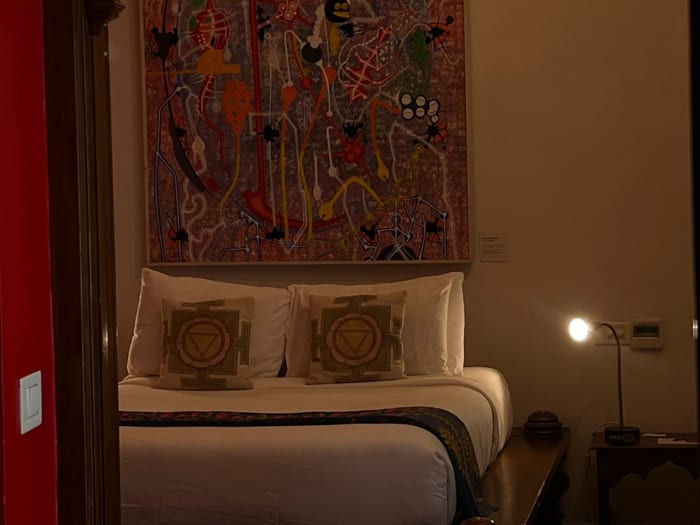
At an address such as The Malabar House, the room is not merely a place to sleep between visits. It extends the experience of Fort Cochin in a more intimate language: that of calm, comfort and aesthetic continuity. While the exact room categories and dimensions are not provided here, the spirit can still be understood from the known elements of the hotel: a clear colonial character, carefully composed décor and evident attention to detail. Together, these suggest rooms conceived not as standardised units, but as lived-in spaces carrying the personality of the house.
When well interpreted, colonial charm does not depend on an accumulation of period references. It rests more on the balance between architecture, ventilation, light and furnishings, and on a sense of ease particularly suited to tropical climates. In that context, modern comfort is at its most valuable when it remains discreet. Today’s traveller naturally expects quality bedding, a functional bathroom, impeccable upkeep and reliable service; but in a house of character, one expects something else as well: atmosphere. It is often that atmosphere which turns a hotel night into a travel memory.
Daily housekeeping and turndown service, both noted among the known amenities, contribute meaningfully to that quality of stay. They reflect a form of quiet care, especially welcome in a warm, culturally rich destination where days can be long. Returning after a walk through the historic streets, finding the room restored to order, sensing that the rhythm of the stay has been anticipated: these are simple gestures, yet they matter. They give travellers the feeling of being looked after without being interrupted.
One may also infer that the rooms at The Malabar House are intended for several kinds of stay, as suggested in the existing description: a couple’s escape, a business trip, a family interlude. That versatility is telling, as it implies spaces able to reconcile personality with practicality. In a hotel of this kind, one seeks less technological display than overall harmony: a room in which one sleeps well, reads willingly, prepares the day ahead or rests after exploring the town.
Ultimately, the promise of the rooms and suites here seems to rest on a simple yet demanding idea: to offer interiors that do not break with the spirit of Fort Cochin. Perhaps the best compliment one can pay such an address is this: the rooms do not try to distract from the destination, but to extend its texture. They allow guests to slow down, catch their breath and inhabit the journey more deeply. In a town where history is legible on every corner, that continuity between outside and inside is especially valuable.
Dining
In Fort Cochin, dining naturally forms part of the journey. The town’s maritime history, the trading routes that shaped Kerala’s coast and the cultural diversity of the historic quarter make it especially compelling for travellers interested in food. Even without detailing a specific menu or named chef here, it is fair to say that the culinary dimension of The Malabar House should be considered an essential part of the stay, all the more so in a Relais & Châteaux house, where the art of hospitality is also expressed through the table and its relationship with the region.
In this context, one expects cuisine able to bring together comfort, seasonality and local identity. In Fort Cochin, that may mean attention to coastal produce, spices, regional recipes and the multiple influences that have passed through the town over the centuries. The real interest lies not in superficial exoticism, but in the accuracy of flavours and in the way a meal can tell the story of a place. In a characterful hotel, the restaurant often acts as an interpreter, allowing travellers to taste the destination in a more composed setting, with a level of service that encourages discovery rather than mere consumption.
Breakfast in particular takes on a distinct importance here. In a town best explored on foot, starting the day in a serene setting, with attentive service, can shape the entire rhythm of the stay. It is the moment to decide on an itinerary, exchange a few words with the team and take the measure of the day’s light and warmth. Lunch or dinner, meanwhile, may become moments of return after sightseeing, when guests rediscover the calm of the hotel and extend the impressions gathered in Fort Cochin’s streets.
The value of a hotel table such as this also lies in its ability to suit different kinds of travellers. Couples may seek atmosphere; business travellers, ease and efficiency; families, uncomplicated hospitality. In every case, the essentials remain the same: precise service, clear cooking and a sense of harmony with the house. When hotel dining is successful, it does more than provide convenience; it strengthens the identity of the place.
For that reason, dining at The Malabar House should be seen as part of its overall style. It contributes to an idea of measured luxury, rooted in context and attentive to the traveller’s complete experience. In a destination as evocative as Fort Cochin, eating well is not only an immediate pleasure: it is a way of entering more deeply into the town, its history and its exchanges. A hotel that understands this offers more than a meal; it offers a sensitive reading of the territory.
Concierge & services
The luxury of a house such as The Malabar House is expressed as much through service as through décor. In Fort Cochin, where a stay often alternates between cultural walks, heritage visits and moments of rest, the quality of support makes a tangible difference. The known amenities provide a solid service foundation here: 24-hour concierge, 24-hour front desk, daily housekeeping, turndown service, luggage storage, laundry, wake-up service and multilingual staff. Considered individually, these may seem expected in a five-star hotel; brought together in a characterful house, they take on another dimension, because they support a more fluid and more personal experience.
The concierge in particular plays a central role in a destination such as Fort Cochin. The historic quarter lends itself to exploration, yet it often benefits from a few useful bearings: visiting hours, routes to favour depending on the heat, suggested walks, transfer arrangements, recommendations for a local guide or a table. A good concierge does more than answer requests; it helps shape the stay according to the time available, the traveller’s rhythm and individual interests. It is precisely this kind of mediation that turns a simple visit into a more nuanced experience.
A front desk open around the clock also brings a welcome sense of ease. Transport schedules can be variable, late arrivals are common, and early departures are part of long-haul travel. Knowing that a team is available at any hour is a discreet but decisive comfort. Likewise, luggage storage allows guests to enjoy the town unencumbered on arrival or departure days, which is especially useful in a cultural stop where every half-day matters.
Daily housekeeping, turndown service and laundry belong to another category of care: the kind that materially lightens a stay. In a humid or warm climate, after several days of sightseeing, the ability to have clothes attended to or to return to a room prepared for the night is far from incidental. These attentions restore physical comfort and help maintain a pleasant travel rhythm.
Finally, the personalised welcome and attention to detail explicitly listed among the highlights give the whole service offering its coherence. A service only has value if it is well interpreted. In a Relais & Châteaux house, one expects precisely that intelligence of hospitality: a genuine presence, yet never overbearing; constant availability, yet without automatism. The Malabar House appears to answer that definition of service done well, designed to accompany the discovery of Fort Cochin with tact, efficiency and warmth.
The Art of Living in Fort Cochin
Choosing The Malabar House also means opting for a particular way of discovering Fort Cochin. The journey unfolds through a succession of moments, walks, visits, and pauses. The historic district lends itself particularly well to this approach. Visitors come for its heritage but also for its atmosphere. Shaded streets, ancient façades, places of worship, galleries, cafés, and maritime vistas create a unique ensemble.
In this context, the hotel serves as an ideal base for a slower pace of life. One sets off on foot in the morning, stopping to appreciate the light, entering an old building, observing the details of a street, and taking the time for lunch or tea. Then, one returns to rest before heading out again. This flexibility prevents Fort Cochin from being reduced to a mere list of sites. A hotel in the heart of the historic district facilitates these back-and-forth movements and unexpected discoveries.
The allure of Fort Cochin also lies in its cultural depth. Few destinations offer, within a concentrated area, such a density of intersecting heritages. For a European traveller, the city may evoke certain ancient ports. Here, the light, vegetation, spices, humidity, and daily life lend a particular tone to this memory. The Malabar House, with its character and location, complements this nuanced understanding of the city.
The most pleasant season extends from November to February. This is when one can best enjoy walking, extended visits, and time spent outdoors. Regardless of the period, the essence remains the same: embracing a slower pace. Fort Cochin rewards attentive travellers who can alternate curiosity with availability, organised visits with spontaneous wanderings.
In this light, prioritising guided tours makes perfect sense. A good guide does not replace leisurely exploration; rather, it enriches it. They help connect buildings, communities, practices, and historical episodes. Returning to The Malabar House afterwards allows for the organisation of these impressions in a setting that continues the dialogue between comfort and culture.
Booking via MyConciergeHotel
Booking The Malabar House through MyConciergeHotel allows for a more nuanced understanding of the stay. The hotel is best appreciated within its context: Fort Cochin, its historic district, its rhythm, and its cultural richness. The Malabar House presents a clear coherence: a five-star establishment, a member of Relais & Châteaux, with a strong heritage focus, personalised service, and immediate proximity to cultural points of interest.
This approach helps to better grasp the on-site experience. The Malabar House may not suit all travel styles. It is ideal for those who favour characterful hotels, intimate stays, and destinations best explored on foot. It also appeals to couples, heritage-conscious travellers, and those incorporating a cultural stop into a South India itinerary.
In Fort Cochin, it is beneficial to consider the right pace for the stay in advance: the duration of the stop, travel period, the value of a guide, transfer arrangements, and the balance between visits and relaxation. This understanding allows for a more calibrated experience, helping to choose between a dense cultural immersion, a romantic interlude, or a more contemplative stop in Kerala.
The best season runs from November to February. Planning ahead for reservations is advisable, especially for a characterful hotel with limited capacity. Booking early also allows time to organise essential details: arrival times, specific needs, visit preferences, and travel pace.
Booking The Malabar House via MyConciergeHotel means choosing a more intentional form of travel. It is not merely about securing a well-located address. It is about selecting a home that tells the story of Fort Cochin with finesse, and an intermediary capable of elucidating its nuances.