History & heritage
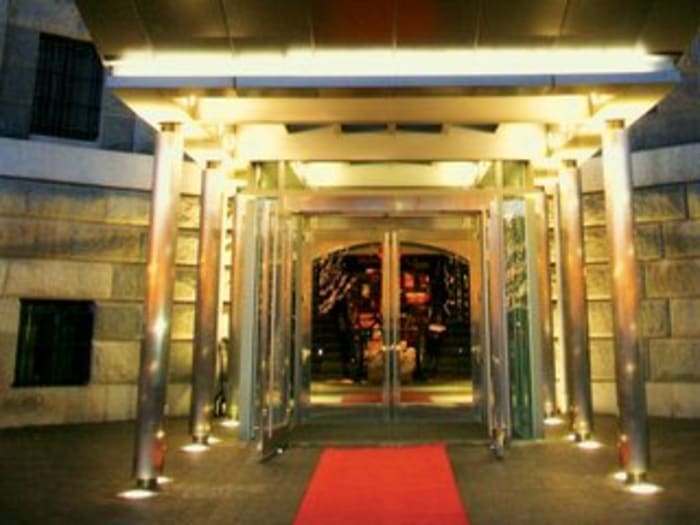
In Boston, few hotels draw their identity so clearly from the memory of the place itself. The Liberty occupies a historic building whose architectural presence sets the tone from the moment of arrival: contemporary hospitality housed within an older shell, with all the character, scale and narrative that implies. More than a decorative backdrop, the period structure shapes the experience throughout the stay. The proportions, the sense of solidity and the theatrical quality of the shared spaces all suggest that, before becoming a hotel, this address belonged to another chapter of the city’s story.
Boston has long maintained a particular relationship with its heritage. The city does not merely display its past; it folds it into daily life through neighbourhoods, institutions and buildings that have been thoughtfully reimagined. The Liberty belongs to that tradition of intelligent reinvention, where traces of time are revealed rather than erased. The result is far from museum-like. History is not placed behind glass here; it is interpreted with restraint, allowing original character to converse with the expectations of a modern five-star hotel.
What stands out is the way the property embraces its singularity without resorting to theatrics. Period charm is not used as a decorative shortcut; it forms the foundation of the atmosphere. The interiors retain a visual tension between heritage and modernity, between architectural rigour and the softness of contemporary comfort. That duality gives the hotel unusual depth. This is not an interchangeable luxury address, but one with a distinct voice, silhouette and memory.
In a city so rich in historic institutions, that dimension matters. It appeals to travellers looking for more than a central location or a polished room: a sense of place, and a meaningful connection with Boston itself. The Liberty speaks as much to architecture-minded guests as to those drawn to narrative hotels, the kind whose walls tell a story before the service even begins.
It also explains the particular energy of the property. A historic building transformed into a destination hotel often creates a different kind of sociability: guests linger, look up, gather in the public spaces, comment on details and take their time. The hotel becomes more than a base; it becomes an urban stage. At The Liberty, that stage is shaped by the building’s past and sustained by a very contemporary sense of comfort. The balance is delicate, and that is precisely where its appeal lies: the feeling of inhabiting a fragment of Boston without giving up the ease, elegance and attentiveness expected of a modern luxury hotel.
The property
The Liberty first impresses through its presence, and then through the way life is organised around its public spaces. Set in a lively part of Boston, with restaurants nearby and a number of attractions within walking distance, it offers an especially fluid base for exploring the city without relying constantly on a car. That walkable quality changes the rhythm of a stay: it becomes easy to step out for coffee, a stroll, a meeting or a visit, and then return to the hotel as one would to a familiar address woven into the urban fabric.
The property’s atmosphere is shaped as much by its architecture as by the way it is used. Shared spaces are designed for gathering, conversation and lingering. This is not a hotel that closes in on itself; rather, it maintains a social openness, almost a permeability with the city outside. That energy suits travellers who like to feel a hotel alive around them, rather than passing through silent, anonymous lounges.
The décor blends elegance with period charm in a visual language that avoids literal reconstruction. There is a clear intention to respect the character of the building while introducing a contemporary, urban comfort. The whole works because it does not try to erase contrasts. Historic elements bring gravity; modern interventions provide ease and lightness. The result is distinctive, sophisticated and approachable at once.
For a stay in Boston, the address answers several kinds of travel. Couples will appreciate an expressive setting for city breaks built around walks, dinners and late returns to a hotel that still feels animated. Business travellers benefit from the central location, the smooth service and the possibility of meeting in public spaces with real character. Families, meanwhile, gain a practical base for moving around the city while enjoying a hotel environment that feels less impersonal than a purely functional large property.
What sets The Liberty apart is its ability to combine destination and atmosphere. Some hotels excel through location, others through design. Here, the two reinforce one another. The historic building gives the experience depth, while the neighbourhood contributes movement, nearby addresses and the immediate sense of being in Boston rather than in an isolated enclave. Guests stay with the city within easy reach, yet also with the pleasure of returning to a place with a personality of its own.
That personality does not rely on excess. It is expressed in the way the volumes are inhabited, in the rhythm of circulation, in the conviviality of the shared spaces and in that rare feeling, within luxury hospitality, of a place that can be both stately and relaxed. The Liberty does not strive to impress at every turn; instead, it establishes a memorable, lively and coherent setting where history, sociability and urban energy come together in a way that is immediately recognisable.
Rooms and suites
In a hotel where architecture and history play such a central role, the question of the rooms is essential: how do you extend the character of the place without compromising privacy, rest and the clarity of modern comfort? At The Liberty, the appeal lies precisely in that balance. The accommodation belongs to a property with a strong personality, yet it must also deliver what travellers expect from an urban five-star hotel: relative calm, functionality, attentive service and a sense of retreat after the intensity of the city.
The spirit of the house suggests rooms where contemporary elegance converses with more classic references, in continuity with the public spaces. In a property of this kind, luxury is not simply about accumulation or display, but about coherence: a restful palette, materials chosen for their lasting quality, and furnishings designed for actually living in the room rather than merely occupying it. One expects spaces able to support different rhythms of stay: a single night, a long weekend, a business trip or several days devoted to discovering Boston.
In a dense and active city, the real privilege often lies in returning to a room that slows the pace. After Boston’s streets, institutions, restaurants and moving neighbourhoods, coming back to The Liberty should offer that discreet shift into another register: softer light, quieter acoustics and service gestures that are carefully timed. Turndown and daily housekeeping contribute to that sense of seamless care which distinguishes a well-run grand hotel from one that is merely well equipped.
Suites, for those who favour them, tend to make particular sense in a property of this nature. They allow guests to enjoy more fully the character of the building, to create a more residential stay and to benefit from space suited to informal meetings, work or simply the comfort of experiencing the city at one’s own pace. In such a context, choosing a more generous category can alter the stay entirely: one is no longer simply sleeping in Boston, but temporarily inhabiting a fragment of it.
For couples, the rooms provide a point of balance between the social energy of the hotel and a more private retreat. For business travellers, they should offer a clear, efficient base supported by services that simplify shifting schedules and late arrivals. For families, the appeal of a grand historic hotel often lies in the feeling of staying somewhere with a story, without giving up practical daily comforts.
Ultimately, the rooms and suites at The Liberty are best understood within the broader logic of the property. They do not attempt to detach themselves from the building as a separate universe; they soften and extend its identity. That is an important distinction. The stay gains a rare coherence: guests move from public drama to private rest without a break in tone, always within that combination of period charm, urban elegance and contemporary comfort that defines the hotel.
Dining
Dining is an integral part of The Liberty’s identity. In a lively neighbourhood surrounded by places to dine out or extend the evening, the hotel does not merely provide a convenient option: it takes part in the local culinary conversation. With several food and social venues within the property, it offers a programme suited to different moments of the day and different styles of stay, from a considered dinner to something more spontaneous.
Among the hotel’s known tables, CLINK. expresses a clear commitment to New England produce and seasonality. The restaurant highlights North Atlantic seafood, seasonal regional dishes and heritage meats. In Boston, that approach feels especially apt, as local cooking often finds its strength in the freshness of maritime ingredients, careful technique and a certain directness of flavour. For travellers, it offers an immediate way into the region without leaving the hotel: a contemporary reading of emblematic local ingredients within a setting that extends the building’s historic character.
Scampo introduces another register. Under the direction of Lydia Shire, the restaurant works from an Italian base enriched with Mediterranean and Middle Eastern accents. That interpretive freedom avoids predictable classicism and gives the venue a distinct personality, ideal for guests seeking more than a polished luxury trattoria. Over the course of a few days, such variety becomes valuable: one evening may be devoted to New England flavours, the next to a more wide-ranging culinary perspective, all without leaving the address.
The fact that the hotel includes several venues reinforces the sense of a lively house. In large urban hotels, dining is never only about the plate; it shapes behaviour. Guests gather before going out, have a drink after meetings, improvise dinner without crossing the city, and observe the local rhythm. At The Liberty, that social dimension feels particularly natural, not least because the public spaces are designed to encourage interaction.
For visitors discovering Boston, dining at the hotel can also provide a first reading of the city. New England appears through its produce, while Boston’s international outlook is reflected in broader influences. That coexistence between regional grounding and cosmopolitan curiosity suits the spirit of the city well: a place of history and intellect, but also a contemporary metropolis that remains mobile and open.
Dining here is therefore not an ancillary service. It extends the narrative of the property. To eat at The Liberty is to remain within that productive tension between heritage and the present, between a historic setting and urban energy. Whether choosing maritime regional cuisine, an Italian table open to Mediterranean influences, or simply a convivial moment in one of the hotel’s social spaces, the same guiding idea remains: a hotel that lives, receives and makes dining central to its way of welcoming guests.
Concierge & services
In a major urban hotel, the quality of a stay is often determined less by visible effects than by the finer points of service. The Liberty understands this well. The property offers a 24-hour concierge and a front desk open around the clock, both essential for international guests, late arrivals, early departures and itineraries that shift throughout the day. That constant availability brings valuable flexibility, especially in a city like Boston, where meetings, cultural visits, dinners and walks can easily follow one another without a fixed rhythm.
The concierge function is particularly meaningful here. In a lively neighbourhood, with many restaurants nearby and attractions within walking distance, the role goes beyond booking a table or arranging a car. It is about setting the right pace for a stay: suggesting a coherent route, recommending the best moment to explore a part of the city, and shaping a day that balances key sights with more personal pauses. In the best hotels, service does not add noise; it removes friction. That is exactly what one expects from a property of this calibre.
Daily services reinforce that sense of ease. Housekeeping ensures a discreet but essential continuity of comfort. Turndown, often underestimated, helps mark the transition between the outside day and a quieter evening return. Luggage storage simplifies early arrivals and late departures, allowing guests to make the most of Boston without carrying their belongings around. Laundry, meanwhile, supports longer stays, business travel and wider East Coast itineraries.
A wake-up service also retains genuine usefulness in a city hotel, particularly for travellers dealing with jet lag or tightly structured schedules. Multilingual staff contribute to a feeling of straightforward, obstacle-free hospitality, especially welcome in a property with an international clientele. Luxury here is not defined by display; it is measured by the hotel’s ability to make things simple, legible and well executed.
What separates good service from memorable service is often its tone. At The Liberty, the overall spirit of the house suggests attentiveness without excessive rigidity. The historic building could easily impose a degree of solemnity; instead, the hotel balances it with a more convivial approach. That nuance matters. It allows couples to feel at ease, families not to feel scrutinised, and business travellers to enjoy a setting with stature but without oppressive formality.
Ultimately, The Liberty’s services extend the broader logic of the property: a place with character, designed to be lived in easily. Round-the-clock availability, room attentions, practical facilities and a team able to support different kinds of traveller all form a coherent whole. In a city where one moves constantly and days fill quickly, that quality of execution often makes the difference between a hotel one simply appreciates and one to which one genuinely wants to return.
The Boston way of life
Staying at The Liberty also means embracing a particular way of experiencing Boston: on foot, in sequences, allowing the city to reveal itself neighbourhood by neighbourhood. The hotel’s setting, in a lively area with restaurants nearby and attractions within walking distance, naturally encourages that gradual reading. Boston is not a city that gives itself up in one dramatic glance, but one of layers, routes and adjacencies, where intellectual, political and architectural history meets a distinctly contemporary energy.
The pleasure often begins with the simple act of stepping outside and finding the city immediately available. Coffee in the morning, a walk towards a cultural institution, a pause in a park, an improvised lunch, then back to the hotel before heading out again for dinner: this flexible rhythm suits Boston particularly well. The city rewards human-scale itineraries. It is discovered as much in transitions as in destinations, in the way an older street opens into a livelier district, in the coexistence of a historic building and a current address, in the meeting of academic elegance and more relaxed sociability.
The Liberty supports that experience well because it shares the same blend of memory and movement. Its historic building echoes Boston’s depth of heritage, while its convivial atmosphere and social public spaces remind guests that the city is not merely an intellectual backdrop. Boston is also lived in the evening, at the table, in conversation, in the movement between institutions and urban pleasures. A hotel able to accommodate that alternation becomes a true partner in the stay.
For couples, Boston offers a way of life built around walks, culinary pauses and returns to a hotel with enough personality to extend the day rather than merely end it. For business travellers, the city allows an easy shift from professional to cultural, from meeting to visit, from working dinner to late walk. For families, it offers a density of experiences accessible without excessive logistics, making the stay lighter and more spontaneous.
The value of an address such as The Liberty lies in the fact that it does not isolate the traveller from the local context. On the contrary, it anchors them within it. Boston is felt here not as a postcard, but as an inhabited, active, cultivated and food-loving city. The lively neighbourhood, nearby restaurants, walkable attractions and the possibility of returning to animated shared spaces create a highly successful balance between exploration and comfort.
In that sense, The Liberty corresponds closely to the idea of contemporary urban luxury: not withdrawing from the city, but inhabiting it with greater ease. The hotel becomes a place to pause, a meeting point, an aesthetic and practical landmark. And Boston, from this address, is discovered as it is best understood: in successive touches, with curiosity, at a lively but never rushed pace, between heritage, culture and very present-day pleasures.
Book with MyConciergeHotel
Choosing The Liberty with MyConciergeHotel means favouring an address that is more than simply a room in the city. The appeal of the hotel lies in a precise combination: a historic building, décor in which contemporary elegance meets period charm, a lively neighbourhood, attractions within walking distance and a genuine internal life shaped by public spaces and dining. For travellers hesitating between several major Boston hotels, that coherence matters more than grand claims. It creates a stay with a clear tone, immediately perceptible from arrival.
The property is especially well suited to those seeking a hotel with narrative, without giving up the comfort and ease of a five-star stay. Couples will find an expressive setting for an urban weekend. Business travellers benefit from a central, lively base with continuous services and spaces in which to extend the day beyond the room. Families enjoy a practical location and an atmosphere less standardised than that of a purely functional international hotel. In every case, The Liberty offers the valuable feeling of inhabiting a place rather than merely using it.
Booking this address also means thinking about the stay at the right pace. Because the neighbourhood is lively and the city lends itself to walking, it makes sense to organise a few anchors rather than an overfilled schedule: a first evening at the hotel to understand the place, dinner on site to enter its culinary world, then days built around walks and regular returns. The Liberty suits that alternation between outside and inside, between urban energy and recovered comfort.
One of the advantages of a guided booking lies in the ability to shape the experience around the traveller’s profile. Some will prioritise the historic character of the building, others the proximity of restaurants and attractions, and others still the conviviality of the public spaces or the range of dining options. In a hotel this distinctive, it helps to book with a clear sense of what one is seeking: immersion in Boston, a couples’ escape, a more inspiring business stay, or simply the desire to sleep in a place with character.
The Liberty is not a secluded retreat; it is a city hotel, with all the movement, encounters and rhythm that implies. That is precisely where its value lies. Guests choose it to feel Boston around them, to return in the evening to a place that remains animated, to enjoy attentive service without distance, and to stay in a building whose history lends depth to every moment.
Booking The Liberty with MyConciergeHotel therefore means choosing a form of urban luxury that is embodied rather than showy: more narrative than demonstrative, more alive than fixed, and more attached to the personality of the place than to international standardisation. For travellers who value hotels with real presence, a location that makes the city easier to navigate and an atmosphere capable of turning a simple stay in Boston into something more memorable, the address presents itself naturally.