History & heritage
Rosewood Mansion on Turtle Creek belongs to that rare category of addresses that first tell a story about the city before speaking about hospitality. In Dallas, where images of vertical modernity and economic energy often dominate, this house offers another reading: more residential, more hushed, more rooted in a tradition of private elegance. Its very name, with the word Mansion, says much about its identity. The experience here does not rely on the spectacle of a large anonymous hotel, but on the feeling of being received in a house of character, with all that implies in terms of calmer rhythm, domestic proportions and close attention to atmosphere.
The property’s classical architecture fully supports this impression. Without seeking ostentation, it establishes a setting of permanence, shaped by balanced lines, noble materials and a close relationship between the building and its gardens. In an American urban landscape often marked by speed and functionality, this architectural presence feels distinctive: it suggests continuity, a way of preserving an art of receiving that does not date. Luxury here is not demonstrative; it is read in the quality of the volumes, in the restraint of the style, in the coherence between indoor and outdoor spaces.
Its place within the Rosewood Hotels & Resorts collection reinforces this heritage-led reading. The group is associated with hotels that cultivate a strong local personality rather than brand uniformity. At Rosewood Mansion on Turtle Creek, this translates into an address that seems to belong to Dallas as much as to the world of high-end travel. It appeals equally to city regulars, international business travellers and leisure guests seeking a stay that feels more intimate than institutional.
What stands out, finally, is the way heritage is expressed in the present. The hotel does not merely preserve a façade or a narrative; it extends a culture of hospitality founded on personalisation, discretion and a distinctly warm American welcome, here tempered by quiet sophistication. The warm, intimate atmosphere noted among its defining traits is not simply a marketing line: it follows naturally from the nature of the place itself. Guests come to the Mansion to find an address with memory, but also to enjoy a setting that remains fully contemporary in its comfort and in its understanding of present-day expectations. It is this alliance of residential heritage, classical elegance and highly attentive service that explains the hotel’s particular standing in Dallas.
The Establishment
One of the standout features of the Rosewood Mansion on Turtle Creek is its location. Nestled in the Turtle Creek neighbourhood, a residential enclave renowned for its more tranquil atmosphere compared to the bustling business district of Dallas, the hotel offers the chance to enjoy an active and expansive city without being constantly swept up in its tempo. Here, one feels a sense of seclusion while remaining connected to the main cultural, commercial, and professional hubs.
The immediate surroundings enhance this sense of balance. The lush gardens are not merely decorative; they soften the approach, filter out noise, and impart an almost residential tone to the stay. In a Texan metropolis known for its wide thoroughfares and direct energy, this presence of greenery acts as a counterpoint, establishing a chosen pace of life that is particularly appreciated upon returning from a day of meetings or sightseeing.
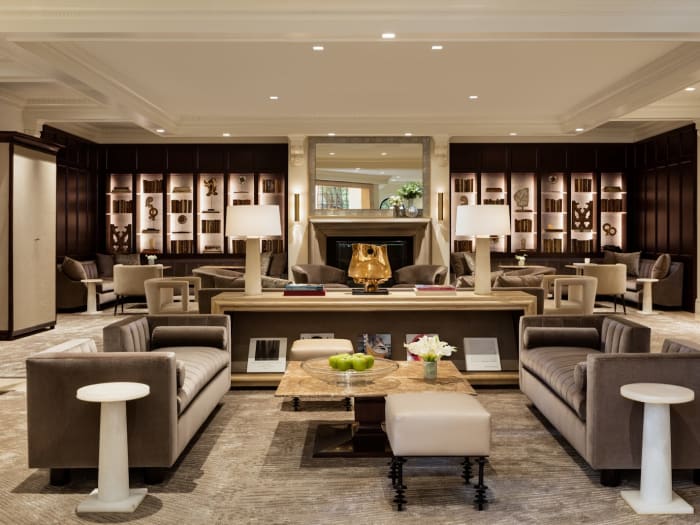
Inside, the classical architecture extends into communal spaces designed for conversation, smooth passage, and discreet comfort. The Mansion exudes a clear personality, that of a grand urban residence where elegance is grounded in moderation. This coherence between the location, the volumes, and the atmosphere largely explains the loyalty of its clientele.
The venue is equally suited for business stays and leisurely retreats. Its location allows for easy access to Dallas's strategic districts while providing a more serene environment upon return. Turtle Creek also serves as an interesting base to explore another facet of the city, characterised by refined residential neighbourhoods, quieter strolls, and a more unhurried lifestyle. Spring and autumn further enhance this quality of stay, particularly for those who appreciate outdoor spaces.
Ultimately, what distinguishes the establishment is its ability to create a sense of refuge without falling into isolation. Here, one experiences Dallas in a more subdued and controlled version. The Mansion is not just a well-located hotel; it is a place where the city remains close without imposing itself.
Rooms and Suites
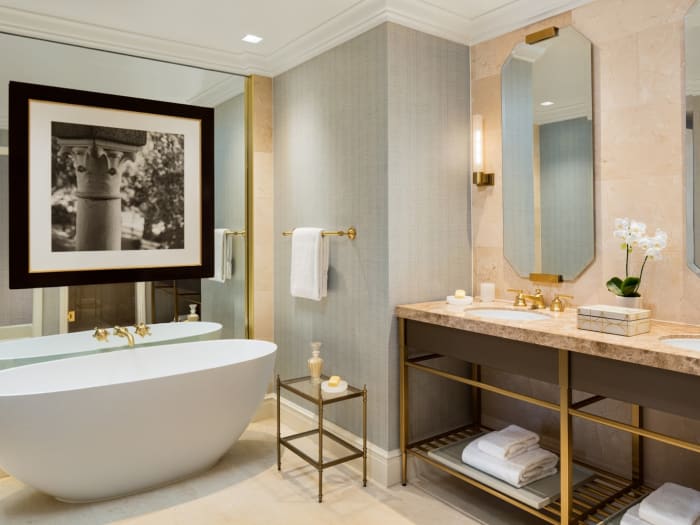
In a house of this nature, the rooms and suites extend the idea of the place: a residential luxury that is calm and controlled. At the Rosewood Mansion on Turtle Creek, one primarily seeks a sensation of balance. Comfort manifests itself through well-thought-out volumes, meticulous bedding, classic or timeless decor, and discreet functionality. This is where the difference between visible luxury and lived luxury is measured: the kind that simplifies the stay, soothes the eye, and allows for rest.
The warm and intimate atmosphere is evident here. A successful room in a hotel like the Mansion should evoke a sense of being lived in, in the noblest sense of the term. Without being cluttered, it avoids impersonal neutrality. One seeks soft lighting, pleasant materials, comfortable seating, and efficient storage. In Dallas, where many high-end establishments adopt a more contemporary language, this residential approach retains a particular appeal.
The suites reinforce this impression of a private home. They are suitable for travellers who desire more space, wish to host an informal meeting, or extend their stay. For business clientele, this generous space offers a true place for work and relaxation. For couples or leisure travellers, it allows for a more leisurely experience of the hotel.
Service plays a central role in the perception of these spaces. Daily housekeeping, turn-down service, as well as 24-hour reception and concierge services, extend this continuity of comfort. True luxury lies in consistency, in the room being tidied at the right moment, in the discretion of the staff, and in the promptness of response.
When choosing accommodation at the Mansion, one should consider both usage and category. A short business stay calls for an elegant and well-organised room. A long weekend or special occasion justifies the space of a suite. In all cases, the appeal of the location lies in this coherent promise: to sleep in a refined, quiet, and personal setting.
Dining
In a hotel of this calibre, the dining experience plays a crucial role in defining the identity of the establishment, its rhythm, and the way guests engage with the venue.
At the Rosewood Mansion on Turtle Creek, the culinary offerings reflect the spirit of the house. Elegant, refined, and unpretentious, they resonate with both residents and regulars from Dallas.
The setting is nearly as important as the food itself. Within this property, characterised by classical architecture and lush gardens, the dining experience naturally comes to life.
Breakfast often sets the tone for the day, showcasing the level of attention to detail, with an emphasis on freshness, tranquillity, and the flexibility of service.
The gardens make the idea of enjoying coffee or a meal al fresco particularly appealing, especially in the spring and autumn months in Dallas.
Whether for lunch or dinner, the Mansion's dining options cater to various occasions. Business meals, discreet meetings, intimate dinners, or casual evenings spent on-site.
This versatility distinguishes the finest establishments. A refined setting for significant occasions, yet relaxed enough to become a regular haunt.
In a city like Dallas, a hotel restaurant must find its rightful place through consistent service, an appropriate atmosphere, and a clear culinary vision.
Service makes all the difference. Recognising preferences, adapting to needs, maintaining the right pace, and providing discreet support.
For a business traveller, this is crucial at lunch. For a couple, it matters at dinner. For a regular patron, it’s about the feeling of being anticipated.
Without detailing a specific menu or chef, the essence lies elsewhere. The dining experience at the Rosewood Mansion on Turtle Creek seamlessly extends its art of hospitality.
Guests come not just to eat, but to immerse themselves in the atmosphere of the house. This is how a dining table becomes both a local landmark and a privilege for residents.
Concierge & Services
The true measure of a hotel often lies in how it attends to its guests in the finer details of their stay. At the Rosewood Mansion on Turtle Creek, the service is built on availability, discretion, and adaptability.
The establishment offers a 24-hour concierge service, a 24-hour reception, daily room service, turndown service, luggage storage, laundry services, wake-up calls, and a multilingual staff. Together, these services create a seamless experience.
The concierge is at the heart of this. In Dallas, where distances and logistics can quickly become burdensome, a team capable of guiding, recommending, and organising makes all the difference. They tailor suggestions to the pace of the stay, whether it involves a dinner, a meeting, or an itinerary spanning multiple neighbourhoods.
Housekeeping services are equally important. Daily cleaning and turndown service keep the room tidy, restful, and pleasant to return to. For both business trips and leisure stays, this consistency provides genuine ease.
Laundry services, luggage storage, and wake-up calls contribute to the same comfort. The 24-hour reception ensures a reassuring continuity, both on arrival and departure. Finally, the multilingual staff facilitates communication for an international clientele.
What distinguishes exceptional service is the tone. Here, hospitality is warm and attentive without being intrusive. Services then cease to be a mere list; they become the discreet fabric of the stay.
The Dallas way of life
Staying at Rosewood Mansion on Turtle Creek also means choosing a particular way of entering Dallas. From afar, the city sometimes suffers from simplified images: economic power, large-scale infrastructure, business culture, Texan heat. All of that exists, of course, but it does not fully define the experience an attentive traveller can have. From Turtle Creek, Dallas reveals itself from a more nuanced angle, where residential elegance, local habits and a taste for well-kept addresses take precedence over cliché. The hotel then acts as a valuable filter: it places the visitor in contact with an active city while offering a calmer, more refined reading of it, almost more European in its relationship to neighbourhood and rhythm.
The first pleasure often lies in inhabiting the area itself. Turtle Creek suggests another urban scale, shaped by quieter streets, greenery and a sense of retreat without isolation. For those who enjoy walking, observing, taking time over a coffee or returning early to the hotel to enjoy the late afternoon, this location has real value. It allows one to alternate between moments of urban intensity and intervals of breathing space. In a city as spread out as Dallas, that alternation is not a detail: it largely determines the comfort of the stay.
The local way of life is also visible in how one composes the day. Dallas lends itself equally well to business appointments, cultural outings, shopping sessions, long lunches and evenings organised around a table. A hotel such as the Mansion particularly suits those who appreciate fluid transitions between these registers. One can imagine a morning of work, a quiet pause in the gardens or lounges, then time in the city before returning to a more hushed setting. This ability to absorb different uses without losing its identity is part of the address’s appeal.
The seasons strongly shape this experience. Spring and autumn, noted as the most pleasant periods, highlight everything connected to the outdoors: walks, terraces, moments of relaxation in the gardens and more agreeable movement between neighbourhoods. In such conditions, the hotel fully reveals its character, as its landscaped environment and residential atmosphere become even more perceptible. The more intense Texan summer, by contrast, reinforces the importance of a well-run refuge where one can recover coolness, service and comfort after the city.
For French or European travellers, Dallas can be a pleasant surprise when approached from an address like this. One discovers less a monolithic city than a set of contrasts: ambition and softness, efficiency and sociability, American scale and a taste for places with character. Rosewood Mansion on Turtle Creek does more than provide accommodation; it offers access to a subtler way of experiencing Dallas, privileging quality of setting, neighbourhood serenity and the pleasure of travelling at one’s own pace.
Book with MyConciergeHotel
Booking Rosewood Mansion on Turtle Creek through MyConciergeHotel makes sense precisely because this is an address of nuance. It is not a hotel one chooses solely on the basis of category or a pin on a map. It is chosen for an atmosphere, for a particular idea of residential luxury, for the balance between calm, service and access to the city. In a house of this kind, the quality of the stay often depends on booking details that may seem secondary at first but become decisive once on site: the right room category, the orientation best suited to one’s rhythm, the right moment to book, and the coherence between the purpose of the trip and the type of experience sought.
The value of editorial and concierge support lies precisely in turning a simple transaction into an informed choice. For a business stay, it may be wise to favour a configuration that supports rest, smooth arrivals and departures, or more generous space in which to work comfortably. For a couple’s weekend, one may be looking more for atmosphere, a larger suite, or the possibility of shaping the stay around time spent on the property, between dining, gardens and attentive service. For a first discovery of Dallas, the key may be understanding how best to use the Turtle Creek address in order to combine visits, quiet time and straightforward logistics.
The advice already given in the short description remains especially relevant here: book well in advance, particularly during busier periods. The most pleasant seasons, notably spring and autumn, often coincide with strong demand for hotels that offer genuine outdoor spaces and the atmosphere of an urban retreat. Booking early not only secures the stay, but also gives access to a wider choice of room categories and greater flexibility in planning the trip as a whole.
MyConciergeHotel can also add value before arrival by helping shape the stay in its entirety. This may involve rhythm recommendations, suggestions tailored to the traveller’s profile, or particular attention to service preferences. In an address known for personalised hospitality, such preparation is far from incidental: it allows guests to enter the experience with greater precision.
Ultimately, booking Rosewood Mansion on Turtle Creek is not simply a matter of reserving a room in a five-star Dallas hotel. It means choosing an address of character, in a peaceful neighbourhood, where classical architecture, lush gardens and quality of service combine to create a stay that is more intimate than demonstrative. Booking through MyConciergeHotel gives that reservation the level of attention it deserves: that of a journey considered with care, so that the place truly matches the way one wishes to experience the city.