History & heritage
In Magescq, Hôtel Relais de la Poste belongs to a distinctly French tradition: that of former posting inns that gradually became destinations in their own right. The very name suggests this heritage. Before becoming a place to stay, a relais de poste was a stopover for rest, provisions and onward travel. In south-western France, such addresses long served routes running through pine forests, Landes villages and roads leading towards the coast or inland. Without overplaying the historical narrative, the hotel still preserves something of that original spirit: hospitality designed to receive, restore and offer pause.
That continuity is felt less through a demonstrative heritage discourse than through atmosphere. The idea of a house matters here more than that of a standard hotel. Its place within Relais & Châteaux further clarifies the identity: a taste for characterful properties, close attention to the table, and a form of French luxury rooted in the quality of welcome, the sincerity of setting and a genuine connection to place. In Magescq, that place is not an abstract backdrop. It is the Landes, with its light, its pinewoods, its slower rhythm, its markets, its produce and its understated way of doing things properly.
The hotel’s heritage also lies in its ability to combine several roles. Guests come for a gastronomic stop, a weekend for two, a few days with family, or as a peaceful base between forest and coast. That versatility is not at odds with refinement; it is one of its most convincing expressions. The houses that endure are often those that remain legible: a place where one eats well, sleeps well, is looked after with care, and immediately senses that time is not governed here by the same urgencies as elsewhere.
In a hospitality landscape often driven by novelty, Hôtel Relais de la Poste stands for another tempo. Its charm comes from a sense of continuity, maturity and balance. Nothing feels forced. Luxury takes the form of settled calm, attentive service, cuisine grounded in local produce and an authentic atmosphere that does not need to reinvent itself every season. For travellers, that is precisely the value of such an address: the feeling of arriving somewhere with memory, coherence and a long-practised sense of welcome.
The property
Hôtel Relais de la Poste reveals itself as a place to breathe. In Magescq, away from the agitation of larger urban centres, it offers a stay shaped by space, relative quiet and immediate proximity to nature. The setting is central to the experience: one does not come only to sleep here, but to attune oneself to a calmer environment. In this part of the Landes, vegetation structures everything. Pines, gardens, open views and shifting light create a backdrop that is never ostentatious, yet immediately establishes a sense of chosen retreat.
The property cultivates a discreet elegance. Its appeal lies in the balance between authenticity and hotel comfort. Guests find what many seek in a characterful house: a warm atmosphere, spaces that do not feel standardised, attention to service details and the sense that the place was designed to be lived in rather than merely consumed. The mood is neither fixed nor demonstrative. It leaves room for rest, conversation, returns from walks, lingering meals and unhurried mornings.
This quality is especially valuable in a destination such as Magescq. The village and its surroundings offer another reading of the south-west: more inland, more muted, less driven by seaside bustle than by the rhythm of the landscape. Staying here makes it easy to alternate between stillness and exploration. Some travellers will choose above all to enjoy the house, its outdoor spaces and its table; others will use it as a base from which to explore the region. In both cases, the hotel fulfils its role convincingly: that of a comfortable, legible and welcoming refuge.
The peaceful character of the place also explains why it suits different kinds of stay. Couples find an environment conducive to switching off and to a gentle form of retreat, without excessive isolation. Families generally appreciate the ease of a house where one can settle in without stiffness, in a natural setting that readily invites outings and shared time. That flexibility matters. It prevents the stay from being reduced to a single register, whether overly formal or overly exclusive.
Ultimately, the property appeals through coherence. As a Relais & Châteaux house, it makes a clear promise: to offer a stay in which hospitality, tranquillity and a sense of place matter as much as the level of comfort. In an era saturated with images and stylistic effects, such restraint has real value. It allows travellers to recover something simple and rare: the pleasure of a hotel that imposes nothing, yet perfectly accompanies the desire to slow down.
Rooms and suites
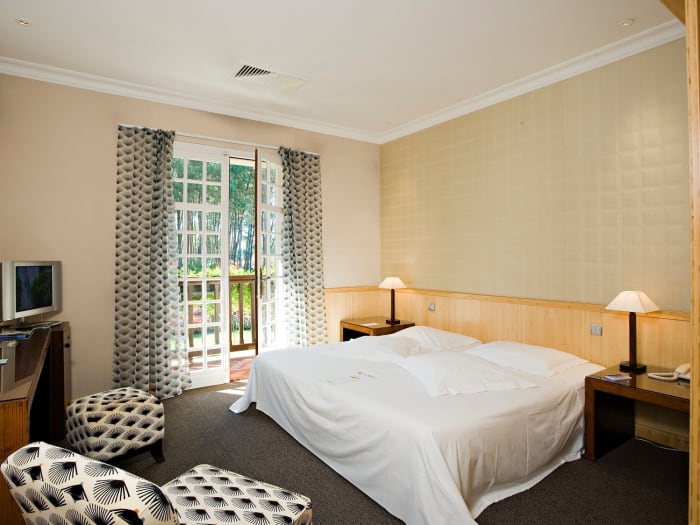
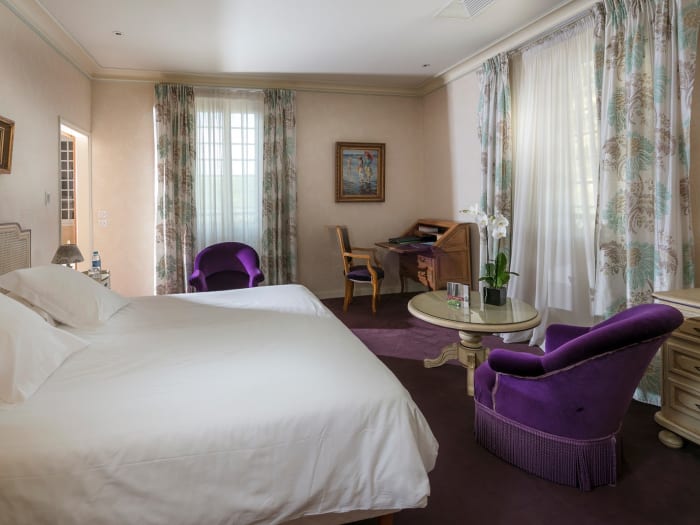
In a house such as Hôtel Relais de la Poste, the room is not conceived as a mere stopping point between activities. It extends the overall experience of the property: calm, comfort and controlled simplicity. Even without dwelling on a precise room typology, one quickly understands that the essential lies in balance. Guests come here expecting spaces conducive to rest, carefully considered bedding, a muted atmosphere and a sense of privacy that allows them genuinely to switch off. That is often what distinguishes a good country or village house from more standardised hotels: the ability to make the room feel like a refuge rather than an interchangeable unit.
The warm and authentic character of the property naturally carries through to the accommodation. One imagines volumes designed for comfort rather than effect, materials and tones in keeping with the spirit of the south-west, and decoration that privileges coherence over display. In this kind of address, luxury does not need to be loud. It appears in the quality of sleep, in the relative quiet of the night, in the morning light, in the ease with which one settles into the space. A successful room is one that can be inhabited immediately; it requires no instruction manual.
For couples, these rooms and suites provide a fitting setting for restorative stays. After dinner at the hotel or a day spent exploring the area, returning to a serene space is part of the pleasure. Families, for their part, often seek something slightly different: fluidity, practicality, the possibility of settling in without tension. The fact that the property is described as well suited to both couples and families suggests that kind of flexibility, which is essential in contemporary luxury hospitality. Comfort is not limited to aesthetics; it also lies in the natural way different needs can be accommodated.
The known services reinforce this impression of daily care. Daily housekeeping, turndown service, round-the-clock reception and concierge, luggage storage and laundry all create a stay that feels smooth without seeming heavy-handed. These details matter especially in houses where guests come to slow down, because they make it possible not to think about logistics. Comfort then becomes a form of well-organised discretion.
In the morning, the room takes on another dimension. In a setting surrounded by nature, the rhythm of the day changes. Curtains open onto softer light, time stretches, breakfast is approached without haste. It is often then that one measures the success of a stay: not in the accumulation of spectacular features, but in the quality of rest that genuinely alters the pace of travel. At Hôtel Relais de la Poste, the rooms and suites seem to answer precisely that expectation: to provide a setting that is balanced, peaceful and lastingly pleasant.
The Dining Experience
Gastronomy holds a central place in the identity of the Hôtel Relais de la Poste. The cuisine is refined and focused on local produce. In a Relais & Châteaux establishment, this aspect is integral to the overall experience. In Magescq, it takes on a particular significance, rooted in the seasonal culinary traditions of the South-West.
The success of such a dining experience lies in its ability to translate flavours. It is not merely about showcasing regional products; they must be woven into a coherent culinary language. In the Landes region, the essence lies in the freshness of the ingredients, respect for the seasons, the precision of pairings, and the balance of the meal. A refined cuisine centred around local products adheres to this logic, highlighting the origins of the ingredients.
The dining experience extends beyond just dinner. It often begins with breakfast, followed by lunch, which can be lighter or more substantial depending on the day's agenda. Finally, dinner often becomes the focal point of the day. It is advisable to reserve a table in advance, as the restaurant also attracts guests who are not staying on-site.
The relational aspect is equally important. A fine hotel dining experience relies not only on the plate but also on the welcome, the rhythm of service, and the knowledge of the products. It also depends on the attention given to the preferences of diners, whether families or couples. In a house with a warm and authentic atmosphere, this precision is expected without stiffness. Thus, the meal can leave a mark without becoming ceremonial.
For many travellers, the memory of a stay is often anchored at the table. A perfectly executed dish, a leisurely lunch, a peaceful evening, or a breakfast taken without haste all enrich the experience. At the Hôtel Relais de la Poste, gastronomy plays this role of a common thread, connecting the hotel to its territory, structuring the days, and making Magescq a destination in its own right.
Concierge & Services
Hotel luxury is often measured by what is almost invisible. At the Hôtel Relais de la Poste, the services contribute to this underlying quality. The stay gains in fluidity, comfort, and serenity.
The 24-hour reception and concierge provide a valuable point of reference. In Magescq, this availability brings genuine peace of mind. Late arrivals, early departures, or last-minute requests are met with flexibility at any hour.
This availability is complemented by thoughtfully designed services. The daily housekeeping ensures continuity in the care of private spaces, while the turndown service extends this attention. The luggage storage facility eases the arrival and departure days, and the laundry service caters to the needs of longer stays.
The wake-up service remains highly relevant here, allowing guests to organise their time discreetly. The multilingual staff highlights the international openness of the establishment. The quality of interaction and clarity of information significantly enhance the stay.
The concierge plays a role that goes beyond mere logistics. It can guide the days according to guests' desires—be it a walk, exploring the surroundings, arranging a lunch, or offering seasonal advice on pacing. Most importantly, it helps guests make the most of their available time.
For couples as well as families, this quality of service transforms the perception of the stay. Some find effective discretion, while others appreciate a house capable of accommodating practical needs without rigidity. Hospitality is expressed with precision, at the right moment, without ever becoming intrusive.
The Magescq way of life
Staying in Magescq means choosing a more inward, quieter version of the south-west. The local way of life cannot be reduced to a list of activities; it lies above all in a manner of occupying time. Here, nature is not merely a backdrop but a daily presence. It influences schedules, moods, walks, meals and even the quality of rest. Hôtel Relais de la Poste fits fully within that logic. Its peaceful setting in the heart of nature makes it an ideal base from which to appreciate a region discovered as much through rhythm as through places.
The Landes invite a gentler form of movement. One can devote a day to walking, taking the air, observing the changing light in the pines, passing through villages, stopping for lunch and returning to the hotel without any sense of rush. That simplicity is valuable. It reminds us that travel does not always need to be densely programmed in order to feel successful. In an environment such as Magescq, the most fitting experience often consists in alternating time outdoors with time indoors: an outing in the morning, a return to the house, a pause, dinner, a quiet night, and then beginning again.
For couples, this way of life takes the form of an interlude. They come in search of a little silence, slowness, good food and the possibility of being together in a setting that does not constantly demand attention. For families, the region offers another promise: that of a stay in which each person can find their place without undue tension. Nature eases the days, outdoor spaces become natural extensions of the stay, and the overall rhythm lends itself better to shared holidays than to overfilled schedules.
There is also, in this part of France, a particular relationship to conviviality. It is neither demonstrative nor society-driven; it passes through the quality of welcome, the care given to the table and a certain directness in exchanges. It is a way of life that values things done properly, local produce, durable habits and pleasures that are simple yet exact. Hôtel Relais de la Poste seems to translate precisely that culture into the language of hospitality: comfort, attentiveness, authenticity and a sense of place.
Choosing Magescq also means slightly shifting one’s perspective. Rather than focusing only on the most exposed destinations, one favours here an address that allows the territory to be understood differently, from a point of balance between retreat and accessibility. That is what makes the stay especially appealing for travellers in search of substance. The local art of living is not spectacular; it is tangible. It appears in the quality of a meal, in the softness of late afternoon, in the ease with which one slows down. And it is often this sense of rightness that makes one want to return.
Book with MyConciergeHotel
Booking Hôtel Relais de la Poste through MyConciergeHotel means approaching the stay with a logic of guidance rather than simple transaction. For a characterful house and Relais & Châteaux member, that difference matters. Choosing such a property does not rest solely on category or location; it involves a style of travel, a relationship to time, and specific expectations regarding dining, atmosphere and service. Being advised in advance therefore helps align the experience more closely with the actual purpose of the trip, whether that is a gastronomic weekend, a retreat for two, a family stay or a longer stop in the south-west.
The value of an assisted booking lies first in the quality of framing. Not all travellers expect the same thing from a hotel surrounded by nature. Some will prioritise tranquillity and room comfort above all, others the culinary dimension, and others still the ease of organising their time on site. MyConciergeHotel makes it possible to orient the booking according to those priorities, taking the profile of the stay into account. This nuanced reading is especially useful in houses where the overall experience exceeds the sum of the facilities. One is not simply choosing availability; one is choosing an atmosphere, a rhythm and a way of being welcomed.
The question of the table deserves particular attention in itself. The existing advice to reserve the restaurant in advance clearly shows that gastronomy is one of the property’s main draws. Booking through MyConciergeHotel allows that dimension to be integrated from the outset, avoiding last-minute compromises. In establishments where dining matters as much as accommodation, such anticipation makes a concrete difference to the quality of the stay.
This form of support also has practical advantages. Late arrivals, specific requests, planning arrival and departure times, needs linked to a stay for two or with family: all these elements benefit from being clarified before arrival. The services available on site — 24-hour reception and concierge, luggage storage, laundry, turndown service — make even more sense when they form part of a well-prepared stay. The role of MyConciergeHotel is precisely to facilitate that continuity between booking and lived experience.
Lastly, booking through MyConciergeHotel means choosing an editorial and selective approach to hospitality. An address such as Hôtel Relais de la Poste cannot be reduced to a technical factsheet. It deserves a reading that is both sensitive and precise, capable of highlighting what makes it distinctive: a peaceful setting, an authentic atmosphere, refined cuisine centred on local produce, and genuine suitability for couples as well as families. In a booking landscape that is often standardised, that perspective has real value. It helps guests choose better, and therefore travel better.