History & sense of place
In Gdynia, a Baltic port city shaped by 20th-century modernity, Hotel Quadrille offers a more intimate reading of luxury: less about display than atmosphere, more about character than spectacle. Its Relais & Châteaux affiliation immediately signals the kind of stay to expect here: one in which the identity of the place matters as much as comfort, and where guests come as much to inhabit a mood as to book a room. Even the name, Quadrille, suggests composition, rhythm and elegance, which suits the property’s balance of contemporary refinement and more classical undertones.
What makes the address compelling is precisely that sense of balance. On one side are the expected codes of a five-star hotel: attentive service, discretion, a strong command of detail, and comfort suited both to rest and to more active stays. On the other, the hotel never feels like a mere collection of amenities. It has a point of view, visible in its design, in its manner of hosting, and in the importance given to dining. That coherence matters in a market where many upscale properties can feel interchangeable. Here, the stay unfolds through a series of subtle impressions: interiors that avoid both cold minimalism and historical pastiche, cuisine centred on local ingredients, genuine proximity to the Baltic Sea, and easy access to the cultural highlights of the region.
Gdynia itself provides a distinctive backdrop. Part of the Tricity alongside Gdańsk and Sopot, it often feels more direct, more maritime and in some ways more contemporary than its neighbours. Choosing a hotel such as Quadrille also means choosing a different gateway to the Polish coast: less the expected postcard image, more a discreet way of living shaped by coastal light, walks towards the sea, regional gastronomy and cultural detours. In that setting, the hotel works as a sophisticated retreat without ever feeling detached from its surroundings.
The spirit of the place ultimately rests on a controlled warmth. Nothing feels overdone. The personalised service, one of the property’s defining traits, contributes to that sense of well-judged hospitality, where needs are anticipated without intrusion. It is a valuable quality, especially for a clientele that may include couples on a short escape, business travellers and guests exploring the Baltic coast at their own pace. In that respect, Hotel Quadrille belongs to a European tradition of characterful grand hotels: places that do more than accommodate, and instead give a tone to the journey.
The property and its setting in Gdynia
One of Hotel Quadrille’s strongest assets is its location in Gdynia, close to the Baltic Sea and within easy reach of both beaches and historic sites. For travellers, this means rare flexibility. A stay here can be imagined as a coastal break, a cultural exploration of the Polish seaside, or a business trip enhanced by a genuinely pleasant setting. The hotel accommodates these different rhythms without ever feeling designed for only one type of guest.
Gdynia has a distinct identity on the Polish coast. Less monumental than Gdańsk and less overtly resort-like than some neighbouring destinations, it appeals through its direct relationship with the sea, its open urban layout, its maritime heritage and its sense of movement. From the hotel, the Baltic is not a marketing abstraction; it shapes the experience of staying here. The changing light, the salt in the air, walks towards the shore and the ease with which one moves from urban moments to a more marine tempo all contribute to the address’s appeal. This is especially evident in the warmer months, when the coast softens into a slower rhythm, but the setting remains compelling year-round. In autumn and winter, the Baltic offers a more contemplative, almost graphic backdrop, well suited to a quieter stay centred on rest and dining.
The property itself appears conceived as a harmonious transition between outside and in. The design, described as a blend of modern style and traditional charm, plays an essential role here. This is not purely aesthetic; it is about perception. A successful hotel helps travellers shift tempo. After a day of visits, meetings or travel, one returns to an environment that calms without becoming dull, and that asserts an identity without overwhelming the guest. This quality becomes all the more valuable in a destination where day trips and varied itineraries are easy to arrange.
The location also opens up the wider Tricity area and its different atmospheres. Beaches naturally draw those in search of sea air, while nearby historic sites provide a welcome cultural counterpoint. Hotel Quadrille therefore lends itself to highly personalised stays: a morning by the water, a long lunch, an afternoon of heritage discovery, then a return to the hotel for a more considered dinner. For couples, this flexibility supports a romantic stay without a rigid programme. For business travellers, it turns a functional trip into something more rounded.
What stands out, finally, is the sense of being in a property that understands its territory. The hotel does not try to replace Gdynia; it offers a refined interpretation of it. It invites guests to see the city and the coast not as a mere backdrop, but as a living part of the stay. That intelligence of place is often what separates a good hotel from one people genuinely recommend.
Rooms and Suites
In a hotel of this calibre, the room is not merely a functional space between two activities. It should be a genuine retreat, conducive to silence and comfort. At the Hôtel Quadrille, this promise is fulfilled through a decorative approach that extends the identity of the establishment. It creates a dialogue between contemporary lines and more traditional charm, without stiffness or excess.
The discerning traveller will notice this coherence in the materials, colours, and light. In a Baltic context, the ideal room accommodates both long summer evenings and grayer days. A five-star establishment is expected to provide a sense of protective enclosure. Generous bedding, fluid circulation, thoughtfully designed storage, and bathrooms conceived as extensions of comfort. Even for a short stay, this quality alters the perception of travel.
The Hôtel Quadrille caters equally well to couples and business travellers. This dual purpose necessitates rooms adapted for different uses. For the former, the essence lies in the atmosphere. A sense of intimacy, a slower pace, the possibility of creating a refuge after a day by the sea or exploring the historic surroundings. For the latter, comfort is paired with genuine efficiency. Smooth check-in, impeccable daily upkeep, evening turndown service, discreet staff, and immediate references. Daily housekeeping, turndown service, and 24-hour reception and concierge services reinforce this impression of a well-managed stay.
Suites, when offered by an establishment, play a particular role. They allow for an extension of time, more comfortable hosting, or lend a more residential dimension to the stay. The expected spirit here is one of luxury that is more about composition than ostentation. The refinement lies in the balance between space, tranquillity, quality of sleep, and attention to daily life.
Ultimately, a good room at the Quadrille makes one wish to return sooner than expected after a stroll along the coast. Or to slightly delay departure in the morning. It enhances the stay rather than interrupting it. It is in this ability to create a personal time, between the sea, the city, and the table, that the success of a characterful hotel is often measured.
The Table and the Taste of the Region
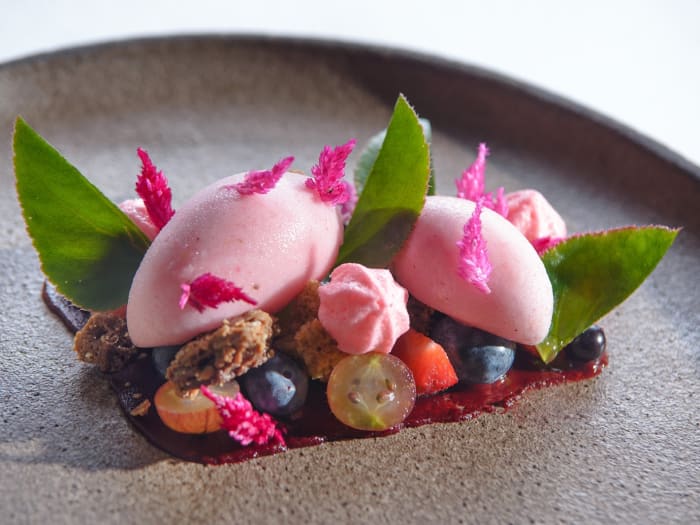
At the Quadrille Hotel, gastronomy unfolds across multiple registers, with a consistent focus on the rhythm of the locale. White Rabbit sets the tone. The restaurant boasts a genuine explosion of flavours, embracing a philosophy that prioritises the right impact over mere effect.
This establishment curates a dining experience designed as a moment apart. The dishes seek momentum, measured surprise, and a sensitive interpretation of flavours. The narrative remains clear and unburdened, allowing each note to find its rightful place.
Oberża 86 extends this approach with a different grounding. The cuisine here follows the seasons and engages in dialogue with French culinary traditions. This intersection lends substance to the table while embracing the natural variation of ingredients and the whims of the moment.
Between these two expressions, the hotel crafts a nuanced culinary journey. One plays with vivacity and intensity, while the other favours seasonal rhythm and the elegance of a reimagined tradition.
To extend the evening, the 10/6 Pub offers a more relaxed counterpoint. The bar provides a welcome breath, in a more straightforward register, conducive to a final drink or an effortless conversation that lingers.
Wellbeing, rhythm and relaxation
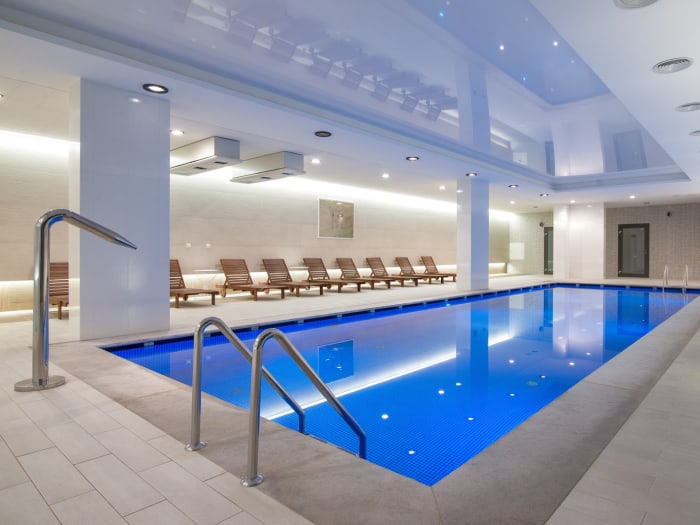
Even when a brief does not detail a spa in the strict sense, a five-star hotel such as Quadrille is ultimately judged by its ability to create genuine wellbeing. That notion extends far beyond dedicated facilities: it lies in sleep quality, in the smoothness of service, in the possibility of slowing down, and in the care given to the body after travel, meetings or long walks in the open air. In a destination close to the Baltic Sea, this takes on a particular tone. Sea air, changing light, seasonal variations and easy access to beaches naturally create a setting conducive to restoration.
Contemporary luxury, especially in characterful hospitality, is no longer defined solely by abundance. It is also measured by a place’s ability to restore balance. At Hotel Quadrille, that promise seems to rest on the overall atmosphere: a design blending modernity with traditional charm, personalised service, and a warm environment that encourages relaxation. These may be less visible than a spectacular facility, but they are often more decisive in the lived experience. One rests better in a hotel that controls its tempo, where spaces do not tire the eye, where arrival does not generate unnecessary tension, and where every detail appears to have been considered in order to make the stay easier.
For couples on a short escape, wellbeing often takes the form of recovered time. It may mean a slow morning, an unhurried breakfast, a walk towards the coast, a return to the room in the late afternoon, then dinner without haste. For business travellers, relaxation works differently: efficient 24-hour reception, an available concierge, reliable wake-up service, impeccable daily housekeeping, and the ability to feel immediately looked after without losing independence. In both cases, the hotel acts as a regulator of rhythm.
Proximity to the sea is essential here. Baltic destinations have the particular virtue of offering a relationship to landscape that calms without dulling the senses. Walks along the waterfront, the simple act of breathing sharper air, the open horizon and the sense of space all contribute to a kind of travel hygiene many guests now seek. Wellbeing is therefore not confined to a treatment room; it begins the moment one steps outside the hotel and continues on returning.
In that sense, Quadrille seems to offer a mature form of relaxation, based less on the accumulation of options than on overall coherence. That is often what more experienced travellers are looking for: not a catalogue, but a place that helps them recentre. Between the sea, the table, the comfort of the room and the quality of the welcome, the stay can find a very balanced rhythm — discreet yet deep — that suits the spirit of an upscale address on the Baltic coast.
Concierge & Services
In the luxury hospitality sector, the value of services lies in how they come together to create a seamless experience. At the Quadrille Hotel, several key elements form a clear promise: 24-hour concierge, 24-hour reception, daily room service, turndown service, luggage storage, laundry service, wake-up calls, and multilingual staff.
The round-the-clock reception provides genuine comfort. Arriving late, departing early, altering plans, or seeking advice at any hour transforms the experience. The 24-hour concierge extends this availability into a more personalised approach. In Gdynia and the Tri-City area, it facilitates the organisation of a day filled with beaches, sightseeing, and delightful addresses.
Daily room service and turndown service exemplify a quiet hospitality. Returning to a refreshed room, finding an evening space prepared for the night, and noticing that practical details have been anticipated—this is often where the perception of comfort is shaped.
The laundry service and luggage storage cater to very tangible needs. They are invaluable for those on multi-stop journeys or itinerant stays, allowing for a lighter load and optimised schedules. The wake-up call service remains a mark of professional attentiveness, particularly for business travellers or early departures. Multilingual staff facilitate communication, whether it’s for recommendations, organisation, or everyday requests.
What matters is not just the presence of these services, but their tone. At the Quadrille Hotel, they are part of a personalised and warm approach. A grand hotel does not merely execute; it accompanies. It knows when to intervene, when to step back, and how to make the stay more serene.
The art of living in Gdynia and on the Baltic coast
Staying at Hotel Quadrille also means discovering a particular way of inhabiting Gdynia. The city does not present itself as a fixed backdrop; it is understood through rhythm, through its relationship with the sea, and through the contrasts between urban energy and coastal breathing space. For French travellers, who often associate the art of living with a combination of landscape, dining, walking and culture, the Baltic coast offers a distinctive proposition. Here, charm does not rest on exuberance but on a form of clarity: sharp light, open horizons, architecture marked by the modernity of the last century, and promenades that naturally lead towards the water.
Gdynia belongs to the wider urban ensemble of the Tricity, alongside Gdańsk and Sopot. That proximity greatly enriches the stay. It allows guests to move from one atmosphere to another without rupture: denser historical heritage in one direction, a more resort-like mood in another, and Gdynia’s own strong maritime identity. Thanks to its practical location, Hotel Quadrille becomes a useful base from which to compose one’s own itinerary. Some will favour beaches and open-air moments; others will alternate between cultural discoveries, leisurely meals and returns to the hotel for comfort and rest.
Local art of living is also shaped by the seasons. In summer, the coast naturally lends itself to long days, more spontaneous movement and dinners extending into the evening light. It is the most sought-after period, and understandably so: the Baltic then becomes a true partner in the stay. Yet reducing the destination to high season alone would be a mistake. Outside summer, the region reveals another depth. Beaches become quieter, historic sites more legible, and restaurants and hotels more inward-looking refuges. For those who appreciate less demonstrative travel, this is often the best moment to grasp the true personality of a place.
In that context, Hotel Quadrille supports an art of living based on measure. One can imagine days without an overly rigid programme: an unhurried start, exploration of the surroundings, a return to rest, then dinner in which local ingredients extend the discovery of the region. This way of travelling, more attentive than spectacular, corresponds well to guests now seeking coherent experiences rather than an accumulation of activities.
What Gdynia perhaps offers most precious is this sense of space and sophisticated simplicity. One finds the sea without the excess bustle of certain resorts, culture without solemnity, elegance without ostentation. Hotel Quadrille fits fully within that register. It allows guests to experience the Baltic coast in comfort, but also with accuracy, leaving the journey time to take shape. And that is often where the most memorable stays are born: not in forced exceptionality, but in the subtle accord between a place, an address and a personal rhythm.
Booking via MyConciergeHotel
Booking the Hôtel Quadrille through MyConciergeHotel means approaching this Gdynia address with a focus on the experience rather than merely a pricing logic. In a five-star establishment that is a member of Relais & Châteaux, the experience often hinges on details absent from a standard booking: the right time to depart, the type of stay sought, the significance of certain dates, restaurant reservations, or the connection with nearby beaches and historical sites.
The benefit of a guided reservation is primarily to clarify expectations. A romantic getaway focused on the sea and gastronomy, a cultural stay exploring the Tricity area, or a pause integrated into a business trip: the Hôtel Quadrille can cater to these intentions. The concierge’s role is to assist in formulating the ideal stay: optimal duration, recommended pace, moments to book in advance, and a balance between time spent at the hotel and external discoveries.
In this case, the restaurant deserves particular attention. It is advisable to book in advance to secure the best tables, especially during high season. The restaurant is an integral part of the experience. Booking through MyConciergeHotel allows for this dimension to be incorporated from the trip's preparation stage.
Another advantage is the reading of the calendar. The summer seasons are particularly sought after, especially to enjoy the proximity of the Baltic Sea and the beaches. Attentive guidance can also steer one towards quieter periods, depending on the desired experience. The challenge is to align the timing of the trip with the actual use one wishes to make of the hotel and the destination.
Booking with MyConciergeHotel means choosing a more qualitative approach to the stay: a well-understood address, a thoughtfully considered pace, useful services, a pre-arranged table, and a destination approached with precision. For the Quadrille, where the appeal lies in the atmosphere, personalization, and balance between sea, city, and gastronomy, this method of booking is often the most relevant.