Histoire & esprit des lieux
À Gdynia, ville portuaire née au XXe siècle et longtemps associée à une certaine idée de modernité balte, l’Hôtel Quadrille propose une lecture plus intime du luxe : moins démonstrative que sensible, davantage attachée à l’atmosphère qu’à l’apparat. Son appartenance à Relais & Châteaux donne d’emblée une indication sur la nature de l’expérience recherchée ici : un séjour où l’identité du lieu compte autant que le confort, où l’on vient autant pour habiter une ambiance que pour cocher une adresse. Le nom même de Quadrille évoque un art de la composition, du rythme et de l’élégance, ce qui correspond bien à l’impression laissée par l’établissement, entre raffinement contemporain et résonances plus classiques.
L’intérêt de cette adresse tient précisément à cet équilibre. D’un côté, on retrouve les codes attendus d’un hôtel 5 étoiles : service attentif, discrétion, exigence dans les détails, confort pensé pour le repos comme pour les séjours plus actifs. De l’autre, l’hôtel ne cherche pas à se réduire à une simple addition de prestations. Il cultive une personnalité, perceptible dans son esthétique, dans sa manière d’accueillir et dans la place accordée à la table. Cette cohérence est essentielle dans un marché où beaucoup d’établissements haut de gamme se ressemblent. Ici, le récit du séjour se construit par petites touches : un intérieur qui ne cède ni au minimalisme froid ni au pastiche historique, une cuisine qui privilégie les produits locaux, une proximité réelle avec la mer Baltique et avec les attraits culturels de la région.
Gdynia elle-même apporte une toile de fond particulière. Membre de la Tricité avec Gdańsk et Sopot, elle possède une énergie plus directe, plus maritime, parfois plus contemporaine que ses voisines. Choisir un hôtel comme le Quadrille, c’est donc aussi choisir une autre porte d’entrée sur la côte polonaise : moins celle des images attendues, davantage celle d’un art de vivre discret, tourné vers la lumière du littoral, les promenades vers la mer, la gastronomie régionale et les échappées culturelles. Dans ce contexte, l’hôtel agit comme un refuge sophistiqué, mais jamais coupé de son environnement.
L’esprit des lieux repose enfin sur une forme de chaleur maîtrisée. Rien n’y semble forcé. Le service personnalisé, mentionné parmi les traits distinctifs de la maison, participe de cette impression d’hospitalité bien réglée, où l’on anticipe sans envahir. C’est une qualité précieuse, particulièrement pour une clientèle mêlant couples en escapade, voyageurs d’affaires et hôtes venus découvrir la côte baltique à leur rythme. En cela, l’Hôtel Quadrille s’inscrit dans une tradition européenne du grand hôtel de caractère : un lieu qui ne se contente pas d’héberger, mais qui donne une tonalité au voyage.
L’établissement et son ancrage à Gdynia
L’un des grands atouts de l’Hôtel Quadrille réside dans sa situation à Gdynia, à proximité de la mer Baltique, avec un accès aisé aux plages comme aux sites historiques de la région. Pour le voyageur, cela signifie une rare souplesse d’usage. On peut envisager le séjour comme une parenthèse balnéaire, comme une découverte culturelle de la côte polonaise, ou comme un déplacement professionnel enrichi d’un vrai cadre de vie. L’hôtel répond à ces différents rythmes sans donner l’impression d’être conçu pour un seul type de clientèle.
Gdynia possède une identité singulière sur le littoral polonais. Moins monumentale que Gdańsk, moins mondaine que certaines stations voisines, elle séduit par sa relation directe à la mer, son urbanisme aéré, son héritage maritime et sa capacité à conjuguer vie locale et ouverture. Depuis l’hôtel, la Baltique n’est pas une abstraction marketing : elle structure l’expérience du séjour. La lumière changeante, l’air salin, les promenades vers le rivage et la facilité avec laquelle on passe d’un moment urbain à une respiration plus marine font partie du charme de l’adresse. C’est particulièrement sensible aux beaux jours, lorsque la côte prend un rythme plus doux, mais l’intérêt demeure en toute saison. En automne ou en hiver, la mer Baltique offre un décor plus contemplatif, presque graphique, qui convient bien à une escapade tournée vers le calme et la table.
L’établissement lui-même semble avoir été pensé comme un lieu de transition harmonieuse entre dehors et dedans. Le design, décrit comme un mélange de modernité et de charme traditionnel, joue ici un rôle essentiel. Il ne s’agit pas seulement d’esthétique, mais de perception : un hôtel réussi est un hôtel qui accompagne le voyageur dans son changement de tempo. Après une journée de visites, de rendez-vous ou de déplacements, on retrouve un environnement qui apaise sans ennuyer, qui affirme une identité sans écraser. Cette qualité est d’autant plus appréciable dans une destination où l’on peut facilement multiplier les excursions.
La localisation permet en effet d’explorer la Tricité et ses différents visages. Les plages attirent naturellement les voyageurs en quête d’air marin, tandis que les sites historiques alentour offrent un contrepoint culturel bienvenu. L’Hôtel Quadrille se prête ainsi à des séjours composés sur mesure : matinée au bord de l’eau, déjeuner prolongé, après-midi de découverte patrimoniale, retour à l’hôtel pour un dîner plus élaboré. Pour les couples, cette flexibilité nourrit un séjour romantique sans programme rigide. Pour les voyageurs d’affaires, elle transforme un déplacement fonctionnel en expérience plus complète.
Ce qui marque enfin, c’est la sensation d’être dans une adresse qui connaît son territoire. L’hôtel ne cherche pas à se substituer à Gdynia ; il en propose une interprétation raffinée. Il invite à regarder la ville et la côte non comme un simple décor, mais comme une matière vivante du séjour. C’est cette intelligence du lieu qui fait souvent la différence entre un bon hôtel et une adresse que l’on recommande réellement.
Chambres et suites
Dans un hôtel de cette catégorie, la chambre ne constitue pas seulement un espace fonctionnel entre deux activités. Elle doit être un véritable lieu de retrait, propice au silence et au confort. À l’Hôtel Quadrille, cette promesse passe par une approche décorative qui prolonge l’identité de la maison. Un dialogue entre lignes contemporaines et charme plus traditionnel, sans raideur ni surcharge.
Le voyageur attentif remarquera cette cohérence dans les matières, les couleurs et la lumière. Dans un contexte balte, la chambre idéale accueille aussi bien les longues soirées d’été que les journées plus grises. On attend d’un 5 étoiles une sensation d’enveloppe protectrice. Literie généreuse, circulation fluide, rangements pensés, salle de bains conçue comme un prolongement du confort. Même pour un court séjour, cette qualité change la perception du voyage.
L’Hôtel Quadrille convient aussi bien aux couples qu’aux voyageurs d’affaires. Cette double vocation suppose des chambres adaptées à des usages différents. Pour les premiers, l’essentiel tient à l’atmosphère. Une impression d’intimité, un rythme plus lent, la possibilité d’en faire un refuge après une journée au bord de la mer ou dans les environs historiques. Pour les seconds, le confort s’accompagne d’une vraie efficacité. Accueil fluide, entretien quotidien irréprochable, service de couverture le soir, discrétion du personnel, repères immédiats. Le ménage quotidien, le turndown service, la réception et la conciergerie 24h/24 renforcent cette impression de séjour bien tenu.
Les suites, lorsqu’un établissement en propose, jouent un rôle particulier. Elles permettent d’étirer le temps, de recevoir plus confortablement, ou de donner au séjour une dimension plus résidentielle. L’esprit attendu ici est celui d’un luxe de composition plus que de démonstration. Le raffinement tient à l’équilibre entre espace, calme, qualité du sommeil et attention portée au quotidien.
Au fond, une bonne chambre au Quadrille donne envie de revenir plus tôt que prévu après une promenade sur la côte. Ou de différer légèrement son départ le matin. Elle accompagne le séjour au lieu de l’interrompre. C’est dans cette capacité à faire exister un temps à soi, entre la mer, la ville et la table, que se mesure souvent la réussite d’un hôtel de caractère.
La table et le goût du territoire
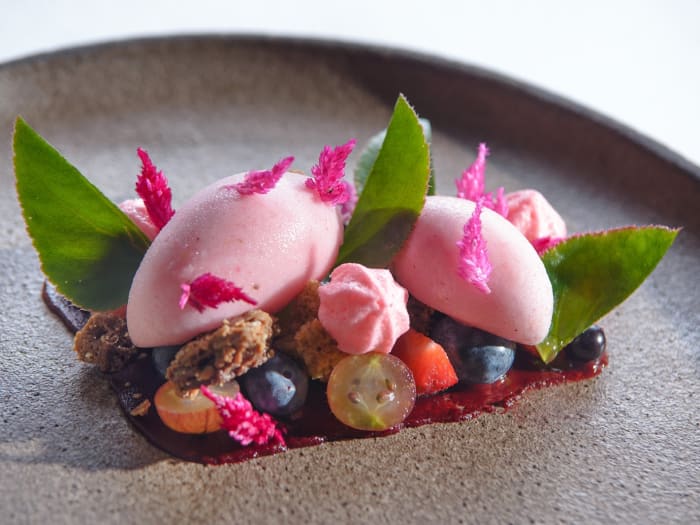
À l’Hôtel Quadrille, la gastronomie avance sur plusieurs registres, avec une même attention portée au rythme du lieu. White Rabbit donne le ton. Le restaurant revendique une véritable explosion de saveurs, dans un esprit qui privilégie l’impact juste plutôt que l’effet.
Cette adresse compose une expérience de table pensée comme un moment à part. Les assiettes y cherchent l’élan, la surprise mesurée, et une lecture sensible des goûts. Le propos reste lisible, sans lourdeur, avec cette manière de laisser chaque note trouver sa place.
Oberża 86 prolonge cette approche avec un ancrage différent. La cuisine y suit les saisons et dialogue avec le répertoire français. Ce croisement apporte de la tenue à la table, tout en laissant entrer la variation naturelle des produits et des envies du moment.
Entre ces deux expressions, l’hôtel dessine un parcours gourmand nuancé. L’une joue la vivacité et l’intensité. L’autre privilégie la cadence saisonnière et l’élégance d’une tradition revisitée.
Pour prolonger la soirée, le 10/6 Pub offre un contrepoint plus libre. Le bar installe une respiration bienvenue, dans un registre plus direct, propice à un dernier verre ou à une conversation qui se prolonge sans effort.
Bien-être, rythme et détente
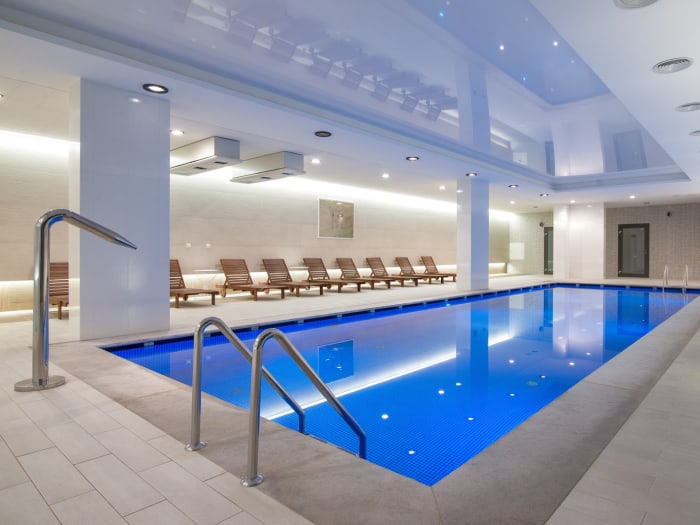
Même lorsqu’un brief ne détaille pas un spa au sens strict, un hôtel 5 étoiles comme le Quadrille est d’abord jugé sur sa capacité à produire du bien-être réel. Cette notion dépasse largement la présence d’installations spécifiques : elle tient à la qualité du sommeil, à la fluidité du service, à la possibilité de ralentir, à l’attention portée au corps après les déplacements, les rendez-vous ou les longues promenades au grand air. Dans une destination proche de la mer Baltique, cet enjeu prend une couleur particulière. L’air marin, les changements de lumière, les variations saisonnières et la proximité des plages créent naturellement un cadre propice à la récupération.
Le luxe contemporain, surtout dans l’hôtellerie de caractère, ne se définit plus uniquement par l’abondance. Il se mesure aussi à la capacité d’un lieu à restaurer une forme d’équilibre. À l’Hôtel Quadrille, cette promesse semble passer par l’ambiance générale : un design qui associe modernité et charme traditionnel, un service personnalisé, une atmosphère chaleureuse qui invite à la détente. Ce sont des éléments parfois moins visibles qu’un équipement spectaculaire, mais souvent plus déterminants dans l’expérience vécue. On se repose mieux dans un hôtel qui maîtrise son tempo, où les espaces ne fatiguent pas le regard, où l’accueil ne crée pas de tension inutile, où l’on sent que chaque détail a été pensé pour rendre le séjour plus simple.
Pour un couple en escapade, le bien-être prend souvent la forme d’un temps retrouvé. Il peut s’agir d’un réveil lent, d’un petit-déjeuner prolongé, d’une marche jusqu’au littoral, d’un retour en chambre en fin d’après-midi, puis d’un dîner sans empressement. Pour un voyageur d’affaires, la détente se joue autrement : efficacité de la réception 24h/24, conciergerie disponible, service de réveil fiable, entretien quotidien irréprochable, possibilité de se sentir immédiatement pris en charge sans perdre son autonomie. Dans les deux cas, l’hôtel agit comme un régulateur de rythme.
La proximité de la mer joue ici un rôle essentiel. Les destinations baltiques ont cette vertu particulière d’offrir un rapport au paysage qui apaise sans endormir. Les promenades sur le front de mer, le simple fait de respirer un air plus vif, l’horizon dégagé et la sensation d’ouverture participent d’une hygiène du séjour que beaucoup de voyageurs recherchent aujourd’hui. Le bien-être n’est alors pas cantonné à une cabine de soin ; il commence dès que l’on sort de l’hôtel et se prolonge lorsqu’on y revient.
En ce sens, le Quadrille semble proposer une forme de détente mature, moins fondée sur l’accumulation d’options que sur la cohérence d’ensemble. C’est souvent ce que recherchent les voyageurs les plus expérimentés : non pas un catalogue, mais un lieu qui les aide à se recentrer. Entre la mer, la table, le confort de la chambre et la qualité de l’accueil, le séjour peut trouver un équilibre très juste, discret mais profond, qui correspond bien à l’esprit d’une adresse haut de gamme sur la côte baltique.
Conciergerie & services
Dans l’hôtellerie haut de gamme, les services valent par la manière dont ils s’articulent pour rendre le séjour plus fluide. À l’Hôtel Quadrille, plusieurs fondamentaux dessinent une promesse claire : conciergerie 24h/24, réception 24h/24, service de chambre quotidien, service de couverture, consigne à bagages, blanchisserie, service de réveil et personnel multilingue.
La réception ouverte en continu apporte un vrai confort. Arriver tard, repartir tôt, modifier un programme ou demander un conseil à toute heure change l’expérience. La conciergerie 24h/24 prolonge cette disponibilité dans une logique plus personnalisée. À Gdynia et dans la Tricité, elle facilite l’organisation d’une journée entre plages, visites et bonnes adresses.
Le service de chambre quotidien et le service de couverture relèvent d’une hospitalité silencieuse. Revenir dans une chambre remise en état, retrouver le soir un espace préparé pour la nuit, constater que les détails pratiques ont été anticipés : c’est souvent là que se joue la perception du confort.
La blanchisserie et la consigne à bagages répondent à des besoins très concrets. Elles sont utiles pour les séjours itinérants ou les voyages en plusieurs étapes. Elles permettent de gagner en légèreté et d’optimiser les horaires. Le service de réveil reste un signe d’attention professionnelle, notamment pour les voyageurs d’affaires ou les départs matinaux. Le personnel multilingue facilite les échanges, qu’il s’agisse de recommandations, d’organisation ou de demandes du quotidien.
Ce qui importe n’est pas seulement la présence de ces services, mais leur tonalité. À l’Hôtel Quadrille, ils s’inscrivent dans une approche personnalisée et chaleureuse. Un grand hôtel ne se contente pas d’exécuter ; il accompagne. Il sait quand intervenir, quand s’effacer et comment rendre le séjour plus serein.
L’art de vivre à Gdynia et sur la côte baltique
Séjourner à l’Hôtel Quadrille, c’est aussi découvrir une certaine manière d’habiter Gdynia. La ville ne se livre pas comme un décor figé ; elle se comprend par son rythme, sa relation à la mer, ses contrastes entre énergie urbaine et respiration côtière. Pour un voyageur français, habitué à associer l’art de vivre à une combinaison de paysage, de table, de marche et de culture, la côte baltique offre une proposition singulière. Ici, le charme ne repose pas sur l’exubérance, mais sur une forme de netteté : lumière franche, horizon ouvert, architecture marquée par la modernité du siècle dernier, promenades qui mènent naturellement vers l’eau.
Gdynia appartient à cet ensemble urbain plus large qu’est la Tricité, avec Gdańsk et Sopot. Cette proximité enrichit considérablement le séjour. Elle permet de passer d’une ambiance à l’autre sans rupture : patrimoine historique plus dense d’un côté, atmosphère balnéaire de l’autre, identité maritime affirmée à Gdynia. L’Hôtel Quadrille, grâce à sa situation pratique, devient alors un point de départ pertinent pour composer son propre itinéraire. Certains privilégieront les plages et les moments au grand air ; d’autres alterneront entre découvertes culturelles, pauses gourmandes et retours à l’hôtel pour profiter de son confort.
L’art de vivre local tient aussi à la saison. En été, la côte se prête naturellement aux journées longues, aux déplacements plus spontanés et aux dîners qui prolongent la clarté du soir. C’est la période la plus prisée, et l’on comprend pourquoi : la mer Baltique devient alors un véritable partenaire du séjour. Mais réduire la destination à sa seule haute saison serait une erreur. Hors été, la région révèle une autre profondeur. Les plages se font plus silencieuses, les sites historiques gagnent en lisibilité, les restaurants et les hôtels deviennent des refuges plus intérieurs. Pour ceux qui apprécient les voyages moins démonstratifs, c’est souvent le meilleur moment pour saisir la personnalité réelle d’un lieu.
Dans ce contexte, l’Hôtel Quadrille accompagne un art de vivre fait de mesure. On peut y imaginer des journées sans programme trop serré : un départ tranquille le matin, une exploration des environs, un retour pour se reposer, puis un dîner où les produits locaux prolongent la découverte du territoire. Cette façon de voyager, plus attentive que spectaculaire, correspond bien aux attentes d’une clientèle qui cherche aujourd’hui des expériences cohérentes plutôt que des accumulations d’activités.
Ce que Gdynia offre de plus précieux, peut-être, c’est cette sensation d’espace et de simplicité sophistiquée. On y trouve la mer sans l’agitation excessive de certaines stations, la culture sans solennité, l’élégance sans ostentation. L’Hôtel Quadrille s’inscrit pleinement dans cette tonalité. Il permet de vivre la côte baltique avec confort, mais aussi avec justesse, en laissant au voyage le temps de prendre forme. Et c’est souvent là que naissent les séjours les plus mémorables : non dans l’exceptionnel forcé, mais dans l’accord subtil entre un lieu, une adresse et un rythme personnel.
Réserver via MyConciergeHotel
Réserver l’Hôtel Quadrille via MyConciergeHotel, c’est aborder cette adresse de Gdynia avec une logique de séjour plutôt qu’avec une simple logique tarifaire. Dans une maison 5 étoiles membre de Relais & Châteaux, l’expérience tient souvent à des détails absents d’une réservation standard : le bon moment pour partir, le type de séjour recherché, l’intérêt de certaines dates, la réservation du restaurant, ou l’articulation avec les plages et les sites historiques alentour.
L’intérêt d’une réservation accompagnée est d’abord de clarifier les attentes. Escapade romantique tournée vers la mer et la gastronomie, séjour culturel à l’échelle de la Tricité, ou parenthèse intégrée à un voyage d’affaires : l’Hôtel Quadrille peut répondre à ces intentions. Le rôle du concierge est alors d’aider à formuler le bon séjour : durée idéale, rythme conseillé, moments à réserver en amont, et équilibre entre temps passé à l’hôtel et découvertes extérieures.
Dans le cas de cette adresse, la table mérite une attention particulière. Il est préférable de réserver à l’avance pour profiter des meilleures tables, surtout en haute saison. Le restaurant fait partie intégrante de l’expérience. Réserver via MyConciergeHotel permet d’intégrer cette dimension dès la préparation du voyage.
Autre avantage : la lecture du calendrier. Les saisons estivales sont particulièrement prisées, notamment pour profiter de la proximité de la mer Baltique et des plages. Un accompagnement attentif peut aussi orienter vers des périodes plus calmes, selon l’expérience recherchée. L’enjeu est de faire coïncider le moment du voyage avec l’usage réel que l’on souhaite faire de l’hôtel et de la destination.
Réserver avec MyConciergeHotel, c’est choisir une approche plus qualitative du séjour : une adresse bien comprise, un rythme bien pensé, des services utiles, une table anticipée, et une destination abordée avec justesse. Pour le Quadrille, dont l’intérêt repose sur l’atmosphère, la personnalisation et l’équilibre entre mer, ville et gastronomie, cette manière de réserver est souvent la plus pertinente.