History & Heritage
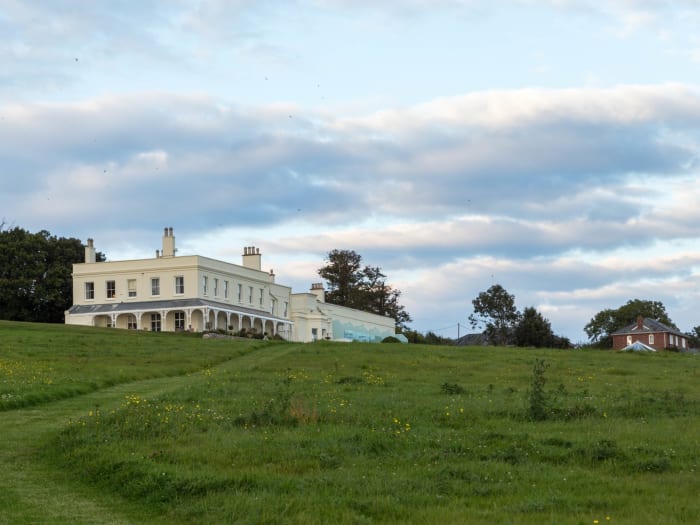
Lympstone Manor belongs to the British tradition of country houses reimagined as destination hotels, places chosen as much for their setting as for the rhythm of life they encourage. In Exmouth, within a rural landscape overlooking the estuary and the Devon countryside, the property embraces a form of hospitality shaped by discretion, scenery and the table. Its membership of Relais & Châteaux already signals much of its philosophy: an intimate address rooted in its region, attentive to the quality of the stay and to a certain standard in both service and cuisine.
Here, heritage is not merely a matter of period architecture or decorative references. It is expressed in the way a house of character has been adapted for contemporary use without losing what gives English country homes their appeal: rooms that retain a domestic scale, a direct relationship with gardens and views, and a sense of chosen retreat rather than isolation. The very name, Lympstone Manor, evokes a specific geography, that of a green Devon shaped by both sea and farmland, where the seasons still define the experience of travel.
One of the property’s most distinctive features is its on-site vineyard. In the context of British hospitality, this is far from incidental. It introduces the idea of a living estate, where guests do not simply admire the landscape but move through it and taste it. The vineyard roots the hotel in an agricultural and sensory reality that goes beyond accommodation alone. It connects the house to its soil, its local climate and a way of life in which gastronomy and wine belong to the same narrative.
This coherence between house, countryside and table explains the particular character of Lympstone Manor. The hotel does not attempt to imitate the model of a grand urban palace; it offers something quieter, more contemplative and more closely linked to the idea of a stay. Guests come here to slow down, to enjoy arriving at an estate, to take a tea or a glass of wine with a view, to let dinner give shape to the evening, and then to sleep in genuine quiet. That sense of tempo is essential: it recalls the country houses where one settles in, finds one’s bearings and discovers that luxury lies less in abundance than in rightness.
The property’s heritage also rests in its ability to represent a modern form of British luxury. One that does not reject the codes of the country house or the importance of service, but interprets them with greater ease. Comfort is expected, as is attentive service, yet without unnecessary theatre. Refinement is found in the fluency of the experience, in the care given to the details of a stay, and in the way the hotel frames its surroundings without ever making them feel contrived.
For travellers, Lympstone Manor offers a clear and compelling expression of what the south-west of England does so well: inhabited countryside, open views, a culture of the table, and that rare sense of being welcomed into a house that has found its balance between heritage and contemporary life. It is that balance, more than anything else, that defines the property’s true inheritance today.
The Property
What first defines Lympstone Manor is the quality of its setting. The hotel unfolds in a rural environment in Exmouth, with views over the surrounding countryside that immediately shape the experience of a stay. This is not simply a country hotel placed along a scenic road: the property has been conceived as an estate, with a continuous relationship between the house, its grounds, the vineyard and the open perspectives beyond. That composition gives the stay a particular depth. The eye is never confined; it moves between architecture, gardens and horizon.
The appeal of the property lies precisely in this balanced tension between elegance and rural simplicity. The house retains the presence of a characterful residence, yet the atmosphere never feels static. Lympstone Manor avoids the trap of overstatement. Luxury here is expressed through space, light, quiet and the sense of being welcomed into a place with genuine coherence. The landscape is not a backdrop; it becomes a central part of the experience, almost a service in itself. At different times of day, the light alters the perception of the façades, lawns, vines and distant views, giving the estate a constantly renewed presence.
Its location within rural Devon also contributes greatly to the hotel’s identity. Exmouth brings proximity to the coast and estuary, while the immediate surroundings remain deeply pastoral in tone. This dual anchoring, between maritime softness and English countryside, creates a distinctive atmosphere: the air feels more open, the colours more nuanced, the stay more breathable. For travellers accustomed to major cities or intensely busy resorts, Lympstone Manor offers another idea of luxury, one based on available space and the quality of silence.
The on-site vineyard plays a decisive role in that perception. It is not merely a visual asset or a differentiating feature; it forms part of the way the estate is understood. The rows of vines introduce geometry into the landscape, visible seasonality, and a promise of tasting and discovery. They suggest that the hotel is also a place of production in the noblest sense: somewhere soil, climate and time contribute to the guest experience. That dimension gives a rare density to a stay, linking the comfort of the house to the reality of the territory.
Inside, one expects an impeccable standard from a five-star Relais & Châteaux property, yet what matters most here is the sense of harmony. The shared spaces invite guests to settle in, read, take a drink or continue a conversation after dinner. Nothing appears designed to impress too quickly; everything feels intended to endure in memory. That is often the mark of a good house: it reveals itself more through use than through effect.
Lympstone Manor will particularly suit travellers seeking a destination in itself rather than a mere base for excursions. One can of course explore the surrounding area, yet the property encourages guests to remain on site, to live at the rhythm of the estate, to watch the light shift over the vines, to reserve a table, to linger in the early morning or at day’s end. In a hotel world often dominated by immediacy, this ability to hold guests through the quality of place alone is one of the hotel’s most convincing signatures.
Rooms & Suites
At a property such as Lympstone Manor, the room is not merely a place to sleep: it extends the logic of the house and the estate. What matters here is less dramatic effect than the feeling of being properly settled, in a setting that shelters from the outside while remaining in dialogue with it. Landscape, light and quiet all play a major part. Depending on orientation, the relationship with the gardens, the vines or the surrounding countryside may become one of the most enduring pleasures of a stay, particularly at waking and at dusk, when the house seems to find its most natural rhythm.
The expected register is one of high-level comfort, faithful to the spirit of a five-star property and to the standards associated with Relais & Châteaux. That implies particular attention to the quality of bedding, the upkeep of the rooms, the fluency of daily service and those details that genuinely alter the experience: a well-executed turndown, a room refreshed with discretion, spaces designed so that one may rest, read, write or simply contemplate the landscape. Luxury here often lies in this absence of friction.
In a country house of this kind, rooms with an individual character are especially appreciated. The proportions do not necessarily seek uniformity; they may instead reflect the history and architecture of the building. That is often what distinguishes fine converted houses from more standardised hotels. The traveller does not feel placed in an interchangeable unit, but in a room that belongs to a living whole, with its own atmosphere, relationship to light and, at times, its own rhythm. When handled well, that singularity gives the stay a more intimate dimension.
Suites, for those who favour extra space or a longer stay, make particular sense in this kind of destination. They allow guests to inhabit the house differently, with more room to settle in, receive a tray, continue reading or simply enjoy the silence. In such a peaceful environment, additional space is not only a comfort; it becomes a way of slowing down further. One is no longer merely occupying a room, but temporarily living within an estate.
The in-room experience is also strengthened by the property’s known services: daily housekeeping, turndown service, concierge and front desk available at all hours, luggage storage, laundry and wake-up service. Considered separately, these may seem expected; brought together in a house of this category, they create an essential sense of continuity. The stay unfolds smoothly, with the impression that any reasonable need can be anticipated or handled without visible effort.
For couples, Lympstone Manor naturally provides the setting for a romantic retreat, thanks to the combination of landscape, vineyard and table. For families or travellers seeking rest, the room becomes a calm anchor point between walks, reading and meals. In every case, the property’s strength lies in its ability to make the room feel like a genuine refuge, true to the spirit of the place: elegant without rigidity, comfortable without ostentation, and always connected to the countryside beyond.
The Dining Experience
Gastronomy lies at the heart of Lympstone Manor's identity. The establishment boasts a fine dining restaurant where the table is not merely a service among others; it is one of the very reasons for the journey. As a member of Relais & Châteaux, this centrality of cuisine contributes significantly to the hotel's reputation. Guests come to Lympstone Manor not only to stay but also to dine.
The setting plays a crucial role in this experience. Dining in a country house surrounded by nature, with an on-site vineyard, carries a different significance compared to dining in the city. The meal is part of a larger experience: a stroll through the estate, returning to the room, enjoying an aperitif, dining, and then embracing the evening silence. This continuity transforms the meal into a structuring moment of the stay, imbuing dinner with a particular density, almost ceremonial in nature. The luxury lies in the seamless flow of events.
Lympstone Manor's fine dining restaurant attracts gourmets, particularly suited to the Devon context. With its fertile countryside, maritime proximity, and strong regional culture, the cuisine here becomes a translation of the landscape rather than an abstraction detached from the locale.
The presence of the vineyard further enhances this coherence. The mere fact that a vineyard is part of the estate alters the perception of the meal, introducing the idea of a natural dialogue between the cellar, the landscape, and the plate. For the traveller, this proximity is invaluable, rendering the wine more tangible, local, and narrative. A tasting, a glass overlooking the vines, or a tour of the estate before dinner can add an extra layer of depth to the meal.
Breakfast also deserves to be considered an important moment. In successful country hotels, it is not merely a morning service; it is a way to ease into the day. Morning light, views of the outdoors, and the stillness of the early hours all contribute to making the first meal a moment of harmony. It is often here that one truly measures the quality of a house.
For guests choosing Lympstone Manor, the dining experience is not an enjoyable extra; it is an integral part of the architecture of their stay. It provides a reason to return early to the estate, to book in advance, and to extend the evening on-site. This establishment fully embraces the notion that a great stay often begins with a great table. A country house becomes memorable when it successfully connects landscape, hospitality, and cuisine in a single gesture.
Concierge & Services
In hotels of this calibre, perceived quality does not solely rely on décor, dining, or views; it also depends on how the stay is supported. Lympstone Manor offers a 24-hour concierge service, a 24-hour reception, daily housekeeping, turndown service, luggage storage, laundry, wake-up calls, and a multilingual team. Together, these services create a seamless and attentive stay, tailored to various travel rhythms.
The presence of a continuously open reception is particularly significant in a destination hotel. Late arrivals, early departures, and adjustments to plans are part of the journey. Knowing that the reception is available at any hour changes the relationship with the stay. In a country house, this continuity avoids unnecessary logistical constraints.
The concierge service adds depth to the experience. In Exmouth and throughout Devon, it caters to both practical requests and time management. Whether it’s a walk, exploring the surroundings, restaurant reservations, vineyard tours, transfers, or weather-appropriate recommendations, a good concierge clarifies the experience and frees the traveller from organisational burdens.
Daily housekeeping and turndown service operate on a more discreet level. They create a sense of continuous care that distinguishes excellent establishments. Returning after dinner to a room prepared for the night, finding a space tidied up, and noticing that everything functions smoothly without needing to ask—this is often where true hotel luxury is realised.
Laundry services, luggage storage, and wake-up calls follow the same logic. Though these services may seem secondary, they contribute significantly to the tangible quality of the stay, facilitating multi-stop itineraries, early arrivals, and morning departures.
The presence of multilingual staff is also noteworthy. In an international hotel, this skill directly enhances the quality of the welcome. Being understood precisely and receiving clear explanations makes the experience more serene.
At Lympstone Manor, these services discreetly support the spirit of the place. They accompany the stay without overwhelming it, allowing guests to fully enjoy the estate, the dining experience, and the landscape, with a team present in the background.
The Art of Living in Exmouth and Devon
A stay at Lympstone Manor is also a way of discovering a certain idea of Devon, and more broadly of England’s south-west. Exmouth is not simply a point on the map: it is a territory of transition between countryside, estuary and coast, where one still feels a tangible relationship to the seasons, to light and to landscapes shaped by time. For the traveller, that changes everything. The stay does not end with the hotel, even if the hotel forms its centre; it opens onto a way of living made of walks, views, leisurely meals and a calmer relationship with time.
The region’s first luxury is perhaps space. Here, the horizon breathes. Minor roads, gentle hills, cultivated land, waterside stretches and villages create a setting that does not seek to impress so much as to settle the visitor. One quickly understands why a house like Lympstone Manor finds its full legitimacy here: it extends an inhabited landscape rather than standing apart from it. For travellers arriving from major cities, that continuity between hotel and environment can feel deeply restorative.
Exmouth also brings a subtle maritime note. Without making the property a seaside hotel in the conventional sense, the proximity of water influences the overall atmosphere: more shifting light, fresher air, a sense of openness. This presence of the coast, combined with the immediate rural setting, gives the stay a richness of perception that is relatively rare. One may move from a contemplative moment overlooking the vines to an outing towards the estuary or surrounding area, then return to the quiet of the estate for dinner. That alternation contributes greatly to the quality of the trip.
Devon as a whole evokes an England of character, generous without ostentation, attached to produce, gardens, landscapes and a certain everyday civility. It is a region especially suited to slow stays. One appreciates mornings without an overfilled programme, lunches that linger, returns to the hotel before dusk, conversations extended over a drink. Lympstone Manor fits perfectly within this culture of well-used time. Its vineyard, table and views make it an ideal vantage point from which to experience this local art of living.
For lovers of gastronomy, the regional context adds another layer of meaning to the stay. A fine-dining table always takes on a different dimension when situated within an identifiable territory, with its resources, seasons and climate. Even without listing products or specialities, one senses here that the countryside and maritime proximity naturally inform the imagination of the meal. The on-site vineyard further reinforces that sense of rootedness.
Finally, the art of living in Exmouth is also defined by a form of measure. Nothing feels forced. The charm comes from the balance between nature, hospitality and understated elegance. That is precisely what many travellers seek today: not demonstrative luxury, but a place where one can recover a quality of attention, silence and landscape. Lympstone Manor answers that expectation by offering more than high-end accommodation: it offers a way of inhabiting, for the duration of a stay, a corner of England where beauty may be approached without emphasis.
Book with MyConciergeHotel
Booking Lympstone Manor through MyConciergeHotel means approaching the property as it deserves to be approached: not as a simple overnight stay, but as a carefully composed experience. In a hotel where the setting, the table and the vineyard all play such an important role, the value of editorial and concierge guidance is clear. The point is not merely to check availability; it is to identify the right moment, the right rhythm and, where possible, the right way to inhabit the estate according to your expectations. A romantic escape, a gastronomic break, a restorative countryside pause or a more contemplative stay: the same address can be experienced in several ways.
One of the first considerations here is the reservation of the fine-dining restaurant. In houses where the table is itself a reason to travel, it is always preferable to plan ahead. To book the accommodation without securing dinner would mean missing an essential part of the experience. MyConciergeHotel can help precisely by thinking these elements together: room, dinner, a possible vineyard visit, arrival and departure times, particular requirements, and the organisation of a stay without interruption. It is often this coordination in advance that turns a good booking into a genuinely successful stay.
Lympstone Manor is particularly well suited to short yet concentrated stays of one or two nights, where every detail matters. In that format, the quality of the room, the arrival time, the possibility of enjoying the grounds, the time allowed before dinner and the management of departure all take on greater importance. Personalised guidance helps optimise that sequence: arriving early enough to discover the estate, allowing for a quiet moment before the meal, arranging a calm wake-up and, if needed, making use of practical services such as luggage storage or transport coordination.
For international travellers, the value of booking through MyConciergeHotel also lies in clarity. A high-end country hotel has its own codes, often subtler than those of a grand urban property. We help clarify the expected experience: atmosphere, rhythm, strengths, suitability for couples or families, the importance of booking ahead in high season, and the added value of a vineyard-related experience. This editorial reading avoids misunderstandings and allows guests to choose the property for what it genuinely offers.
Booking with MyConciergeHotel also means benefiting from a more qualitative approach to travel. We favour houses with a clear identity, a genuine sense of hospitality and real coherence between place, service and gastronomy. Lympstone Manor fits that definition precisely. Its Relais & Châteaux membership, rural Exmouth setting, views over the surrounding countryside, on-site vineyard and fine-dining restaurant form a rare whole that deserves careful preparation.
If you are considering a stay in Devon and are looking for an address able to offer both the calm of an estate, the interest of a serious table and the charm of an English country house, Lympstone Manor is a particularly relevant choice. Through MyConciergeHotel, we help turn that intention into a smooth, informed booking tailored to your way of travelling. It is often in that discreet yet rigorous preparation that the luxury experience already begins.