History & heritage
In Carmel-by-the-Sea, L’Auberge Carmel belongs to that rare category of hotels defined less by display than by a sustained sense of hospitality. In this coastal Californian village, where domestic architecture, walkable streets and immediate proximity to the ocean shape a singular atmosphere, the property fits naturally into a tradition of intimate, character-led stays. Its identity does not rely on theatrical grandeur, but on a way of conveying place, rhythm and understated elegance. Its Relais & Châteaux affiliation gives this promise a clear framework: attention to dining, a sense of detail, and an experience that feels personal rather than standardised.
Part of the appeal of L’Auberge Carmel lies precisely in its scale. A stay here does not feel like an isolated retreat cut off from its surroundings, but rather a gentle immersion into the spirit of Carmel. It offers what seasoned travellers often seek in small luxury houses: calm, service that is present without being intrusive, and an aesthetic that values coherence over effect. It speaks to guests who prefer places that reveal themselves over time, through the quality of a welcome, the rightness of late-afternoon light, or the sense of being expected without excessive staging.
In a destination often associated with romantic escapes, art galleries and walks to the beach, L’Auberge Carmel plays a particular role. It serves as an anchor for a stay that moves easily between quiet retreat and exploration on foot. This close relationship with its setting is part of its contemporary heritage: the hotel does not try to replace the town, but to offer a more comfortable, more refined, more attentive way of reading it. That distinction matters. Where some hotels impose a self-contained universe, this one seems instead to be in conversation with the streets, boutiques, restaurants and sea air that define Carmel-by-the-Sea.
Its heritage is therefore less monumental than emotional. It can be felt in its fidelity to a certain idea of luxury hospitality: one that values restraint, precision and quality of experience. For European travellers, the approach may recall those houses chosen as much for atmosphere as for service. For American guests, it offers a quieter interpretation of the upscale coastal stay, far removed from the scale and energy of large resorts. This position, somewhere between a sophisticated village house and a destination hotel, is likely one of the reasons for its enduring appeal.
Choosing L’Auberge Carmel means choosing a place that favours sensory memory. What remains afterwards is not a catalogue of effects, but a sequence of well-judged details: intimacy, the ease of doing everything on foot, a serious commitment to gastronomy, and that rare impression that a hotel truly understands the destination in which it stands. In the world of five-star hospitality, such restraint is often the mark of the most convincing addresses.
The property
The first luxury at L’Auberge Carmel is its setting. Being in the heart of Carmel-by-the-Sea means more than having a central address; it means experiencing the town at its true scale, that of a coastal village best explored on foot, where each turn reveals a shopfront, gallery or garden. The hotel appeals to travellers who value this tangible closeness to local life. Within minutes, guests can reach the beach, boutiques, walking routes and a discreet but genuine cultural scene. This central position, within an environment that remains peaceful, is one of its clearest strengths.
The property cultivates an intimate, refined atmosphere, in keeping with the qualities that most accurately define it. Here, refinement is expressed not through excess, but through overall composition: a human-scale house, attentive hospitality, spaces designed for comfort and quiet, and a general sense of coherence. Guests quickly understand that this is not a large transient hotel, but an address chosen for a particular tempo. The pace is slower, allowing one to return from a walk by the sea, prepare for dinner, and settle back into the calm of one’s room without any break in mood.
This quality of atmosphere is especially valuable in Carmel-by-the-Sea, a destination whose charm depends on nuance. The light shifts throughout the day, the sea air cools the afternoons, and the town itself invites strolling rather than hurried consumption. L’Auberge Carmel supports that style of stay. Rather than multiplying internal distractions, the hotel focuses on the comfort of an elegant base that extends the character of the destination. It is an approach well suited to couples, lovers of quiet, and anyone who prefers a hotel with real personality to an interchangeable luxury product.
Its Relais & Châteaux affiliation reinforces that reading. It suggests a certain level of expectation in hospitality, dining and overall experience, without forcing the property into an overly ceremonial idea of luxury. One expects precision here: in the welcome, in local knowledge, and in the ability to shape a stay according to the mood of the moment. Whether for a long weekend or a more contemplative pause on the Californian coast, that precision matters.
In practical terms, L’Auberge Carmel is particularly well suited to guests who want everything within easy reach without giving up the feeling of retreat. That is a rare combination. The hotel allows visitors to enjoy Carmel at its most appealing — human scale, mild climate, proximity to the ocean, local cultural life — while offering a setting sufficiently hushed for returning to the hotel to feel like an essential part of the journey. This balanced relationship between inside and outside, between characterful address and walkable destination, is perhaps the best way to define the property.
Rooms and suites
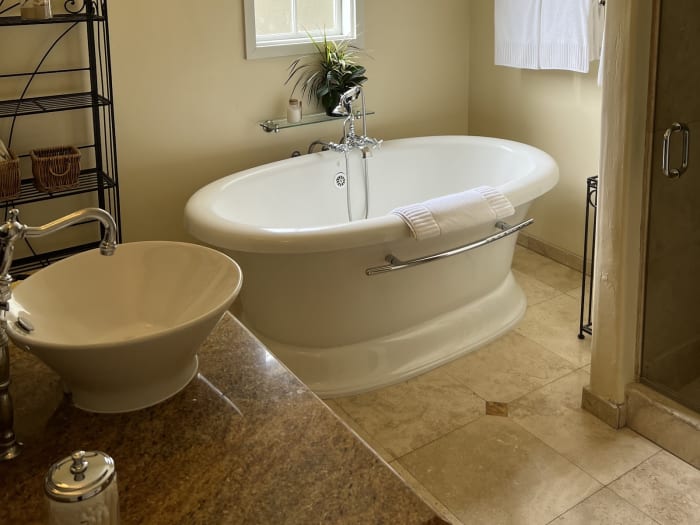
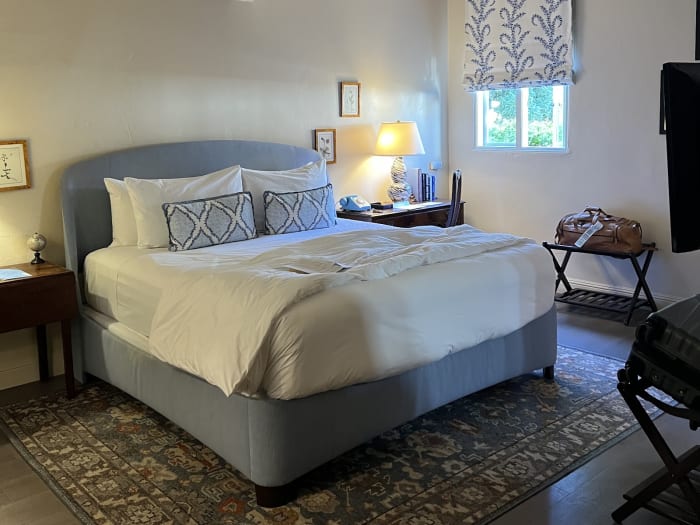
In a house such as L’Auberge Carmel, the room is not merely a place to sleep; it becomes a natural extension of the hotel’s overall atmosphere. What matters here is not theatrical effect, but the feeling of a well-considered refuge suited to the spirit of a stay in Carmel-by-the-Sea. This logic of discreet comfort is entirely consistent with the hotel’s positioning: an intimate, refined address for travellers who value rest, quiet and the sense of staying somewhere distinctive rather than in an international chain with little local connection.
The language of luxury here is one of restraint. A successful room in this context is defined by the right proportions, the quality of daily housekeeping, the evening turndown that makes returning to the hotel feel anticipated, and the way each detail contributes to a frictionless stay. Turndown service, daily housekeeping and an attentive team all support that sense of ease. For guests, it means a lighter experience overall: the rhythm of the day is quietly supported without every need having to be articulated.
This kind of address is especially well suited to stays for two. Carmel has long attracted couples in search of a calm interlude, shaped by the beach, walks, galleries and thoughtful dinners. In that setting, the room becomes a place of retreat after the life of the village. One returns for silence, to prepare for the evening, to read a few pages before going out, or simply to enjoy that rare quality in luxury hospitality: genuine intimacy. L’Auberge Carmel appears designed precisely for that purpose, offering a setting that soothes without ever feeling impersonal.
Part of the appeal of a small character hotel also lies in its ability to create a more direct relationship between guest and house. Rooms and suites contribute to that impression. Even without relying on decorative excess, they can express a form of quiet sophistication in keeping with Carmel’s surroundings. One expects them to be welcoming, comfortable and sufficiently elegant to give the stay a particular tone. That elegance need not be demonstrative; it is often measured instead in the quality of sleep, the ease with which one settles in, and the sense that nothing disturbs rest.
For travellers planning a route along the Californian coast, L’Auberge Carmel represents the sort of stop where one can genuinely slow down. Rooms and suites therefore take on particular importance: they are not just a practical base, but the setting for a more contemplative experience. They allow the rhythm of the town, the mild climate and the desire to live outdoors before returning to withdraw again. It is this alternation that defines the success of the best coastal addresses.
Ultimately, the rooms and suites at L’Auberge Carmel should be understood as the most intimate expression of the house itself. They reflect its preference for measure, its attention to comfort and its commitment to a form of luxury based on use rather than display. For many travellers, that nuance is precisely what turns a simply good hotel into an address remembered long after departure.
The Dining Experience
Gastronomy is an integral part of the identity of L’Auberge Carmel. The establishment places a strong emphasis on the art of living and dining, with particular attention given to local and seasonal produce.
Within the Relais & Châteaux universe, this focus shapes how a hotel is perceived, experienced, and recommended. For the traveller, dining on-site often ranks among the highlights of their stay.
In Carmel-by-the-Sea, this dimension resonates particularly strongly. The Californian coast provides an agricultural and maritime environment conducive to a precise and clear seasonal cuisine. L’Auberge Carmel embraces this culinary culture, valuing freshness, the provenance of ingredients, and a discreet elegance in service.
Booking in advance ensures a table, underscoring the significance of dining in the overall experience of the establishment. It also suggests a limited capacity, consistent with the intimate scale of the hotel. For guests, this often translates into more attentive service, a more measured pace, and a more contemplative atmosphere.
In a destination cherished by couples, this is significant. Dinner becomes a special occasion, structuring the evening as much as it nourishes it.
The appeal of a dining experience in a hotel of this calibre also lies in its ability to interpret the local territory. It tells the story of the region with subtlety, allowing guests to savour a season, a closeness to the ocean, and a Californian approach that blends culinary precision with relaxed sophistication.
At L’Auberge Carmel, the dining experience deserves to be considered as a distinct chapter of the stay. One can explore the village or the beach, then return to the hotel for a pre-reserved dinner. This continuity lends a pleasing unity to the overall experience.
Here, gastronomy is not an afterthought; it contributes to the definition of the place. At L’Auberge Carmel, the dining experience is one of the most natural ways to immerse oneself in the spirit of the house.
Concierge & Services
In boutique hospitality, the most cherished services are often the most unobtrusive. L’Auberge Carmel embodies this philosophy. With a 24-hour concierge, round-the-clock reception, daily housekeeping, evening turndown service, luggage storage, laundry, wake-up calls, and multilingual staff, it offers a cohesive suite of amenities. In an intimate setting, these thoughtful touches take on special significance, ensuring a high level of comfort without overwhelming the experience.
The concierge plays a pivotal role in a destination like Carmel-by-the-Sea. The town is best explored on foot, and desires shift with the weather, light, or time of day. It is invaluable to rely on a team capable of guiding the stay with precision. They can recommend a scenic walk, assist in planning a day along the coast, or remind guests that a sought-after table requires advance booking. In a small establishment, this role often takes on a more personal touch.
The continuously open reception also brings genuine peace of mind. For travellers arriving late, departing early, or adjusting their itineraries, this availability simplifies the stay. On the Californian coast, travel can sometimes be affected by traffic or changes in plans. The hotel thus becomes a reliable anchor, able to absorb unexpected events with calm.
Daily housekeeping and evening turndown service exemplify a practical luxury. Guests return to find their room tidied up, ready for the next part of the day or evening. These simple gestures are significant during a short stay, especially for couples seeking relaxation. Laundry services, luggage storage, and wake-up calls extend this practical logic, allowing for lighter travel and maximising the enjoyment of arrival and departure times.
The multilingual staff also deserves special mention. In an international destination, this skill enhances the quality of the welcome. It facilitates communication, reduces hesitations, and reinforces that essential feeling of being understood quickly and effortlessly.
The services at L’Auberge Carmel are designed to support rather than impress. They do not overwhelm with options but favour reliable, elegant, and continuous execution. This is often what one expects from a small five-star establishment: a quality of presence.
The Carmel-by-the-Sea way of life
Staying at L’Auberge Carmel also means adopting, for a few days, the particular rhythm of Carmel-by-the-Sea. Few American destinations offer such an immediate relationship between village, ocean and visual culture. Here, the art of living is not simply a list of activities; it lies in a way of inhabiting time. One sets out on foot without an overfilled plan, pauses at a gallery, walks down to the beach, returns by a quieter street, then allows the late afternoon to unfold slowly before dinner. That apparent simplicity is precisely what gives the place its value.
Carmel has long attracted travellers in search of natural beauty and tranquillity. Light plays an essential role here. It softens façades, transforms the end of the day and gives walks an almost cinematic quality. The proximity of the beach adds a physical dimension to the stay: one does not merely look at the ocean, but folds it into the daily rhythm, whether through a morning walk, a contemplative pause or an impromptu detour before returning to the hotel. In this context, L’Auberge Carmel appears to be an ideal base, because it allows guests to live this relationship with the landscape without giving up the comfort of a refined address.
The presence of art galleries also contributes to the destination’s identity. Carmel-by-the-Sea is not only an elegant seaside town; it is also a place where people take time to look. For travellers sensitive to aesthetics, that matters greatly. It creates days shaped less by touristic performance than by attention. One visits less to tick off than to feel. The hotel, with its intimate atmosphere, seems perfectly suited to that state of mind. It extends the idea of a stay in which quality matters more than quantity, where a beautiful walk and a good dinner are preferred to an overfilled agenda.
The region’s mild climate further reinforces this way of life. It makes the destination pleasant throughout the year and allows great flexibility in how days are organised. One can improvise more, let a morning stretch out, decide at the last moment on a walk to the beach or a more cultural outing. For couples, that freedom is especially valuable: it allows a stay to be composed at one’s own pace rather than according to a rigid structure.
Part of L’Auberge Carmel’s appeal lies in the way it captures this gentleness without caricaturing it. The hotel does not overplay local spirit; it accompanies it. It offers a setting that allows guests to enjoy what is most distinctive about Carmel: its human scale, coastal beauty, calm, artistic sensibility and that rare impression of a place that naturally invites one to slow down. In a travel landscape often dominated by speed and overstimulation, that quality becomes a luxury in itself.
For many travellers, this is what will remain after departure: less a memory of specific activities than a sense of balance. The feeling of having spent a few days in a destination where everything encourages a form of presence in the moment. By virtue of its location and temperament, L’Auberge Carmel seems particularly well placed to offer exactly that experience.
Book with MyConciergeHotel
Booking L’Auberge Carmel through MyConciergeHotel means approaching the property in the right way: by prioritising the fit between the place, the rhythm of the stay and the traveller’s actual expectations. An intimate hotel such as this is not chosen solely for its five-star status or its Relais & Châteaux affiliation. It is chosen because one is seeking a particular way of experiencing Carmel-by-the-Sea: on foot, in calm surroundings, with genuine importance given to gastronomy and discreet comfort. The role of MyConciergeHotel is precisely to support that reading and help shape a stay that feels coherent rather than approximate.
That coherence begins before arrival. Depending on the length of the trip, the season, the reason for travel or the profile of the guests, priorities will differ. Some will come for a romantic interlude, others as part of a wider route along the Californian coast, and others still to combine rest, beach time and cultural discovery. In every case, a well-considered booking is about more than securing a room. It means anticipating the moments that matter most: arrival time, luggage arrangements, reserving a table if dining on site is desired, or planning the days so as to make the most of the hotel’s central location.
One of the advantages of booking through MyConciergeHotel is that it places the property back into its context of use. L’Auberge Carmel is not an address designed for a hurried or purely functional stay. It is better suited to those who want to slow down, enjoy a refined atmosphere, and rely on a team able to support the stay with tact. Booking with that understanding helps avoid misaligned expectations and instead allows guests to benefit fully from what the hotel does best: intimacy, proximity to the beach and galleries, quality of service and the gastronomic dimension.
The most important practical advice remains simple: plan ahead. In a small-scale house, availability can be more sensitive, and the dining room also deserves advance reservation. This preparation does not diminish spontaneity; it makes it possible. The more the essentials are secured, the easier it becomes to live lightly and fluidly on site, without last-minute compromises. This is especially true for shorter stays, where every half-day matters.
MyConciergeHotel also makes it possible to approach the reservation as an experience project rather than a transaction. For a hotel such as L’Auberge Carmel, that distinction is decisive. A stay here depends on subtle balances: between village life and retreat, between dining and walking, between service and discretion. Properly prepared, it can become one of those rare interludes in which everything feels simple because everything has been considered with care.
By choosing to book through MyConciergeHotel, travellers gain more than access to a fine address. They give themselves the means to experience L’Auberge Carmel under the best possible conditions, with particular attention paid to the details that genuinely change the quality of a stay. In luxury travel, that intelligence of preparation is often the difference between a pleasant trip and a fully successful experience.