History & heritage
In Launceston, Islington Hotel belongs to a tradition of hospitality shaped by character, continuity and restraint. Its appeal does not lie in overt grandeur, but in the particular way certain historic houses retain a strong sense of place while adapting to contemporary expectations. Here, the historic charm noted in the brief is not merely decorative: it informs the entire stay. It can be felt in the intimate scale of the house, in the more personal relationship established with guests, and in the sense of temporarily inhabiting a private address rather than a standardised luxury hotel.
That heritage dimension gives Islington Hotel a distinctive identity in Launceston. In a city often used as a base for exploring northern Tasmania, the property offers a more residential reading of travel. Guests do not come only for comfort, but for atmosphere, memory and rhythm. This is precisely what well-run small luxury hotels do best: they create the impression of entering a fully formed world, where architecture and decoration are not theatrical gestures but a discreet language.
Its membership of Small Luxury Hotels of the World further clarifies this positioning. The label suggests not ostentation, but a certain idea of refined, human-scale luxury: properties selected for personality, attention to detail and an experience more nuanced than that of large international chains. In the case of Islington Hotel, the affiliation reinforces a commitment to intimacy and individuality while signalling a high standard of service and comfort.
The dialogue between heritage and modern comfort is one of the stay’s defining threads. In the best historic houses, modernity does not disrupt the spirit of the place; it supports it. A five-star hotel is expected to provide contemporary standards in bedding, bathrooms, connectivity and guest care. Yet when these elements are integrated with tact, they strengthen rather than interrupt the sense of continuity. That restraint often marks the difference between a merely elegant hotel and one that feels genuinely lived in.
Islington Hotel therefore seems particularly suited to travellers who care about the texture of a stay: the light in the public rooms, the calm of a residential neighbourhood, the presence of gardens, the quality of materials and the tone of the welcome. It is not a place designed for bustle or for an excess of programmed activity. Its heritage is expressed instead through a chosen slowness and the idea that a hotel can be both a restorative retreat and a base for discovering a destination.
At a time when many high-end addresses risk becoming interchangeable, the attraction of a house like Islington lies in what it preserves: human scale, intimate atmosphere and a more sensitive relationship with time. Even without a detailed chronology, its history can be sensed in the coherence of the whole. That is often the clearest sign of true hotel heritage: a place that does not need to overstate itself in order to make an impression.
The property
One of Islington Hotel’s first attractions is its setting in a peaceful part of Launceston. This may sound like a simple detail, yet it fundamentally shapes the quality of the stay. In a property of this kind, luxury is not defined solely by the accumulation of facilities; it is also measured by the ability to slow down, to recover a sense of quiet, and to feel removed without being cut off. In a human-scale city such as Launceston, this location allows guests to combine rest with ease of movement, with the welcome feeling of returning each evening to a discreet refuge.
The setting appears designed for travellers seeking a form of elegant retreat. The intimate atmosphere mentioned in the brief likely translates into public spaces where one can read, have a drink, talk quietly or simply look out over the gardens without the theatricality sometimes associated with luxury hospitality. This is a style of welcome based on proportion and tact. Guests find not so much a social stage as a coherent environment suited to both relaxation and concentration.
The gardens are central to that identity. Their prominence in spring and summer, when they are in bloom, suggests a direct relationship between the hotel and the seasons. This matters: a property with carefully maintained outdoor spaces offers more than a pleasant view; it creates a rhythm for the stay. In the morning, the garden accompanies breakfast or the first quiet hours of reading; in the afternoon, it becomes a natural extension of the lounges; towards evening, it provides a gentle transition between time spent in town and a return to one’s room. In an intimate hotel, such uses matter as much as major facilities.
The architecture and decoration seem to strike a balance between refinement and warmth. The brief emphasises a welcoming atmosphere rather than demonstrative sophistication. That often indicates a hotel that understands emotional comfort to be part of physical comfort. Materials, colours, room proportions and the flow between inside and outside all contribute to this sense of harmony. Guests do not feel they are in a static set, but in a house arranged to be lived in.
Launceston itself adds to the appeal. A city of heritage, food culture and departure points for Tasmanian landscapes, it lends itself particularly well to stays that alternate exploration with calm. Islington Hotel appears to fit that pattern precisely. Days can be devoted to galleries, markets, restaurants, walks or regional excursions, followed by a return to a more hushed environment. That alternation is part of the pleasure of travel, especially when the hotel does not try to compete with the destination but supports it intelligently.
For couples, the property naturally offers the feel of an urban retreat. For business travellers, the calm and attentive service can be a genuine advantage. Families or guests seeking a more contemplative stay may also appreciate it, provided they embrace the spirit of the house: discretion, serenity and attention to detail. In that sense, Islington Hotel embodies a contemporary idea of luxury: less spectacular, more liveable, and deeply connected to a sense of place.
Rooms and suites
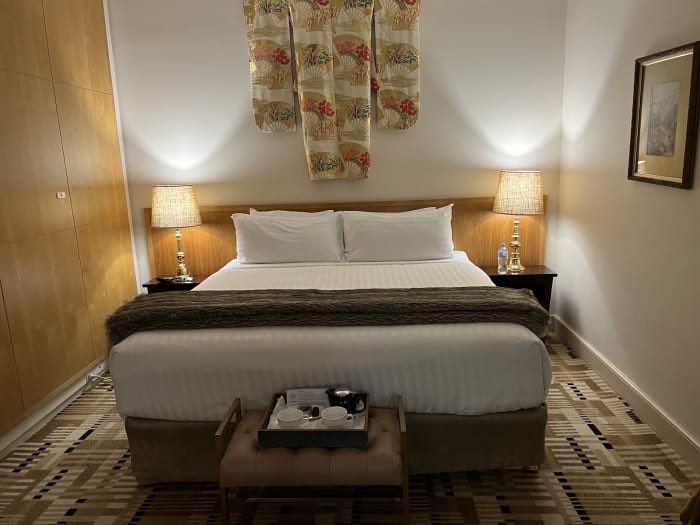
In a small-scale hotel with an intimate atmosphere, the room is not merely a functional space; it becomes the centre of gravity of the stay. At Islington Hotel, one may reasonably expect rooms and suites conceived as an extension of the house’s overall character: a balance of modern comfort, discreet elegance and references to the property’s heritage. The brief does not detail accommodation categories, and it would be unwise to speculate. Yet the spirit of the address suggests spaces where the quality of experience matters more than any catalogue effect.
The first criterion in this kind of property is a sense of privacy. A successful room should offer genuine retreat, with soothing acoustics, very good bedding, well-considered lighting and an easy flow between the different uses of a stay: sleeping, reading, occasional work, dressing to go out, or simply taking time to do nothing. In a historic house, these elements matter even more, because they must fit within an architecture that has its own rhythm. When properly integrated, they give guests the rare feeling of contemporary comfort without a break in the building’s spirit.
Decoration plays an essential role here. The existing text refers to elegant décor and a warm atmosphere; these are two qualities that do not always naturally coincide. Elegance can become cold, while warmth can slip into the merely picturesque. The best rooms find a point of balance between the two. One expects pleasant materials, calming tones, furniture chosen with coherence and details that remind guests they are staying somewhere individual rather than in an interchangeable room. That discreet sense of personality is often one of the chief pleasures of hotels within Small Luxury Hotels of the World.
The modern comfort explicitly mentioned in the brief naturally implies facilities suited to current expectations. Without inventing specific features, one can stress the importance of a well-designed bathroom, rigorous daily housekeeping, evening turndown and consistent care in the presentation of the room. These elements, partly confirmed by the known services, contribute to the impression of ongoing attention that distinguishes high-end hospitality. Luxury here is visible in the regularity of detail: a room reset with precision, a bed prepared for the night, personal belongings respected, and a staff presence that is discreet yet effective.
Depending on their outlook, the relationship between the rooms and either the gardens or the peaceful neighbourhood may also shape the experience. In a city such as Launceston, where light and seasonality strongly influence atmosphere, a room opening onto a calm environment has particular value. In spring and summer, when the gardens are in bloom, that dimension becomes even more tangible. It encourages guests to treat the room not simply as a place to pass through, but as a quiet vantage point within the stay.
For a weekend for two, a longer Tasmanian stopover or a business trip seeking more character, the rooms and suites at Islington Hotel appear to answer the same promise: to provide a personal space in keeping with the spirit of the house. Nothing ostentatious, but quality of use, atmosphere and attention to comfort that allow guests to feel immediately settled. That is often what one most hopes for from a great small hotel: the sense that the room has been designed to be lived in, not merely occupied.
Dining
The brief does not provide precise details about Islington Hotel’s dining offer, and it would be inaccurate to invent a signature restaurant, a chef or a specific culinary concept. It is nevertheless possible to place the expected gastronomic experience within the context of a property of this level and scale. In an intimate five-star hotel, dining does not necessarily need to become a destination in its own right; it may instead extend the personality of the house, favouring the right rhythm, the quality of ingredients and the feeling of being hosted rather than served impersonally.
In Launceston, gastronomy carries particular resonance. The city is often associated with a food scene attentive to regional produce and with a culture of taste that echoes the broader identity of Tasmania. For travellers, staying at a hotel such as Islington therefore also means entering that culinary environment, whether through a carefully handled breakfast, a relaxed drink, or informed recommendations for discovering the city’s and region’s notable addresses. In the best houses, internal dining and outside suggestions complement rather than compete with one another.
Breakfast may reasonably be expected to play an important role in the stay. In a residence surrounded by gardens, the first hours of the day often have a particular quality: softer light, the quiet of the neighbourhood, and the sense of beginning the day without haste. A well-executed morning service, whether taken in a dining room, lounge or near the garden when the season allows, sets the tone. It is often at this moment that one measures a hotel’s true standard: freshness, controlled simplicity, attention to the guest’s rhythm and discretion in service.
Any broader offer, where available, benefits in this kind of address from remaining coherent with the overall spirit. Rather than a display, one expects clear cooking, a thoughtfully chosen drinks selection and an atmosphere suited equally to a quiet tête-à-tête or a calm return after a day of exploring. The notion of modern comfort applies here too: reliable timing, attentive service, the ability to accommodate reasonable requests and a sense of detail in presentation.
One of the advantages of an intimate hotel also lies in its ability to act as a guide to the destination. The 24-hour concierge and round-the-clock reception mentioned in the known amenities are especially valuable for arranging outside bookings, suggesting restaurants to suit the mood of the evening or directing guests towards local experiences. In a city such as Launceston, where one may wish to explore both contemporary cafés and more classic addresses, that mediation forms an integral part of the culinary experience.
Ultimately, dining at Islington Hotel is best understood not as a promise of spectacle, but as an art of hosting. Pleasure may come from an unhurried breakfast, a late-afternoon drink, a conversation with the team about the best dinner options, or simply from returning to a peaceful setting after discovering the local food scene. For many travellers, this is a particularly persuasive form of luxury: gastronomy placed within the real rhythm of the stay, in the service of comfort, discovery and the feeling of being well looked after.
Concierge & services
In small-scale luxury hospitality, service quality is judged less by the sheer number of facilities than by the precision with which they are delivered. According to the brief, Islington Hotel offers a 24-hour concierge, 24-hour front desk, daily housekeeping, turndown service, luggage storage, laundry, wake-up service and multilingual staff. Considered individually, these may seem standard within the five-star category; brought together in an intimate address, however, they define a very clear promise: a stay that feels smooth, consistently supported and never heavy-handed.
Round-the-clock reception and concierge service are a genuine advantage, particularly in a destination that may welcome travellers arriving at varied times or planning early departures for excursions. That continuity of presence is reassuring. It allows a late arrival, an early check-out, a last-minute logistical request or a simple practical question to be handled calmly. In a characterful hotel, such permanent service often feels more personal than in larger properties: the exchange is less procedural and more grounded in knowledge of the guest and attention to individual rhythm.
Daily housekeeping and evening turndown contribute to the kind of discreet luxury built on regularity. A room maintained with care, reset without fuss and prepared thoughtfully for the night changes the perception of the stay in a profound way. These gestures are not incidental; they create continuity of comfort. They tell the guest that the hotel watches over their private space with method and respect. In a house where atmosphere matters as much as facilities, that quality of execution is essential.
Laundry and luggage storage answer very practical needs, yet their presence takes on particular significance in a hotel that may serve both as an elegant stopover and as a base for exploring the region. The ability to travel light, have garments cared for, or leave luggage before check-in or after departure all make the stay more flexible. Luxury often reveals itself in this capacity to absorb practical constraints without allowing them to dominate the experience.
The multilingual staff also deserve mention. In a property that belongs to Small Luxury Hotels of the World, welcoming international travellers is naturally part of daily life. The ability to communicate easily, make a precise request, receive clear recommendations or resolve an unforeseen issue quickly is a decisive element of comfort. Again, this is not only about efficiency but about the quality of the relationship.
Ultimately, the true value of concierge service in a place such as Islington Hotel lies in its ability to shape the stay. Booking a table, suggesting an itinerary in Launceston, arranging an early departure, advising on the best time to enjoy the gardens or directing guests towards outdoor activities: all these interventions, when handled with tact, transform simple accommodation into a guided experience. The best service remains almost invisible while being quietly decisive.
This is perhaps where Islington Hotel can make its strongest impression: in a conception of service that seeks not effect, but rightness. For travellers accustomed to large hotel machines, this more hushed approach often has particular value. It restores to hospitality something of its original meaning: to anticipate without intruding, to welcome without excessive formalism, and to make every stage of the stay simpler, gentler and more coherent.
The Launceston way of life
Staying at Islington Hotel also means adopting, for a few days, Launceston’s particular rhythm. Often less discussed than other Australian destinations, the city nevertheless offers a quality of life that lends itself remarkably well to the idea of high-end travel without ostentation. Its scale, heritage, food scene and proximity to broader landscapes make it a destination of nuance rather than effect. It is precisely within that register that Islington Hotel seems to find its place: not as a world closed in on itself, but as a sensitive point of entry into a local way of living and travelling.
Launceston invites gradual exploration. Visitors appreciate its quiet neighbourhoods, older buildings, cafés where one lingers, markets, restaurants where regional produce matters, and walks that reveal the city’s contours. For travellers, the appeal often lies in this combination of urban culture and openness towards nature. By choosing a hotel in a peaceful setting, one gains the ability to enjoy that alternation without friction: heading into town in the morning, returning in the afternoon to rest, then going out again for dinner or extending the evening in a more hushed environment.
Spring and summer, highlighted as especially favourable when the gardens are in bloom, further enhance that quality of stay. More generous light, the relative softness of the days and the presence of greenery transform the experience of both the city and the hotel. One can then organise the day around a very simple but very satisfying tempo: an unhurried breakfast, time discovering Launceston, a pause in a garden or lounge, and an evening devoted to the local food scene. This kind of travel, less saturated with activity, suits a property built on intimacy and serenity.
The local way of life is also expressed through the relationship with the wider territory. Launceston serves as a gateway to a part of Tasmania appreciated for its landscapes, produce and outdoor routes. Without detailing specific excursions not mentioned in the brief, one can say that the hotel forms a relevant base for those wishing to combine urban comfort with regional discovery. This is an important advantage: returning in the evening to a calm, carefully maintained house after a more active day adds depth to the journey.
For couples, the city naturally provides a setting conducive to time away together, shaped by walks, good tables and more contemplative moments. For business travellers, it often allows a dimension of pleasure to be added to a professional trip. For families or independent travellers, it offers a rare balance of accessibility, character and breathing space. In every case, the experience is best approached without haste. Launceston reveals itself more fully when one accepts its scale and tempo, favouring the quality of moments over their accumulation.
That is no doubt why a hotel such as Islington makes such sense here. Its intimate atmosphere, historic charm, gardens and attentive service do not create a bubble cut off from the city; they extend its qualities. Together, hotel and destination compose the same idea of travel: calmer than spectacular, more sensitive than demonstrative, and grounded in the lasting pleasure of well-chosen places.
Book with MyConciergeHotel
Booking Islington Hotel through MyConciergeHotel means approaching the property not as a room to be confirmed, but as a stay to be shaped with discernment. In an intimate hotel that belongs to Small Luxury Hotels of the World, the choice of dates, pace and desired experience often matters as much as the reservation itself. The value of editorial and concierge guidance lies precisely there: helping travellers align the hotel’s specific qualities with the nature of their trip, whether it is a couple’s escape, a longer Tasmanian journey, a business stay extended into a weekend, or a visit centred on calm.
The first consideration is timing. The brief highlights spring and summer as especially appealing, when the gardens are in bloom. This is far from incidental. In a house where outdoor spaces contribute to the overall atmosphere, the season genuinely shapes the experience. Booking during these periods may heighten the pleasure of the stay, particularly for travellers sensitive to light, greenery and the opportunity to enjoy open-air surroundings. At other times of year, the hotel may appeal more to those seeking retreat, reading, rest and a more inward relationship with the place.
Booking ahead is especially relevant for a property of this kind. Small-scale hotels offer a more personal experience, but that quality also implies more limited availability. Planning in advance not only provides a better choice of rooms, but also allows the elements that give depth to a trip to be arranged more calmly: arrival and departure times, laundry needs, luggage handling, special requests, restaurant reservations or advice on local activities. The recommendation already present in the short description points in that direction and is worth taking seriously.
MyConciergeHotel’s support becomes particularly meaningful when these details need to be orchestrated. In a destination such as Launceston, where guests may wish to combine urban discovery, local gastronomy and restorative downtime, it is useful to think of the stay as a whole. Good booking support does not merely confirm a night; it helps build a coherent sequence. That may mean favouring certain dates, anticipating a late arrival thanks to the 24-hour front desk, arranging an early departure, or simply ensuring that the traveller’s expectations genuinely match the spirit of the property.
Booking through MyConciergeHotel also means choosing a more qualitative reading of luxury hospitality. Islington Hotel is not an address selected merely to tick the five-star box. It is chosen for its intimate atmosphere, historic charm, peaceful setting, gardens and more lived-in idea of comfort. That individuality deserves a carefully considered reservation so that every detail — from timing to the use of services — genuinely serves the experience being sought.
For discerning travellers, this approach makes a real difference. It allows them to arrive with the right expectations, to enjoy fully what the hotel offers and to avoid the common mismatch between a generic image of luxury and the reality of a characterful house. In that sense, MyConciergeHotel acts as a useful intermediary: not to add unnecessary discourse, but to clarify, refine and support. And in the case of a property such as Islington Hotel, that precision is already a form of luxury.