History & heritage
In Casablanca, certain addresses tell the story of the city better than any guidebook. Hôtel Le Doge belongs to that rare category of properties that do not attempt to reproduce a standardised international luxury, but instead extend a very specific urban imagination: that of a port city shaped by exchange, layered influences and a distinctly 20th-century idea of elegance. In a city where modern architecture converses with Moorish, Art Deco and European legacies, Le Doge embraces character, atmosphere and a carefully composed sense of place. Its membership of Relais & Châteaux reinforces this reading: the experience here is rooted less in display than in identity, service and the feeling of staying somewhere singular.
The hotel’s very name suggests an older, almost literary refinement, preparing guests for something more personal than a conventional business stay. It evokes the idea of a sophisticated townhouse, open to Casablanca yet not absorbed by its pace. Heritage, in a property such as this, is not only a matter of dates or historical facts. It also lies in atmosphere, in the arrangement of rooms, in decorative detail, and in the coexistence of contemporary comfort with a more classical aesthetic language. Le Doge appears to extend a Casablanca memory in which hospitality is understood as an art of receiving, with a real awareness of setting, rhythm and discretion.
Casablanca has long been a city of arrivals and departures: merchants, diplomats, artists, business travellers and visitors seeking something beyond a fixed postcard image. That cosmopolitan dimension gives the hotel particular resonance. The stated blend of Moroccan culture and European comfort is not merely a formula; it reflects the city’s own history and its ease with multiple influences. In that context, Le Doge becomes an urban refuge that embraces these cultural layers. Moroccan references have their place here not as superficial decoration, but as part of a broader sensibility, paired with the fluid service associated with international hospitality.
What stands out is the hotel’s relationship with time. It seems to invite guests to slow down, to observe, to inhabit Casablanca differently. Where many city-centre properties focus on efficiency alone, Le Doge leaves room for texture: the quiet of a sitting room, the light on an ornamental detail, the sense of being sheltered from the city while remaining within it. This balance between urban immersion and intimate retreat is perhaps one of its most valuable inheritances. It recalls a tradition of hospitality in which luxury is defined not only by facilities, but by tone, continuity and measured presence.
For today’s traveller, that depth matters. It gives meaning to the stay and distinguishes the hotel from a merely comfortable address. To stay at Le Doge is to enter a more nuanced, more inward-looking, more elegant vision of Casablanca: a city of contrasts, certainly, but above all a city of style, culture and movement. The hotel becomes one of its most sensitive interpreters.
The Establishment
The primary allure of Hôtel Le Doge lies in its ability to harmoniously blend two qualities that are rarely found together: a genuine connection to the city and an immediate sense of retreat. Located in Casablanca, amidst a vibrant neighbourhood, the hotel benefits from a lively environment that encourages spontaneous exploration and smooth movement. Once you cross the threshold, the pace shifts. The address feels like a parenthesis, a space that filters urban intensity without denying it. This balance makes it appealing to travellers who wish to experience Casablanca without sacrificing tranquility.
The hotel is distinguished by a refined and welcoming atmosphere. The setting aims to establish a quality of presence. The spaces invite lingering. The pathways remain clear. Modern comfort does not overshadow the character of the place. The blend of Moroccan culture and European comfort takes on a tangible form here, expressed through a decorative sensibility, a careful selection of textures, and a balance of warmth, intimacy, and functionality. This alliance finds its natural place in Casablanca.
Le Doge is an urban address, and this is what adds to its value. Guests come not only to stay but also to temporarily immerse themselves in a certain version of Casablanca: one of neighbourhood strolls, professional meetings, cultural discoveries, and returns at the end of the day to a more subdued atmosphere. For couples, the hotel offers an elegant and intimate base. For business travellers, this location allows for a blend of efficiency and quality of stay. The establishment thus caters to various needs without losing its tone.
The charm of the place also lies in its measured approach. Refinement is not ostentatious here. It is perceived in the welcome, in the continuity of service, and in the feeling of being anticipated rather than treated according to a uniform protocol. This aspect is significant in a Relais & Châteaux establishment, where a more personal experience is expected. Le Doge meets this expectation with a form of hospitality that allows space for the traveller. One can seek rest, inspiration, discretion, or simply a comfortable anchor point from which to explore the city.
The establishment is particularly suited to those who appreciate characterful hotels. In a landscape where many high-end addresses lean towards standardisation, Le Doge offers something different: an identity, a climate, a more sensitive relationship to the destination. Casablanca appears not as a distant backdrop but as a tangible presence, perceptible from the hotel without ever overwhelming the experience. This ability to hold together the vibrancy of the neighbourhood and inner serenity is one of the signatures of this address.
Rooms and Suites
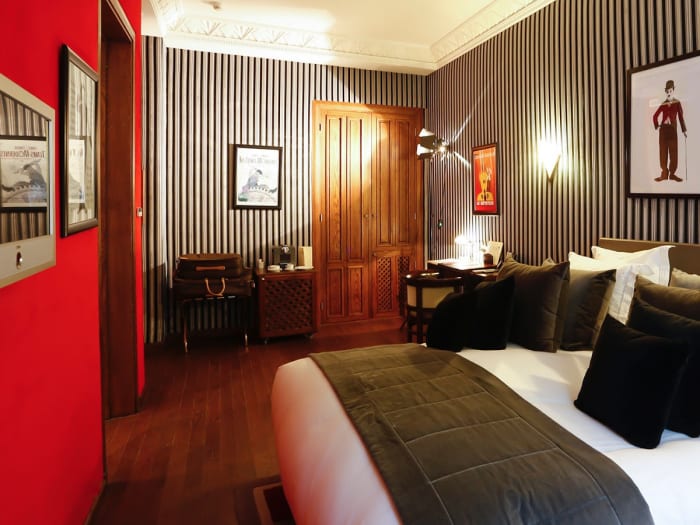
In a characterful hotel, the room transcends mere comfort; it embodies the spirit of the establishment. At Hôtel Le Doge, the rooms and suites reflect a harmonious balance of refinement, warmth, and uniqueness. They blend Moroccan culture with European comfort, creating a cohesive atmosphere that has been thoughtfully designed.
The experience is rooted in intimacy. Le Doge offers a personalised and residential approach. The spaciousness prioritises tranquillity, while the decorative details subtly evoke Moroccan craftsmanship. Contemporary comfort enhances the stay without overwhelming it, allowing the venue to retain its character, whether for a few days of exploration or a business trip.
In a city hotel, luxury is defined by simple elements: a good quality of sleep, pleasant lighting, genuine protection from the outside world, sufficient storage, and a bathroom that accommodates the pace of travel. In a five-star hotel that is a member of Relais & Châteaux, this discreet fluidity is as significant as the décor itself. The turndown service, daily housekeeping, and attention to comfort all contribute to this experience.
For couples, the main asset lies in the atmosphere. The hotel is particularly suited for travellers seeking tranquillity. The spaces create a bubble that encourages intimate stays, peaceful returns after a day in the city, leisurely mornings, and quieter late afternoons. In Casablanca, this ability to provide rest without coldness makes all the difference.
For business travellers, this quality takes on a different form. The room becomes an effective transitional space between meetings, calls, document preparation, and recuperation. European comfort is evident in the clear organisation of the space. The hospitality remains straightforward, with the environment supporting the stay without unnecessary distractions.
The rooms and suites at Hôtel Le Doge form the silent heart of the experience. They do not impress through accumulation but rather convince with their precise tone. The character of the establishment becomes more intimate here, embodying the idea of a lived luxury that fosters calm and offers a different perspective on Casablanca.
Dining
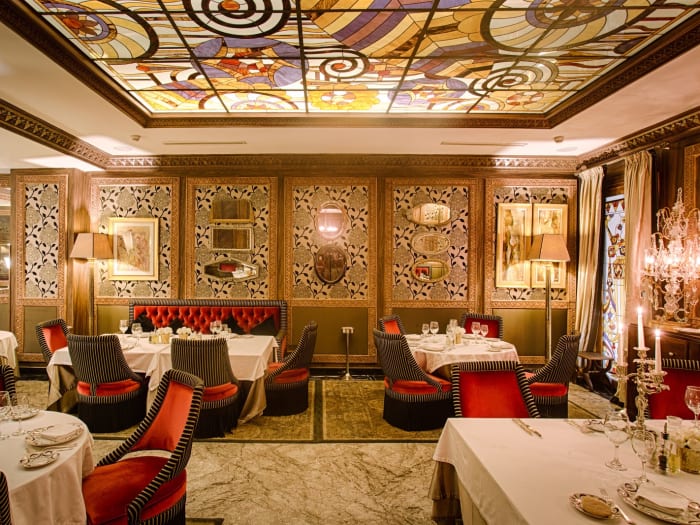
In a Relais & Châteaux house, dining always matters, even when it is not defined by a list of signatures or distinctions. It forms part of the property’s identity, its daily rhythm and its way of receiving guests. At Hôtel Le Doge, dining should be understood in that sense: not as a mere convenience for residents, but as a natural extension of the place, its refinement and its dialogue between Moroccan culture and European comfort. In Casablanca, a city shaped by exchange, commerce and appetite, that promise carries particular weight. One expects from such an address a cuisine that is clear, thoughtful and attentive both to ingredients and to atmosphere.
Part of the pleasure of staying in a hotel with character lies in the in-between moments that dining makes possible: breakfast taken without hurry, a light lunch between appointments, a more settled dinner on returning from the city, tea or coffee served in a setting that encourages conversation to linger. The table becomes a breathing space. In Le Doge’s case, this role matters all the more because the hotel appeals both to couples and to business travellers. The former will seek atmosphere, the latter consistency of service and a form of comfort without complication. Both ultimately expect the same thing: an experience coherent with the tone of the house.
The mix of Moroccan and European references offers particularly fertile ground here. Without inventing a precise menu, one may reasonably imagine an approach in which local flavours find their place within an elegant, accessible and well-executed register. In a city such as Casablanca, the best hotel dining does not necessarily try to do too much; rather, it knows how to work with the traveller’s habits, the urban tempo and the desire to discover without fatigue. A successful table in this context should be both rooted and reassuring, transporting and familiar.
Atmosphere should not be underestimated. In a hotel that claims a refined and welcoming ambience, the setting of a meal matters almost as much as the plate itself. Light, service, pacing and quality of attention all contribute to the memory of a stay. A well-managed breakfast can set the tone for the day; a calm dinner can turn a business trip into something more lived-in; even a simple hot drink can become part of the journey’s recollection. The best houses understand this and shape their dining offer as part of an art of living rather than as an ancillary service.
For travellers discovering Casablanca, the hotel table can also act as a transition. It allows one to enter gradually into the flavours of the destination, to find bearings again after a dense day, or to prolong immersion in a more intimate setting. For regular guests, it becomes ritual, a reassuring continuity. In both cases, what matters is rightness: good cooking, attentive service and an atmosphere that never strains for effect.
That is perhaps the best way to understand dining at Le Doge: as an expression of hospitality, designed to accompany the stay, reflect the character of the house and offer, in the heart of Casablanca, the discreet luxury of feeling well received at any hour of the day.
Concierge & Services
The luxury of a hotel is often measured not by the list of amenities it offers, but by the manner in which they are delivered. At Hôtel Le Doge, this truth is fully realised. A 24-hour concierge service, a continuously open reception, daily housekeeping, turn-down service, luggage storage, laundry, wake-up calls, and a multilingual staff contribute to a seamless stay, discreetly attended to.
The concierge is one of the best indicators of this service ethos. In Casablanca, it does not merely organise transfers or respond to ad-hoc requests. It connects the traveller with the city, bridging the limited time of their stay with the richness of the destination. It guides without imposing, recommends without reciting, and tailors its advice to the client's profile.
For a couple, this might involve a quieter itinerary, a table suited to the evening's mood, or a gentler approach to exploring the city. For a business traveller, it is about optimising time, facilitating logistics, and swiftly resolving unexpected issues. In both cases, the value of the service lies in its relevance.
The 24-hour reception extends this continuity. In a bustling city, late arrivals, early departures, and changes of plans are part of the journey. Knowing that the hotel is available at any hour enhances the sense of comfort. The stay becomes more flexible, which is particularly suited to an urban address with varied rhythms.
Daily housekeeping and turn-down service reflect a silent hospitality. Returning to a tidied room, finding an atmosphere prepared for the night, and sensing that the private space has been maintained with care without becoming intrusive: these gestures create a valuable continuity.
Luggage storage, laundry services, and wake-up calls may seem secondary, yet they are essential to the flow of a stay. Luggage storage frees up arrival or departure hours. Laundry supports extended stays and business trips. Wake-up calls provide a reassuring utility. The multilingual staff embodies the hotel’s international vocation.
At Le Doge, all these services form an invisible architecture. They do not seek to draw attention to themselves but aim to make the stay simpler and clearer. It is often here that hotel sophistication resides: in the art of anticipating needs, facilitating experiences, and remaining present without ever being intrusive.
The Art of Living in Casablanca
Staying at Hôtel Le Doge means choosing a particular way to enter into Casablanca. The city does not always reveal itself immediately. It demands an attentive gaze, urban and sensitive to contrasts. This is what makes it fascinating.
Casablanca is a city of movement, work, architecture, and modern memory. Visitors come less for a static image than for an energy, a texture, a rhythm. In this context, Le Doge offers a refined anchor point from which to read the city with nuance.
The lively neighbourhood in which the hotel is situated contributes to this experience. It allows one to feel the city up close, to observe its uses and rhythms. From the hotel, days unfold in sequences. A leisurely start in the morning. An exploration on foot or by car. A pause in a café. Then a return to the more subdued atmosphere of home.
This alternation between immersion and retreat aligns well with the spirit of Casablanca. The city is often better understood in successive layers than through an accumulation of sites.
The Casablanca way of life hinges on the coexistence of intensity and elegance. The city has a knack for gatherings, terraces, and prolonged conversations. It also possesses a strong visual culture. Its architectural heritage, facades, modernist lines, and Art Deco details contribute to this.
For a traveller sensitive to urban atmospheres, Casablanca can be deeply endearing. Le Doge, through its positioning, responds to this expectation. It is close enough to real life to capture its momentum, yet sufficiently protected to offer perspective.
From October to April, the milder temperatures encourage movement, strolls, and long days outside the hotel. However, Casablanca is best discovered with an open mind. It is advisable to favour a coherent itinerary, an architectural reading, or a succession of chosen moments.
For couples, the destination offers discreet romance. For business travellers, it also allows for the transformation of a work trip into a genuine cultural experience.
Le Doge accompanies this reading of Casablanca with precision. It neither seeks to isolate the traveller from the city nor overwhelm them with simplified folklore. Instead, it offers an elegant mediation. A place to return to for catching one's breath, organising the next steps, and reflecting on what has been seen.
Book with MyConciergeHotel
Choosing Hôtel Le Doge through MyConciergeHotel means favouring an approach to travel that goes beyond simply booking a room. For a five-star Relais & Châteaux address, the real issue is not only to confirm dates, but to prepare a stay coherent with the traveller’s profile, the purpose of the trip and the desired rhythm on site. Casablanca can be experienced in very different ways depending on whether one is travelling for a weekend for two, a longer stop, a business assignment or a first discovery of Morocco in an urban setting. The value of editorial and concierge support lies precisely in this ability to tailor.
Le Doge appeals to travellers seeking more than a well-located hotel. Its refined and welcoming atmosphere, its position in a lively neighbourhood, its blend of Moroccan culture and European comfort, and its suitability for couples seeking peace and quiet all define a clear positioning. Booking this address makes sense for those who appreciate hotels with character, houses that feel personal in spirit, and stays in which the experience depends as much on tone as on facilities. MyConciergeHotel helps clarify that singularity in advance and guide the choice with more precision than a generalist platform.
In practical terms, a well-considered booking begins with the right questions. Is the stay meant to focus on discovering Casablanca, with flexible planning and neighbourhood recommendations? Is the main goal an elegant refuge from which to alternate meetings and rest? Is it preferable to travel during the most pleasant period, from October to April, in order to enjoy the city at its best? These parameters shape the way the hotel will be experienced. They may also guide practical requests such as arrival and departure times, luggage handling, laundry needs, expectations regarding quietness or concierge assistance.
Booking through MyConciergeHotel also means benefiting from a more qualitative reading of the property. In a market saturated with interchangeable promises, it becomes useful to distinguish hotels with genuine personality from those that merely reproduce the codes of the upper end. Le Doge clearly belongs to the first category. Its appeal lies in atmosphere, in its relationship to Casablanca, and in its ability to offer an urban stay that feels more intimate than anonymous. That nuance deserves to be understood before booking, because it shapes the traveller’s eventual satisfaction.
For couples, this support can help create a calmer stay, with the right tempo, the right moments and a selection of experiences suited to a discreet escape. For business travellers, it can help anticipate the practical and comfort-related needs that make a trip run more smoothly. In both cases, the objective is the same: to ensure that the hotel is not merely booked, but truly chosen.
That is the value of MyConciergeHotel: restoring discernment to the centre of the booking process. For an address such as Hôtel Le Doge, this means understanding what makes the place distinctive, identifying whom it suits best, and then organising the stay with the kind of attention to detail that turns a simple reservation into a well-shaped experience.